
A no-frills virtual card that turns USDT and USDC into something the corner shop will accept
 Available in US
The Cryptomus card is a virtual Visa and Mastercard, with no physical version, that lets you pay online and in stores from a balance funded by stablecoins. Cryptomus is best understood as a payment gateway first and a card programme second: the card is one of several products on the platform, and the card section of the site is short on detail. If you already hold USDT or USDC somewhere and want a quick way to spend it without first moving it to a bank, this is roughly the use case the card is built for. If you want cashback, a physical card, Apple Pay on a card that is officially confirmed to support it, or a published schedule of what you will actually be charged, you will be looking somewhere else.
The conditions described in this review are current as of October 28, 2026.
Verdict
I went through the public information on Cryptomus, the app-store listings, and a large set of recent user reports, and I came away with a score of 4.7 out of 10. The card does the basic job of converting stablecoins into a card-accepted payment, and it is open to a wide range of countries. What drags the score down is the thinness of the published information: a lot of the things a normal cardholder would expect to see spelled out (monthly fees, ATM policy, daily limits, supported currencies, Apple Pay, the identity of the issuer) are simply not stated. The complaints picture is also unflattering, with a high number of reports about cards being deactivated and AML holds on balances. Treat this card as a tool for a narrow use case, not as a general replacement for a bank card.

| Criterion | Mark | Notes |
|---|---|---|
| Who can get it | 8/10 | “Most countries worldwide” with the caveat that local rules may restrict access; no country list, and the list can change. |
| Cost | 3/10 | Issuance 4 USD, top-up 3.2 percent, and service or inactivity fees depending on the card type; unofficial sources cite 3.9 percent FX. |
| Top-up options | 5/10 | USDT and USDC; supported networks not stated; the list of accepted coins may grow. |
| Reliability and complaints | 3/10 | Issuer and corporate entity are not named; Trustpilot 2.4/5 across 521 reviews; a virtual card deactivated after a 1,200 USD payment with refund refused; recurring AML holds on funds. |
| Everyday use | 4/10 | Virtual Visa and Mastercard only; NFC phone payments are mentioned; Apple Pay and Google Pay are not officially confirmed; no ATM. |
| Total | 4.7/10 |
In plain language: if you are the kind of reader who already pays online with USDT, you will probably find the card fits the way you work, and the limitations will not be news to you. If you are coming from an ordinary bank card and are trying to decide whether to switch, the gaps in the published information, the unofficial FX figure, and the volume of complaints about locked funds will probably put you off.
Who they will give the card to
Cryptomus says the card is available in “most countries worldwide”, with the explicit caveat that local regulation may restrict who can use it. There is no public list of supported or excluded countries, and the list is described as something that can change. I want to be careful with that wording because it leaves a lot of room: it means that just because you read that the card is “available in most countries” does not mean it is available in yours, and the only way to know for certain is to register and find out at the KYC step.
The card’s terms, as published, do not say whether eligibility is based on residence, citizenship, or both, and they do not state a minimum age. For the category as a whole, prepaid and debit cards are usually restricted to adults (18+), and KYC will typically require a government ID and a proof of address, so you should expect the same here. Where you live, where you were born, and the country on your passport are all things a card issuer can screen separately, especially for sanctions compliance, so do not assume a card you can buy with one nationality will work if you take on a different one later.
There is also a soft restriction that has nothing to do with the rules: a Trustpilot review page linked from some Cryptomus listings carries a “may be associated with high-risk investments” warning. That is Trustpilot’s flag, not a regulatory finding, but it is a useful reminder to read the wider reviews of the company before you load meaningful funds.
How to get it
The sign-up path is short on detail because the published pages are short on detail. The site tells you to register on Cryptomus and pass KYC before getting a card. That is the only published instruction; the list of accepted documents, whether you need a proof of address, what counts as a valid ID, how long the checks take, and the reasons a verification might be rejected are not stated publicly. You will only see what is actually required when you go through the flow.
The card itself is a virtual card, with both Visa and Mastercard mentioned on the public page. There is no physical version, and the card is described as being issued in about 5 minutes. The page also mentions that you can pay by tapping your phone (NFC), which is a different claim from “works in Apple Pay” or “works in Google Pay”, and the two are not the same thing; the public information is careful not to put a brand on the wallet support.
One practical implication of a virtual-only product: there is no card to lose in the post, no activation letter, and no plastic to freeze. The “freeze” is a software switch on the card details. That is also why a virtual card has no ATM use: there is no card to insert, and the magnetic-stripe and contactless hardware simply does not exist. If your mental picture of a card involves a PIN at a cash machine, that is not this product.
What it really costs (Fees)
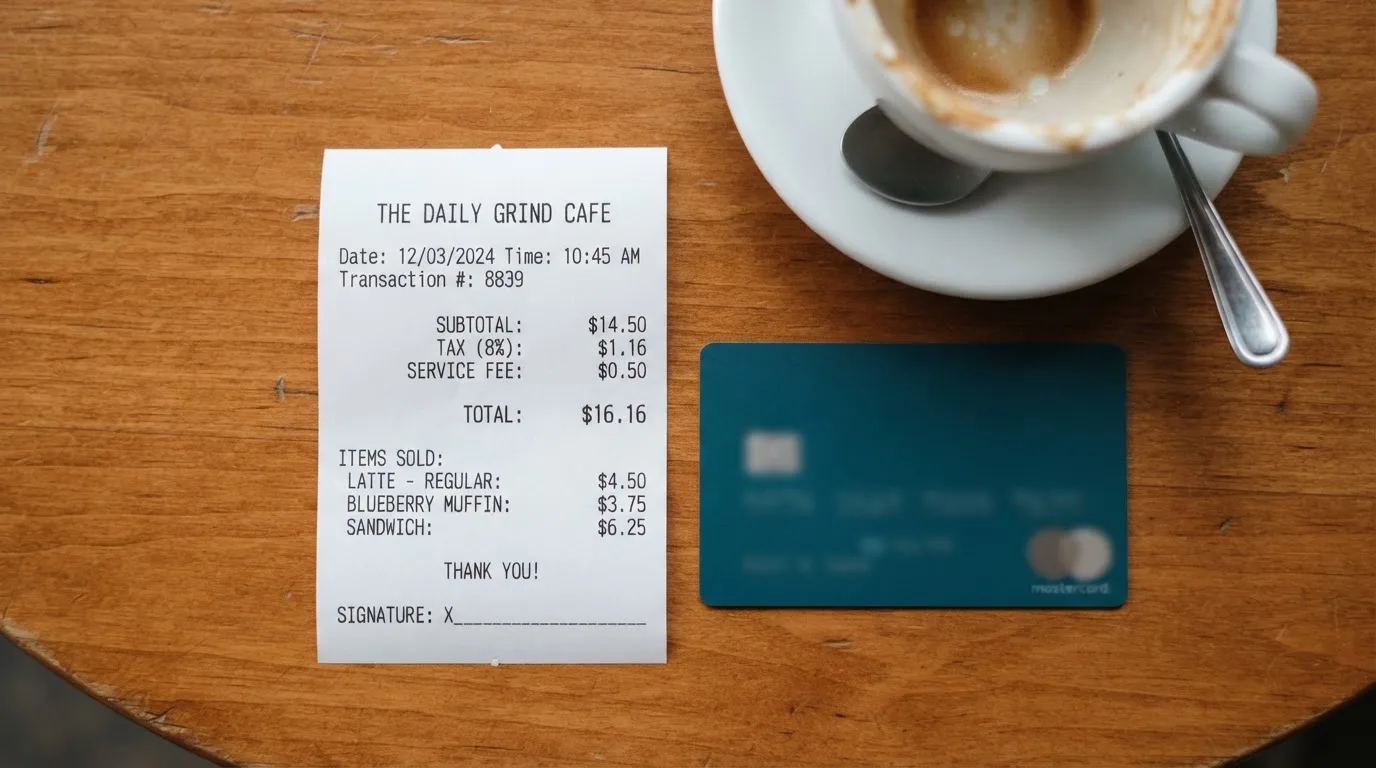
The published cost story is thin enough that I have to lean on unofficial figures, and I want to be upfront about that. The card is issued for 4 USD. There is a 3.2 percent fee on each top-up. Beyond that, the public page only says that some fees depend on the type of card you choose, that maintenance or inactivity fees may apply, and that “payment/conversion fees may vary”, without giving a number. The FX markup is not stated officially; one third-party listing puts it at 3.9 percent. There is no published monthly fee, no published ATM fee (and no ATM, as the card is virtual-only), and no published daily or monthly spending limit, although one third-party listing gives a 10,000 USD daily and 25,000 USD monthly ceiling.
| Fee or limit | Amount |
|---|---|
| Issuance | 4 USD |
| Monthly fee | Not stated |
| Top-up fee | 3.2% |
| Payment / conversion | Not stated (“may vary”) |
| FX markup | Not stated officially; 3.9% (unofficial) |
| ATM fee | Not stated; no physical card |
| Daily spending limit | Not stated officially; 10,000 USD (unofficial) |
| Monthly spending limit | Not stated officially; 25,000 USD (unofficial) |
To make that concrete, here are three everyday payments and what fees would apply based on what the public page does and does not say.
A 50 USD online subscription paid in US dollars. The crypto is converted to fiat at top-up, not at payment, so the conversion fee (whatever it is) has already been paid into the 3.2 percent top-up fee. There is no additional FX leg because the merchant is paid in USD and your card balance is in USD. The cost of using the card for this purchase is essentially the top-up fee plus any payment-side fee the issuer charges, which is not published.
A 30 EUR streaming service paid to a eurozone merchant. This is where the FX number matters. If the 3.9 percent unofficial figure is right, that is 1.17 EUR added to a 30 EUR purchase on top of the top-up fee you already paid. If the real markup is lower (or higher), the difference is significant, and you cannot check it against an official schedule because there is no official schedule.
A 1,000 USD laptop from a US merchant. The same logic applies: top-up fee paid in advance, and any FX or payment fee on the way through. The reason this case is interesting is that it overlaps with the complaint pattern. A user report describes a virtual card being deactivated after a 1,200 USD payment and the refund being refused. The company explanation was that the issuing bank blocked the card after a high decline rate and that Cryptomus does not control the card programme. If you are planning a single large payment, that is a real risk to be aware of, and it underlines that the issuer behind the card is not Cryptomus and is not under your direct control.
A note on the unofficial figures: third-party sites that aggregate card data often disagree on basic facts, and Cryptomus is a case in point. One source claimed a free virtual card with 0.5 percent conversion, which contradicts the 4 USD issuance and 3.2 percent top-up numbers on the official page. Treat any number that is not on the official site as a hint, not a quote.
How to top it up (Top up)
The top-up flow is centred on stablecoins. The official page lists USDT and USDC, and adds that the list may expand over time. The networks on which you can send those coins are not specified in the public materials I read. This matters more than it sounds: in the wider stablecoin world, USDT and USDC are issued on multiple blockchains (Ethereum, Tron, Solana, Polygon, Avalanche, and others), and the network you choose determines the speed, the gas fee you pay, and whether the address is one the card programme can read. Some wallets default to one network and let you switch; others do not. If you send a supported coin on a network the programme does not watch, the funds can simply not arrive, and the recovery path is manual support at best.
Behind the top-up, your crypto is converted into fiat at the time you top up, not at the time you pay. That has two practical consequences. The first is that you take the conversion hit on the whole balance you load, even if you only spend part of it. The second is that once your balance is in fiat, the price of the underlying stablecoin no longer affects your card: the card behaves like a prepaid card, and your downside is the FX and payment fees, not the coin price. That is a relief in one sense (you cannot lose money on a coin dip while you are standing in a shop) and a cost in another (you also cannot benefit from a coin rise on unspent balance).
A few things the page does not say and you should not assume. There is no published minimum top-up. Fiat top-up (paying with a bank transfer or card) is not described, so the working assumption is that the top-up is crypto-to-fiat only. Withdrawals (sending the card balance back out to crypto or to a bank) are not described either, and that is a meaningful gap if you ever want to leave the platform. If a route back to your bank matters to you, write to support before you load significant funds.
Paying with it every day
On a normal day, the card behaves like any other Visa or Mastercard at the checkout, with the difference that the balance behind it is a prepaid fiat balance funded by stablecoins. The card supports both Visa and Mastercard, which widens the set of merchants that will accept it, and the site mentions NFC phone payment, which is the technology behind Apple Pay, Google Pay, and the various banking-app tap-to-pay systems. Brand support is a different question: the public page does not confirm Apple Pay or Google Pay by name. One third-party listing does, but I would want to see the brand in the official materials before relying on it.
There is no cashback, rewards, or other published incentive on the cards page, and the merchant categories that the card will not work with are not listed. In the wider market, gambling (MCC 7995) and a handful of other categories are commonly blocked on prepaid cards, and the absence of a published blocklist here is not the same as a promise that everything is open. A decline at an unusual merchant is the more likely signal.
The mobile app is in the App Store and Google Play, and it offers the basics you would expect: expense control and transaction history. App-store ratings and reviews for the Cryptomus app are not stated in the public materials I read, and I would not treat that as either a good or a bad sign without checking your local store listing. Disputes (the process for challenging a charge you do not recognise) are also not described on the card page, which is a meaningful gap for a card you intend to use online. The category-level background is that chargeback rights on prepaid cards vary by jurisdiction and should not be assumed, and that the practical safety net on a virtual card is the freeze switch in the app, used quickly.
What can go wrong
The reliability and complaints picture is the biggest single reason the score is where it is. Cryptomus’s Trustpilot page sits at 2.4 out of 5 across 521 reviews, with 43 percent one-star and 49 percent five-star. The platform’s reviews are mostly about the payment service rather than the card, but the card complaints are concentrated, and a few patterns come up repeatedly.
The most damaging pattern is the card deactivation after a relatively normal-sized payment, with refund refused. The case I read in detail: a virtual card was deactivated after a 1,200 USD transaction, and the customer was told the issuing bank blocked the card after a high decline rate, and that Cryptomus does not control the card programme. Whether or not the bank’s explanation is right, the practical effect is that the customer lost access to the funds and the card at the same time, and the brand they signed up with cannot unblock the card directly. That is a structural risk of a programme where the issuer is hidden.
The second pattern is AML and KYC holds. Multiple user reports describe funds being frozen during KYC review, with examples in August, September, and October 2026. Some of these are resolved by submitting more documents; others drag on with tickets being closed as duplicates. The wider background for this is that regulated payment businesses are required to monitor transactions, escalate anything that looks suspicious, and in some cases block funds while they check, and that this happens with disproportionate frequency on platforms that have a high volume of cross-border crypto on the way in.
A third, smaller pattern is the disagreement between third-party sources on basic fees (one source claims a free virtual card with 0.5 percent conversion), which is a tell that the published information is incomplete. The official page says what it says; the unofficial pages do not always agree with it.
The corporate side is also a question. The card page does not name the issuer behind the card, and the wider site does not surface the legal entity behind the brand in a place that is easy to find. That matters because, in a card payment, the issuer is the party that owes you the cardholder protections; the brand is usually only a programme manager. If you cannot tell who the issuer is from the public pages, you are relying on the brand alone.
On the security tools that are present, the published list is reasonable: 3-D Secure authentication, freeze and unfreeze of the card, and biometric authentication in the app. The site also says that no one will be able to withdraw funds or pay without your knowledge, which is a strong claim. The custody model (how the underlying customer funds are held) and whether there is any insurance on those funds are not stated. A CertiK project page is linked, which is a third-party code review rather than a financial safeguard.
Support runs through a Telegram bot (cryptomus_support_bot), an email address ([email protected]), and an FAQ. Hours, languages, and live-agent coverage are not stated, and the complaints pattern includes slow support and tickets closed as duplicates.
What to take instead
The honest comparison here is between Cryptomus and three other cards aimed at similar readers. None of them is a perfect substitute; they each make different trade-offs.
| Card | Score | Card type | Top-up | Issuance | Notable point |
|---|---|---|---|---|---|
| Cryptomus | 4.7/10 | Virtual Visa and Mastercard | USDT, USDC | 4 USD | Wide country reach; thin published detail; high complaint volume. |
| Cardex | 5.6/10 | Virtual and physical, on Verve, Visa, Mastercard, UnionPay | USDT, USDC, BTC | Not stated | 200+ countries; “AI-powered” conversion rate; card currency Naira per the App Store listing. |
| TakeCard | 5.5/10 | Virtual everywhere; physical in Bolivia | From a Takenos balance | 5 USD virtual, 20 USD physical (Bolivia) | 1% commission per purchase; USD payments 1:1; physical card restricted to Bolivia for now. |
| OkiCard | 6.0/10 | Virtual, Visa/Mastercard | USDT on BSC, Ethereum, Tron, Solana | 0 USD (FAQ says one-time fee; pages disagree) | 3% load fee, 0% transaction fee in USD; 100 USDT initial deposit. |
Cardex is the most direct alternative in spirit. It is a crypto card on multiple networks, including Verve, Visa, Mastercard, and UnionPay, and the published material says it is available in 200+ countries. The brand’s own site describes an “AI-powered conversion rate” that picks the best rate when you spend, and the top-up set is USDT, USDC, and BTC. The catch is that the App Store listing prices the card in Nigerian Naira, which suggests the card’s primary market is Nigeria even if the country list is broad.
TakeCard is built on top of a wider wallet (Takenos) and the published material is more concrete. The virtual card is 5 USD, the physical card is restricted to Bolivia for now, and the published fee is 1 percent per purchase. USD payments are 1:1 with no extra currency adjustment, which is a useful guarantee. Top-up runs through the Takenos balance rather than directly from a wallet you control, so you have to think of TakeCard as a two-step load.
OkiCard is the strongest of the four on raw score, with a 0 USD issuance, a 3 percent load fee, and 0 percent transaction fees in USD. The trade-offs are a 100 USDT initial deposit and a published network list (BSC, Ethereum, Tron, Solana) that gives you more control over which chain you send on. OkiCard’s country list is “150+ countries” on some pages and “200+” on others, and the brand says it does not geo-block by passport but does exclude sanctioned jurisdictions.
Who I would recommend it to
I would recommend the Cryptomus card to a specific kind of reader, and I would actively steer other readers away from it. The reader I would recommend it to is someone who already uses Cryptomus as a payment gateway, who has USDT or USDC they want to spend, and who is comfortable with the gap between what is published on the cards page and what the card actually does. For that reader, the card does the narrow job, and the limitations (virtual-only, no Apple Pay or Google Pay by brand name, no published limits, 3.2 percent top-up, 4 USD issuance) are things they would factor in and accept.
I would not recommend it to a reader who is choosing a card for the first time and is comparing it to ordinary bank cards or to better-known crypto cards like the ones above. The combination of an unnamed issuer, an FX number that is not officially published, recurring AML holds, and the specific case of a card deactivated after a 1,200 USD transaction with a refused refund is too heavy for a card whose main published advantage is “most countries”. For a broader use, Cardex, TakeCard, or OkiCard each publish more of what you would want to know upfront, even if none of them is a perfect substitute.
Two practical checks before you load any meaningful amount. First, read the latest user reviews in your own country and language if you can find them, not just the global Trustpilot average. Second, do a small test load, top up, pay, and withdraw the balance before treating the card as a working tool. That costs you a few dollars in fees and it gives you a real answer to “does it work for me” before you bet larger sums on it.
Frequently asked questions
What is the Cryptomus card?
It is a virtual Visa and Mastercard offered by Cryptomus, a crypto payment platform. There is no physical version, and the card is funded by converting USDT or USDC into a fiat balance that you can spend online and at contactless terminals. The public page describes the card as issued in about 5 minutes, and the card is one product inside the wider Cryptomus platform rather than a standalone banking product.
How does the Cryptomus card work?
You register on Cryptomus, complete KYC, request a card, and top it up by sending USDT or USDC. The crypto is converted into fiat at the moment of top-up, and the card then spends from that fiat balance like a prepaid card. Because the conversion happens at top-up, you take the conversion cost on the whole balance, not only on what you end up spending, and once the balance is in fiat, the card is no longer exposed to the underlying coin’s price.
Is Cryptomus a bank?
No, and the public materials do not describe it as one. The card page does not name the bank or e-money institution that actually issues the card. In a card payment, the issuer is the party that holds the card programme and owes the cardholder protections; the brand on the front of the card is often only a programme manager. With Cryptomus, the issuer is not publicly identified, which is a meaningful gap if you care about who is responsible for the funds and the dispute process.
Can I get the Cryptomus card in my country?
The official page says “most countries worldwide”, with the caveat that local rules may restrict access, and the public materials do not publish a list of supported or excluded countries. The list is described as something that can change. The only certain way to know whether the card is available where you live is to register and find out at the KYC step.
Does the Cryptomus card require KYC?
Yes. The published instruction is to register on Cryptomus and pass KYC before getting a card. The exact documents required, the proof-of-address rules, the minimum age, and the typical processing time are not stated in the public materials, and the only place to learn them is in the sign-up flow itself. Several user reports describe funds being held during KYC review, so be prepared for that possibility on a first top-up.
How do I add the Cryptomus card to Apple Wallet or Google Pay?
The official card page mentions NFC phone payment but does not confirm Apple Pay or Google Pay by name. One third-party listing says both wallets are supported, but I would not rely on a third-party listing for this. If wallet support is critical to you, the safer path is to test it with a small top-up first, or to pick a card that publishes the wallet brand on its own page.
How do I top up the Cryptomus card?
The published top-up set is USDT and USDC, and the page adds that the list may grow. The supported networks for those coins are not stated in the public materials, and this is a real point of friction: stablecoins are issued on multiple blockchains (Ethereum, Tron, Solana, Polygon, and others), and sending a supported coin on an unsupported network is the most common way to lose a top-up. The page does not publish a minimum top-up, and it does not describe a fiat top-up route, so the working assumption is crypto-to-fiat only.
Is the Cryptomus card safe?
The published security tools are reasonable for the category: 3-D Secure authentication, a freeze and unfreeze switch in the app, and biometric login. The custody model (how the underlying customer funds are held) and any insurance on those funds are not described in the public materials, the issuer is not publicly named, and the Trustpilot score for the brand is 2.4 out of 5 with a high concentration of complaints about locked funds and deactivated cards. Read the latest user reviews in your own country before you load a meaningful amount, and start with a small test top-up.
Are there fees for using the Cryptomus card?
Yes. The card is issued for 4 USD, and there is a 3.2 percent fee on each top-up. Maintenance or inactivity fees may apply depending on the type of card you choose, and the payment or conversion fee is described as “may vary” without a published number. The FX markup is not stated officially; one third-party source cites 3.9 percent, but unofficial figures for the brand disagree, and the official schedule is silent. There is no published monthly fee and no published ATM fee, and the card has no physical version, so it has no ATM use at all.
Is the Cryptomus card worth it?
For a reader who already uses Cryptomus as a payment gateway, holds USDT or USDC, and is comfortable with the gaps in the published information, it does the narrow job and the score reflects that. For a reader comparing it to ordinary bank cards or to better-known crypto cards, the unnamed issuer, the unofficial FX figure, the volume of complaints about locked funds, and the lack of published limits, ATM policy, and dispute process make it hard to recommend ahead of Cardex, TakeCard, or OkiCard, which publish more of what a cardholder needs to know upfront.
Virtual card options – cryptocardoptions.com
Content created by the «cryptocardoptions.com» team