
Anon card review: a virtual Visa for one-off anonymous payments — priced in silence
 Available in US
Anon is a virtual Visa card you open with an email address, fill with cryptocurrency, and spend online without handing over identification. That is the whole pitch, and in a small, unglamorous corner of the crypto card market it is the pitch that distinguishes this card from the mainstream ones that now ask for a passport scan. The promise is real in the literal sense: the card’s own pages state “We will never ask for any identification or personal information,” and signing up asks for nothing more than an email.

What you get is also narrow in the literal sense. It is virtual only — there is no plastic to post to you. The balance lives in US dollars at the company, not in a wallet you control. Each card can be loaded once, up to $1,000, and has to be used within 60 days of being created. Apple Pay and Google Pay only appear if you load more than $500, and there is no 3-D Secure, which means merchants who insist on a step-up check simply will not process the payment. For someone who wants to pay for one or two subscriptions or a single online purchase without a bank account, those limits are acceptable. For anyone building a daily payment method, they are the whole problem.
I scored Anon 5.6 / 10 overall. The number is not a judgement on whether the service works on the day it works; it is a weighted verdict that gives credit where credit is due (openness, a real range of coins) and withholds it heavily where a card you depend on cannot be relied on (unpriced fees, a 60-day lifespan, no 3-D Secure, and a thin public record of what happens when a load fails).
The conditions described here are current as of October 28, 2026.
Verdict: 5.6 out of 10, built for one-off anonymous payments and nothing else
| Criterion | Mark | Why |
|---|---|---|
| Who can get it | 9 / 10 | Card is not redeemable in 22 named countries; the rest of the world is open; no KYC, email only |
| Cost | 5 / 10 | Issuance and load fees exist and are non-refundable but the amounts are not published; conversion and FX fees not stated |
| Top-up options | 7 / 10 | Over 10 cryptocurrencies named, but networks not specified; $1,000 per card, one load per card |
| Reliability and complaints | 3 / 10 | Anon Services, Inc., not a bank, issuing partners not named; user reports of load failures and silent support |
| Everyday use | 3 / 10 | Virtual Visa only; Apple Pay and Google Pay only above $500; no 3-D Secure; no ATM; card lives 60 days |
| Total | 5.6 / 10 | Good fit for anonymous one-off online payments with email-only sign-up; poor fit as a primary card |
Read that table as a description of shape, not a ranking of competitors. The high mark on access is genuine — there is no identification barrier to argue with. The low marks are about what happens after you press the button: nobody at the card will tell you what the load costs, what the conversion costs, or what to do if the load fails.
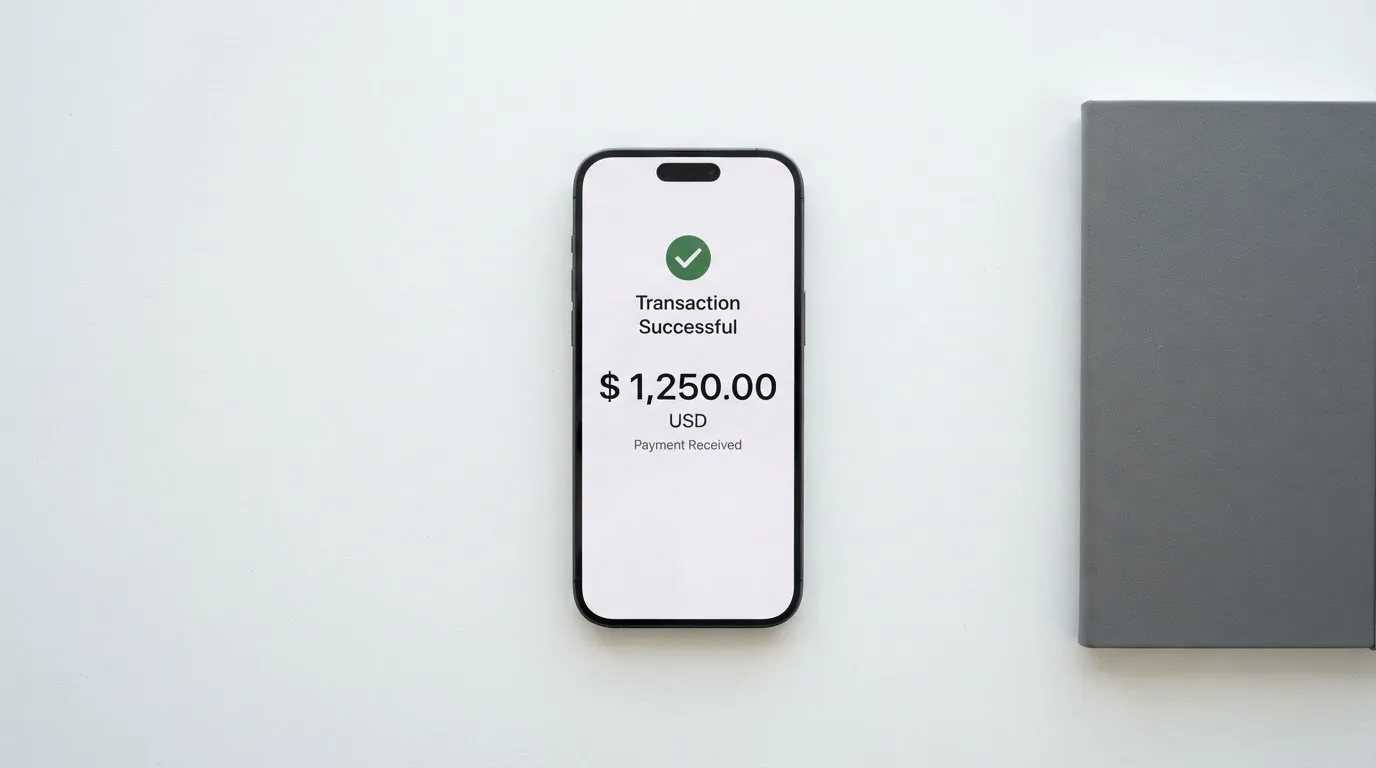
So who is this for? Someone in a country where opening a normal bank account is slow, expensive or impossible, who has cryptocurrency but no usable card, and who wants to pay one thing online today. Someone paying for a service that rejects foreign BINs, or that wants an email-only buyer. Someone who has decided that $1,000 and 60 days is enough because they only need one purchase.
And who is it not for? Anyone who wants a card for daily life. Anyone who wants to withdraw cash. Anyone who wants to be able to appeal a charge — the terms say that in an account-ownership dispute “Anon will be the sole arbiter.” Anyone whose plan depends on the card still working in three months, or on the company answering the phone when money is stuck.
Will they give you the card: yes, almost everywhere — the list of refusals is explicit, and Russia is not on it
Yes, with one important caveat about wording. The card is not redeemable in a named list of 22 countries: Albania, Belarus, Congo, Democratic Republic of the Congo, Côte d’Ivoire, Cuba, Iran, Iraq, North Korea, South Korea, Lebanon, Libya, Myanmar, Nicaragua, Pakistan, Somalia, South Sudan, Sudan, Syria, Venezuela, Yemen and Zimbabwe. Russia is not on that list. If you are reading this because you wondered whether the answer for Russia is a special case, it is not singled out; the general rule applies, which is that everywhere outside that list the card is open.
“Redeemable” is the card’s word, and it is worth pausing on. It points at the ability to spend, not at your citizenship. Where you were born and where you live are two different questions for a card issuer’s risk team, and this card’s public pages do not say which one decides your eligibility — citizenship versus residence is not stated. If your situation is the kind where those two answers disagree, that is precisely the question to ask support before you fund anything, and the answer is not going to be in a help article.
Two things about that list. First, most of it is sanctions and compliance territory — Iran, North Korea, Syria, Cuba, Venezuela, Sudan, Somalia — so this is a legal-risk screen, not a quality judgement about your country. Second, a “not redeemable” card is not a card you can partly rely on. If the answer for your country is yes, you are in the open world as far as this card is concerned.
How to get it: an email, a crypto transfer, and a virtual card number
Three steps, and the card describes them plainly: sign up with an email address, fund your balance with crypto, create a virtual card. The signup promise is quoted in its own words — “NO-KYC: We will never ask for any identification or personal information.” There are no KYC levels to climb because there are no levels at all; no documents, no selfie, no source-of-funds questionnaire is part of the described flow.
What you receive is the Anon Virtual Visa Card, a Visa-branded debit card that exists only as a number in an interface. It is described as “issued by our partner Financial Institutions, pursuant to a license from Visa U.S.A. Inc.” — note the shape of that sentence. The issuer is a partner, and the partner is not named. Your balance is held in US dollars. There is no physical delivery step to worry about, because there is no physical card; if you were waiting for something in the post, that is not coming.
One thing the flow leaves open: your age. Whether you must be an adult to open an account is not stated, and it is a reasonable question to ask support given that prepaid and debit products generally go to adults. I mention it because the absence of a stated age floor sits oddly beside a product whose entire design choice is not asking you anything.
There is no store app to install. The web sign-in is on the Anon website. Support is live chat and email; hours and languages are not stated, which for a service whose whole customer base cannot easily call anyone is worth noticing.
Fees and costs: the card says fees apply, and then it does not say how much
This is the weakest part of the picture, and the reason the cost mark is 5 out of 10 rather than higher. The card tells you that at issuance “standard card creation and load fees apply,” that they are non-refundable, and then it does not publish the amounts. A monthly fee is not stated. The conversion fee or spread applied when crypto becomes dollars is not stated. The FX fee is not stated. Where a card can tell you “no additional fees” for online purchases — and this one does say that for online purchases — that reassurance arrives without the one number you need to plan around: what the load costs you.
| Fee or limit | What the card says |
|---|---|
| Issuance and load | “Standard card creation and load fees apply” at issuance; non-refundable; amount not stated |
| Monthly fee | Not stated |
| Crypto conversion | Crypto is automatically converted to USD on deposit; fee or spread not stated |
| FX fee | Not stated |
| ATM | Not applicable: virtual card only |
| Online purchases | “No additional fees” |
| Per-card balance cap | Up to $1,000 USD (“You can load an Anon Card up to $1.000 USD each”) |
| Loads per card | Each card can be funded only once |
| Card lifetime | Must be used within 60 days of creation |
| Number of cards | Unlimited number of cards |
| Daily / monthly spend limits | Not stated |
So what does a payment actually cost you? Take three ordinary situations.
A small subscription at about $10. Here the unstated issuance and load fee is proportionally heaviest, because it is charged per card and you have loaded a card up to $1,000’s worth of capacity to spend a tenth of it. If a new card is what you use for this, you are paying the same fixed fee per subscription.
A $40 online purchase from a card you already hold. The card’s stated position is no additional fees for online purchases, so this is the cleanest case: you spend the dollar amount, and the conversion from crypto into dollars happened at the deposit rather than at the till. What you cannot check in advance is what that deposit conversion cost, since neither the conversion fee nor the spread is stated.
Anything in a currency other than the US dollar. The balance is in USD and payments draw on it, so a euro or naira purchase involves a conversion somewhere. The card does not state an FX fee, and it does not state that there isn’t one. If you buy in your own currency and the exchange rate you effectively receive is the one that matters, the card does not publish it.
One more line sits outside the fees table but hits the same nerve: on-chain network fees for your deposit are charged by the blockchain, not by the card. If you send Bitcoin or Ethereum, you pay whatever that network charges. If you send a token, you may pay in a different token — Ethereum gas is paid only in ETH, so a wallet holding USDT with no ETH cannot send it. Tron prices its fees through bandwidth and energy resources, often burning TRX. None of that is the card’s fee, but it is money leaving your wallet on the way to the card.
How to top it up: ten-plus coins, unspecified networks, one load per card
Topping up is the part of the flow the card is most confident about, and it is the reason the top-up mark is 7 out of 10 rather than lower. The site advertises “Over 10+ cryptocurrencies.” Named on the homepage: Bitcoin, Litecoin, Ethereum, Bitcoin Cash and USDT. Starting data adds Monero (XMR), USDC, SOL and XRP. For Monero specifically, the card says balances are credited once confirmed on the Monero network — which is the only network the card names anywhere.
That single clause tells you the shape of the risk. Networks not specified for the rest. And this is the part of a crypto card that punishes impatience hardest: blockchain transfers are irreversible, so a deposit sent on a network the provider does not support, or sent to an address belonging to a different network, can simply be lost or need manual support recovery with no guarantee attached. With USDT, for example, the token exists on several chains — Ethereum, Tron, Solana, Polygon, Avalanche and others — and sending on the wrong one is a classic way to lose money that no support desk is obliged to return. The same trap has a USDC variant: Circle stopped supporting USDC on Tron in February 2024, so “USDC over TRC20” is not a native option.
The mechanics on the card’s side are short: crypto is converted to USD on deposit. The deposit fee and the minimum are not stated. Each card can be funded only once, up to $1,000. That is worth understanding as a design, not a bug — it makes the card a pre-loaded balance instrument, so it cannot be overdrawn, and it also means a second mistake on a card is not possible, because there is no second load.
There is also a one-way character to the money. The balance “is not redeemable for cash” outside limited legal exceptions. If you delete a card, unspent balance on it can be returned to Anon credit — credit, not cash. And inactivity beyond 12 months “may result in reductions” of the credit balance, and the company may close an account. So the practical reading for anyone planning ahead: treat loaded value as spend-it-here value, not as a float you keep.
Paying with it day to day: virtual only, wallet links above $500, no 3-D Secure
This is where Anon’s limits become hard, and it is why the everyday-use mark is 3 out of 10.
- Virtual only. No plastic card. Anything that needs to be handed over or slid into a reader is out.
- Apple Pay and Google Pay are available only for cards loaded with more than $500 USD. Below that line, no tokenised mobile wallet.
- No 3-D Secure. The card says so plainly: merchants requiring 3DS will not process the payment.
- No ATM. Virtual card only, so no cash, ever.
- 60 days. A card must be used within 60 days of creation.
- No cashback. None mentioned anywhere on the page.
Read those together and you get a clear picture of what kind of payment this is: an online, single-purpose, one-shot instrument. The 3-D Secure point deserves a word of explanation, because it is the item most likely to surprise you. 3-D Secure is the step-up check Visa brands as Visa Secure — the issuer assesses the risk of an online payment and either approves it invisibly or challenges you with a one-time code or biometric. European rules treat this as strong customer authentication, so a growing share of European merchants now expect it. A card with none of it is not merely less protected; it is invisible to a category of merchant, and those merchants decline rather than ask.
The other category to expect is “foreign-looking” decline. Card numbers begin with a 6- or 8-digit issuer identifier that any merchant’s terminal can look up, and it reveals both the institution and the country of issue. When that country differs from the billing address, extra scrutiny often follows, and some merchants decline prepaid or foreign-issued cards outright on the lookup alone. On a virtual card with no stated billing-address model, that is a live risk. Address verification checks in the US, Canada and UK are generally unavailable for foreign-issued cards, which also causes declines. The card publishes no blocked-merchant list, so you cannot even see the categories it is known to fail at — and gambling is a common one to be blocked, as a matter of issuer policy rather than law.
Two smaller things. A declined authorisation can leave a hold on your funds for several days, typically up to seven, so a failed attempt is not necessarily instant. And on refunds: a merchant’s refund returns to the original Anon card — not to the crypto you sent, not to a bank account — which means if you delete a card before the refund lands, the money is in a strange place.
What can go wrong: the load is where the reported failures cluster
The most concrete risk I can point to is not theoretical, because users have written about it. On AlternativeTo, three negative comments are visible, dated 27 December 2025, 18 November 2024 and 22 October 2023. The recurring account: the service “works until you try to load a card,” and then support stops responding. There are also “scam” claims from low-activity accounts, and the observation that no-KYC cards are suspect on their face. The AlternativeTo page itself notes these comments are not counted in the app rating, so read them as individual reports rather than as a statistic. Separately, a stacker.news post of 22–23 October 2023 raised doubts about the company’s legitimacy and noted missing company details, no VAT number, and that the privacy policy collects email, name and IP. I could not find a Trustpilot page for Anon in one search — the results were for a different service, paywithus — so I am not going to paraphrase reviews I did not read. These are user reports from third-party sites, unofficial, and not confirmed by the card.
No official incidents were found on the company’s own pages. That is not the same as a clean record; it is a thin one.
Behind the reports sit structural facts about who you are trusting. The company is Anon Services, Inc., which describes itself as “a financial technology company, NOT A BANK.” The state of incorporation is not given. The issuer is “our partner Financial Institutions” under a Visa U.S.A. Inc. licence, and is not named. Visa and Mastercard do not issue crypto cards to consumers themselves; they license issuers, and they can suspend a programme. That is not a scare note so much as an explanation of the shape of the market: the crypto brand is often only a programme manager or front-end, and the party that actually holds your balance and actually issues the card is often the one you cannot name.
Your balance is custodial — held at Anon in US dollars. Which means you trust the counterparty with the money, and you accept that your crypto is converted at the point of deposit rather than at the point of payment. Two-factor authentication, an in-app freeze and spending controls are not stated, so I cannot tell you what protections exist beyond the card number itself. This matters more than it would for a card tied to a bank account, because with a bank card a frozen card still leaves your money in an insured institution; here the card number and the balance are the same place.
Some context worth holding onto, from the wider category rather than this card: custodial platforms have a record of failure — Mt. Gox at about US$350 million reported stolen across 2011–2014, Coincheck at about US$400 million in 2018, Ronin Network at US$625 million in 2022. Card programmes themselves get closed. Visa terminated its global agreements with FTX on 13 November 2022 and the FTX US debit card was wound down. Visa suspended WaveCrest in Europe in 2018, closing all WaveCrest-issued Visa programmes. Closures typically follow a pattern: a notice period, then spending and loading stop, then users are asked to withdraw what is left. That last step is the one that matters here, given the balance “is not redeemable for cash.”
For scale, the site’s own statistics were last updated 05/03/2026 as displayed: 154,918 total issued cards and a USD volume of $59,231,973.12. That is the company reporting on itself, so treat it as an indication of activity rather than of solvency.
On disputes, the terms are unusually blunt. Refunds return to the original card; the card says “we cannot refund you if you are unable to use your card with all or specific merchants”; and in a dispute over who owns an account, “Anon will be the sole arbiter.” No chargeback process and no time frames are stated — and prepaid-card coverage varies and should not be assumed. If the sort of purchase you have in mind is one you would want to dispute, this card is the wrong instrument.
Two category-level warnings that apply here without being Anon’s fault. Blockchain transfers are irreversible, so a deposit on the wrong network has no built-in recovery — the network cannot freeze or return it. And stablecoins can depeg: TerraUSD collapsed in May 2022, USDC temporarily lost its peg in March 2023 during the US banking crisis. “Dollar-pegged” is an intention, not a guarantee.
What to take instead: three cards with the same problem or a smaller version of it
None of the alternatives fixes the underlying category issue, which is that most no-KYC-ish crypto cards are thin programmes over someone else’s banking licence. But each shows you a different trade, and comparing them is the fastest way to see which compromise Anon is asking you to make.
| Anon | Cardex | TakeCard | OkiCard | |
|---|---|---|---|---|
| Score | 5.6 / 10 | 5.6 / 10 | 5.5 / 10 | 6.0 / 10 |
| Access | 22 countries excluded, no KYC | “One crypto card, 200+ countries”; app listing is Naira-focused | Physical card “available only to Bolivian users for now”; starting data lists several Latin American and European countries, unverified | “150+ countries” (some pages say 200+); users must confirm they are not in a sanctioned jurisdiction |
| Card | Virtual Visa, balance in USD | Debit crypto card on VERVE, Visa, Mastercard, UnionPay; virtual and physical | Virtual card available immediately, physical Bolivia only; Visa; issued in the US; prepaid; USD 1:1 | Virtual card, physical mentioned without detail; “Visa/Mastercard” unspecified; USD/EUR pegged |
| Fees | Issuance and load fees apply, amount not stated; conversion not stated | Real-time conversion at payment with an “AI-Powered Conversion Rate”; no percentage stated | 1% commission per purchase; other currencies at the official Visa rate of the day | Issuance $0 and monthly $0 on the pricing page, starting price $15 for virtual; pages disagree; load fee 3%; transaction fee 0% in USD; “no hidden exchange spreads” |
| Funding | 10+ coins, networks not specified | USDT, USDC, BTC; networks not stated | Top up from Takenos balance; coins not named in the article; starting data says USDC/USDT via Polygon, BNB Chain, Tron or Ethereum, unverified | USDT on BSC, Ethereum, Tron, Solana; deposits to a generated address |
Read across the row and the sharpest difference is the fee line. Anon publishes no amounts at all. OkiCard publishes percentages but contradicts itself about the starting price. Cardex describes an algorithm for choosing a rate and no number. TakeCard is the only one stating a clean percentage: 1% per purchase, 1:1 on USD payments, other currencies at the official Visa rate of the day — which makes it the easiest to cost a transaction in advance, even with its USD 5 virtual issuance and USD 20 + USD 20 physical in Bolivia (another article in the same centre says USD 10 for the physical, so the site’s own numbers conflict).
On access, Anon and Cardex are the two open ones; TakeCard is effectively Bolivia-only for physical and its wider country list comes from starting data I could not verify on a readable page; OkiCard asks you to self-certify you are not in a sanctioned jurisdiction, which is a weaker guarantee than being checked against a published list.
On funding, OkiCard is the most specific and therefore the most workable if you want to know in advance what to send: named chains for USDT. Anon and Cardex name coins without naming networks, which is the gap that turns a transfer mistake into a loss.
If your priority is knowing the number before you commit, TakeCard and OkiCard are the two to price up. If your priority is genuinely zero identification, Anon and Cardex are the field. None of them is a bank, and none of them should hold money you would miss.
Who I would recommend it to
I would recommend Anon to someone with a specific, near-term need and crypto already in hand. Someone paying a subscription that would rather not have your passport, in a country where a bank account is slow or unavailable, who can afford to lose the load if it goes wrong because the amount is small, and who can live with a card that must be spent within 60 days. I would also say it to someone who has tested it once with a small amount and found the load worked, because the reported failures cluster exactly at that step and there is no point discovering the pattern with the full $1,000.
I would not recommend it to anyone planning a subscription you intend to keep. Sixty days is not a renewal cycle; it is a countdown. I would not recommend it to anyone paying anywhere they need a fallback, because no 3-D Secure, no physical card, no ATM and a virtual-only footprint together make declines likely and unrecoverable. I would not recommend it to anyone whose main worry is getting money back: the balance is not redeemable for cash, unspent value returns as Anon credit, refunds land on the original card, and in an ownership dispute the card is the sole arbiter.
And I would not recommend it to anyone planning to fund it repeatedly. One load per card is fine as a constraint. It is a bad thing to discover at the moment you want a second one.
If you want the card, check three things in this order, in writing, before you send anything: which network to use for the coin you hold; what the issuance and load fee actually is; and what support hours are. None of the three is answered on the public pages, and all three determine whether this works for you.
Frequently asked questions
What is the Anon card?
Anon is a virtual Visa debit card that you open with an email address and fill with cryptocurrency. There is no identification step, no plastic card, and no app — you sign in on the web. The balance is converted to US dollars on deposit and the card spends that balance online. Anon Services, Inc. describes itself as a financial technology company, not a bank.
Does the Anon card require KYC?
No, and that is the card’s central claim: “We will never ask for any identification or personal information.” Signing up requires only an email address, and there are no verification tiers to clear. The trade is that no identity information sits with the company, which also means less of a paper trail if a dispute ever comes up. Whether you must be an adult to open an account is not stated.
Is Anon a bank, and who actually issues the card?
Neither. Anon Services, Inc. calls itself “a financial technology company, NOT A BANK,” and the card is described as issued by “our partner Financial Institutions” under a Visa U.S.A. Inc. licence — with that partner not named and the state of incorporation not given. Visa licenses issuers rather than issuing cards to consumers itself, and it can suspend a programme, so the banking partner is the real institution behind the product.
How much can I load, and how long does the card last?
Each card can be funded only once, up to $1,000 USD, and must be used within 60 days of creation. The number of cards is unlimited, so the practical pattern is several single-load cards rather than one reused card. Daily and monthly spend limits are not stated. Loading above $500 USD is also the threshold that unlocks Apple Pay and Google Pay.
What does it cost to load and use the card?
At issuance, “standard card creation and load fees apply” and are non-refundable, but the amounts are not published. Crypto is converted to USD on deposit and the conversion fee or spread is not stated; no FX fee is stated either. The card does say “no additional fees” for online purchases. Separately, on-chain network fees are charged by the blockchain for your deposit, not by the card.
Can I add the Anon card to Apple Pay or Google Pay?
Yes, but only if you loaded the card with more than $500 USD — below that, the mobile wallets are not available. When you do have the option, the card number is replaced by a device-specific token in the phone’s Secure Element rather than stored on Apple’s servers, and each payment uses a one-time dynamic code. The issuer can still restrict a tokenised number to certain channels.
Is the Anon card safe?
Judge it in two parts. The card side: virtual only, no 3-D Secure, so merchants requiring that check will decline it outright, and 2FA, freeze controls and spending limits are not stated. The money side: the balance is custodial and held at Anon, so you depend on a company that is not a bank, with no named issuer behind it and user reports of load failures and unanswered support.
Can I use the Anon card in Russia, and which countries are excluded?
The card is not redeemable in 22 named countries: Albania, Belarus, Congo, Democratic Republic of the Congo, Côte d’Ivoire, Cuba, Iran, Iraq, North Korea, South Korea, Lebanon, Libya, Myanmar, Nicaragua, Pakistan, Somalia, South Sudan, Sudan, Syria, Venezuela, Yemen and Zimbabwe. Russia is not on that list, so it falls under the general rule rather than a special one. Whether the card tests citizenship or residence is not stated, which matters if those two differ for you.
Can I withdraw cash or get money back from the Anon card?
No cash: the card is virtual only, so there is no ATM possibility at all. The balance “is not redeemable for cash” outside limited legal exceptions. Unspent balance on a card can be returned as Anon credit by deleting the card, inactivity beyond 12 months “may result in reductions,” and the company may close an account. A merchant refund returns to the original Anon card rather than to your crypto.
What should I check before funding an Anon card?
Three things, all in writing, because none is answered on the public pages: which network to send the coin on, since networks are not specified for most supported coins and transfers are irreversible; what the issuance and load fee actually is, since the amount is unstated; and what the support hours are. Check them before you send funds, not after a load stalls.
Virtual card options – cryptocardoptions.com
Content created by the «cryptocardoptions.com» team