
A prepaid Visa from an Argentine crypto exchange that only ships to Argentina and Brazil, with a lot of blanks where the fee schedule should be
 Available in US
The Ripio card is an international prepaid Visa offered by Ripio, the Argentine crypto exchange. It comes in virtual and physical form, draws on the user’s Ripio wallet balance, and converts crypto to fiat at the moment of payment. On paper, it is one of the more straightforward ways to spend Bitcoin, Ethereum, USDT or Argentine pesos at any Visa merchant, including through Apple Pay and Google Wallet. In practice, the card has a narrow footprint (the card’s own footer says the product is available for Argentina and Brazil), the issuer and licences are not named, and the fee schedule on the public page leaves most numbers out. The score on this review is 5.5 out of 10, and the reasoning behind that mark, together with the day-to-day picture, is what follows.

The conditions described in this review are current as of October 28, 2026.
Verdict
The Ripio card lands at 5.5 out of 10. It is cheap to hold (no maintenance fee on either the virtual or the physical card), it accepts any crypto available on the Ripio platform for funding, and it is unusually easy to use day to day because it works with Apple Pay, Google Wallet and any Visa-accepting shop or ATM. What drags the score down is eligibility, transparency and trust: the card is officially limited to residents of Argentina and Brazil, the issuer and its licences are not disclosed on the public page, the conversion and FX fees are not published, and the Trustpilot profile for Ripio as a company sits at 2.4 out of 5 across 1,848 reviews, with recurring complaints about uncredited funds and unreachable support.
The card suits an Argentine or Brazilian user who already keeps funds inside Ripio, prefers a single wallet for crypto and spending, and is happy with crypto-funded cashback rather than travel perks or fiat deposit interest. It does not suit anyone outside those two countries, anyone who needs a named bank-grade issuer, anyone who wants a published FX mark-up before signing up, or anyone for whom a responsive support team is a deal-breaker.
Score breakdown
| Criterion | Mark | Why |
|---|---|---|
| Who can get it | 2 / 10 | Footer disclosure: “Product available for Argentina and Brasil” |
| Cost | 7 / 10 | Virtual and physical card with no maintenance fee; conversion fee and FX not disclosed |
| Top-up options | 7 / 10 | Wallet balance in crypto or ARS, any coin on Ripio including BTC, ETH, USDT; conversion at purchase; networks not named |
| Reliability and complaints | 4 / 10 | Visa network, processing by Pomelo, issuer and licences not named; Trustpilot across the whole company 2.4/5 from 1,848 reviews, themes include uncredited funds and unreachable support |
| Everyday use | 9 / 10 | Virtual and physical Visa, free home delivery, Apple Pay and Google Wallet, cash withdrawals at ATMs |
| Total | 5.5 / 10 |
Will they give you the card
Short answer: probably not, unless you live in Argentina or Brazil. The card page itself states in the footer disclosure that the product is “available for Argentina and Brasil” (the spelling matches the page). That single line is the most important sentence on the site for anyone considering the card, because everything else (fees, cashback, mobile wallets) is moot if the card cannot be shipped to your address.
There is no public list of additional restricted countries, and there is no public statement about citizenship as opposed to residence. A US citizen living in Buenos Aires, for example, will not find a clear answer on the public page: the card’s geographic rule is expressed in terms of the country where the product is “available”, not in terms of nationality. By contrast, several competing cards in this category publish both a residence list and a citizenship restriction list, and separate the two.
The card is described as an international prepaid Visa. “Prepaid” means the card draws on a stored balance rather than a credit line, and “international” is the network description rather than a guarantee of worldwide acceptance. Visa is accepted by tens of millions of merchants worldwide, but a prepaid card issued in Argentina can still face the usual friction that foreign-issued cards meet abroad: a merchant in another country may treat the card as foreign after looking up the BIN, and Address Verification Service (AVS) is generally not available for foreign-issued cards, which can lead to declines at some online shops.
The deeper eligibility questions, such as the minimum age, the exact KYC documents required, and whether the company screens for politically exposed persons, are not stated on the card page. The page asks the user to sign up or log in and accept the terms and conditions, and that is the end of the public information on who is allowed to apply.
How to get it
Short answer: you create or log into a Ripio account, accept the terms, order the card, choose virtual or physical, and wait for the physical card to be delivered free of charge to your home.
The published path is light on detail. The card page presents two options, virtual or physical, and the difference is functional rather than pricing:
- The virtual card is intended for online and QR payments and is available immediately after order.
- The physical card works at any Visa merchant and at cash machines, supermarkets and service stations that support cash-out, and is sent to the user’s home at no charge.
A useful feature is that the virtual card can be activated while the user is still waiting for the physical card to arrive, so there is no gap in spending if the user needs to pay online straight away. The published flow does not state how long the physical card takes to be delivered, what happens if it is lost in transit, or what the replacement fee is. None of those numbers appear on the card page.
The KYC step is also thinner on the card page than it is on competing card sites. The page says only that the user must sign up or log in and accept the terms and conditions to order the card. It does not list the documents that will be requested (national ID, proof of address, a selfie), does not name the KYC levels, and does not say how long verification takes. A user who has never used Ripio before should expect to be asked for a government-issued ID and a proof of address at the wallet level, since regulated crypto platforms in Argentina and Brazil are required to verify their customers, but the card page itself does not promise that or describe the flow.
What is also missing from the public page is the name of the issuing bank or e-money institution. The card is on the Visa network, the launch coverage says Pomelo provides the processing technology, and the page footers name Ripio entities including BitPagos, Inc. and Moonbird S.R.L., but the regulated issuer (the entity that holds the card programme under Visa’s licence and is supervised for that programme) is not named on the card page. That is a real gap, because the issuer is the entity a cardholder’s complaint is filed against in a chargeback, and the entity whose regulator should be visible in the card’s terms.
What it really costs: Fees
Short answer: holding the card is free, but every number that would let you calculate the real cost of a payment, a withdrawal or a foreign-currency transaction is missing from the public page.

The card page states directly that the virtual and physical Visa have “no maintenance cost”. That is a clean fact and a real saving compared with cards in this category that charge a monthly or annual fee. Beyond that, the published information thins out quickly:
- The crypto conversion fee (the spread or commission applied when the wallet sells crypto to fund a payment) is not stated on the card page.
- The FX fee (the charge added on top of the network rate when a payment is made in a currency other than the card’s funding currency) is not stated.
- The ATM fee and the ATM limit are not stated.
- Daily and monthly spending limits are not stated.
Cash withdrawals are supported at cash machines, supermarkets and service stations, but the fee for using that feature, the cap per transaction and the monthly cap are all absent from the public page. For a card aimed at everyday spending, the absence of a fee table is unusual: most crypto card programmes publish at least the conversion fee and the ATM fee, because those are the two numbers a user needs to decide whether a given payment is worth running through the card.
To picture what a typical day looks like, three everyday examples are useful. They use the structure “what you do, what the page says about the fee, what that leaves open”:
- Paying for purchases in pesos with a USDT balance. The page says any Ripio crypto can be used and that conversion happens automatically at purchase. It does not say what percentage the conversion takes, so the actual cost of a transaction settled in USDT cannot be calculated from the page alone.
- Buying something online in dollars from an Argentine account. The page says the card supports spending in the user’s local currency or in dollars. It does not state the FX margin on the dollar leg, so a $50 online purchase cannot be quoted in pesos with any certainty.
- Withdrawing cash from an ATM. The page confirms ATM withdrawals are available. The fee and the limit are not stated, so a user cannot tell in advance whether a cash withdrawal will cost them a flat fee, a percentage, or nothing at all.
Costs table
| Fee or limit | Value |
|---|---|
| Virtual card issuance | not stated |
| Physical card issuance | not stated |
| Monthly maintenance | none |
| Crypto conversion fee | not stated |
| FX fee | not stated |
| ATM fee | not stated |
| ATM limit | not stated |
| Daily spending limit | not stated |
| Monthly spending limit | not stated |
| Replacement fee | not stated |
| Funding currencies | crypto (any coin on Ripio, including BTC, ETH, USDT) or ARS |
How to top it up: Top up
Short answer: the card spends the balance already in the Ripio wallet, and the user chooses whether that balance is held in crypto (any coin available on the Ripio platform, including BTC, ETH and USDT) or in Argentine pesos, then picks the payment currency inside the Ripio Card section. Conversion happens automatically at the moment of purchase.
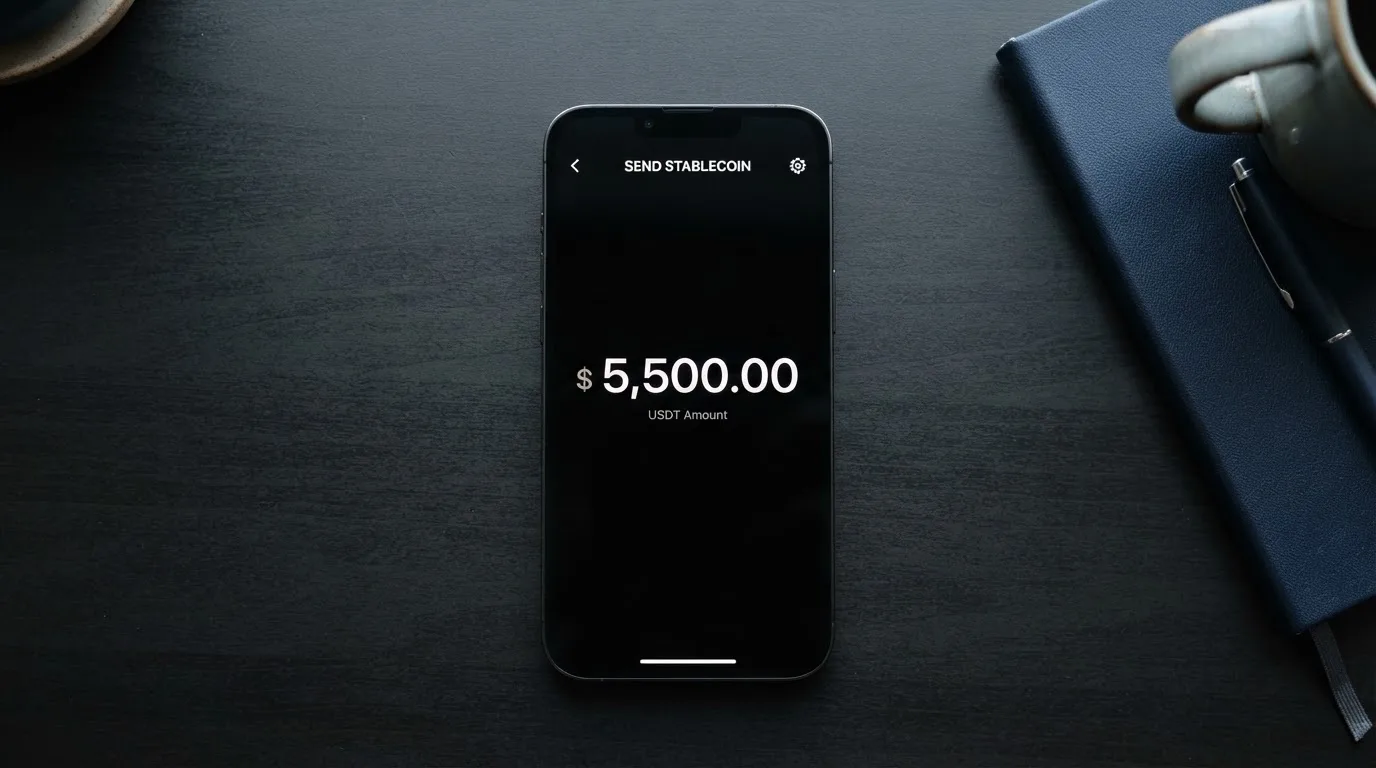
The funding model is worth pausing on, because it differs from a “buy crypto, then load a card” model that several competitors use. With the Ripio card, the wallet itself is the funding source. There is no separate “card balance” that the user pre-loads. The card deducts from the wallet in the currency the user has selected in the Ripio Card section, and if that currency is not already sitting in the wallet, the wallet sells the user’s crypto to produce it at the point of sale. That removes the step of explicitly topping up the card, but it also means the user has to trust the conversion rate applied at the moment of payment, and that rate is not published on the card page.
The card page does not say which blockchain networks are supported for deposits of each coin. The launch coverage from Argentina (February 2023) says the wallet can be loaded by bank transfer, via Mercado Pago, or with cash at Rapipago Online and Pago Fácil, which is a distinctly Argentine funding path. There is no comparable list on the public card page for Brazil, and there is no public list of supported networks for stablecoin deposits. For a user sending USDT or USDC from an external wallet, the absence of a stated network is a real risk: stablecoin transfers on the wrong chain can be lost or stranded because blockchain transfers are irreversible.
The card page also does not state how to withdraw funds from the card back to the wallet or to a bank account, which is a separate question from topping up. Withdrawal back to the wallet is conceptually free because the balance is the wallet balance, but the page does not describe the cash-out path from wallet to a bank or to a third-party payment service.
Paying with it every day
Short answer: the card is built for everyday use, and on that front it is the strongest part of the product. The published weaknesses are around blocked merchant categories and the dispute process, both of which are not stated.
The card works at any Visa merchant, in physical or virtual form, and it integrates with Apple Pay and Google Wallet. Tokenised mobile wallets are a real convenience: the card number is replaced with a device-specific number, and each transaction uses a one-time dynamic security code, so the actual card number is never shared with the merchant. That means the card is comfortable for tap-to-pay in shops, in-app purchases, online checkouts and QR payments in Argentina. Cash withdrawals at ATMs, supermarkets and service stations add a useful fallback when card acceptance is poor or the user wants physical cash.
The card’s cashback structure is straightforward. On crypto-funded payments, the card returns 2% (the FAQ names USDT, BTC and ETH); on ARS-funded payments, the return is 0.5%. New card users get a higher rate for 30 days: 4% on crypto and 1% on ARS. The launch promos in each country gave higher headline numbers for a limited window: 5% BTC cashback in Brazil at launch, capped at R$ 250 per month until 31 October 2022, and 3% USDC cashback in Argentina at launch, capped at ARS 10,000 per month until 31 March 2023. Those launch promos have since ended, and the standing 2% / 0.5% rates are what a new user gets today.
Two things the page does not say are worth flagging. First, the blocked merchant category list is not published: many crypto cards block gambling (MCC 7995), and some block other categories such as adult content or crypto purchases, but the Ripio card’s own list is not on the public page. Second, the dispute process (how to raise a chargeback, what evidence is needed, how long it takes) is not stated, and because the issuer is not named, there is no visible regulator to escalate to if a dispute stalls.
The mobile app rating and the in-app experience are also not stated on the card page. The Trustpilot reviews for Ripio as a whole include reports of unresponsive support, which is a separate question from the app’s quality but feeds into the day-to-day picture.
What can go wrong
Short answer: the operational and transparency risks are larger than the technical ones. The card is on Visa, the processing is by Pomelo, and the wallet is custodial, so the failure modes are around money not arriving, support not answering, and a regulator not being visible on the page.
There are no official incident disclosures on the card page. The risks are visible in the gaps rather than in any single event.
Trust and reliability. The card is on the Visa network, which means it is subject to Visa’s rules and Visa’s right to suspend a programme. Visa terminated its global agreements with FTX in November 2022, and the FTX US debit card programme was wound down by its issuer. WaveCrest, a Visa card issuer that supplied crypto card brands, was suspended by Visa in Europe in 2018, closing all WaveCrest-issued Visa programmes. Neither of those events involved Ripio, but they are precedents for how a card programme can be closed with relatively short notice. When that happens, the typical pattern is: a notice period, then new loads stop, then spending stops, and the user is asked to withdraw any remaining balance. There is no public commitment on the Ripio page about how such a closure would be handled for this card.
Company-level complaints. The card-specific complaint record is not published, but the Trustpilot profile for Ripio as a company, read 2026-10-21, stands at 2.4 out of 5 across 1,848 reviews (45 in the previous 12 months). The themes that recurred in the user reports are funds not being credited (a complaint dated August 2026), support being unreachable (August 2026, and going back to June 2021), and disputes about fees (September 2021). These are not card-specific complaints, and a complaint on Trustpilot is not the same as a confirmed fault, but the pattern is consistent enough to mention.
Custodial risk. The wallet that funds the card is custodial, which means Ripio holds the credentials. The user does not hold a seed phrase. That removes a class of self-custody risk (lost seed phrases, clipboard-hijacking malware, phishing that drains a hot wallet), but it concentrates the risk on the platform itself. Cryptocurrency transfers are irreversible, and a stolen private key has no built-in recovery; if the platform is breached or becomes insolvent, the user’s claim is against the platform, not against a blockchain.
Undisclosed security controls. The card page does not state whether 2FA, instant card freeze, per-transaction limits, or 3-D Secure confirmation are turned on by default. 3-D Secure is an identity check layered on top of online card payments: the issuer assesses the risk, and either approves the transaction frictionlessly or asks the cardholder to confirm with a one-time code or biometric. Without knowing whether it is on, a user cannot tell whether a fraudulent online payment would shift liability to the issuer or stay with the user.
Regulatory visibility. The issuing institution and the licences it holds are not named on the card page. The launch coverage says Pomelo provides the processing technology, and the page footers name Ripio entities including BitPagos, Inc. and Moonbird S.R.L., but the regulated issuer that holds the card programme under Visa’s licence is not on the public page. In a category where the licence determines who the user complains to and which regulator is visible, that is a meaningful gap.
Stablecoin risk. Funding the card with USDT or USDC brings the usual stablecoin caveats. Stablecoins aim to hold a stable value against a fiat currency, but “despite the name, stablecoins are not necessarily stable” and history bears that out: TerraUSD collapsed in May 2022, and USDC temporarily lost its peg in March 2023 during the US banking crisis. The two largest dollar stablecoins, Tether’s USDT and Circle’s USDC, together account for about 90% of stablecoin market capitalisation, and Circle’s USDC is described as redeemable 1:1 for USD with monthly reserve attestations. None of that removes the peg risk during a stress event, and the conversion the card performs at purchase is exposed to that risk in the seconds between rate fetch and settlement.
What to take instead
The Ripio card is one option in a wider set of crypto-funded prepaid and debit cards, and the closest comparisons depend on what the reader actually wants. Three alternatives cover the main cases.
MSX (score 6.4/10). MSX sits slightly above the Ripio card on this site’s scoring. The public information reviewed is thin: who can get it, what the card looks like, the cost and the funding path are not stated on the official page read for this review, and the rewards structure is not stated either. MSX is therefore listed as a comparable option for readers who already have a relationship with the brand or who want to compare two middle-of-the-pack scores, but the published facts are too sparse to recommend it on a feature-by-feature basis.
Bybit Card (score 6.0/10). Bybit’s card is the most fully documented alternative in this set, and it covers a wider geography: the official help centre lists Argentina, AIFC (Kazakhstan), Georgia, Kazakhstan, Australia, Mexico, Brazil, Peru and Asia Pacific, and the application asks for a country of residence, with a fallback for unsupported countries. The card comes in virtual and physical form across most regions (a virtual card must be obtained first; the physical card is not available in Peru). Networks and currencies are region-specific: Argentina is Mastercard prepaid in ARS, AIFC/Georgia/Kazakhstan/Australia and Asia Pacific are Mastercard or Visa credit in USD, Brazil and Peru are Visa prepaid in BRL or PEN/USD. The fee table is the contrast with Ripio: virtual card issuance is free in all regions “until further notice”, the cards page advertises “Auto interest, no annual fees”, physical card issuance or replacement costs are stated by region (29.99 USD in Australia, 5 USD/USDT in Argentina, 29.99 USDT in Georgia and Kazakhstan, 5 USDT in Asia Pacific, free in Brazil and Mexico), and the FX fee is published by region (2% on top of the network rate in Australia, Asia Pacific, Georgia and Mexico, 2% “International Fee” in Kazakhstan outside Kazakhstan even in USD, 7% in Argentina, 1.5% in Brazil, 1% in Peru). From 5 October 2026, only crypto-funded transactions earn cashback or points, and the tiered rates are stated: Base 2% with a 5 USD monthly cap, Beta 2%/50 USD, Alpha 4%/150 USD, Apex 6%/250 USD, Omega 8%/400 USD and Infinite 10%/600 USD, with a monthly spend threshold to unlock each tier for non-VIP users. The catch is the Europe statement on the cards page: “This product is not meant for European Economic Area customers. All European Economic Area customer participation is strictly prohibited.” Bybit’s fiat-service restricted list for deposits, withdrawals and One-Click Buy includes Belarus, the Russian Federation, Serbia, China and the United States, and says “Russian users can only make RUB transaction in Fiat”, but the card-specific statement on Russian or Belarusian citizens and on citizenship versus residence is not on the public page.
MEXC (score 5.6/10). MEXC offers a virtual card only (a physical card is not yet available according to the page). The page lists an issuance fee of 20 USD, with what looks like a 0 USD discounted price next to it that the public page does not fully explain, and a 0% service fee. Funding is by transferring USDT to the Fiat account and then adding the balance on the My MEXC Card page, but the supported networks are not stated. Cashback is paid by the 15th of the next month and is tiered by M-Score: Standard 4% with a 100 USDT monthly cap, Premier (600-799) 6% with 300, Elite (800+) 10% with 800. The card’s availability is the practical limit: the page lists the Philippines, Taiwan and Thailand with a Details link, but the full country list is not shown, so a reader outside that set cannot tell from the public page whether they are eligible.
The trade-off, then, is between the Ripio card’s narrower geographic reach and its cheap-to-hold profile, Bybit’s wider reach and richer published fee table but Europe exclusion, and MEXC’s tiered cashback but virtual-only and unclear pricing. The right pick depends on country first, fee transparency second, and cashback third.
Who I would recommend it to
I would recommend the Ripio card to a user who lives in Argentina or Brazil, who already has a Ripio wallet with a balance they trust, who wants to spend that balance through Visa and through Apple Pay or Google Wallet without opening a second account, and who is comfortable with a published fee schedule that does not name the conversion fee or the FX margin. The card’s no-maintenance-fee structure and its broad funding list (any coin on Ripio, including BTC, ETH and USDT) make it a natural fit for that user.
I would not recommend it to a user outside Argentina or Brazil, to a user who needs the issuer’s name and licence on the page before they sign up, to a user who wants a published conversion and FX table, to a user who needs an in-app dispute and chargeback flow with a regulator visible at the end of it, or to a user for whom unresponsive support would be a deal-breaker. The Trustpilot pattern on the company as a whole, the absence of a named issuer, and the missing numbers on the fee schedule add up to a card that is fine for an existing Ripio user with low support needs, and a poor fit for anyone else.
Frequently asked questions
What is the Ripio card?
The Ripio card is a prepaid Visa, virtual or physical, that draws on the balance in your Ripio wallet. You can fund that balance in crypto (any coin available on Ripio, including BTC, ETH and USDT) or in Argentine pesos, and the card converts the balance to the merchant’s currency at the moment of payment.
How does the Ripio card work?
You order the card from the Ripio app or website, choose virtual or physical, and the physical card is delivered to your home free of charge. You add it to Apple Pay or Google Wallet if you want to pay with your phone, and you use it anywhere Visa is accepted. When you pay, the wallet sells the required amount of your chosen crypto (or uses your ARS balance) and the card settles the payment in the merchant’s currency.
Is Ripio a bank?
No. Ripio is a crypto exchange and wallet provider. The card is on the Visa network and the processing technology is provided by Pomelo, but the card page does not name the regulated institution that issues the card. That issuer is the entity that holds the card programme under Visa’s licence.
Who owns Ripio?
The page footers name Ripio entities including BitPagos, Inc. and Moonbird S.R.L. The full ownership and corporate structure are not described on the card page; for that, the terms and conditions or the company’s corporate disclosures are the place to look.
Is the Ripio card available in my country?
The card page footer states that the product is “available for Argentina and Brasil”. Outside those two countries the card cannot be ordered through the published flow. Citizenship as opposed to residence is not addressed on the public page.
How do I get the Ripio card?
You create or log into a Ripio account, accept the terms and conditions, and order the virtual or physical card from the Ripio Card section. The virtual card is available immediately; the physical card is sent to your home free of charge, and the delivery time is not stated on the page.
Does the Ripio card require KYC?
The card page says only that you must sign up or log in and accept the terms and conditions to order the card. It does not list the documents the wallet-level KYC will request, and it does not describe the KYC levels. As a regulated crypto platform operating in Argentina and Brazil, Ripio is required to verify its customers, so expect to be asked for a government-issued ID and a proof of address at the wallet level.
How do I top up the Ripio card?
There is no separate “card balance” to top up. The card spends the Ripio wallet balance, and you choose the funding currency in the Ripio Card section. The wallet itself can be funded by bank transfer, via Mercado Pago, or with cash at Rapipago Online and Pago Fácil (Argentina, per launch coverage), or by sending crypto to the wallet from an external address. The blockchain networks supported for each coin are not stated on the card page.
Is the Ripio card free?
The virtual and physical Visa have no maintenance cost. The conversion fee, the FX fee, the ATM fee and the spending limits are not stated on the card page, so the all-in cost of a given payment cannot be calculated from the public information.
How do I add the Ripio card to Apple Wallet?
Open the Wallet app on your iPhone, tap the plus sign, and follow the prompts to add a card. If the option to add the card manually is offered, you can type in the card details; otherwise, the card details become available in the Ripio app once the card is issued, and the app can push the card to Apple Wallet. The exact in-app flow is not described on the public card page.
Exchange card options – cryptocardoptions.com
Content created by the «cryptocardoptions.com» team