
Trustee Plus card review
 Available in US
Trustee Plus is a virtual Visa prepaid card that spends from a USD balance funded by stablecoins, with Apple Pay and Google Pay support. It is built for people who already hold crypto, want a card to spend it, and have trouble getting a normal bank card. In my view it is a workable niche product rather than a general replacement for a bank account: the signup is light, the conversion path is cheap on paper, and the practical limits hit you only when you try to use the card like a real everyday account.
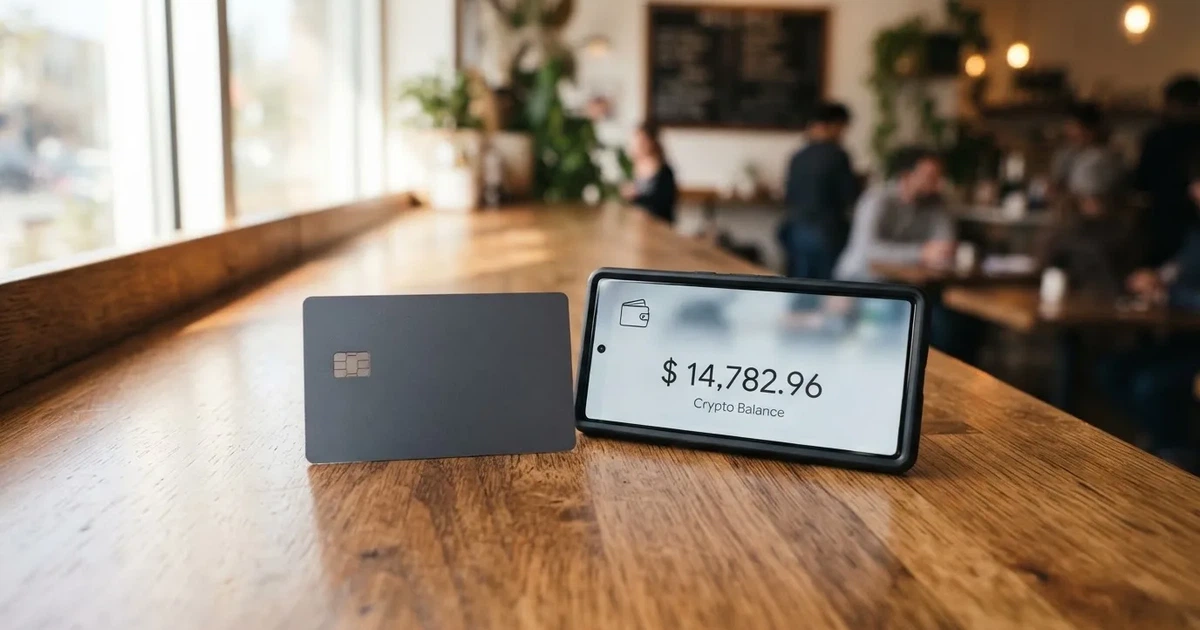
The card’s final score is 5.7 out of 10. Conditions and fees on this page are current as of October 28, 2026.
Verdict
I scored Trustee Plus at 5.7 / 10. That number is not a verdict I arrived at casually: it reflects a product that is strong on funding flexibility and weak on everyday use, and a service that is partly regulated, partly operating in a regulatory grey area. The breakdown is in the table below, and the reasoning for each row is in the section that follows it.
| Criterion | Score | Reason |
|---|---|---|
| Who can get it | 3 / 10 | The card page targets Ukrainians regardless of where they live, but the Terms require a residence in a “supported country” without ever publishing the list. The National Bank of Ukraine barred the Lithuanian operator from offering payment services in September 2025 and new registrations inside Ukraine are stopped. |
| Cost | 8 / 10 | The headline numbers are friendly: 10 USD to issue the virtual card, 0 USD monthly fee, 0% on card payments, 0.5% to top up the card balance. The fee you cannot see in the small print is the FX markup on top of the Visa rate, and there is a 20 USDT inactivity fee that triggers after a year. |
| Top-up options | 9 / 10 | The wallet accepts USDC and USDT across 30+ coins and networks including TRC20, ERC20, SOL and NEAR, and adds fiat in via Smart P2P and a personal SEPA IBAN. |
| Reliability and complaints | 5 / 10 | The card programme is run by Wirex Limited in England, with the service operator MIKEPAY INC. in Panama. There are no public regulatory registrations on the pages I read, and user reports on Trustpilot mention frozen funds after source-of-funds reviews. |
| Everyday use | 4 / 10 | Apple Pay and Google Pay are present, but the physical card is on a waitlist and ATM cash withdrawal is not available. |
| Total | 5.7 / 10 | Best for Ukrainians topping up a virtual USD card with stablecoins; not suitable as a primary card. |
If you are a Ukrainian abroad with stablecoins on TRC20 or Solana and you want a Visa card you can add to your phone wallet without opening a European bank account, Trustee Plus fits the use case cleanly. If you are anyone else, or you need a physical card, ATM access or a tiered cashback structure, you will run into the limits of the product fast.
Who will give you the card
The official Ukrainian FAQ says Ukrainians can get the Trustee Plus card regardless of country of residence, and the card page has no eligibility FAQ in English at all. The Terms of Service add a different layer: the user must “reside or be incorporated in countries and territories We support” and must not be a citizen or resident of any country on a sanctions list. That second rule is normal for any regulated card. The first one is the problem — “countries We support” is not defined anywhere on the pages I read, and there is no published list of issuing or excluded countries.
Two pieces of news make the picture more specific. The National Bank of Ukraine barred the Lithuanian operator of the Trustee Plus service from offering payment services in Ukraine in September 2025. The operator said existing users were not affected, but new registrations inside Ukraine were halted. As of August 2026 a news source reported that availability for Ukrainian residents was “still being checked”, which matches what the official English page tells you by omission.
Outside the official pages, one crypto-card comparison site says Trustee Plus cards are offered to residents of the European Economic Area and describes the card as a crypto-funded prepaid Mastercard issued through a Polish payment institution. That directly contradicts the official material, which is a Visa Prepaid card issued by Wirex Limited in Great Britain. Take the unofficial line as unconfirmed: the official product is a Visa, not a Mastercard, and the issuer of record is Wirex.
In short: the audience the company is actually serving is Ukrainians abroad, with stablecoins, who want a USD card on their phone. The product pages are not honest about who else can apply, and the regulator in the home market has already pushed back once.
How to sign up
The flow runs through the Trustee Plus app and looks like this: install the app, complete a single KYC step, order a virtual card, top it up. A Trustee guide mentions a passport or national ID photo plus a selfie, with the KYC partner named as Kycaid. The Terms require you to be at least 18 or the legal age in your jurisdiction.
There is no statement on the page I read about which KYC tiers exist, how long verification takes, or what reasons lead to a rejection. That is a normal thing for a card to leave vague, but it is also the kind of vagueness that matters if you are trying to understand whether a small address-history mismatch will block you.
Two practical points that come up while signing up. First, the card is virtual only at the moment: ordering a physical card is on a waitlist, and delivery countries, time, cost and replacement are not described anywhere. Second, the issuance fee of 10 USD is taken at the moment you order the virtual card, so the worst case if you then fail KYC is a non-refundable 10 USD.
Fees
The cost picture is the part of Trustee Plus that looks best, but it has a few items that only show up when you read the small print. The headline numbers, from the Ukrainian page and the Terms, are: 10 USD to issue the virtual card, 0 USD monthly maintenance, 0% on card payments, and 0.5% to top up the card balance from the wallet. There is no statement of a physical card price because the physical card is on a waitlist. The Terms also reserve the right to add fees to the Payment Card service in the future, in language that does not name a cap.

The two costs the marketing material leaves in shadow. First, the FX markup. The card settles in USD and converts payments in EUR, PLN, GBP and other currencies at the Visa rate; the company does not publish a separate conversion or cross-border fee, and any markup it adds to that Visa rate is not stated. Second, the wallet inactivity fee of 20 USDT equivalent per month, which kicks in after one year of no transactions on the wallet. If you fund the card and then stop using the app, that is the kind of fee that eats your balance quietly.
The costs table summarises what I could confirm.
| Fee or limit | Amount |
|---|---|
| Virtual card opening | 10 USD |
| Card maintenance | 0 USD |
| Card payments | 0% |
| Card balance top-up | 0.5% (Ukrainian page) |
| FX conversion | At Visa rate; markup not stated |
| ATM withdrawal | Currently unavailable |
| Inactivity fee | 20 USDT equivalent per month after 1 year without transactions |
| Monthly operations limit | 30,000 USDC (FAQ); 30,000 USD (table) |
| Daily / per-transaction limits | Not stated |
To put the costs into context, three everyday payments. Buying a 4 USD coffee in a country that uses the local currency: the conversion runs at the Visa rate with no stated markup on top, so you pay 4 USD out of your card balance and that is the end of it. Paying a 50 USD subscription online: no payment fee, but 3-D Secure may ask for a code, and if the merchant’s fraud rules dislike a foreign-issued prepaid BIN the transaction can be declined even with funds on the card. Adding 1,000 USD from USDC on TRC20: the wallet-to-card move costs 0.5%, so 5 USD, and you still pay the underlying Tron network fee on the wallet side.
Top up
Topping up the card is a two-step process in the same app. You first put value into the Trustee Plus wallet, then move it to the card balance. The wallet is the part of the product with the most flexibility: the company lists support for USDC and USDT (the English guide mentions USDT, the Ukrainian page emphasises USDC), with 30+ coins and networks available, including TRC20, ERC20, SOL and NEAR. On the fiat side you can use Smart P2P with bank cards or a personal SEPA IBAN.
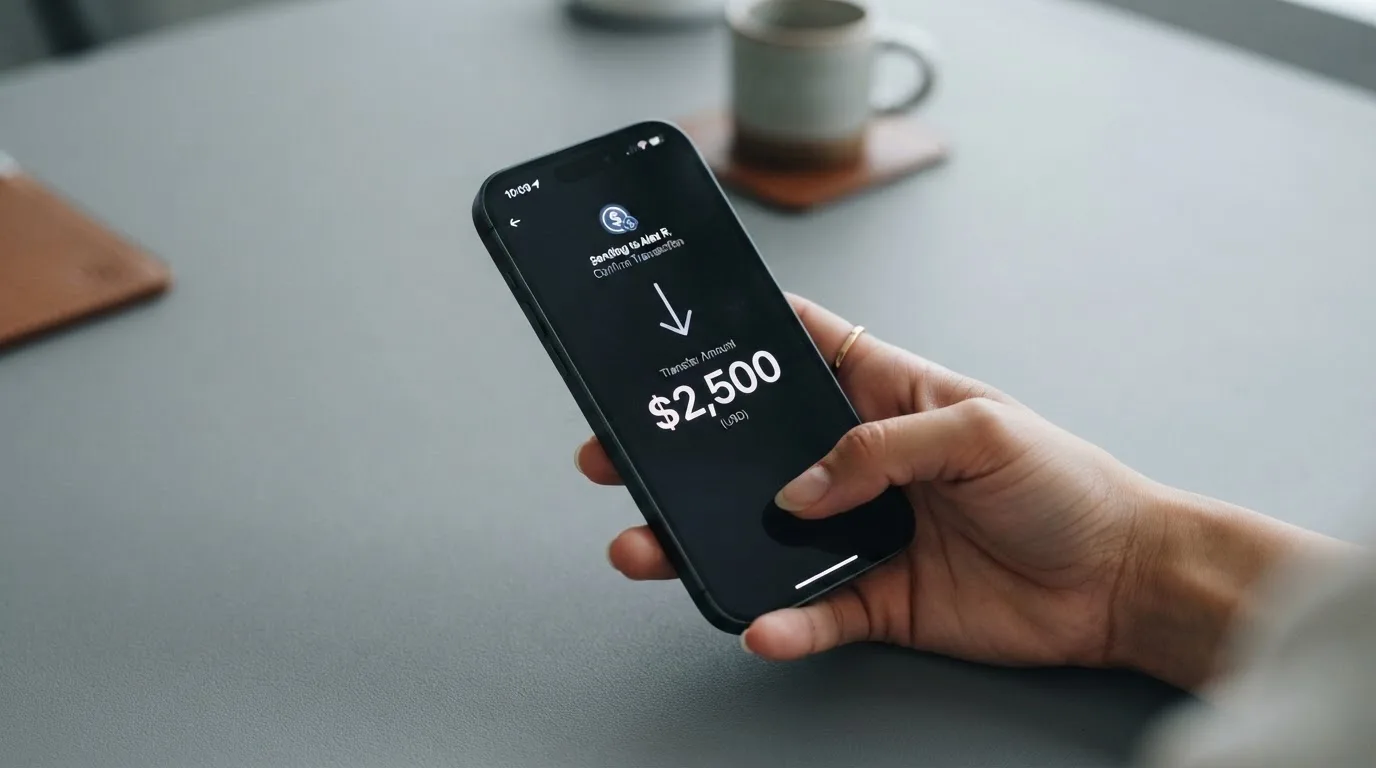
The cost of topping up has two layers. The card-level fee is 0.5% on the move from wallet to card balance. The network fee is on top of that: when you send USDC over Tron, you also pay a small Tron network fee; when you send over Ethereum, you pay gas in ETH. The wallet’s own minimum top-up amount, and which side pays the network fee, are not stated on the pages I read. If you deposit a coin on a chain the wallet does not support, or to an address on the wrong network, blockchain transfers are irreversible and recovery is at the support team’s discretion.
The IBAN is worth flagging in practical terms. A personal SEPA IBAN lets you receive a regular bank transfer from a European employer or a friend, and the value lands in your wallet in euros that you can move to the card after conversion. P2P is the same idea but with a counterparty, which means KYC on the buyer side, posted prices and a counterparty risk you do not have with a normal bank transfer.
A few things the funding pages do not tell you. The minimum top-up amount is not stated. The wallet-to-card move is one-way as far as I can see, but moving the card balance back to crypto or to a bank account is not described, and any fees on closure are not stated either. If you expect a “refund my card balance” button, that is not in the documentation I read.
Paying with it every day
Once the card is loaded, you can add it to Apple Pay or Google Pay and spend it in stores, online and on subscriptions. The card page says it works at 60+ million merchants worldwide, which is the same coverage any Visa network card gets. The card is a Visa Prepaid, so it spends only what is on the card balance — there is no overdraft and no cheque account behind it.
The practical limits show up here. The physical card is on a waitlist, so the “card” is really a tokenised version of the virtual card in your phone wallet. ATM cash withdrawal is listed as a physical-card benefit and the physical card is not available, so cash is not available either. The card is in USD, so any local-currency payment goes through Visa’s conversion. Blocked merchant categories are not stated, and neither is the dispute process if a charge goes wrong.
Two safety nets I would want to know about, and the page does not tell me. First, card freeze: there is an app-side freeze, which is standard, but the marketing material does not describe what happens if you lose your phone and have a tokenised card. Second, insurance: card insurance and dispute resolution are not stated on the pages I read, so I would not assume them. The 3-D Secure layer for online payments is part of the Visa stack, which means a code or biometric challenge on higher-risk online checkouts.
The separate Trustee Wallet app, which is a non-custodial product from the same company, has a low App Store rating, but that rating is for the self-custody app, not for the Trustee Plus card app. The Trustee Plus app itself is also distributed as an APK from the company’s own site, which is normal for crypto products in regions where Google Play restricts them, but it is also the kind of channel where a fake app is a real risk.
What can go wrong
The risks are regulatory, operational, and counterparty.
Regulatory first. The Terms name two companies. The card service is provided by Wirex Limited, registered in England as company 09334596, at 9th Floor, 107 Cheapside, London EC2V 6DN, with the card described as “issued in Great Britain”. The service operator is MIKEPAY INC., registered in Panama. The pages I read do not list a financial regulator registration. The NBU action in Ukraine in September 2025 is the most concrete regulatory signal: a national bank used its powers to bar a service from offering payment services in its jurisdiction. If the same authority were to take further action, the company says existing users were unaffected, but the service could in principle be wound down for users inside a given country.
Operational next. The custody model is a custodial wallet-with-card, which means your card balance and the stablecoins behind it sit with the company, not with you. The product is marketed with 2FA, Face ID, AML Check, a HackenProof bug bounty and Hacken audits of the apps. The basic safety story is reasonable for a custodial product, but the question of what happens if the custodian fails is not answered in the documentation. Custodial crypto platforms have a record of failure: Mt. Gox in the early 2010s, Coincheck in 2018, the Ronin bridge in 2022. The dollar amounts there are reminders that “regulated” and “safe” are not the same word.
Counterparty last. The user reports I found are a single data point, but they are a consistent one. A June 2026 Trustpilot review cites slow USDT transfers, an unclear AML review, an unclear complaint procedure and confusing company information. A separate Trustpilot page for the trusteeglobal.eu domain is currently shown as unavailable because the page breaches the platform’s guidelines. The wallet-to-card and card-to-bank back flows are not documented, and the dispute process is not stated, which means that if your money gets stuck, the company’s support wiki and Telegram channels are the practical route.
The stablecoin piece is also worth keeping in mind. USDC and USDT are not guaranteed by any deposit scheme, and stablecoins have lost their peg before — TerraUSD in May 2022, USDC briefly in March 2023. Tether has also stated that it disables tokens in wallets on the OFAC sanctions list, which means the asset itself is not censorship-proof.
What to take instead
If the Trustee Plus card does not fit, three alternatives come up in the same general category.
| Card | Score | What it is | What stands out |
|---|---|---|---|
| Whop Cards | 5.2 / 10 | Visa card spending a Whop account balance, backed by stablecoin collateral | 5% cashback at a rotating list of merchants (currently Uber, more planned); consumers supported in 31 US states, businesses in 41, with a long list of unsupported countries including Ukraine, Russia, Belarus, China, India, Iran, Cuba, North Korea, Syria, Turkey, Venezuela, Vietnam and others. |
| Stella | 6.5 / 10 | VISA virtual and physical card funded from a custodial in-app wallet that is topped up with crypto | Works at “over 40 million VISA merchants globally”; the card page does not list cashback; the Earn product is separate yield. |
| UniFi Card | 4.7 / 10 | Prepaid Debit Visa Card issued by Lead Bank, spending a USD balance | 3% rewards on balances advertised; supports Apple Pay; funded via ACH, wire, SEPA, SPEI or a USDC wallet; coins and networks beyond USDC not stated. |
The shape of the choice is straightforward. If you are a US person and you want a card that earns 5% at specific merchants and you live in one of Whop’s 31 supported states, Whop is a more rewarding but narrower product. If you want a card from a more polished crypto brand and you do not need cashback, Stella is the higher-scored of the three alternatives. If you are in a corridor where the app supports a local send-money route (PHP in the Philippines, MXN in Mexico, EUR in the eurozone, BRL in Brazil, COP in Colombia, GBP in the UK), UniFi is a more local-currency product. None of these are direct replacements for a normal bank account; the trade-off between “works with crypto” and “behaves like a bank card” is the same on all of them.
Who I would recommend it to
The honest short version is that I would recommend the Trustee Plus card to a specific reader. If you are a Ukrainian living abroad, you hold USDC or USDT on TRC20, Solana or Ethereum, and you want a USD card on your phone that you can use in stores and online without opening a foreign bank account, the product does what it says on the box. The 10 USD issuance is a one-off, the 0.5% card top-up fee is bearable, the 0% payment fee is the headline benefit, and the 0 USD monthly fee keeps it cheap to keep open. Apple Pay or Google Pay gives you the everyday tap-to-pay experience.
I would not recommend it as a primary card, and I would not recommend it to most readers outside the Ukrainian diaspora. The reasons are not subtle. The eligibility is opaque, the regulator in the home market has already pushed back, the physical card and ATM access do not exist, the inactivity fee will eat a balance you forget about, and the company does not publish a dispute process. The MoneyPak-style counterparty risk on a custodial product is real. For most people, a regulated bank card plus a separate on-ramp to crypto is a cleaner, more honest setup. For the specific reader I described, Trustee Plus is worth a serious look — with the small-print costs and the regulatory signals in mind.
Frequently asked questions
What is the Trustee Plus card?
It is a virtual Visa Prepaid card that spends from a USD balance funded by stablecoins such as USDC and USDT. The card is issued by Wirex Limited in Great Britain and the service is operated by MIKEPAY INC. in Panama, and it is designed to be added to Apple Pay or Google Pay for tap-to-pay spending.
How does the Trustee Plus card work?
You top up the Trustee Plus wallet with crypto or fiat, move value to the card balance at a 0.5% fee, and the card spends that balance at 0% in payments. Local-currency payments are converted at the Visa rate, with no published markup on top of that rate.
Is Trustee Plus a bank?
No. Trustee Plus is a card programme run by Wirex Limited as the card issuer and by MIKEPAY INC. as the service operator. The pages I read do not list a banking licence, and the card is prepaid, not a debit or credit product tied to a current account.
Who owns Trustee Plus?
The Terms name two companies: Wirex Limited, registered in England, runs the card programme and “issues” the card in Great Britain; MIKEPAY INC., registered in Panama, is the operator of the service. The pages do not list an owner above those two.
Is the Trustee Plus card available in my country?
The official FAQ says Ukrainians can get the card regardless of country of residence, and the Terms require a residence in a “supported country” with no published list. The NBU barred the service from offering payments in Ukraine in September 2025 and new registrations inside Ukraine were halted. Unofficial sources describe availability to EEA residents, but that line is not confirmed by the official pages.
How do I get a Trustee Plus card?
You install the Trustee Plus app, complete a single KYC step via Kycaid with a passport or national ID and a selfie, order a virtual card for 10 USD, and top it up. The physical card is on a waitlist and is not currently orderable.
Does the Trustee Plus card require KYC?
Yes. KYC runs through the partner Kycaid in the app before the card is issued, with an identity document and a selfie. The Terms require you to be at least 18 or the legal age in your jurisdiction, and the documentation does not list KYC tiers, processing times or rejection reasons.
How do I top up the Trustee Plus card?
You top up the wallet first and then move value to the card. The wallet accepts USDC and USDT across networks including TRC20, ERC20, SOL and NEAR, supports 30+ coins in total, and adds fiat through Smart P2P and a personal SEPA IBAN. The wallet-to-card move costs 0.5%.
Is the Trustee Plus card free?
The virtual card costs 10 USD to issue, the monthly fee is 0 USD, payments are 0% and card top-ups are 0.5%. The fee the marketing does not advertise is a 20 USDT-equivalent inactivity charge on the wallet after one year without transactions, and any FX markup on top of the Visa rate is not stated.
Is the Trustee Plus card safe?
It is a custodial product, which means the company holds the funds and you trust it to do so honestly. The company markets 2FA, Face ID, AML checks, a HackenProof bug bounty and Hacken audits of the apps. The dispute process, card insurance and a clear regulatory registration are not stated on the pages I read, and Trustpilot reviews from 2026 mention frozen funds after source-of-funds reviews.
App and neobank card options – cryptocardoptions.com
Content created by the «cryptocardoptions.com» team