
A Telegram-first virtual card with a score of 4.7 out of 10, and a fee schedule its public pages never publish
 Available in US
Most people arrive at a card like this from the same direction. You have money in crypto, or you want to spend without an ordinary bank card, and you find a product that describes itself in one sentence: a virtual card you get inside Telegram and load with USDT. That is a real product with real users. It is also a product whose public pages leave several of the questions a cardholder actually needs answered — the fee schedule, the eligible countries, the networks supported — unwritten. My job here was to read everything the card publishes, mark what is stated and what is not, and tell you which is which.
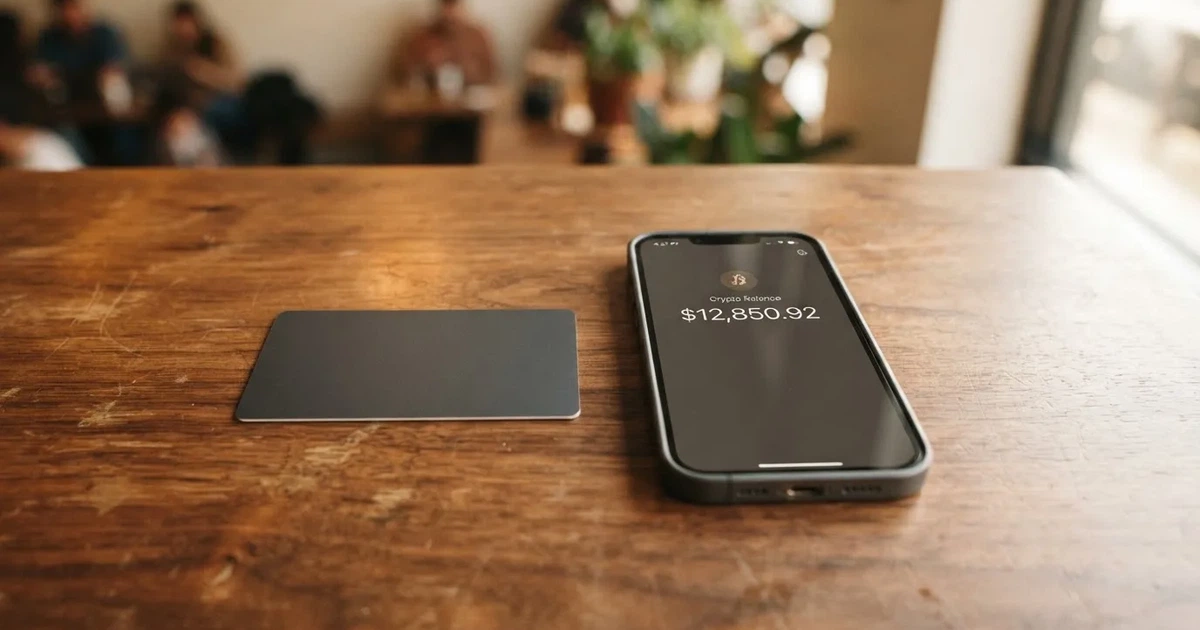
WebWisePay scores 4.7 out of 10 on my scale. That is not a verdict of “scam” and not a dismissal. It is the arithmetic of a service that is live, fast to set up, and genuinely convenient for one specific use, set against a card where the details you would use to decide are missing from the pages rather than hidden on a page you didn’t find. Below, I walk through who can get the card, what it costs, how it is funded, and where the risks sit — and I flag every place where the answer is “the card’s public pages don’t say.”
The conditions described here are current as of October 28, 2026.
Verdict: 4.7 / 10
The score sits where it does because the card is thin on disclosure and reasonable on function. WebWisePay is a virtual card, issued in minutes, funded with USDT, used through Apple Pay and Google Pay, and — as far as the public record goes — not associated with a wave of user complaints. Those are real points. Against that: the card does not name the countries it serves, does not publish its fees, does not name the issuer behind it, and comes as an Android app with a few hundred downloads and no visible rating, alongside a Telegram bot that does the real work.
Who it suits: someone who already lives in Telegram, holds USDT, wants a virtual card number for online spending, and can tolerate reading the fee terms inside the bot before each operation rather than on a published schedule. That is a real person with a real need — it is not a negligible group.
Who it does not suit: anyone deciding on the basis of a cost comparison, anyone who needs a physical card or ATM withdrawals, anyone who needs to know before they start which country rules apply to them, and anyone who needs a documented dispute process.
| Criterion | Mark | Why |
|---|---|---|
| Who can get it | 5 / 10 | Countries and exclusions are not named; a simplified KYC is required before issue |
| Cost | 5 / 10 | No tariffs on the main page; a referral programme implies an issuance fee and a top-up fee, but no amounts |
| Top-up options | 4 / 10 | USDT deposit; networks not disclosed |
| Reliability and complaints | 4 / 10 | Developer NovaCyber Ltd, “Not a bank”, issuer not named; no complaints found; app shows 500+ downloads with no rating |
| Everyday use | 5 / 10 | Virtual card only, issued in 5–10 minutes; Apple Pay and Google Pay; ATM and iOS app not disclosed |
| Total | 4.7 / 10 |
Who Will They Give You the Card
The honest answer is that the card’s public pages do not tell me. Country eligibility is not stated: there is no list of the countries served, no exclusions, and no distinction drawn between citizenship and residence. If that matters to you — and for many readers of this kind of card it matters a great deal — you have to ask in the Telegram support channel and get an answer that the card does not publish anywhere.
The site does say it runs a “simplified KYC” before a card can be issued. What “simplified” means, which documents count, and whether the process differs by country are all not stated. What I can tell you is that KYC is not optional here: the referral programme is described as “available to users who have already completed KYC and issued a card,” which confirms identity verification happens before issue rather than after.
That is worth pausing on, because it cuts both ways. Some readers looking at crypto cards want a product with no paperwork at all, and this is not that. Others have been turned away by banks and want a card that asks fewer questions than a conventional institution; a simplified process may suit them, but “simplified” is a description, not a standard, and you cannot compare it to anything because the underlying requirements aren’t published.
The wider background here is worth knowing, because it explains why the country question is not a formality. Card issuing is a licensed activity. A card number begins with a 6- or 8-digit issuer identification number (BIN) that tells merchants which institution issued it and from which country — and merchants may apply extra scrutiny when the issuer country differs from the billing address. That is why a card issued in one country can look “foreign” in another. In the EU, customer due diligence covers name, address, date of birth, nationality, identity documentation, a sanctions check, the purpose of the relationship, and whether you are a politically exposed person. Nationality is screened separately from residence because sanctions rules and issuer risk policy often apply to citizenship and country of birth, not just to your address. And if due diligence cannot be completed, EU rules require the institution to refrain from the transaction or relationship, and where necessary end it — which is why accounts get closed or frozen pending documents.
So: prepaid and debit cards are generally available to adults 18 and over, some issuers set higher limits, but for WebWisePay specifically the questions of where you must live and which passport you must hold have no published answer.
How to Get It
The process is short, and this is the card’s strongest suit. You go through the Telegram bot @WebWisePay_bot or the Android app, then follow “Cards” → “Add Card”, and the card is issued within 5–10 minutes. It is virtual: there is no plastic to wait for and no delivery to disclose. KYC, as discussed in the section on eligibility, comes first.
One thing to know before you compare networks or scheme types: the card’s own communications are not consistent about the scheme. The site and August 2026 posts describe VISA cards, while February 2026 posts refer to “virtual Mastercard cards.” Both statements are on the channel, months apart. I can’t tell you from the public record which network your card will run on today. If the scheme matters to you — and for some merchants it does — ask in the support bot before you rely on the card for a subscription you can’t easily cancel.
No iOS app was found. The bot works from Telegram, which on iPhone is a route in, but the first-class app experience described above is Android-only as far as the public record shows.
Fees: What It Really Costs
This is the section that most tests a reviewer’s honesty, because here the answer is mostly “not stated.” The card’s public pages do not publish an issuance fee, a monthly fee, a conversion fee, a foreign-exchange rate or markup, an ATM fee, or daily and monthly spending limits. No tiers are described. The currency of the card balance is not stated either, and that detail quietly determines the conversion maths at the till.

What does exist is a referral programme, described in an August 2026 channel post, that pays out percentages of two fees: 40% of the card issuance fee for a first-level user, 10% at second level, 15% of the top-up fee for a first-level user and 5% at second level. The existence of those percentages tells you an issuance fee and a top-up fee exist and are large enough to be worth sharing. It does not tell you what they are.
| Fee or limit | What the card’s public pages say |
|---|---|
| Issuance fee | not stated |
| Monthly fee | not stated |
| Conversion fee | not stated |
| Foreign exchange rate or markup | not stated |
| ATM withdrawal fee | not stated |
| ATM availability | not stated |
| Daily limit | not stated |
| Monthly limit | not stated |
| Card balance currency | not stated |
| Pricing tiers | not stated |
I want to be precise about the consequence, because it is the practical heart of this review. On-chain network fees for your deposit are charged by the blockchain, not by the card provider — that part is general to the category and will apply to you whatever card you pick. The part the card should be telling you about, and isn’t, is its own cut: what it charges to convert USDT into the balance the card spends, what it charges to convert that balance back when a shop in another country prices in a currency you don’t hold, and whether the card’s balance is denominated in dollars or something else. Without those three numbers, a cost comparison against another card is not possible. Not “hard” — impossible. You would be comparing a published schedule to a blank.
So my practical advice is narrow and specific: before you load funds you intend to spend, open the bot, run a test top-up, and read the fee line the app shows before you confirm. That’s not a trick and it’s not a workaround; it’s the only published price list available. But it does mean the burden of checking sits with you, every time, and that is a real cost even when the number turns out to be low.
How to Top Up
The funding route is narrow and clearly stated: deposit USDT. There is no fiat on-ramp described, no bank transfer, no card-to-card purchase. In practice the sequence is that you deposit USDT and then issue the virtual card, with the fees for that not shown on the main page.
The networks are not stated. An earlier check, unverified, suggested BNB Smart Chain, Ethereum and Tron. I’m flagging that clearly as unconfirmed third-party information rather than the card’s own statement, and I’d treat it as a hint rather than a list to plan a transfer around.
Why the network matters so much, in one paragraph: a blockchain transfer is irreversible. A deposit sent on a network the provider does not support, or to an address belonging to a different network, can be lost, or can need manual recovery through support with no guarantee. Stablecoins exist on many chains — USDT has been issued on Ethereum, Tron, Solana, Polygon, Avalanche and others — and the same token on the wrong chain is not the same destination. There are also per-network mechanics that surprise people: ERC-20 fees are paid only in ETH, so a wallet holding USDT with no ETH cannot send; Tron’s fees are often paid by burning TRX. Check the network twice. Once on your sending side, once against what the card says it accepts.
There is one further movement the card does describe, in an August 2026 channel post: internal transfers to other users and between your own cards are “at the first stage… with no fee.” Withdrawing back to crypto is not stated. So the card is well connected internally and silent at the outer edge — which is exactly the boundary where a lot of people need an answer.
Paying With It Every Day
Day to day, the card is a virtual number plus mobile wallets. A February 2026 channel post announced “full integration with Apple Pay and Google Pay for online and in-store purchases.” That’s the practical version of “everyday use” for most people: you load the balance, add the card to your phone’s wallet, and pay by tapping.
There is no cashback stated. What exists as a reward is the referral programme described above, which pays you a share of fees from people you bring in rather than a share of your own spending. If your question was “will I get money back on everyday purchases,” the published answer is no.
The software situation deserves a plain description. There is a Telegram bot, @WebWisePay_bot, and an Android app, “WebWise Pay: Wallet & Card,” published by NovaCyber Ltd, showing 500+ downloads, updated September 25, 2026, with no star rating visible when I looked on October 22, 2026. No iOS app was found. The wallet is multichain and lives in Telegram with two-factor authentication, per a February 2026 post.
On protections, 3-D Secure adds an identity step to online payments: the issuer assesses risk and either approves the payment without friction or challenges you with a one-time code or biometrics. Visa’s version is branded Visa Secure, Mastercard’s is Identity Check. Address verification is a different matter and the one that bites foreign-issued cards: it compares the numeric parts of the billing address you type with issuer records, and it is mainly offered in the US, Canada and the UK — generally unavailable for foreign-issued cards, which can cause declines. Some merchants decline prepaid or foreign BINs precisely because the BIN lookup reveals the card type and issuer country. None of this is specific to WebWisePay; it is what happens to nearly every virtual card, and it is why a card with no published country story may still pay at home and struggle abroad.
One thing to hold on to: a declined authorisation can leave a hold on your funds that stays for several days, typically up to seven. And the card does not state what happens when a payment is disputed. Whether chargebacks are available, and on what terms, is not stated — so don’t assume the protection you would have with a card from a bank you have a relationship with.
What Can Go Wrong
Starting with the finding that surprised me most: no complaints found. Two searches returned only unrelated brands — Wise, WisePay UK, PayWithUs. That is genuinely good news, and I want to credit it. But it should be read precisely. No complaints found is not the same as no complaints. A product with 500+ app downloads and a Telegram-first audience may simply generate its feedback inside Telegram, where it is invisible to a web search. There is no Trustpilot page. The card’s own dispute process is not stated. So the absence of evidence here is weak evidence.
The structural risks are more concrete.
Who stands behind it. The Google Play developer is NovaCyber Ltd. The site footer says: “Not a bank. Card-related services are supported through independent third party partners and remain subject to eligibility, availability, and compliance review.” The issuer is not named. That sentence is doing a lot of work and it is worth reading twice: the card is a front end over unnamed third parties, and access to it is conditional on someone else’s review. A programme like that can change shape without your agreement, because the decision isn’t the operator’s to make alone.
Regulatory standing. MiCA, the EU’s markets-in-crypto-assets regulation, took legal effect in June 2023; its rules on asset-referenced and e-money tokens applied from June 30, 2024, with the remaining provisions including crypto-asset service provider rules applying from December 30, 2024. Under it, e-money tokens may be issued only by a credit institution or an electronic money institution. The transitional period for existing providers ran until July 1, 2026 at the latest. ESMA maintains an interim register of authorised providers, white papers and non-compliant entities that you can check a provider against — and I would check, since this card does not point you there itself. Note also that a card is a payment service regulated separately from the crypto side, so a crypto card often depends on two licences. The UK has its own regime outside this EU framework; I have not verified where the unnamed third-party partners sit.
Programme closure. This is not hypothetical in this category. Visa terminated its global agreements with FTX on November 13, 2022 and the FTX US debit card was wound down. WaveCrest, a Visa issuer that supplied crypto card brands, was suspended by Visa in Europe in 2018, closing all WaveCrest-issued Visa programmes. The pattern in closures: a notice period, then spending and loading stop, then users are asked to withdraw remaining balances. One 2026 closure reported by a secondary source had new loads ending July 8, 2026 and spending stopping August 8, 2026 — single source, unconfirmed, and I include it only to show the shape of a timeline you might have to act on quickly. The practical takeaway for a card with no published issuer: know your exit route before you load, because it may be short.
Technology risk, if you self-custody. Not this card’s model exactly — WebWisePay is custodial — but the general risk deserves knowing, because custodial is a choice, not a safety guarantee. Control of crypto belongs to whoever holds the private key; with a custodial wallet the provider holds the credentials, so you trust them completely. A seed phrase is typically 12 to 24 words in an unencrypted form of the private key, and anyone who obtains it can restore the wallet and spend the funds. Transfers are typically irreversible and a stolen key has no built-in recovery — the network cannot freeze or return funds. Custodial platforms have a real record: Mt. Gox (about $350 million reported stolen 2011–2014), Coincheck (about $400 million, 2018), Ronin Network ($625 million, 2022). Your funds sit with someone else’s resilience.
Unrecoverable transfers. Already covered under top-up, and it is the risk I’d rank first for a newcomer: wrong network, gone.
Sanctions. Tether says it disables tokens in wallets on the OFAC sanctions list and has frozen funds tied to illicit activity, so stablecoins are not censorship-proof. If the eligibility rules that aren’t published turn out to exclude your country, the frozen-or-not question becomes very real and very expensive.
Tax. I’m not giving tax advice, and you should check your position with a professional, but the mechanism is worth knowing: the IRS treats digital assets as property, so exchanging them for goods, services or dollars generally produces a taxable gain or loss, measured in local fiat currency at fair market value on the date of the transaction. That makes each card payment funded from crypto potentially a separate disposal, and it applies across many jurisdictions even where the framing differs. A virtual card does not remove the tax event; it hides it inside a tap.
What to Take Instead
None of these is a recommendation to switch; they are the comparisons I could not make for you because WebWisePay publishes no prices. Read the marks as “here is what each one does publish.”
| Card | Score | Card type | Cost, as published | Funding | Rewards |
|---|---|---|---|---|---|
| WebWisePay | 4.7 / 10 | Virtual; scheme described as both Visa and Mastercard across 2026 posts | Nothing published | USDT; networks not stated | No cashback; referral pays 40/10% of issuance fee and 15/5% of top-up fee |
| AnoCard | 5.9 / 10 | Virtual VCCs, reloadable and one-time, several BINs; network and currency depend on BIN | Creation fee varies by BIN, some have maintenance fee; all shown before payment | Route depends on asset; unverified starting list includes SOL, BTC, USDT, USDC, ETH | No cashback; $5 per referred card, 0.25% of referred top-ups |
| MaxSwap | 5.2 / 10 | Virtual Mastercard; currency not stated on home page (USD amounts in fees) | Card 50 USD with 25 USD first deposit required, total issuance listed 77.125 USD; monthly fee not stated | Crypto, long network list including BTC, ETH, TON, TRX, USDT, USDC and others | Not stated |
| Ape Wallet | 5.5 / 10 | Virtual Visa: a “service card” for subscriptions and online payments, plus an Apple Pay / Google Pay card | Issuance price not stated; promo codes change it, holders of an active Apple/Google Pay card get a discount | Wallet balance in USDT | No cashback; two-level referral pays a share of invited users’ card purchases, no percentages |
Where each is stronger:
- AnoCard publishes its variable costs and shows them before you pay, and its referral terms are concrete numbers rather than percentages of an unnamed fee. It scores highest here. Its weakness is that the card’s site was down when checked on October 22, 2026, and eligibility is not stated on the page read.
- MaxSwap is the only one of the four with a published headline price. Its per-operation costs are explicit too: top-up 4.5% plus $1, transaction 0.25 USD plus 0.4%, with no separate FX rate — you’re told to take possible fees into account when converting. It also lists its networks, which removes the single most common top-up mistake. Against that, it claims “no geographical restrictions” without a country list, and no rewards are mentioned.
- Ape Wallet describes its two card products clearly, says the card works “wherever Visa is accepted,” and states that the fee and total are shown before confirming any operation — plus transfers to other users by Telegram username are free. Its KYC is described around a Russian passport and SBP payments, and nothing is said about citizenship versus residence.
Two things all of them share with WebWisePay: none publishes an ATM story worth relying on, and none publishes a dispute process in its terms or help pages.
Who I Would Recommend It To
I’d recommend WebWisePay to someone in this position: you use Telegram daily, you hold USDT already, you want a virtual card for online and in-store payments via your phone’s wallet, and you are the kind of person who reads the fee line in the app before confirming a transaction rather than assuming there isn’t one. For that person this is a genuinely fast setup — five to ten minutes from bot to card number — and the absence of complaints I found is a fair reason for relaxed curiosity.
I’d steer you away if any of these are true: you need to know the total cost before you commit; you need a physical card or cash withdrawals; you need a published answer on whether your country is eligible; you want Apple’s app rather than a bot; or you’re putting savings behind it rather than spending money you’re about to spend.
And one last test I’d apply to anyone. Before your first real payment, work out how you’d get the balance back to crypto. Transfers to other users are described as free at this stage, but withdrawal back to crypto is not stated, the issuer behind the card is not named, and programme closures in this category have historically given users a short window to withdraw. A card you can’t exit is a card you should think about twice, regardless of how good the entry looks.
Frequently asked questions
What is the WebWisePay card?
The WebWisePay card is a virtual payment card issued inside a Telegram bot or an Android app, in what the card describes as 5–10 minutes. It is funded by depositing USDT, and it works with Apple Pay and Google Pay for online and in-store purchases, according to a February 2026 channel post. The site and August 2026 posts describe Visa cards while February 2026 posts refer to virtual Mastercard cards, so the scheme is described inconsistently. There is no physical card and no cash ATM.
How does WebWisePay work in practice?
You deposit USDT into your balance, request a card through the bot or app, then add the card to Apple Pay or Google Pay and pay by tapping. The balance behaves like a prepaid card: the card spends what is loaded and cannot overdraw it. Moving funds to other users is described as fee-free at the first stage. The catch is that the card does not publish its fees, so the cost of loading and converting is visible only inside the app at the moment you transact.
Is WebWisePay a bank?
No — the site’s own footer says “Not a bank.” The Google Play developer is NovaCyber Ltd, and the footer adds that card-related services are supported through independent third-party partners and remain subject to eligibility, availability, and compliance review. The issuer behind the card is not named. That means your card depends on unnamed partners whose approval can change without the operator deciding it, and I would check the current entry for these parties on ESMA’s interim register.
Who can get the WebWisePay card?
The card’s public pages do not state which countries are served, which are excluded, or whether eligibility follows citizenship or residence. What is stated is that a “simplified KYC” is required before a card can be issued, and the referral programme is described as available only to users who have already completed KYC and issued a card. Documents required are not stated either. Cards of this kind are generally for adults 18 and over, but the country question can only be answered by the service itself.
Does WebWisePay require KYC, and is the card free?
KYC is required before issue, and which documents it involves is not stated — the site says only “simplified KYC.” On cost, the card publishes nothing: no issuance fee, no monthly fee, no conversion fee, no FX rate, no limits. A referral programme paying 40% and 10% of the issuance fee, and 15% and 5% of the top-up fee, confirms those two fees exist without revealing their size. So the answer to “is it free” is that nobody outside the app can tell you from public pages.
How do I top up the WebWisePay card?
You deposit USDT, then issue the virtual card; the card describes this order and does not publish the top-up fee on its home page. The supported networks are not stated — an earlier unverified check suggested BBN Smart Chain, Ethereum and Tron, but treat that as a hint, not a list. Transfers are irreversible, so a deposit on the wrong network can be lost or need manual recovery with no guarantee. Check the network on both sides before sending.
Where can I use the card, and can I add it to Apple Wallet?
The card is virtual and is announced as fully integrated with Apple Pay and Google Pay for online and in-store purchases. It is a Visa or Mastercard number according to the card’s own inconsistent 2026 posts, so it should work wherever that network is accepted, with two general exceptions worth knowing: merchants may decline prepaid or foreign-issued cards once they look up the BIN, and address verification is mostly unavailable for foreign-issued cards, which causes declines. Declines can also leave a hold on funds for up to seven days.
Is WebWisePay safe to use?
There are real safeguards — a multichain wallet in Telegram with two-factor authentication, per a February 2026 post — and no complaints surfaced in my searches. But the issuer is not named, the card depends on unnamed third-party partners, and there is no Trustpilot page or published dispute process. In this category, programmes do close: Visa ended FTX’s agreements in November 2022 and WaveCrest’s Visa programmes were suspended in Europe in 2018. I would load only what I plan to spend and know my exit route first.
How do I withdraw money from WebWisePay, and what if the service closes?
Moving funds between your own cards and to other users is described as free at the first stage, but withdrawal back to crypto is not stated. That gap is the one to resolve before you load money. Closures in this category follow a pattern — a notice period, then spending and loading stop, then users are asked to withdraw remaining balances — and one 2026 closure reported by a secondary source ended new loads on July 8, 2026 with spending stopping August 8, 2026, though that is a single unconfirmed source. With no published issuer, there is no guarantee of a timetable.
Is the WebWisePay card worth it?
For a Telegram-first user spending USDT they already hold, the speed is real: a card in 5–10 minutes, Apple Pay and Google Pay integration, and no complaints I could find. Against that, no fees, no limits, no country list and no named issuer are published, there is no cashback, no iOS app was found, and the Android app shows 500+ downloads with no star rating. I would call it worth testing with a small amount if that use case is yours, and worth skipping if you need to know the cost in advance or want a documented complaints process.
Virtual card options – cryptocardoptions.com
Content created by the «cryptocardoptions.com» team