
What the card's own pages don't say about fees, countries, and who handles complaints
 Available in US
Roqqu’s card is built on a simple idea: convert your crypto at the moment of purchase and spend it like an ordinary payment card. That idea is easy to grasp, and the app pages say it plainly. The problem is everything around it. Roqqu’s public pages do not name the countries where the card is available, do not publish a single fee, and do not say which institution issues the card or which licence stands behind it. The card is called “Virtual Flexibility” with customizable designs; whether a physical card exists, on which network, and whether Apple Pay or Google Pay work are not stated on the page.
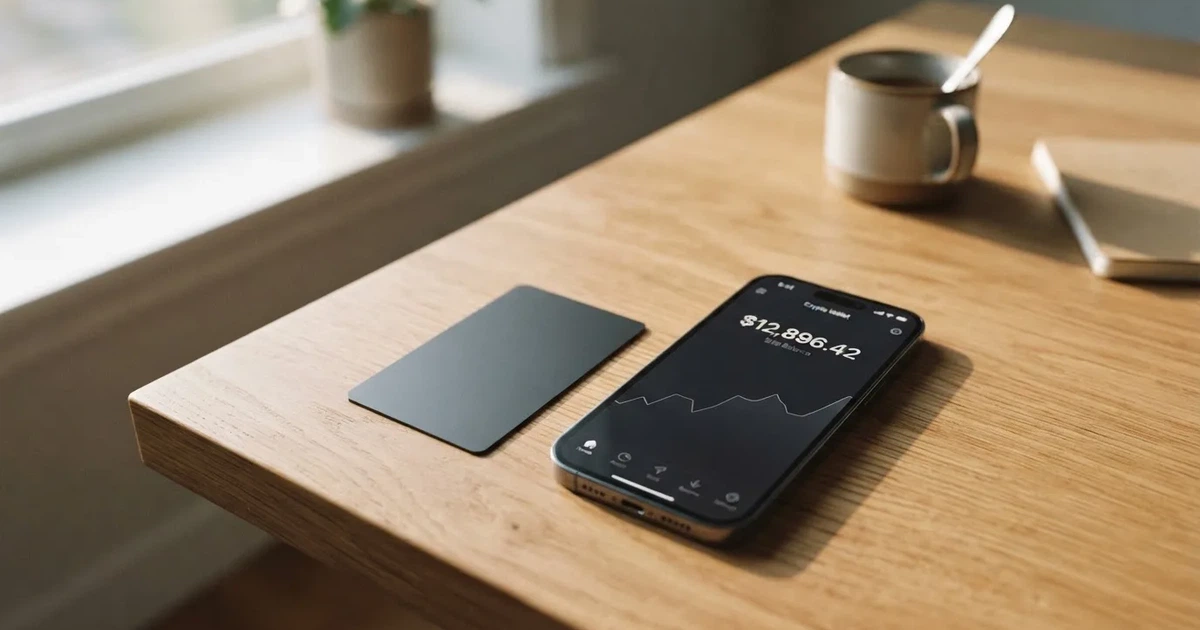
If you are someone who has trouble getting an ordinary bank card — or who simply wants to spend a stablecoin balance online without opening another account — the idea here is worth understanding. If you want to know what a coffee costs, what your monthly fee is, or who to complain to when a payment is wrong, this review will be short and blunt: those answers are not on the public pages, and a reviewer cannot supply them for you.
The conditions described below are current as of October 28, 2026.
Verdict: 4.5 out of 10
I scored Roqqu 4.5 out of 10. That is not a verdict on the product idea, which is coherent; it is a verdict on what a person can find out before they depend on the card.
| Criterion | Mark | Reason |
|---|---|---|
| Who can get it | 5 / 10 | Countries named only as “supported markets”; access depends on where you live and the countries Roqqu operates in, and that list is not disclosed |
| Cost | 5 / 10 | Card fees are not disclosed; the /fees page contains none |
| Top-up options | 5 / 10 | “Spend your crypto directly”; direct conversion, but the coins and networks are not named |
| Reliability and complaints | 4 / 10 | Roqqu Nigeria Limited is named as issuer, licences are not; complaints about locked accounts and held assets; Trustpilot 3.6 out of 5 from 104 reviews |
| Everyday use | 3 / 10 | A virtual card with customizable designs; Apple Pay, Google Pay, a physical card and ATM access are not disclosed |
| Total | 4.5 / 10 |
Who does this card suit? Roqqu exchange users spending stablecoins online. That is the one audience the design clearly serves: people who already hold crypto on the platform and want to convert it at the point of sale rather than moving money to a bank first.
Who does it not suit? Anyone who needs to know the fee before the purchase, anyone who depends on Apple Pay or a physical card, and anyone whose country may not be on a list that is not published. Those are not small gaps. They are the questions a payment card exists to answer.
Will they give you the card?
Short answer: probably not impossible, but you will have to find out. Roqqu’s page names no countries. It speaks only of “supported markets,” and the general terms say access depends on where you live and the countries in which Roqqu operates — a list the page does not disclose. The terms add that eligibility is reassessed on an ongoing basis.
That last point deserves a pause. “Ongoing basis” means your access is not fixed at signup. A card that can become unavailable after you have loaded it is a different proposition from one that cannot, and the difference matters for anyone planning to keep a balance there.
You cannot tell from the public pages whether your country is one of them, and there is no published list to check against. The practical consequence: before you load anything, you would need to confirm eligibility for your country of residence directly — not by inference from a list that does not exist, but by asking.
How to get it
The signup path runs through Roqqu’s general terms, and it is a normal identity check. Registering means providing your legal name, a government ID and your date of birth. You must be 18 or the legal age in your country.
Two things about the card itself are worth knowing up front. First, the card FAQ’s KYC answer is not shown on the public page, so the exact verification steps for the card are not spelled out there — only the general terms describe the underlying identity requirements. Second, and more concretely: the page calls the card “Virtual Flexibility” and describes customizable card designs. The card network and whether a physical option exists are not stated on the page. An earlier check of the same material described a prepaid Visa, but that is not what the current page says, and I do not want to pass an old description off as a current fact.
There is also a tier system referenced in the terms, but it is not described. Limits depend on your verification level and your tier, higher limits may require enhanced due diligence, and the terms list no tiers and no timings. So you can expect your limits to be set by a system whose structure you cannot see, and you cannot know in advance which tier you will land in.
Fees: what a payment really costs
Here is the honest state of play: Roqqu does not publish the numbers. The page links to a /fees page, and that page lists no card fees. Not low fees — no card fees. Issuance cost, monthly cost, conversion cost, foreign-exchange cost, ATM cost: none of them are stated, and none of the daily or monthly limits have figures.
| Fee or limit | What Roqqu’s pages say |
|---|---|
| Issuance fee | not stated |
| Monthly fee | not stated |
| Conversion fee | not stated |
| FX / currency fee | not stated |
| ATM withdrawal fee | not stated |
| Daily transaction limit | depends on verification level and tier; no figures |
| Monthly transaction limit | depends on verification level and tier; no figures |
| Tiers and their rates | not stated (terms mention tiers affecting limits) |
| Card currency | not stated |
Now, apply that to three everyday payments.
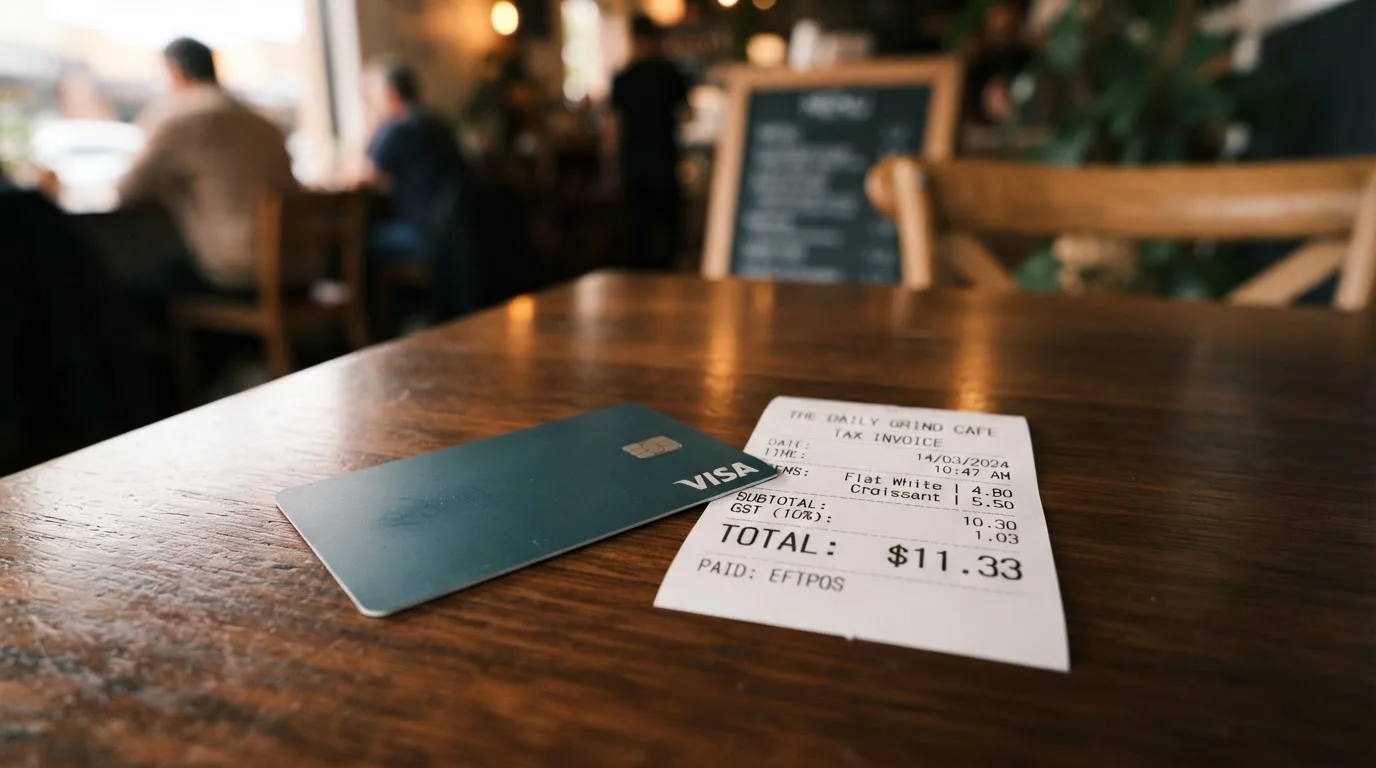
A coffee. You tap, and the app converts your crypto at the point of sale. Whether you pay roughly the sticker price or noticeably more depends on a conversion fee that is not published. You cannot know which, before or after.
An online subscription. Same mechanism, and here the gap matters more, because a recurring charge repeats the same unknown cost every month. If the conversion rate applied at each purchase differs, the effective monthly price drifts with it.
Spending in a currency other than your own. The FX treatment — whether a markup is added on top of the network rate, and how large it is — is not stated. Nor is the currency your card is denominated in. For a card whose entire purpose is cross-border spending by people who often do not have a local bank account, this is the single most important omission on the page.
The limits point deserves its own emphasis. The terms say limits depend on verification level and tier. That is a real mechanism, and it is not a promise of any particular ceiling. No figures exist on the page, so you cannot budget around them.
Top up: how the balance gets there
The funding model is the card’s clearest idea. Roqqu says you can “spend your crypto directly online or in store” through “Direct Conversions” — that is, the crypto is converted at the moment of purchase rather than held as a pre-loaded card balance. An earlier check of the same material described stablecoins in a Roqqu wallet converted in real time at each purchase; the current page does not name which coins or which networks.
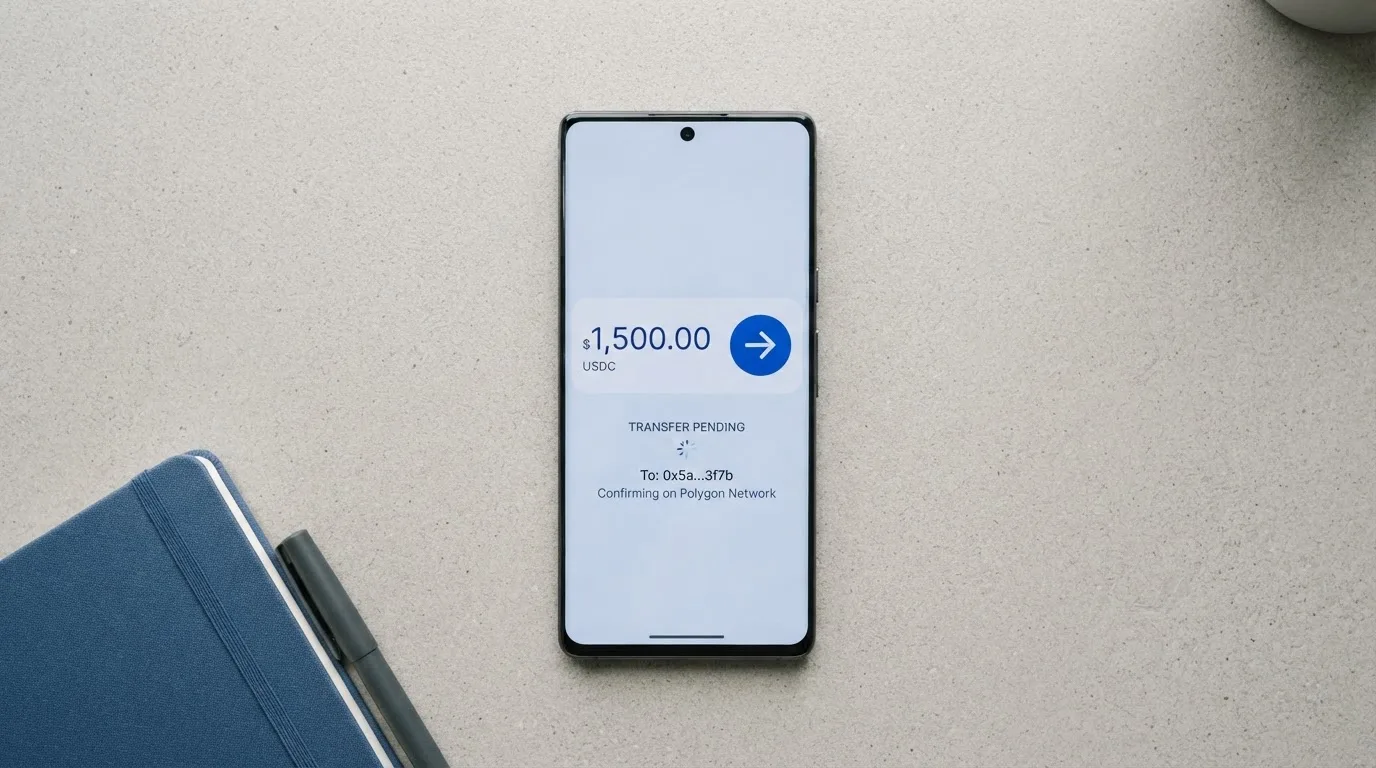
What is not stated: the top-up routes. Whether there is a bank transfer, a card load, a wallet transfer, or a P2P option — none of that appears on the public page. And the withdrawal side is not stated either. The general terms do say one relevant thing: digital asset transactions cannot be reversed once broadcast. That is a property of blockchains, not of Roqqu, but it means a transfer you have sent cannot be recalled.
For a person choosing between cards, “top up” usually means: how do I move value in, and how do I get it back out if I change my mind? Roqqu’s pages answer neither in public. The practical answer is the same as before — you would need to ask.
Paying with it every day
Day-to-day, the card is described in one line: a virtual card with customizable card designs. That is a genuinely light product, and for someone who wants a card number to paste into a checkout form, it may be enough.
Everything around it is undisclosed. Whether the card works in Apple Pay or Google Pay is not stated. Whether you can add it to a phone wallet, and if so, on which networks, is not stated. Whether an ATM exists for this card, and at what cost, is not stated. Wallets supported, and any rewards or cashback on spending, are not stated.
The app page does carry App Store and Google Play badges and shows a figure — “4.25 Stores” — that the page does not explain. The underlying store ratings and review counts were not read, so I will not repeat them as fact.
One point about disputes is worth reading carefully, because it reframes who is on the other side of a complaint. Roqqu states it is a platform, not a counterparty: user disputes are resolved directly, and chargebacks appear only in a fraud context. The formal process lives at a /complaint-handling-process-ng page. What this means practically is that a merchant dispute is not routed through a bank chargeback in the usual way; it is handled by Roqqu directly. Whether that is faster or slower for you depends entirely on a support process whose quality the complaints below call into question.
What can go wrong
This is where I want to be most careful and most specific.
Locked accounts and held assets. The user-reported complaint themes on Trustpilot include missing deposits and withdrawals (October 2023, October 2025), slow support (November 2023, February 2026), locked accounts with assets held (November 2023, June 2024), and identity-verification problems (December 2023, January 2025). Card-specific complaints were not found. These are user reports on a third-party site, not confirmed by Roqqu, and I present them as themes, not as verified incidents. No official incidents were found.
Slow support. Two of the reported themes — November 2023 and February 2026 — are about slow support. The page advertises 24/7 support and gives a legal contact, [email protected]. Whether that support is quick is a separate question from whether it exists, and users have reported the answer twice.
The Trustpilot picture. Read on 2026-10-21, the page shows 3.6 out of 5 from 104 reviews, 2 of them in the last 12 months. The same page also carries the figures “4.0 Trust Pilot / 300,” which do not match the rating-and-count pair; the reason is not explained. I mention both because choosing only the flattering one would be dishonest.
Who is behind the card. The general terms name Roqqu Nigeria Limited. The site footer names Roqqu Technologies. The relationship between the two is not explained. The issuing institution and its licences are not named on the page. For a regulated activity, “which licence covers this card” is not a formality; it is the first question.
Something could simply close. This is the general risk of custodial platforms, and it is worth stating plainly rather than burying. Funds held with a custodian carry counterparty and hack risk, and the record includes Mt. Gox (about US$350 million reported stolen, 2011–2014), Coincheck (about US$400 million, 2018), and the Ronin Network (US$625 million, 2022). Card programmes also close: WaveCrest, a Visa issuer that supplied crypto card brands, was suspended by Visa in Europe in 2018, closing all WaveCrest-issued Visa programmes. In November 2022 Visa said it had terminated its global agreements with FTX, and the FTX US debit card was wound down by its issuer. Programme closures typically give notice, then stop spending and loading, then ask users to withdraw remaining balances. If you hold a balance on a card whose issuer is not publicly named, that sequence is the scenario to keep in mind.
Irreversible transfers. Blockchain transfers are irreversible. A deposit sent on a network the provider does not support, or to an address belonging to a different network, can be lost or need manual support recovery with no guarantee. Since Roqqu does not name the networks it supports, this is not a hypothetical for you — it is the gap you would be crossing.
What Roqqu does say about safety. The page lists cold storage, two-factor authentication, email and SMS transaction notifications, an “ISO 27001 certified” claim, and an NDPR audit dated 2024. These are real safeguards and worth noting. But the custody model for the card funds themselves is not stated — who holds the balance between purchases, and under what arrangement — so the reassuring list and the unanswered question sit side by side.
No dated card-related events were found in the news.
What to take instead
If Roqqu’s core idea is right but its disclosure is too thin for you, there are three cards I scored higher. I set out below what each one publishes, so you can see the contrast with Roqqu’s “not stated” columns rather than take my word for it.
| Card | My score | Countries | Card type | Cost published? |
|---|---|---|---|---|
| Roqqu | 4.5 / 10 | “supported markets”, undisclosed | Virtual, customizable design | no card fees published |
| MSX | 6.4 / 10 | not stated on an official page I could read | not stated officially | not stated |
| Bybit Card | 6.0 / 10 | Argentina, AIFC (Kazakhstan), Georgia, Kazakhstan, Australia, Mexico, Brazil, Peru, Asia Pacific | Virtual and physical | yes — issuance, FX, conversion |
| MEXC | 5.6 / 10 | “The Philippines, Taiwan, Thailand…” with a full list behind a Details link | Virtual only | issuance 20 USD, service 0% |
MSX, 6.4 / 10. The highest of the three on my scale, and the thinnest on public detail: I could not read an official page stating who can get the card, what the card is, what it costs, or what it pays. If you are comparing on transparency, MSX and Roqqu are in the same position — you would be asking, not reading. Rewards are not stated either.
Bybit Card, 6.0 / 10. This is the one that publishes, and by a wide margin. It names its card regions — Argentina, AIFC (Kazakhstan), Georgia, Kazakhstan, Australia, Mexico, Brazil, Peru, Asia Pacific — and the application asks for your country of residence; if your country is unsupported, Bybit “will register your interest.” The cards page states: “This product is not meant for European Economic Area customers. All European Economic Area customer participation is strictly prohibited.” Its fiat-service restricted list — which covers deposits, withdrawals and One-Click Buy, not the card itself — includes Belarus, the Russian Federation, Serbia, China and the United States, and says “Russian users can only make RUB transaction in Fiat.” I found no card-specific statement on Russian or Belarusian citizens, and no citizenship-versus-residence rule.
On cost, Bybit is concrete. Virtual card issuance is free in all regions “until further notice.” Physical card issuance or replacement: Australia 29.99 USD; Argentina 5 USD/USDT; Georgia 29,99 USDT; Kazakhstan (AIFC) 29,99 USDT; Asia Pacific 5 USDT; Brazil and Mexico none. VIPs holding an Australia, Kazakhstan (AIFC), Georgia or Asia Pacific physical card pay no issuance or replacement fee. The cards page says “Auto interest, no annual fees.” The crypto conversion fee is 0.9% over the One-Click Sell rate (Australia, Asia Pacific, Georgia, Kazakhstan, Brazil, Mexico), 0.5% in Argentina; Peru is not supported. FX fees: 2% on top of the network rate in Australia, Asia Pacific, Georgia and Mexico; 2% “International Fee” on purchases outside Kazakhstan even in USD for Kazakhstan (AIFC); 7% in Argentina; 1.5% in Brazil; 1% in Peru. FX padding is 0% for the Australia group and Mexico, 5% in Argentina, 1% in Brazil, and the excess is refunded. Argentina adds VAT 21% on foreign digital services, a 30% tax on foreign transactions, and provincial gross-income tax of 1%–13.2%. Rewards are tiered by monthly cashback rate and cap, from Base at 2.00% with a 5 USD monthly cap up to Infinite at 10% with a 600 USD cap — but from 2026-10-05 10:00 UTC only crypto-funded transactions earn points or cashback; fiat-funded spending does not.
MEXC, 5.6 / 10. A middle path: some fees are published, most are not. The card is virtual only — physical cards are not yet available — and the network and card currency are not stated. Issuance is 20 USD (the page shows it possibly next to a 0 USD discounted price, which is unclear), service fee 0%. The monthly fee is not stated, and neither are the conversion and FX fees — those live in a linked guide that was not read. Funding works by transferring USDT to the Fiat account and then adding it on the My MEXC Card page; networks are not stated. Cashback runs by M-Score tier, paid by the 15th of the next month: Standard 4% capped at 100 USDT a month, Premier (600–799) 6% capped at 300, Elite (800+) 10% capped at 800.
The pattern across all four is the lesson. Roqqu, MSX and MEXC all ask you to accept numbers they do not print. Bybit prints its numbers, and some of them are unappealing — 7% FX in Argentina, 29.99 USD for an Australian physical card — but you can price a payment with them. For many people that is worth more than a low headline rate you cannot verify.
Who I would recommend it to
I would recommend this card to someone who already uses Roqqu as an exchange, holds a stablecoin balance there, and wants to spend it online without a bank transfer in between — and who treats the balance as money they are willing to lose, because the issuer is not named, the fees are not published, and the complaint history includes locked accounts with assets held.
I would not recommend it to anyone who needs to forecast their cost of living with this card, who relies on Apple Pay or a physical card, who wants to know the complaint route before they need it, or whose country might be outside a list that is not published.
My own order of operations, if I were choosing today, would be: confirm my country is served, in writing, before loading anything; ask for the conversion and FX fees and the card currency; ask which institution issues the card and under which licence; and check the tier and limit I would land on. If any of those come back vague, that is itself the answer.
Frequently asked questions
What is Roqqu card?
Roqqu is a crypto exchange that also offers a payment card. The card lets you convert crypto directly at the point of purchase and spend it online or in stores, rather than moving funds to a bank first. The public page describes it as a “Virtual Flexibility” card with customizable designs. Roqqu’s card pages do not name the card network or say whether a physical card exists.
How does the Roqqu card work?
The card works on “Direct Conversions”: your crypto is converted at the moment of purchase, and the converted value pays for the transaction. So you spend from a crypto balance rather than from a pre-loaded card balance. Coins and networks are not named on the current page. An earlier description mentioned stablecoins in a Roqqu wallet converted in real time at each purchase.
Is Roqqu a bank?
No — and the page says so in substance. Roqqu describes itself as a platform, not a counterparty, which is why user disputes are resolved directly rather than through a bank chargeback. The general terms name Roqqu Nigeria Limited and the site footer names Roqqu Technologies, but the relationship between them is not explained, and the issuing institution and its licences are not named.
Who owns Roqqu?
Two names appear across Roqqu’s own pages. The general terms name Roqqu Nigeria Limited, and the site footer names Roqqu Technologies. The pages do not explain how the two relate — whether one is a parent, a subsidiary or a trading name. I found no single unambiguous answer on the public site.
Is the Roqqu card available in my country?
I cannot tell you, and neither can the public page. Roqqu names no countries, only “supported markets.” The terms say access depends on where you live and the countries Roqqu operates in, and that list is not published. Eligibility is also reassessed on an ongoing basis. You would need to ask Roqqu directly before loading any funds.
Can I use the Roqqu card in my country?
Whether you can use it at all depends on where you live, which is not disclosed. Separately, using a card abroad raises a general problem: merchants can look up the issuer identification number at the front of the card number and see which institution and country issued it, and may apply extra scrutiny if that differs from your billing address. Roqqu does not name the issuer country either.
How do I get a Roqqu card?
The signup runs through Roqqu’s general terms. Registering means giving your legal name, a government ID and your date of birth, and you must be 18 or the legal age in your country. The card-specific KYC answer is not shown on the public page. Your limits will then depend on a verification level and a tier system whose tiers and timings are not listed.
Does the Roqqu card require KYC?
Yes, in substance. The general terms require your legal name, a government ID and your date of birth at registration. These identity checks are not Roqqu’s invention — regulated businesses must verify customers and assess risk as part of anti-money-laundering law, including ongoing monitoring and suspicious-activity reporting. If due diligence cannot be completed, accounts can be closed or frozen pending documents.
How do I top up the Roqqu card?
That is one of the things the page does not answer. The card’s funding model is described — “spend your crypto directly” through direct conversions — but the top-up routes are not stated: no bank transfer, card load, wallet transfer or P2P option appears on the public page. Note that blockchain transfers cannot be reversed once broadcast, so confirm the supported network before sending anything.
Is the Roqqu card free?
I cannot tell you. The page links to a /fees page, and that page lists no card fees. Issuance, monthly, conversion, FX and ATM costs are all not stated, as are daily and monthly limits. This is the single largest gap on the site, and it is why I scored Cost at 5 out of 10 — not because the fees are high, but because they are not published.
Exchange card options – cryptocardoptions.com
Content created by the «cryptocardoptions.com» team