
Who the Pionex card really works for, and who should keep looking
 Available in US
If you are reading this, you probably have a specific problem in mind. Maybe you have tried to open an ordinary bank card and been turned down, or you live somewhere where the paperwork is a wall, or you simply hold most of your money in stablecoins and would rather not shuffle it through a bank every time you buy groceries. That is exactly the reader I had in mind while going through the Pionex card’s own pages, its fee schedules and the reviews people leave behind.
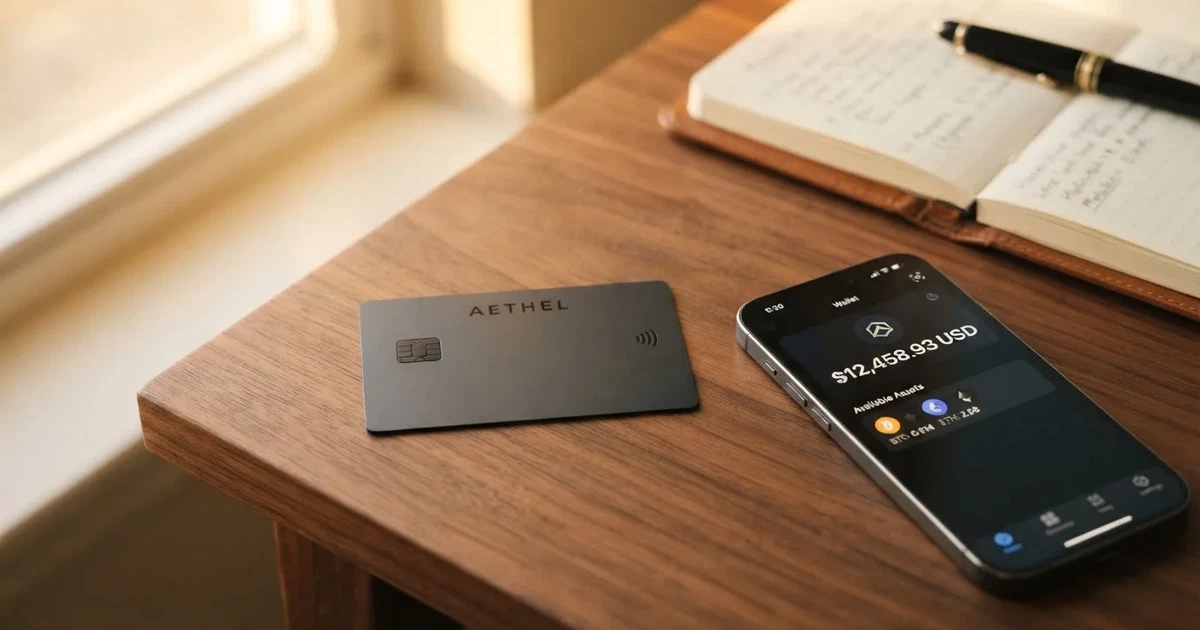
Here is the short version before the detail. The Pionex card scores 4.8 out of 10. It is a competent way to spend a USDT balance, and it is free to hold. But it is not a bank account, it holds only USDT, only virtual cards are being issued right now, the issuing bank is not named, and in August and September 2026 the platform cancelled the cards of inactive users in batches. None of that makes it useless. It makes it a tool with edges, and you should know where the edges are before you load it.
The conditions described here are current as of October 28, 2026.
The verdict: 4.8 out of 10, and who it suits
The score is not a punishment. It is a description of a narrow card that does a narrow job well. Let me show you the marks I gave each part, so you can argue with the ones you disagree with.
| Criterion | Mark | Why |
|---|---|---|
| Who can get it | 6 / 10 | Card type depends on the country of your completed KYC, no country list is published; users in restricted regions cannot apply |
| Cost | 6 / 10 | Annual fee and inactivity fee are 0; Visa charges 1% and converts fiat to crypto free; Mastercard charges “up to 3.5%”; no issuance fee appears on either fee schedule |
| Top-up options | 4 / 10 | USDT only, by transfer from the main Pionex account or from an external wallet; networks are not named and there is no fiat route |
| Reliability and complaints | 3 / 10 | The issuing bank is not named; cards of inactive users were cancelled in batches in August–September 2026; Trustpilot shows 2.5 out of 5 on the exchange for frozen withdrawals |
| Everyday use | 4 / 10 | Only virtual cards are issued; Apple Pay and Google Pay are there; the physical Visa is being rolled out in phases; no ATM on Mastercard |
| Total | 4.8 / 10 |
Who does this card suit? In my reading, it suits someone who already has a working Pionex account at verification Level 2, who already holds USDT, and who wants a second, spend-only rail for that balance — a travel wallet, a way to keep a fixed sum available for daily spending without touching the rest. It also suits people who find the banking onboarding genuinely difficult and want a card that asks fewer questions than a bank does. If that is you, the Pionex card is worth a try, because there is no annual charge to lose.
Who does it not suit? If your money is in a bank account and you want a normal debit card, this is worse than what you already have: you are paying 1% on Visa to convert a bank balance into something a card can spend, and you gain no interest, no ATM on one network, and no name on the issuer. If you spend in a currency other than dollars and Mastercard is what you get, the “up to 3.5%” and the platform’s own conversion rate are a real drag. And if you are the kind of person who wants to know which bank stands behind the card, the honest answer is that the card’s own pages do not name one, which is a poor first impression for anyone who cares about that.
One more group, named plainly: the Pionex card is aimed at people who already spend USDT balances, particularly users of the platform’s trading bots who hold USDT and want to set some of it aside to live on. If you are not already inside that ecosystem, you are being offered a card that only accepts the one asset you would have to buy first.
Who will they give you the card
Yes, in some countries, and the rule is not quite the one most people expect. Your card type depends on the country or region of your completed identity verification, shown on the application page — and the page does not publish a list of those countries. The important detail, which is easy to skim past: the rule follows the country of your verification, not your citizenship. Two people with the same passport can be treated differently depending on where they verified. If you are in a region Pionex restricts, you simply cannot apply.
There is one country-specific application rule stated outright. Since 14 August 2026, new Visa applications from Belarus have stopped, and applicants verified in Belarus are offered a Mastercard instead. There is no Russia-specific application rule stated. What is stated is where payments are declined: merchants registered in or operating from Afghanistan, Venezuela, Russia, Myanmar, Ukraine, North Korea, Iran and Belarus.
Now the part I could not confirm from the card’s own pages. Some third-party sites say the card pages are marked “Not available in some EU countries”, and Pionex’s terms list France, the Netherlands and Spain as restricted jurisdictions — which sits awkwardly against the spend list above, which allows France and Spain. Availability is also said to vary, with the UAE, South Africa, Malaysia, Nigeria and Australia listed as open and the US and Canada as not open. That is unofficial reporting, gathered from other people’s country pages in 2026, and I would not rely on it. The honest position is that the card publishes no country list of its own, so the only way to know is to complete verification and look at the application page.
The reader who has been turned away from ordinary banks should know what this means. There is a difference between “I cannot open a bank account” and “no regulated institution will have me at all”. A crypto card is issued by someone, and that someone runs checks. This card asks for Level 2 verification, which is a step up from the basic check, not a step down. It is a narrower door than a bank but it is still a door, and it is not a way around the rules — anyone promising you anonymity is not offering you this card.
How to get it
The requirements are short and specific. You need KYC Level 2 on your Pionex account, plus account assets above a threshold that is shown on the application page — that threshold is an eligibility test, not a fee, so it costs you nothing but it does gate you. Your cardholder name can be at most 25 characters. You get one card network per user. The card’s pages do not state an age requirement.
The steps run through the app: Wallet, then Card, then Apply Now, then your cardholder details, then confirm. Review usually completes within an hour. One practical difference worth knowing before you start: a Visa application asks for an address, a Mastercard application does not.
What you actually receive, today, is a virtual card. Only virtual cards are issued at the moment. Physical cards are described as being rolled out in phases, but the delivery countries, the delivery time, the delivery cost and the replacement cost are not stated anywhere on the public pages — if a physical card matters to you, that is a question to ask support before you commit. The card holds USDT only, and bills at 1:1 between USD and USDT. A Mastercard is valid for two years; a Visa for about five.
One last thing, unofficial. A tested card in one report was a virtual Mastercard even though the application screen showed Visa artwork. The card you are assigned depends on your account and region, so do not read a screenshot of someone else’s card as a promise of what you will get.
What it really costs: Fees
Here is where the Pionex card is genuinely good news, and also where the fine print starts working. Let me put the whole schedule in front of you at once, because the two networks are priced very differently and you may not know which one you are getting until you apply.

| Fee or limit | Value |
|---|---|
| Annual fee | 0 |
| Inactivity fee | 0 |
| Issuance fee | Not listed on either fee schedule |
| Visa transaction fee | 1% |
| Mastercard transaction fee | “up to 3.5%” |
| Fiat-to-crypto conversion | Free (USD/USDT 1:1) |
| Mastercard non-USD conversion | At its own rate; no separate FX markup listed |
| Small payments of 5 USD or less | First per month free, then 0.2 USDT |
| Failed payments | 0.5 USDT after the first free one |
| Visa physical-card ATM withdrawal | 2% |
| ATM limits (Visa physical) | 3,000 USDT daily, 7,000 USDT monthly, not adjustable |
| Mastercard ATM | None |
| Visa default limits | 10,000 USDT per transaction and daily, 50,000 USDT monthly |
| Visa temporary limit raise | 80,000 per transaction, 500,000 daily/monthly, for 14 days, if balance is at least 16,000 USDT; 30-day cooldown |
| Mastercard limits | 20,000 USD per transaction and daily, 100,000 USD monthly, no increases |
There is one tier, and there are no paid plans — so the free part is genuinely free. The only upgrade on offer is that temporary Visa limit raise, and it is a loan of headroom, not extra money: fourteen days of higher caps, if your card balance is at least 16,000 USDT, and then a thirty-day wait before you can ask again. Mastercard has no version of it.
Let me make this concrete with three payments, because percentages only mean something when you attach them to a Tuesday morning.
A 4 USD coffee. This is a small payment, 5 USD or less, so the first one each month is free and every one after that costs 0.2 USDT. On Visa, the 1% fee is waived here because the small-payment rule takes over; on Mastercard, the “up to 3.5%” would be a fraction of a cent. Nobody will notice either way, but this is the category where the fee schedule is kindest.
A 60 USD grocery shop. On Visa you pay the 1% transaction fee — 0.60 USD — and the fiat-to-crypto conversion itself is free, because USD and USDT convert 1:1. That is the normal, expected cost of this card: a flat one percent on ordinary spending. On Mastercard the same shop costs “up to 3.5%”, so somewhere between 0.60 and 2.10 USD, and you cannot tell in advance which end you get.
A 40 EUR dinner abroad. On Visa, this is where it stings: the 1% fee applies to the local-currency transaction. On Mastercard, non-USD amounts are converted at the platform’s own rate, with no separate FX markup listed on the fee schedule — but “no separate markup listed” is not the same as “no markup”. If Mastercard is what you are assigned and you spend in euros, you should assume the conversion costs you more than the 1% you would pay on Visa. This is the single biggest reason to care which network you are given.
One more fee that is easy to forget and appears in your balance rather than on a receipt: the card balance earns APY automatically and you cannot turn it off. That is not a cost you pay, it is interest you are paid, but it means the balance is never simply idle, and you should check the rate before you treat the money as parked.
How to Top up
Topping up is the weakest part of this card, and it is the part the score of 4 out of 10 for top-up options is really about. There is exactly one route: USDT. You move it from your main Pionex account into the separate card account, or you deposit USDT from an external wallet. The card’s public pages do not name the networks, do not state a deposit fee or a minimum top-up, and do not say what network fees apply to an external deposit — that cost is charged by the blockchain, not by the card provider, and it comes out of your transfer.
What you cannot do is the obvious thing. There is no fiat top-up and no IBAN, so you cannot pay the card in from a bank account the ordinary way. There is no overdraft: the card is debit only. If you want dollars in the card, you have to hold dollars in crypto first, and the simplest version of that plan is to hold USDT in your main Pionex account and press transfer.
Take the network question seriously even though the pages do not answer it, because this is where real money disappears. A blockchain transfer is irreversible. USDT exists on several chains — Ethereum, Tron, Solana, Polygon, Avalanche among them — and a deposit sent on a network the card provider does not support, or sent to an address belonging to a different network, can be lost or need manual recovery with no guarantee. Ask support which network they want before you send, and check the receiving address character by character.
Money also only travels one way, and that is by design. The card cannot send crypto on-chain and cannot send to a bank card. Funds go back to the Primary Account first — in the app, Wallet, Card, Deposit, Transfer; on the web, Card, Personal Card, Transfer, with From set to Card Account — and then you withdraw as usual. Security verification may be asked for along the way. The fee for that transfer back is not stated. Two further rules catch people: reward-type balances, meaning Growth Fund principal and Futures Bonus, cannot be moved to the card at all; and if you let the card balance go negative and do not repay it, your crypto withdrawals are restricted until you do.
Paying with it every day
Daily use is fine within a narrow corridor. The card lives inside the Pionex app under Wallet, Card, and also on the web; the platforms it runs on and the store ratings are not stated. For contactless, Apple Pay and Google Pay are supported — Samsung Pay is not. There are restricted-merchant notices for both Visa and Mastercard, though the pages do not detail them and do not say whether gambling merchant codes are among them.
The reward structure is the part that makes it pleasant. You get 1% cashback on local-currency and general USD purchases, at 0% on listed excluded merchant-and-country combinations and on ATM withdrawals, credited in real time with no cap mentioned. On top of that, the USDT balance earns 5% APY, credited hourly. Whether 1% cashback offsets the 1% Visa fee is a question you should do the arithmetic on yourself for your own spending; that is not a promise, it is arithmetic.
Then there is the money-back flow, which is where I would spend more of your attention than on the rewards. A refund generally clears in three to thirty days and is released automatically — support cannot release it early. A pre-authorisation hold is released within seven business days after the merchant finalises the transaction. VAT refunds take three to five business days and up to a few weeks. The transaction fee is returned only when the transaction has the status “Payment Reversal”. If you have a failed payment that was charged anyway, the route is to ask the merchant for a refund first and then give support the ARN.
Disputes are the sharpest corner, and the numbers are worth reading twice before you ever need them. A Visa dispute costs an appeal fee of 50 USDT per case, paid regardless of the outcome. If you lose, an arbitration fee of 600 USDT is added. And at least 650 USDT must be sitting in your main account as a temporary deposit to open the case at all. Those are real sums, held against your account while a merchant or issuer argues about a small purchase.
What can go wrong
This is the section I would not skip, and it is the reason the reliability mark is 3 out of 10.
The most concrete fact: the platform cancelled the cards of inactive or rarely used users in batches between August and September 2026, some without notice. The cancellation is irreversible, you cannot reapply for that card, and your balance stays sitting in the card account rather than being returned automatically. If you hold a card you barely use, the card itself may not outlive your interest in it. That single fact should govern how much you leave on the card at any time.
The second fact is who stands behind it. The issuing bank is not named on the card’s pages. One help article refers to a “Dogpay channel (BIN 5371)” for some Mastercards, and Mastercards on that channel cannot pay merchants in South Africa — a reminder that a card number’s first six or eight digits identify the issuer and country, and that a merchant or an automated system can look them up and treat a foreign-issued card differently. Pionex’s own company registration and licences are not stated on these pages. Unofficial checks by third parties in October 2026 also found no named issuer bank and no named licences.
Third, the custody. The card is custodial: your funds sit in a card account inside the Pionex exchange account, which means you are trusting the platform with them, with the same counterparty and hack exposure that anyone holding crypto with a custodian accepts. There is history here — Mt. Gox at about 350 million US dollars reported stolen between 2011 and 2014, Coincheck at about 400 million in 2018, Ronin Network at 625 million in 2022. Nobody is claiming Pionex is in that category. The point is only that custodial storage is a known risk category, not a neutral detail.
Fourth, the reviews. Trustpilot shows 2.5 out of 5 for Pionex.com as an exchange, from about 600 reviews with 124 in the last twelve months, which I read on 20 October 2026. The recurring themes are frozen withdrawals and trading after profits, with company replies pointing to a risk team; account closure with a refund scheduled two months out; and cards charged for transactions the merchant declined with no refund. Coin Bureau listed 2.3 out of 5 in August 2025, with withdrawal complaints. These are exchange-level complaints, not card-specific, and I am weighting them accordingly — but they are the complaints a reader will run into, so you should see them before you decide. An unverified aggregator report also describes a negative card balance pausing withdrawals until repaid, which matches what the card’s own pages say about an unpaid negative balance.
What you can control is worth separating from what you cannot. Freezing and unfreezing the card is instant in the app, under More, then Freeze. What freezing does not do is stop a merchant subscription you already have — those keep billing until you cancel them with the merchant, so treat the freeze button as a spending brake, not a full stop. You need security authentication to view card details and to pay at checkout, and you can move payment confirmation away from SMS codes and into the app if you prefer. Beyond that, your own controls run out: a freeze imposed by the platform’s risk system can only be lifted by contacting customer support, which is a much slower route than your own button.
Support itself is thinly documented. The card articles name a channel only as Pionex Customer Support, with no chat link, no email address and no opening hours. The help centre itself is translated into six languages — English, German, Russian, simplified Chinese, Spanish and traditional Chinese — so language is not likely to be your obstacle. What is not stated anywhere is whether the card balance is insured or otherwise safeguarded, or exactly how two-factor authentication works. There is also a notice on the help centre titled Pionex Mastercard Temporary Maintenance Notification, which suggests the Mastercard side needs occasional patching; I did not read it in detail.
There is no licence or issuer-bank news I could find. The news that exists is the batch card cancellation, the Belarus switch to Mastercard from 14 August 2026, and that maintenance notice.
What to take instead
If the Pionex card’s gaps — USDT only, no named issuer, batch cancellations — do not suit you, there are three other cards in this category that I looked at, and one clear pattern between them: the more established cards publish far more.
| Card | Score | Card types | Top-up route | Conversion fee |
|---|---|---|---|---|
| Pionex | 4.8 / 10 | Virtual only right now | USDT only, internal or external wallet | 1% (Visa); “up to 3.5%” (Mastercard) |
| MSX | 6.4 / 10 | Not stated officially | Not stated | Not stated |
| Bybit Card | 6.0 / 10 | Virtual and physical, by region | Draws on the funding account, fiat first, then crypto | 0.9% over the One-Click Sell rate (0.5% in Argentina) |
| MEXC | 5.6 / 10 | Virtual only | USDT to the fiat account | Not stated |
Let me be straight with you about how solid that table is. For MSX, the score is the only thing I can put my hand on: the card type, the cost, the fees, the funding route and the rewards are not stated on any official page I could read. I am not going to fill those cells in with guesses, because a table full of invention is worse than a table with honest blanks.
Bybit Card is the one worth your time, because it publishes everything. Its help centre names its regions — Argentina, AIFC (Kazakhstan), Georgia, Kazakhstan, Australia, Mexico, Brazil, Peru and Asia Pacific — and states that if your country of residence is unsupported, they register your interest. It also states plainly that the product is not meant for European Economic Area customers and that EEA participation is strictly prohibited, which is the kind of sentence that tells you a company has thought about compliance. Its restricted list for fiat services includes Belarus, the Russian Federation, Serbia, China and the United States, with the note that Russian users can only make RUB transactions in fiat; that is about deposits and withdrawals, not the card itself, and I found no card-specific statement about Russian or Belarusian citizens or a citizenship-versus-residence rule. Its cards page says “Auto interest, no annual fees”, and virtual issuance is free in all regions “until further notice” while physical issuance ranges from none in Brazil and Mexico to 29.99 USD in Australia and 29,99 USDT in Georgia and Kazakhstan.
Two Bybit details that tell you how differently it is run. First, its card has no balance of its own: it draws on the funding account, spending fiat first and selling crypto only if fiat runs out. Second, its rewards have changed shape — since 5 October 2026 at 10:00 UTC, only crypto-funded transactions earn points or cashback and fiat-funded spending does not. That is a warning worth reading twice, whichever card you are looking at, because it shows how a reward can be narrowed by announcement.
MEXC is a middle option with one strange line item. Its card is virtual only, physical cards not yet available, and the page lists issuance at 20 USD with a possible discounted 0 USD price beside it that is unclear. Service fee is 0%. Funding is USDT transferred to the fiat account. Its cashback runs by M-Score tier, paid by the 15th of the next month: Standard 4% capped at 100 USDT a month, Premier (600–799) 6% capped at 300, Elite (800+) 10% capped at 800.
My honest read is this: if you want a card that tells you what it charges, what it supports and where it is not allowed, Bybit publishes that and Pionex does not, and that difference shows up in the scores more than any single fee does. If you want something simpler and can live with USDT-only funding, Pionex’s 1% Visa fee is competitive and its zero annual charge is hard to argue with. And whatever you choose, check whether your provider is on the relevant public register of authorised crypto-asset service providers — in the EU that register exists and it is free to consult.
Who I would recommend it to
I would recommend the Pionex card to three kinds of person, in this order.
First, someone already holding USDT on Pionex who wants a controlled spending slice — someone who will transfer a fixed amount to the card account, set a limit raise if they need one, and treat the card as a prepaid wallet rather than as money in the bank. The 1% fee, the free conversion, the zero annual charge and the 1% cashback make this a coherent, if unglamorous, arrangement.
Second, someone for whom a normal bank card is genuinely out of reach and who has accepted that this is a custodial product inside an exchange account. I would tell that person plainly what they are accepting: no named issuer, batch cancellation of inactive cards, USDT-only funding, and no route to a bank account except back through the exchange.
Third, a traveller with a short, specific need — a fixed spend for a trip — who understands that the balance is stranded on the card if the card is cancelled and will move it back deliberately before they stop using it.
I would not recommend it to anyone whose money is primarily fiat, to anyone who needs an ATM, to anyone in the EEA hoping the EU’s payment rules will protect them here, or to anyone who plans to hold a large balance on the card for a long time. The reason is not the fees. It is the August and September 2026 cancellations and the unnamed issuer — two things that tell you the card is a product feature of a trading platform rather than a financial service in its own right.
If you are still unsure, the three questions I would ask support before loading anything are: which network should I send USDT on, what happens to my card balance if the card is cancelled, and which institution actually issues the card. You deserve a written answer to all three.
Frequently asked questions
What is the Pionex card?
The Pionex card is a payment card that spends a USDT balance held inside your Pionex exchange account. You transfer stablecoins from your main account or an external wallet into a separate card account, and the card draws down that balance. It is Visa or Mastercard depending on your region, and it behaves more like a prepaid card than a bank debit card, because there is no overdraft and no fiat top-up.
How does the Pionex card work?
You load USDT, and the card spends it. Because USD and USDT convert 1:1, a Visa transaction costs a flat 1% fee with the fiat-to-crypto conversion itself free. Money can only travel back one way: from the card account back to your Primary Account first, and then out as normal. The card cannot send crypto on-chain or pay a bank card directly.
Is Pionex a bank?
No, and this matters for what protection you have. Pionex is a crypto exchange platform, and the card’s own pages do not name the issuing bank. The card network — Visa or Mastercard — handles the payment rails, but that is not the same as a bank standing behind your balance. Treat anything you load as money held with a platform, not a bank deposit.
Who owns Pionex, and where is it licensed?
The card’s public pages state Pionex’s company registration and licences nowhere, and I found no named licences in unofficial checks either. If licensing matters to your decision, that is a question to put to support directly. In the EU, authorised crypto-asset service providers appear on a public register, and you can check whether a provider appears there before you load funds.
Which countries can get the Pionex card?
Your card type follows the country of your completed verification, not your citizenship, and no country list is published. Users in Pionex’s restricted regions cannot apply at all. Since 14 August 2026, new Visa applications from Belarus have stopped and verified applicants are offered Mastercard. Third-party sites say it is open in the UAE, South Africa, Malaysia, Nigeria and Australia and closed in the US and Canada, but that is unofficial.
Does getting the card require KYC?
Yes, and it requires more than the basic check. You need KYC Level 2 plus account assets above a threshold shown on the application page, and that threshold is an eligibility test rather than a fee. Reviews usually finish within an hour. Your cardholder name can be at most 25 characters and you get one card network per user.
How do I top up the Pionex card?
By USDT only. Transfer from your main Pionex account into the card account, or deposit USDT from an external wallet. There is no fiat top-up, no IBAN and no overdraft. Networks are not named on the public pages, so ask support which chain to use before sending, because a transfer on an unsupported network can be lost with no guarantee of recovery.
Is the Pionex card free?
Partly. The annual fee and the inactivity fee are both 0, and no issuance fee is listed on either network’s fee schedule. Spending is not free: Visa charges 1% per transaction and Mastercard charges “up to 3.5%”. Small payments of 5 USD or less are free the first one each month and 0.2 USDT after that, and a failed payment costs 0.5 USDT after the first free one.
Can I use it in Apple Pay and Google Pay?
Yes, both are supported for contactless payments; Samsung Pay is not. Security authentication is required at checkout, and payment SMS codes can be switched to in-app authorization instead. Note that freezing the card in the app stops spending but does not cancel merchant subscriptions — those keep billing until you cancel them with the merchants themselves.
Is the Pionex card safe, and what happened to inactive cards?
It is custodial, so your funds sit with the platform and carry the usual counterparty and hack exposure of holding crypto with a custodian. More immediately, the platform cancelled the cards of inactive or rarely used users in batches between August and September 2026, some without notice, irreversibly. If you hold one, keep only what you will actually spend, and move the rest back deliberately.
Exchange card options – cryptocardoptions.com
Content created by the «cryptocardoptions.com» team