
A payroll-only virtual Visa for ten countries, with more questions than answers on cost
 Available in US
I went through Thera Wallet’s public pages, the KYC guide and what people are saying about it on Trustpilot, and what I came away with is a product that is genuinely useful for a narrow group of people and almost invisible on the topics that matter most to a cardholder. If you are paid through Thera payroll in one of the ten countries on its list, the card probably does what you need it to do. If you found Thera Wallet through a search for “crypto card” the way I did, the picture is much less reassuring: there is no published fee schedule, no named card issuer, and the only verifiable everyday use case is buying things online.
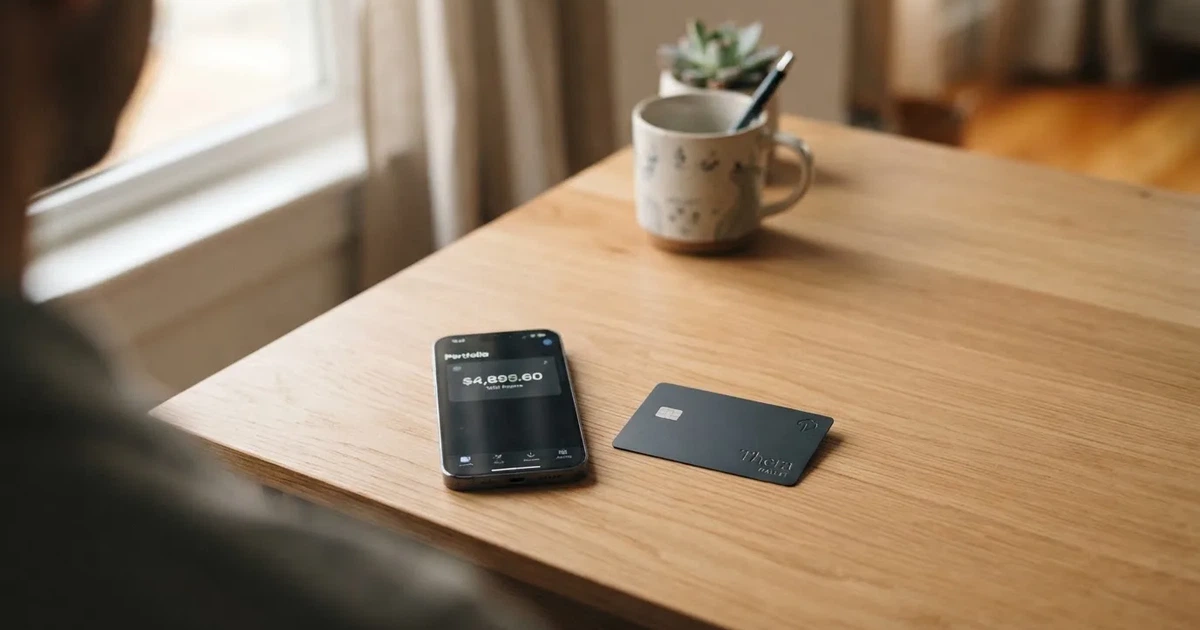
This review is for someone weighing whether Thera Wallet is the right way to spend a payroll-funded crypto balance. I will walk you through who can get the card, how the signup actually works, what it costs (or rather, what isn’t published), how you top it up, what daily use looks like, what can go wrong, and the alternatives I would consider instead.
The information below was checked against Thera’s public pages and the KYC partner’s guide on 20 October 2026; figures and country lists are as Thera states them. The conditions are current as of October 28, 2026.
Verdict
Thera Wallet earns 4.9 out of 10 in my scoring. That is a below-average score for a crypto card, and the main reason is what Thera *doesn’t* publish: no fee schedule, no named card issuer, no legal entity, and no offline or ATM use. The product only makes sense for a specific audience, and outside of that audience the gaps become liabilities.
Here is how the score breaks down:
| Criterion | Mark | Why |
|---|---|---|
| Who can get it | 3 / 10 | Only 10 countries; you have to be paid through Thera payroll |
| Cost | 5 / 10 | No fee numbers; “may incur FX fees” is all you get |
| Top-up options | 6 / 10 | Internal transfer works; only USDC and USDT on Ethereum and Tron |
| Reliability and complaints | 6 / 10 | 4.7 on Trustpilot over 100 reviews, one visible complaint about a stuck withdrawal |
| Everyday use | 5 / 10 | Virtual Visa, Apple Pay and Google Pay; online only for now |
| Total | 4.9 / 10 |
The audience that scores this card above its raw number is freelancers and contractors in Latin America who are already paid in stablecoins through Thera. For them, the lack of an FX number is a smaller problem than the alternative of trying to convert USDC into local currency. For anyone else, the gaps in the published information become the story.
Who will they give you the card
Thera Wallet is not a general retail card. The single biggest fact about it is this: you can only get one if Thera pays your salary. The card is built for employees and contractors who receive payroll through Thera, not for people who simply want a crypto-funded Visa.
The country list is also short. Thera says the card is available in:
- Argentina
- Bolivia
- Brazil
- Colombia
- Dominican Republic
- Ecuador
- Guatemala
- Mexico
- Peru
- United States
Ten countries in total, with nine in Latin America and the Caribbean plus the US. Thera adds that availability is “based on local banking and regulatory availability”, which in practice means the list can change without much notice. I read the public help pages and did not find separate lists for residents versus citizens, so the rule of thumb is: if you are paid by Thera and you live in one of those ten countries, you are in the candidate pool. Everyone else is not.
A few things to be aware of even inside that pool:
- The card is for Thera payroll recipients only. If you are a Thera customer in any other sense, the card is not the product for you.
- Country availability depends on local banking and regulatory rules, so a country being on the list today does not guarantee a card tomorrow.
- Thera’s public pages don’t say whether dual citizens, recent movers or people on temporary visas in those countries are eligible. You will only find out at the KYC stage.
How to get it
The signup is mobile-only and runs through a third-party identity check. Thera uses a partner called AiPrise for KYC, and the flow is designed to be done from your phone.
Here’s the path:
- Find the Wallet section. Inside the Thera app, the wallet is created under Payroll > Wallet. The help text says approval “typically takes a few business days”, so don’t expect a same-day result.
- Start the KYC. You scan a QR code that opens the AiPrise flow on your phone. The standard checks are: pick an ID type and the country that issued it, photograph the front and back, then take a selfie. Accepted documents are a driver’s licence, a resident ID, a voter ID, a national ID or a passport.
- Submit your tax form. If you are a non-US tax resident you fill in a W-8BEN (or W-8BEN-E if you are an entity). If you are a US tax resident, you fill in a W-9. This is required before withdrawals, not necessarily before the card is issued.
- Wait for the verdict. AiPrise returns either “Verified” or “Declined”. The standard review takes minutes; if extra verification is needed, the wait is 24 to 48 hours. The page does not say what extra verification means in practice.
- Receive the virtual card. The card is a virtual Visa, generated in the Wallet section of the app. A physical card is “planned” but not yet shipping.
A few practical points the KYC guide does mention:
- Two checks are run: one on your ID and one on your selfie. The outcomes are “Verified” or “Declined” only — there is no “pending” outcome published for the user.
- If Thera’s employer flow requires KYC, withdrawals are blocked until verification is approved. So you can be paid but unable to move the money out until KYC clears.
- Thera’s pages do not list the specific reasons a KYC submission might be declined, and the company has not published rejection criteria. If you are declined, you are not told the exact reason.
- Thera’s pages do not say whether proof of address or a minimum age is checked, beyond the general “18+” assumption that applies to most prepaid cards.
What it really costs — Fees
The honest answer to “what does Thera Wallet cost?” is: I could not find a published fee schedule. This section is short because the public material is short, and that itself is a finding.

What Thera does say:
- Issuance fee: not stated.
- Monthly fee: not stated.
- Conversion fee (crypto to card balance): not stated.
- Foreign exchange (FX) fee: “Foreign transactions may incur foreign exchange (FX) fees”. That is the only FX line, with no number attached.
- ATM fee: not stated. The card is not usable in stores and Thera does not address cash withdrawals on its card page, so I would assume ATM use is not part of the product today.
- Card spending limits: not stated.
- Withdrawal limit: a maximum of 10 withdrawals in any rolling 30-day period, drawn from the wallet to an external crypto address.
- Card tiers: a single virtual card. No tiered plan is described.
- Card currency: not stated. The wallet holds USDC and USDT, and the payroll balance is in USD, so the working assumption is that the card is denominated in USD; Thera just does not say.
What everyday payments look like
Because the fee structure is not published, the practical question is: which fees will you actually pay when you pay for something? Here are three everyday scenarios and what is and isn’t known:
- Online purchase in USD from a US merchant. You spend from a USDC or USDT balance that has been loaded onto the card. The published fee lines that could apply are the unstated conversion fee and the unstated FX fee. If both merchants and card are in USD, the FX fee should not be triggered, but the conversion fee on the way in remains invisible.
- Online purchase in a non-USD currency from a Latin American merchant. A conversion from USDC/USDT to USD happens when the card is loaded, and then a second conversion from USD to the merchant’s currency happens at the network layer. The published page warns that “foreign transactions may incur foreign exchange (FX) fees” but does not put a number on it.
- Adding the card to Apple Pay or Google Pay and paying in a physical store. The card is online-only for now, so this scenario is not yet live. A physical card is “planned”. If and when it ships, the FX and conversion questions above will still apply.
The fee page is the part of Thera Wallet I am most uncomfortable recommending without a conversation with support first. A card with no published fee schedule is not unusual in early-stage fintechs, but it does mean you should not treat the first month as a free trial — the first time a fee shows up is also the first time you find out it exists.
How to top it up — Top up
Top-up is a two-step internal transfer, and that is the part of Thera Wallet that is actually well documented.
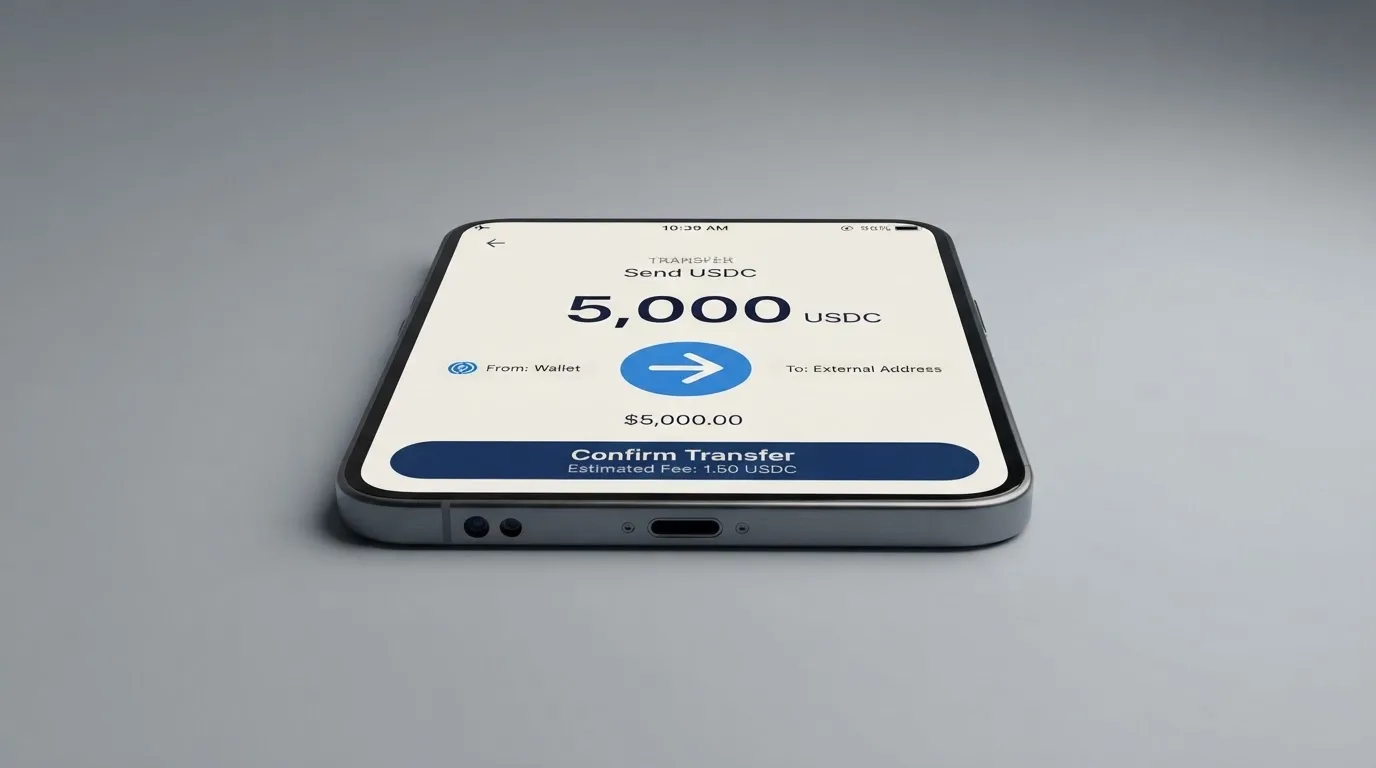
The flow is:
- Thra account to wallet. Inside the app you go to your Thera account, choose “Transfer to Wallet”, and move the payroll balance into the Thera Wallet.
- Wallet to card. From the Wallet section you choose “Add Funds” to load the card. Thera says the balance usually reflects on the card within 5 to 10 minutes.
The wallet itself only holds USDC and USDT, and the only networks on which Thera accepts deposits are Ethereum and Tron. That is a real limitation. If you hold USDC on Solana, Polygon, Base, Arbitrum, Avalanche or any of the other networks Circle natively supports, you will have to bridge or swap before you can fund the card, and the bridging fee is on you.
To withdraw (move money *out* of the Thera Wallet to an external address), the flow is:
- Add a withdrawal method — an external crypto address — under “Add Method”.
- Send USDC or USDT to that address, on Ethereum or Tron only.
- Wait for the transaction. Fees for the withdrawal are not stated.
A few things to be careful with:
- Wrong address, wrong network. A transfer to a wrong address or to a network Thera does not support can be lost permanently. Blockchain transfers are irreversible, and manual support recovery is not guaranteed.
- No third-party fiat on-ramp published. Thera does not advertise a way to top up the card from a regular bank account, a card payment, or a third-party on-ramp. The only documented funding path is from the Thera account itself.
- Closure balance. Thera’s pages do not say what happens to the card balance if your Thera employment ends. Treat the card balance as tied to your employment status until you have written confirmation otherwise.
Paying with it every day
The card is a virtual Visa, and that is where the everyday-use story is strongest and weakest at the same time. Strongest, because a virtual Visa works on any site that accepts Visa online. Weakest, because the card cannot be used in physical stores, cannot be used at ATMs, and does not have a physical form factor yet.
What is in the app:
- Apple Pay and Google Pay. The card can be added to either wallet through the card settings. Once tokenised, the card number on the merchant side is replaced by a device-specific number, and the card details auto-hide when you leave the page in the app.
- Card details in the app. The card number, expiry date and CVV are visible inside the Wallet section, useful for online checkout.
- No peer-to-peer transfers. The card cannot be used for P2P transfers through payment links, which is a common feature on competing cards.
- Blocked categories. Thera does not publish a list of blocked merchant categories. On a typical crypto card, gambling (MCC 7995) and similar high-risk categories are blocked by issuer policy rather than law; Thera’s pages do not confirm either way.
What is missing from the app:
- No cash access. ATM withdrawals are not addressed, and the card is online-only, so cash is not part of the product.
- No offline or in-store use. A physical card is “planned”, so for now you can only use it where you would type in a card number.
- No rewards or cashback. The pages do not mention a rewards rate, cashback, sign-up bonus or any earn component.
- No app ratings read. Thera has a web dashboard; the page I read did not give app store ratings or recent feature updates.
For a freelancer in Mexico or Colombia who is buying software, paying for remote work tools, or running an ad account, this card does that job without drama. For someone who wants to tap to pay at the supermarket, it does not.
What can go wrong
The risk section is short because the public incident list is short, but the gaps in the published information are themselves a risk you should price in.
Company and issuer opacity. Thera’s pages do not name the legal entity behind the card, the card issuer or any licences. The KYC partner is named (AiPrise), but the bank that issues the Visa programme is not. When a card issuer is not on the page, you are trusting the brand on the front, not a regulated institution you can look up.
No fee schedule. “May incur FX fees” is not a fee schedule. If you start using the card in earnest, the first surprise fee is also the first thing you discover about the card’s economics.
Withdrawal complaints. On Trustpilot, Thera Wallet has a 4.7 rating from 100 reviews, all posted in the last 12 months (read on 21 October 2026). I went through what was visible, and the one substantive complaint was from 6 August 2026: a user said a withdrawal was marked as completed but the funds never arrived, and that support replies were slow and repetitive. Thera has not responded publicly to the negative reviews. A single data point is not a pattern, but it is the only data point, and it is the failure mode that hurts most — money you have been told is gone.
KYC outcomes are binary. The KYC guide lists only “Verified” or “Declined”. There is no published escalation path if you are declined, no reason code, and no address shown for the reviewer. If your application is refused, you find out why only if support chooses to tell you.
Custody not stated. The pages do not say whether the funds in the Thera Wallet are held in a custodial account at a qualified custodian, in a pooled hot wallet, or some combination. With a custodial product, the custody arrangement is the single most important fact about it; Thera does not publish that fact.
Network limitations. Only Ethereum and Tron are accepted for USDC and USDT, and only those two tokens. The minimum, the speed and the on-chain fee you will pay are all on the blockchain, not on Thera. Circle stopped supporting USDC on Tron in February 2024, so a “USDC over TRC20” deposit is not a natively supported path on Circle’s side; Thera’s pages say it accepts Tron-deposited USDT, which is consistent with USDT-only on that network.
Reversibility. Crypto transfers are irreversible. If you withdraw to the wrong address, you will not get the funds back from the network. If you load the wrong token or use the wrong network, support can try to help, but there is no guarantee.
Sanctions and frozen funds. Stablecoins are not censorship-proof. Tether has stated that it disables tokens in wallets on the OFAC sanctions list and has frozen funds tied to illicit activity. If the address you withdraw to is on a sanctions list, your transfer can be stopped.
Programme risk. Card programmes get shut down. In November 2022 Visa said it had “terminated our global agreements with FTX”, and the FTX US debit card was wound down by its issuer. WaveCrest, a Visa card issuer that supplied crypto card brands, was suspended by Visa in Europe in 2018. There is no public reason to think Thera is at risk, but the lesson is that a card programme depends on the network and the issuer staying in business, and the names of those partners are not on Thera’s public pages.
Chargebacks and disputes. Thera’s card page does not describe a dispute or chargeback process. The general rule for prepaid cards in the US is that Regulation E protections (the rules for debit cards) are weaker than Regulation Z (credit cards), and crypto-funded prepaid cards can sit in a grey area. Do not assume the same dispute rights you have on a bank debit card.
What to take instead
If Thera Wallet’s gaps are dealbreakers for you, here are three alternatives I considered while writing this review, and how they compare on the points that matter most. These are independent products, not endorsements.
| Card | Score | Who can get it | Card type | Fees | Top-up | Rewards |
|---|---|---|---|---|---|---|
| Whop Cards | 5.2 / 10 | 31 US states for consumers, 41 for businesses | Visa, online and in stores, virtual/physical not stated | Page says “no extra fees”, no numbers published | Spends from a Whop balance backed by stablecoin collateral; coin/network not stated | 5% cashback at select merchants, currently Uber |
| Stella | 6.5 / 10 | Countries not stated on the site; US and European users routed via affiliates; sanctions programmes barred | Virtual and physical, VISA, 40 million+ merchants | Fees “described under this User Agreement and/or on the App” | Deposit crypto into the app wallet; custodial | No cashback stated |
| UniFi Card | 4.7 / 10 | Not confirmed; app lists send-money routes to Philippines, Mexico, eurozone, plus Colombia, Brazil and UK | Prepaid Debit Visa, issued by Lead Bank, USD; Apple Pay | “Fees may apply” with no numbers | ACH, wire, SEPA (IBAN), SPEI (CLABE) or a USDC wallet | Listing claims 3% rewards on balances |
A few notes on each:
Whop Cards is the closest in spirit to Thera — also a US-card-style product where the published fee information is thin. Its edge over Thera is that it works in stores as well as online, and it has a published cashback rate (5% at Uber, more merchants planned). The catch is that it is a US product, and the unsupported-country list is long: Belarus, Mainland China, Cuba, Hong Kong, India, Iran, Iraq, Israel, Myanmar, Nepal, Nicaragua, North Korea, Russia, Syria, Turkey, Ukraine, Venezuela, Vietnam. If you live in one of those countries, Whop is not the alternative.
Stella is a higher-scoring alternative, with a Visa card that works at “over 40 million VISA merchants globally” in both virtual and physical form. The fee information is also not published, but the company is more transparent about the user agreement and the app being the source of truth. If you are a US or European user you will be routed through an affiliate, and the terms bar users under economic sanctions programmes. This is the alternative to look at if Thera’s payroll-only rule is what rules you out.
UniFi Card is a prepaid debit Visa issued by Lead Bank, denominated in USD, and it accepts ACH, wire, SEPA (IBAN) and SPEI (CLABE) — that last one is the Mexican bank-transfer system, which is useful for the same audience Thera targets. The listing claims 3% rewards on balances, but coin and network details beyond USDC are not stated. Like Thera, it is light on published fee information, and the issuer is at least named (Lead Bank), which is more transparency than Thera currently offers.
Who I would recommend it to
The short version is: if you are a freelancer or contractor in Argentina, Bolivia, Brazil, Colombia, the Dominican Republic, Ecuador, Guatemala, Mexico, Peru or the United States, and your employer or client already pays you through Thera, the Thera Wallet card is a sensible way to turn that stablecoin payroll into online spending. The internal transfer is well documented, the time to fund the card is short (5 to 10 minutes), and the card is accepted wherever Visa is accepted online. For that audience, the lack of a published fee schedule is a smaller problem than the alternative of trying to convert USDC into local currency through a third-party on-ramp.
The longer version is that I would not recommend the card outside that audience. If you are not paid through Thera payroll, the card is not available to you. If you need to use a card in a physical store, at an ATM, or to send money to another person, the card does not do those things today. If you want a published fee schedule, a named card issuer and a written dispute process, none of those are on the page. And if you intend to move meaningful sums through the wallet, the only public data point about a failed withdrawal is the one Trustpilot complaint from August 2026, which is not a pattern but is the only pattern there is.
What I would check first before signing up:
- Country and employment status. Confirm that Thera currently issues cards in your country and that your role (employee, contractor) qualifies.
- Fee behaviour in your test month. Put a small amount through the card, in your actual spending currency, and read the line items before scaling up.
- Withdrawal path. Do a test withdrawal to an address you control, on Ethereum or Tron, with a small amount, before relying on it for a real payout.
- What happens at end of employment. Ask support in writing what happens to any card balance if your Thera-paid role ends.
A card that is genuinely useful to a specific group can still be a poor choice for the average reader of “crypto card reviews”, and Thera Wallet sits squarely in that tension.
Frequently asked questions
What is the Thera Wallet card?
The Thera Wallet card is a virtual Visa debit card that spends from a crypto balance held in the Thera Wallet. The wallet holds USDC and USDT only, and the card is intended for online purchases where Visa is accepted.
How does the Thera Wallet card work?
You get paid in stablecoins through Thera, transfer the balance from your Thera account to the Thera Wallet, and then load the card with “Add Funds”. The card balance usually reflects within 5 to 10 minutes, and you spend it like any other Visa card online.
Is Thera Wallet a bank?
Thera’s public pages do not describe Thera Wallet as a bank, and the card issuer and legal entity are not named. The KYC partner is AiPrise, but the issuing bank and any banking or e-money licence are not stated on the pages I read.
Who owns Thera Wallet?
Thera is the payroll and payments platform behind the card (on Thera’s website). The legal entity that operates the wallet and the card programme is not named on the public pages reviewed.
Is the Thera Wallet card available in my country?
The card is officially available in ten countries: Argentina, Bolivia, Brazil, Colombia, the Dominican Republic, Ecuador, Guatemala, Mexico, Peru and the United States. Availability is described as “based on local banking and regulatory availability”, so the list can change. You also have to be paid through Thera payroll to qualify.
How do I get the Thera Wallet card?
You create a wallet under Payroll > Wallet in the Thera app, complete AiPrise KYC on your phone (ID plus selfie), submit a W-8BEN, W-8BEN-E or W-9 tax form, and wait for verification. Once approved, the virtual card is generated in the Wallet section.
Does the Thera Wallet card require KYC?
Yes. Identity verification is run by the KYC partner AiPrise on mobile only, via a QR code. Accepted documents are a driver’s licence, resident ID, voter ID, national ID or passport, plus a selfie. The outcome is either “Verified” or “Declined”, and the standard review takes minutes (24 to 48 hours if extra checks are needed).
How do I top up the Thera Wallet card?
Move funds from your Thera account to the Thera Wallet, then choose “Add Funds” on the card. The card balance usually reflects within 5 to 10 minutes. The only deposit networks are Ethereum and Tron, and the only supported tokens are USDC and USDT.
How do I add the Thera Wallet card to Apple Wallet or Google Pay?
The card can be added to Apple Pay and Google Pay from the card settings in the Thera Wallet. The card number, expiry and CVV are visible in the Wallet section, and they auto-hide when you leave the page.
Is the Thera Wallet card safe?
The published safeguards are limited to identity verification via AiPrise, card tokenisation in Apple Pay and Google Pay, and auto-hiding card details in the app. The legal entity, the card issuer, the custody arrangement and the dispute process are not stated on Thera’s public pages, and the only public complaint pattern on Trustpilot is a withdrawal that was marked as completed but did not arrive.
App and neobank card options – cryptocardoptions.com
Content created by the «cryptocardoptions.com» team