
The Brighty card is a crypto IBAN with a virtual card attached, useful if ordinary banking is hard for you, thin on the things a payment card is supposed to do well
 Available in US
If you are looking at the Brighty card, you are probably not doing it because you want another piece of plastic. You are doing it because a normal bank card is either hard to get, awkward to hold, or tied to a banking relationship you do not want or cannot have. Brighty is a fintech app that gives you a euro IBAN, a card that spends from crypto, and a place to hold balances — with the promise of spending without touching an exchange. That is a genuinely useful thing for a specific person, and a fairly thin thing for everyone else. I went through the card’s own pages, its plan structure, its fees, its complaint history and the general behaviour of crypto cards before writing this, and here is what I found.
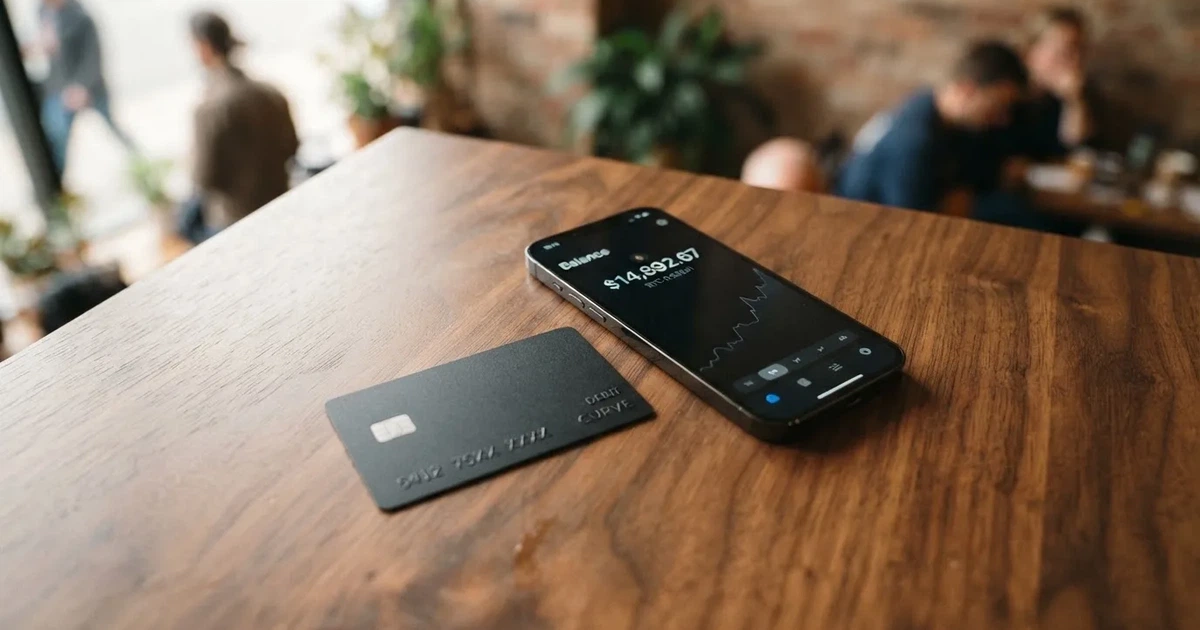
The conditions described here are current as of October 28, 2026.
My score: 5.6 out of 10. Not a bad product — a narrow one, with real gaps in the places a payment card normally earns its keep.
| Criterion | Mark | Why |
|---|---|---|
| Who can get it | 5 / 10 | The card page is labelled “EEA only” and the app has extended to Montenegro and Andorra, so whether you can open an account depends on where you live and, in those two countries, on your nationality |
| Cost | 7 / 10 | Virtual card issuance is EUR 2.99, the monthly card fee is free, and conversion starts at 0.6% — but the paid plans and their prices are not on the page I could read |
| Top-up options | 7 / 10 | Bitcoin, Ethereum and USDC in-app, incoming crypto free on all plans, plus an IBAN, and a wide list of withdrawal networks |
| Reliability and complaints | 4 / 10 | No issuing partner is named on the pages I read, and Trustpilot shows 3.2/5 from 78 reviews, with account closures without explanation as a recurring theme |
| Everyday use | 5 / 10 | A virtual Mastercard, Google Pay works, Apple Pay does not for Mastercard, and physical card orders are reported to be unfulfilled |
This is the card for an EEA resident who wants a crypto IBAN and a virtual card and is not overly bothered that the card is virtual-only, that Apple Pay will not work with it, and that the fees are small but not always obvious. This is not the card for someone who wants a metal card in a wallet, a card that reliably works at foreign ATMs, or a large cash withdrawal. If you are comparing cards because a bank turned you down, read on — that is the situation Brighty actually addresses, and it does address it. If you are comparing because you want a better exchange rate or nicer rewards, the number above should stop you reading.
Will they give you the card?
Short answer: if you live in the EEA, probably yes. If you live in Montenegro or Andorra, it depends on your nationality as well as your address. Outside those areas, the card’s public pages do not tell me.
The card page itself carries an “EEA only” label. The app has since been extended to Montenegro and Andorra, and Brighty describes availability as something that “may vary by jurisdiction” — which is regulatory language for “we will decide when you apply”. There is one firm exclusion I can quote: “Due to regulatory restrictions, we are unable to onboard Russian nationals residing in Montenegro and Andorra.” So in those two countries the rule is residence plus nationality, not residence alone.
Beyond that, the card’s public pages do not give a full country list, and I will not guess at one. What you will find on third-party sites is a figure of 36 listed countries including the EU, the EEA, Switzerland, Montenegro, Andorra, San Marino, Monaco and Moldova, but that comes from an unofficial source from August 2026 and Brighty has not confirmed it. Treat it as a hint, not a guarantee.
The wider point matters for your situation. Nationality is recorded and screened separately from residence, because sanctions screening and issuer risk policy are applied to citizenship and country of birth as well as to your address. If you hold a passport that is not from where you live, that is the kind of thing that decides your application, not where your electricity comes from. And the rules here are not bureaucratic decoration: an EU-regulated firm is required, when due diligence cannot be completed, to hold back from the transaction or relationship and, where necessary, end an existing one. That is the legal reason behind a pattern of account closures that I will come to.
How to get it
You apply in the app, and you pass identity and address checks during sign-up. Brighty’s own help centre names Sumsub as the verification provider, but it does not publish the verification levels it applies or how long approval takes — that is simply not stated anywhere I could read. If the in-app route stalls, the fallback is email to [email protected].
What you will need to hand over, according to the help articles:
- Identity: a clear photo, your full name, date of birth, place of birth and citizenship.
- Address: a utility bill or bank statement as a PDF no older than three months — screenshots are rejected — or an official registration confirmation, or a second official ID that carries your address.
The listed reasons for a rejection are worth reading before you photograph anything, because most of them are avoidable. Documents that are ambiguous, unclear, contradictory or incomplete get bounced. So does an address that does not match the one you signed up with, an old or damaged document, and a document with blank fields including an unsigned signature.
On the card itself: the main card page shows a virtual card that works wherever Visa is accepted, while the help articles refer to a physical Visa, a virtual Visa with no PIN, and a virtual Mastercard. The fees page describes the card as a virtual Mastercard. Card currency is not stated. On delivery, a card-issuance article says you can choose a virtual or physical card in the app, but gives no countries, no timeframe and no cost — and the physical card price is not stated either. Unofficially, physical Mastercard orders are currently unavailable and the help centre says they “will not be fulfilled”, again without a published cost or timeframe.
That last point is the one to sit with. The card is something you will largely hold in your phone. If a virtual number in your wallet is not what you were picturing, that is worth knowing before you pay the issuance fee.
What it really costs
The headline numbers are good. The details are patchy, and the patchiness is the problem. Brighty’s own page says crypto converts instantly and gives no rates, so the honest picture has to be assembled from the fees article and the plan table.
| Fee or limit | One | Plus | Pro |
|---|---|---|---|
| Cards included | 1 | 2 | 3 |
| Card purchase limit, daily / monthly | EUR 50,000 / EUR 50,000 | EUR 75,000 / EUR 75,000 | EUR 100,000 / EUR 100,000 |
| Outgoing fiat, daily and monthly | EUR 30,000 | EUR 250,000 | EUR 500,000 |
| Free FX per month | EUR 0 | EUR 2,000 | EUR 5,000 |
| FX after the free allowance | 0.6% | 0.5% | 0.4% |
| SEPA / Faster Payments out | EUR 3 + 0.3%, min EUR 10 | EUR 0.5 + 0.3% | EUR 0.5 + 0.3% |
| SWIFT out | 0.9%, min EUR 50 | 0.9%, min EUR 50 | 0.9%, min EUR 30 |
| Max fiat account balance | EUR 100,000 | EUR 250,000 | EUR 500,000 |
| Virtual card issuance | EUR 2.99 | EUR 2.99 | EUR 2.99 |
| Monthly card service fee | free | free | free |
| Balance inquiry | free | free | free |
Cards issued per month are capped at ten. Three plans exist — One, Plus and Pro, in a help article dated 15/09/26 — and on that same page neither the subscription prices nor a metal card price is stated. Unofficially, One is free, Plus is EUR 9 a month and Pro is EUR 18 a month, and those same third-party sources put card limits much lower, at EUR 15,000 / 25,000 / 50,000, which contradicts the official plan table. I would plan around the official table and treat the plan prices as something to confirm in the app before you commit to a paid tier.
Now three everyday payments, so this is concrete:
A EUR 12 coffee paid in euros from a euro balance. The virtual card fee of EUR 2.99 was paid once, at issuance. Monthly card service is free, so no monthly fee. No FX, because no conversion is needed. This is the cheapest way to use Brighty and it works exactly as you would hope.
A EUR 40 subscription paid in dollars. The card converts at the in-app rate, and on the One plan with EUR 0 free monthly allowance you pay 0.6% on the converted amount — roughly EUR 0.24. The separate fee for paying in a foreign currency on the card itself is not stated, so I cannot tell you whether another layer sits on top. Ask before you rely on this for a large bill.
A EUR 300 transfer out to a eurozone account. On One that is EUR 3 plus 0.3%, minimum EUR 10; on Plus or Pro it is EUR 0.5 plus 0.3%. So the plan change pays for itself on outgoing transfers rather than on card spending — which is a useful thing to know, because the free FX allowance is what most people notice first and it is not the biggest lever.
Two costs you will not find on any list. First, ATM fees: the card page claims acceptance at ATMs worldwide but gives no fee and no allowance, and it notes that a physical Visa must be used at an ATM with a new PIN after a PIN change to activate. Unofficially, there is no dependable current ATM feature for the Mastercard, with legacy Visa rates reported at EUR 3.50 in the EEA and EUR 3.50 plus 3.5% outside for Plus, and EUR 3 plus 3% outside for Pro. Second, card purchase limits, daily and monthly, are on the table above — EUR 50,000 on One — which is generous for a person spending a salary and irrelevant to most readers.
My read on cost: 7 out of 10 is fair. Issuance and monthly card fees are genuinely cheap for Europe, and the in-app FX rate is not predatory. But the number that matters to you is not on the page, the card-currency fee is unstated, ATM costs are unstated, and a paid plan may be required before SEPA transfers stop costing EUR 3.
How to top it up
Topping up is the part Brighty does clearly. You can hold crypto such as Bitcoin, Ethereum and USDC in the app — the NPC token is the one featured — and you have a euro IBAN to receive fiat into. The card page does not list which networks the crypto deposits arrive on, which is a real gap given how much networks matter in this category; the outbound list is the one that is public.
Incoming. Incoming crypto is free on every plan with no monthly limit. Incoming SEPA is 0.3% with a minimum of EUR 10, Faster Payments is 0.3% with a minimum of EUR 10, and SWIFT is 0.7% with a minimum of EUR 50. Incoming fiat is capped at EUR 100,000 a month. The card top-up fee and the minimum top-up amount are not stated.
Outgoing crypto, the same on every plan and with no monthly limit:
| Network | Fee |
|---|---|
| ERC20 (Ethereum) | EUR 3 |
| TRC20 (Tron) | EUR 3 |
| BTC | EUR 20 |
| ADA | EUR 1 |
| XTZ | EUR 1 |
| HAQQ | EUR 1 |
| TON | EUR 3 |
| ARB | EUR 3 |
| Solana | EUR 3 |
| Polygon | EUR 3 |
| BEP20 | EUR 3 |
The networks Brighty lists for sending out are Ethereum, Tron, Bitcoin, Cardano, Tezos, Islamic Coin, TON, Arbitrum, Solana, Polygon and BEP20.
Two things to know about the mechanics. Network fees are charged by the blockchain, not by the card — so an ERC-20 token transfer needs ETH in the wallet to pay gas, because fees on that standard are paid only in ETH and a wallet holding the token but no ETH simply cannot send. Tron prices fees through bandwidth and energy and commonly burns TRX. And blockchain transfers are irreversible: a deposit sent on a network Brighty does not support, or to an address belonging to a different network, can be lost or may need manual support recovery with no guarantee. Brighty’s help centre does have articles on wrong-network deposits and unsupported cryptocurrencies, but I have not read their contents and cannot tell you how recovery actually goes. Check the network before you send, every time.
If you close your account yourself, it is scheduled for permanent deletion within 30 days. What happens to the balance left inside is not stated — so withdraw before you close, and confirm that you have.
Paying with it every day
Daily use is where this card is thinnest, and the reason is a single fact: it is a virtual Mastercard. Google Pay works with Mastercard. Apple Pay does not — Brighty’s help article on Apple Pay and Google Pay, dated 26 May 2026, states that Apple Pay is currently unavailable for Mastercard cards because of technical updates, and is available for Visa. So the phone-wallet experience you would assume is not there, unless the card you hold turns out to be a Visa.
What you can do: hold the card number in your phone’s usual wallet app as a manually added card, spend it online anywhere Mastercard is accepted, and use Google Pay. Apple Pay and Google Pay are both mentioned in the Montenegro and Andorra announcement, which is consistent with the help article’s caveat.
On rewards, the card page says “Keep earning on your crypto while using it” and gives no rate and no payout mechanics, and it never uses the word cashback. Unofficially, the scheme is 0.5% base in USDC on all tiers, 1.25% to 1.75% in selected categories, with monthly caps of 20, 60 and 100 USDC for One, Plus and Pro, paid the following month into a Reward Box. If rewards are part of why you are considering a card, that structure is thin at the base rate and depends on categories you may not shop in. Treat it as a small perk, not a reason.
Three more everyday realities. Blocking of merchant categories is not stated, so you cannot tell whether gambling or adult merchants will be refused — and given that many issuers block gambling category 7995 by policy rather than by law, with the list varying by issuer, assume nothing. Merchant category codes and declined payments behave as they do with any card: a merchant can look up your BIN and see which institution and country issued the card, and may apply extra scrutiny if the issuer country differs from your billing address, which is why a card issued in one country can look foreign to a shop in another. A declined authorisation can leave a hold on your money for several days, typically up to seven. And address verification is mainly offered in the US, Canada and the UK and is generally unavailable for foreign-issued cards, which can cause declines on their own.
The app itself looks well received on the one storefront I could see: the App Store listing, read on the Turkish storefront, shows “Brighty: Crypto Card & IBAN” at 4.9 from 9 ratings. Nine ratings is not a signal about anything. I could not find a Google Play rating.
What can go wrong
This is the section where the score drops hardest, and you should read it before you fund the account with anything you mind losing.
The issuer is not named. The card’s pages describe Brighty as “a financial technology company, not a bank”, and say that accounts, cards, custody and the on/off ramp are handled through unnamed licensed partners. No licence numbers appear on the pages I read. That is not automatically a red flag — this is how the category is built — but it means you cannot check the specific entity your money sits with from the card’s own marketing. Unofficially, 2024 press coverage describes Brighty as based in Switzerland and holding crypto-exchange and digital-asset custodian licences; that is not confirmed on the official pages.
Your money is held for you, not by you. Custody is with Brighty, and the official FAQ says “Brighty keeps user funds in segregated accounts that are specially secured”, for fiat and crypto alike. Brighty says it works with penetration testers. No insurance is mentioned, and two-factor authentication is not mentioned on the page I read. Segregated means held apart from the company’s own money, not the same as a bank deposit — such balances may not be covered by any deposit guarantee scheme. And the category has a poor record here: Mt. Gox, Coincheck and the Ronin Network all failed, and stablecoin issuers themselves have intervened, with Tether describing both the freezing of funds tied to illicit activity and disabling of tokens in wallets on the OFAC sanctions list. If you hold meaningful money here, the honest framing is counterparty risk, not “my keys”.
Closures happen without a warm-up. Trustpilot shows 3.2/5 from 78 reviews on the page I read. The recurring themes are an account closed without explanation — with the company citing policy or regulation — a referral bonus not paid, with suspected referral abuse cited, and instant transfers taking hours. Some reviewers praise the cashback. I found no card-specific complaints and nothing on Reddit. The regulatory background explains the pattern: when due diligence cannot be completed, EU rules require the institution to hold back from the transaction or relationship and, where necessary, end existing relationships. Offboarding reasons Brighty officially lists include suspected fraud, unclear source of funds, partner-provider concerns, and PEP or sanctions status.
Disputes are undocumented. There is a “Refund Policy for Unsupported Crypto Deposits” article and a “Wrong Network and Unsupported Cryptocurrency” article, whose contents I have not read. I saw no card dispute or chargeback article at all. Unofficially, no dispute or chargeback process is described, and cashback can be reversed if a purchase is refunded or charged back. Practical consequence: if something goes wrong with a card purchase, you may be relying on the card network’s chargeback route, whose liability shift under 3-D Secure is contested by critics — and prepaid-card coverage under US rules varies and should not be assumed.
The programme itself can end. Visa and Mastercard do not issue crypto cards to consumers; they license issuers and can suspend a programme. Visa terminated its global agreements with FTX on 13 November 2022, and WaveCrest, a Visa issuer that supplied crypto card brands, was suspended in Europe in 2018, closing every WaveCrest-issued Visa programme. Closures typically mean a notice period, then spending and loading stop, then you are asked to withdraw what’s left. Card programmes have also become a MiCA question: the transitional period lets providers operating under national law continue only until 1 July 2026 or until they receive or are refused a MiCA authorisation, whichever comes first.
You can lock yourself out with a wrong transfer. Irreversibility again, this time with a price tag: the BTC withdrawal fee alone is EUR 20.
What Brighty does offer as control: freeze the card temporarily and terminate it permanently, both in the app — termination cannot be reversed. Support is email at [email protected] with a help centre at help.brighty.app, in English, French, Italian, Lithuanian, Polish, Romanian, Serbian and Spanish, with no Russian. No phone line, no live chat and no published hours appear in the FAQ I read, and the languages the support staff actually speak are not stated.
One last check before you deposit: Brighty raised USD 10M in December 2024, and a provider’s licensing status can be checked against ESMA’s interim register of authorised CASPs, white papers and non-compliant entities.
What to take instead
If your problem is “no ordinary bank card”, the honest comparison is against other crypto cards, and the differences are large. Brighty’s real advantages are the euro IBAN and a free monthly card fee.
| Brighty | Whop Cards | Stella | UniFi Card | |
|---|---|---|---|---|
| Score in our review | 5.6 / 10 | 5.2 / 10 | 6.5 / 10 | 4.7 / 10 |
| Who it is for | EEA residents needing a crypto IBAN | US consumers in 31 states and businesses in 41 | Not stated on the official site | Not confirmed from official pages |
| Card | Virtual Mastercard, Visa also referenced | Visa, online and in stores | Virtual and physical VISA | Prepaid Debit Visa, issued by Lead Bank |
| Card currency | not stated | not stated | not stated | USD |
| Cost | EUR 2.99 issuance, monthly fee free | “No extra fees”, no amounts listed | not stated, “described under this User Agreement” | not stated, “fees may apply” |
| Spending model | Crypto and fiat balance, plus IBAN | Whop balance; pending balance usable on arrival | Deposit crypto, auto-tops the card | ACH, wire, SEPA, SPEI; USDC wallet |
| Rewards | Not stated; unofficially 0.5% base USDC | 5% cashback at select merchants, currently Uber | No cashback stated; separate Earn product | “3% rewards on balances” claimed on the listing |
| Rewards currency | not stated | not stated | — | not stated |
Reading across: Whop is the most geographically limited, tied to specific US states, and unsupported for consumers in Belarus, China, Cuba, Hong Kong, India, Iran, Iraq, Israel, Myanmar, Nepal, Nicaragua, North Korea, Russia, Syria, Turkey, Ukraine, Venezuela and Vietnam — though it says nothing about whether it checks citizenship or residence. Stella scores highest and routes US and European users through affiliates while barring anyone under economic sanctions programmes, but it publishes almost nothing: no country list, no fee amounts, no cashback. UniFi is the least established on official pages, priced in USD, and its app listing mentions send-money routes to the Philippines, Mexico, the eurozone and, in recent release notes, Colombia, Brazil and the UK.
My conclusion from the table: if you need the IBAN, Brighty is the one of these that plainly has one. If you need a physical card, look at Stella. If you are in the US and want the strongest cashback percentage listed here, Whop’s 5% at select merchants is on paper a different order — but it is select merchants, currently Uber, and the plan structure behind it is not published. If you want simplicity in dollars and do not care about crypto, UniFi. Nobody in this set publishes its card-currency fee.
Who I would recommend it to
Brighty to someone in the EEA who holds crypto, has been declined a normal card or does not want a bank relationship, and wants a euro IBAN with a virtual card attached. The free monthly card fee and free incoming crypto make it cheap to keep open, and 7 out of 10 on cost reflects that honestly.
I would not recommend it to someone whose income arrives in dollars or pounds and who spends mostly in high-street shops, because the FX allowance is either zero or small and the card is euro-denominated. I would not recommend it to someone whose main payment method is a phone wallet, because Apple Pay does not work with the Mastercard. I would not recommend it to anyone planning a large balance or an ATM withdrawal, given the unstated ATM costs, the EUR 20 Bitcoin withdrawal fee and the fact that the underlying issuer is not named on the pages I read. And I would think twice if you are a national of a country currently facing sanctions or if you reside in a jurisdiction where the card cannot onboard you. Brighty plainly states there are regulatory restrictions for certain regions and profiles, which you should verify against your own citizenship and residence before you apply.
If you do open one, my own order would be: put a small amount in, test a purchase and one withdrawal, confirm Apple Pay versus Google Pay on the card you actually receive, read the ATM and card-currency fee inside the app where the website is silent, check ESMA’s register, and withdraw anything you would not miss before closing anything.
Frequently asked questions
What is the Brighty card?
Brighty is a fintech app that bundles a euro IBAN, a crypto wallet and a payment card. You hold balances in euro or in crypto, and the card spends them — many crypto cards work like a prepaid card rather than a debit card, because the crypto is converted and loaded as a balance first. Brighty describes itself as a financial technology company, not a bank, and handles accounts, cards and custody through licensed partners it does not name on its public pages.
Is Brighty a bank?
No, and it says so itself: “Brighty is a financial technology company, not a bank”. Your money is held by Brighty in segregated accounts for both fiat and crypto, which means it is kept apart from the company’s own funds — not that it is a bank deposit. No insurance is mentioned on the pages I read, and such balances may not be covered by a deposit guarantee scheme. Treat holding money here as counterparty risk.
Who owns Brighty?
The card’s own pages do not name the issuing partner behind the card, and no licence numbers appear on the pages I read. Unofficially, 2024 press coverage describes Brighty as based in Switzerland and holding crypto-exchange and digital-asset custodian licences, but Brighty has not confirmed that. The card page also mentions an NPC token as the featured asset. What is confirmed: Brighty raised USD 10M in December 2024, and you can check a provider’s status on ESMA’s interim register.
Does the Brighty card require KYC?
Yes, verification runs in the app at sign-up, with Sumsub named as the provider, though the levels and processing time are not stated. You supply a clear identity photo with your full name, date of birth, place of birth and citizenship, plus proof of address — a utility bill or bank statement PDF from the last three months, screenshots rejected. EU rules also require a sanctions check and a PEP determination, and if due diligence cannot be completed the account can be refused or closed.
Is Brighty card free?
Partly. The virtual card costs EUR 2.99 to issue and the monthly card service fee is free, with up to ten card issues a month and free balance inquiries. Currency exchange in the app costs 0.6%, 0.5% or 0.4% by plan above a free monthly allowance of EUR 0, EUR 2,000 or EUR 5,000. Subscription prices for Plus and Pro are not stated on the plan page; unofficially they are EUR 9 and EUR 18 a month.
Can I use the Brighty card in my country?
Only if you live in the EEA, or in Montenegro or Andorra where the app has expanded — and even there, Russian nationals are excluded. The card page is labelled “EEA only” and availability “may vary by jurisdiction”. No full country list appears on the official pages; an unofficial August 2026 source lists 36 countries including Switzerland, San Marino, Monaco and Moldova. Check your own country before downloading anything.
How do I add the Brighty card to Apple Wallet?
Probably not, if the card you receive is a Mastercard. Brighty’s help article states that Apple Pay is currently unavailable for Mastercard cards because of technical updates, and available for Visa. Google Pay does work with Mastercard. You can still add the card number manually to your phone’s wallet, but that is a different experience from tapping in and out with Face ID — worth checking which card you are actually issued.
Is the Brighty card safe?
Safer than holding nothing, but it carries real counterparty risk because custody sits with Brighty rather than with you. Brighty says funds are in segregated accounts and that it works with penetration testers, but no insurance is mentioned. User feedback is mixed: Trustpilot shows 3.2/5 from 78 reviews, with recurring reports of accounts closed without explanation and transfers taking hours. There is no card dispute or chargeback process described that I could find.
What are the limits and fees I should know before depositing?
Card purchase limits are EUR 50,000 a day and a month on One, EUR 75,000 on Plus and EUR 100,000 on Pro. Maximum fiat account balance is EUR 100,000 on One rising to EUR 500,000 on Pro. Incoming crypto is free with no monthly cap; SEPA and Faster Payments in cost 0.3% with a EUR 10 minimum and SWIFT in 0.7% with a EUR 50 minimum. Crypto withdrawals start at EUR 1 for ADA and XTZ, EUR 3 for the ERC20, TRC20, TON, ARB, Solana, Polygon and BEP20 routes, and EUR 20 for BTC.
App and neobank card options – cryptocardoptions.com
Content created by the «cryptocardoptions.com» team