
WaldenPay is a quick virtual card, not a bank — and the 5% top-up fee is the price of that convenience
 Available in US
WaldenPay is a virtual prepaid card that runs on Visa or Mastercard rails and spends whatever you have loaded onto it. You register, send crypto to a generated address, the balance converts into dollars, and a working card appears in ~10 minutes. There is no monthly fee, no plastic, and a top-up line that accepts 135+ cryptocurrencies across 35+ networks. That is the shape of the product in one paragraph, and it is genuinely useful for a specific person: someone who cannot or will not open an ordinary bank account and who treats spending a crypto balance as the goal rather than a side effect.
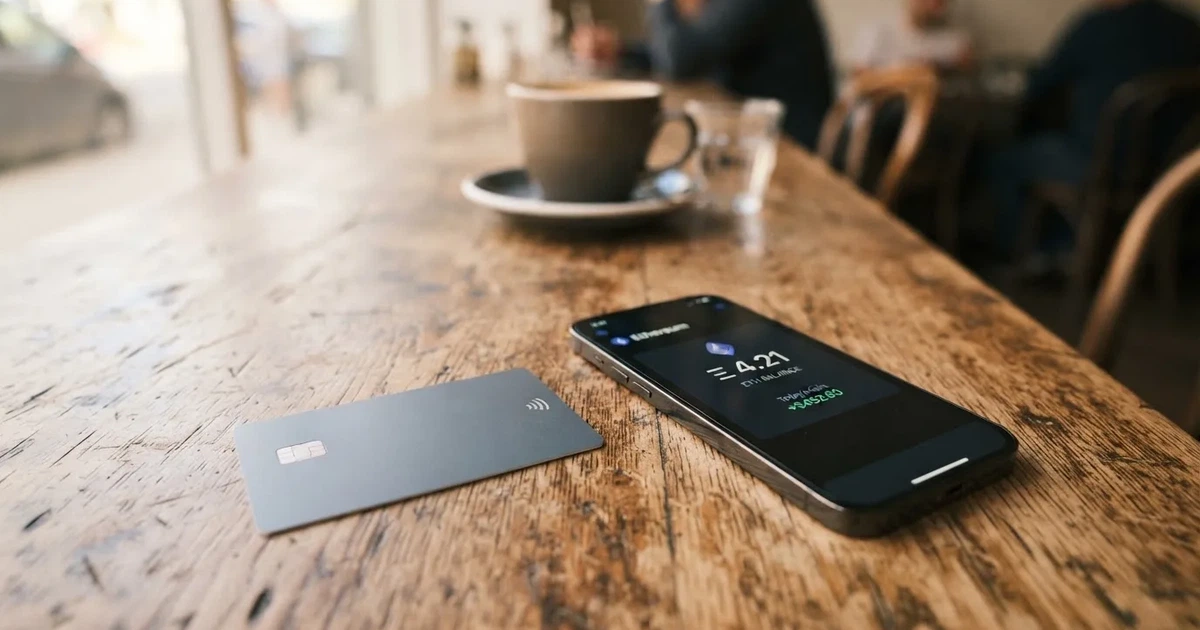
It is not that simple for everyone. The flat 5% top-up fee is the first thing you meet, and it does not disappear. The company behind the card states plainly that it “is not a bank” and does not name its issuing bank or its licences. The card is virtual only, so there is nothing to put in a shop window, and the public pages do not say what happens when you want to dispute a payment. Those are the trade-offs I am going to walk through.
I scored it 6.3 out of 10.
The conditions described on this page are current as of October 28, 2026.
My score, and who it actually suits
Here is the breakdown, criterion by criterion, with the marks exactly as I gave them and my reasoning in plain words.
| Criterion | Mark | Why |
|---|---|---|
| Who can get it | 9 / 10 | Sign-up and card loading are described as supported globally except for a short list of restricted jurisdictions: North Korea, Iran, Syria, Cuba, Russia, Belarus, Crimea/Donetsk/Luhansk regions, Afghanistan, Myanmar |
| Cost | 3 / 10 | Issuance is $10 once, the monthly fee is $0; top-up is 5% as a base rate, dropping to 4.75% at $2,000+ of card spend over 30 days and 3% at $100,000+, with no currency markup charged by WaldenPay itself |
| Top-up options | 10 / 10 | “135+ cryptocurrencies” across “35+ networks”, with USDT, USDC, BTC, ETH, SOL, TRX and LTC named as examples; minimum top-up $25, credited instantly |
| Reliability and complaints | 5 / 10 | Issuer entity BlueHouse Software B.V. in Rotterdam, the site says WaldenPay “is not a bank”, and neither the bank nor the licences are named; unofficial reporting points to split sentiment on Reddit and a partner-bank freeze risk |
| Everyday use | 5 / 10 | Virtual Visa/Mastercard only, delivered in about 10 minutes, Apple Pay and Google Pay supported, no plastic card, ATM terms not disclosed, and a web dashboard plus Telegram bot rather than a listed mobile app |
The total is 6.3 / 10, and the shape of that total tells you something honest: this card does one thing extremely well (loading crypto) and leaves a lot unsaid on everything around it. The 10 out of 10 on top-up is deserved. The 3 out of 10 on cost is deserved too, because a flat 5% fee is a heavy toll to pay for the convenience, and only volume makes it reasonable.
Who this suits, concretely:
- You hold crypto on a chain the card supports and want to spend it directly without going through a bank account.
- You want a card number in minutes, not days, and do not mind that it lives only in a wallet app.
- You spend in a country where your banking relationship is difficult, or you simply have no bank willing to open an account for you.
- You are comfortable with a provider that says outright that it is not a bank.
Who it does not suit:
- You want a physical card for a shop that wants to see it, or you need cash from an ATM and want to know the terms in advance.
- You need a dispute process, a chargeback right, or a clear answer to “what happens if my account is frozen”. None of that is stated.
- You spend small amounts repeatedly. A 5% top-up on a $25 minimum is $1.25 each time, and that ratio does not improve until your 30-day card spend passes $2,000.
- You are in one of the restricted jurisdictions, or your situation touches a sanctions question. Read that section, then stop if it applies to you.
Will they give you the card?
Mostly yes, and the exclusion list is short enough to read in ten seconds. WaldenPay describes registration and card loading as supported globally except in what it calls the restricted jurisdictions: North Korea, Iran, Syria, Cuba, Russia, Belarus, the Crimea/Donetsk/Luhansk regions, Afghanistan, and Myanmar. That is nine entries, and four of them are countries under broad sanctions.
The reasoning is spelled out on the page for the two that matter most in Europe. The Russia entry cites “EU restrictions on providing crypto-asset and payment services (Reg. 833/2014)”. The Belarus entry cites “EU sectoral sanctions (Reg. 765/2006)”. In other words, the blocklist is not WaldenPay inventing house rules; it is the European sanctions regime showing through, which is a reasonable reason for a provider to stop before an application arrives.
Here is the thing that is not stated, and I want to be plain about it rather than fill the gap for you: the page is framed by jurisdiction and does not say whether it is citizenship or residence that decides. If you live in a permitted country but hold citizenship of a restricted one, or the reverse, the public pages do not tell you which door you are standing at. The card is also subject to what it calls onboarding and eligibility checks, so passing the country test is not the same as being approved.
If your situation is anywhere near a sanctions list, the honest answer is that this review cannot help you think around it. A restricted jurisdiction means restricted, and that is the end of the inquiry. If you are unsure whether your own country or citizenship appears, that is a question for the provider’s own compliance team, not for a review page.
How to get it
The card is described with the language of speed: registration as “instant”, onboarding as “fast”, and ~10 minutes from sign-up to a working card. One of the card pages adds a useful detail — the card is issued instantly after the first top-up — so the real sequence is that you sign up, fund once, and the card appears.
Here is what you end up holding. It is a virtual prepaid card on Visa or Mastercard rails, and the balance on it is held in USD. Prepaid is the important word: it draws on money already in the account rather than asking a bank to pull from a linked current account at the moment of purchase. Crypto converts to dollars at the moment of loading, so the conversion happens on your side of the transaction, not at the till.
Some of the card pages say no identity documents are needed to get started, and card purchases are stated as subject to AML and regulatory requirements. Those two statements sit together without much tension, and the sensible reading is that you can open an account and look around before documents are demanded — but do not build a plan around never providing any. Which documents, of which kind, at which age, and at what point in the flow: the public pages do not say. Neither does the level of identity checking you can expect. Both are among the questions worth asking support before you commit money.
Fees: what it really costs
The headline numbers are friendly and the recurring cost is genuinely zero. The catch is that you pay on the way in, every time you pay on the way in.

| Fee or limit | Value |
|---|---|
| Card issuance | $10 one-time |
| Monthly fee | $0 — “No recurring charges, ever” |
| Top-up fee | 5% base, falling with 30-day card spend |
| Top-up tier, $2,000+ card spend in 30 days | 4.75% |
| Top-up tier, $5,000+ | 4.5% |
| Top-up tier, $10,000+ | 4.25% |
| Top-up tier, $25,000+ | 4% |
| Top-up tier, $50,000+ | 3.5% |
| Top-up tier, $100,000+ | 3% |
| Top-up tier, $250,000+ | Individual |
| Foreign exchange | “no foreign transaction markup” from WaldenPay; the network’s standard rate applies |
| ATM | Not stated |
| Card spending limits | Not stated |
| Send to Friend | $1–$10,000 per transfer, $20,000 per rolling 24 hours |
| Collect Payments | $1–$10,000 |
Now let the tiers do their work, because they are the whole economics of this card. There are no feature tiers — no gold, no silver — only the volume ladder above. What it rewards is spending more, measured as card spend across a rolling 30 days, not loading more. Loading a large balance does not help unless you then spend it.
Three everyday payments, priced out
You load $100 and spend $100. Top-up fee 5% of $100 is $5. Network fee for the transfer is whatever the chain charges, paid to the blockchain and not to WaldenPay — on Tron typically under $1. So $5 lands in the card’s favour, and your $100 arrived as $95.
You load $40 twice in a month because you are short twice. Two fees of $5.00 and $5.00, total $10 on $80 of spending — a heavy toll before any network cost. This is the small-user case the tier ladder actively punishes, and it is why I marked cost down to 3 out of 10.
You spend $2,100 across 30 days, in payments of $70. The base drops to 4.75%, so a $1,000 load costs $47.50 rather than $50. The saving is real but small — $2.50 for turning over $2,100. Meaningful relief starts at the top of the ladder, not the bottom.
Two other cost facts to hold in mind. First, the card balance is in USD and conversion from crypto happens at loading, so the value of what you load moves with the market until you spend it — you carry that exposure whether you wanted it or not. Second, on currency: WaldenPay charges no foreign transaction markup of its own, but the network’s standard rate still applies, so it is not a zero-cost foreign purchase. When you pay in a currency other than dollars, something is being taken by the network, and the page’s claim covers only the card company’s own slice.
Top up: how the money gets in
This is the strongest part of the product and the reason to stay interested. WaldenPay states “135+ cryptocurrencies” accepted across “35+ networks”, naming USDT, USDC, BTC, ETH, SOL, TRX and LTC as examples. The coin is converted to a dollar balance at the moment of loading, and the minimum top-up is $25 or the dollar equivalent. Crediting is described as instant.
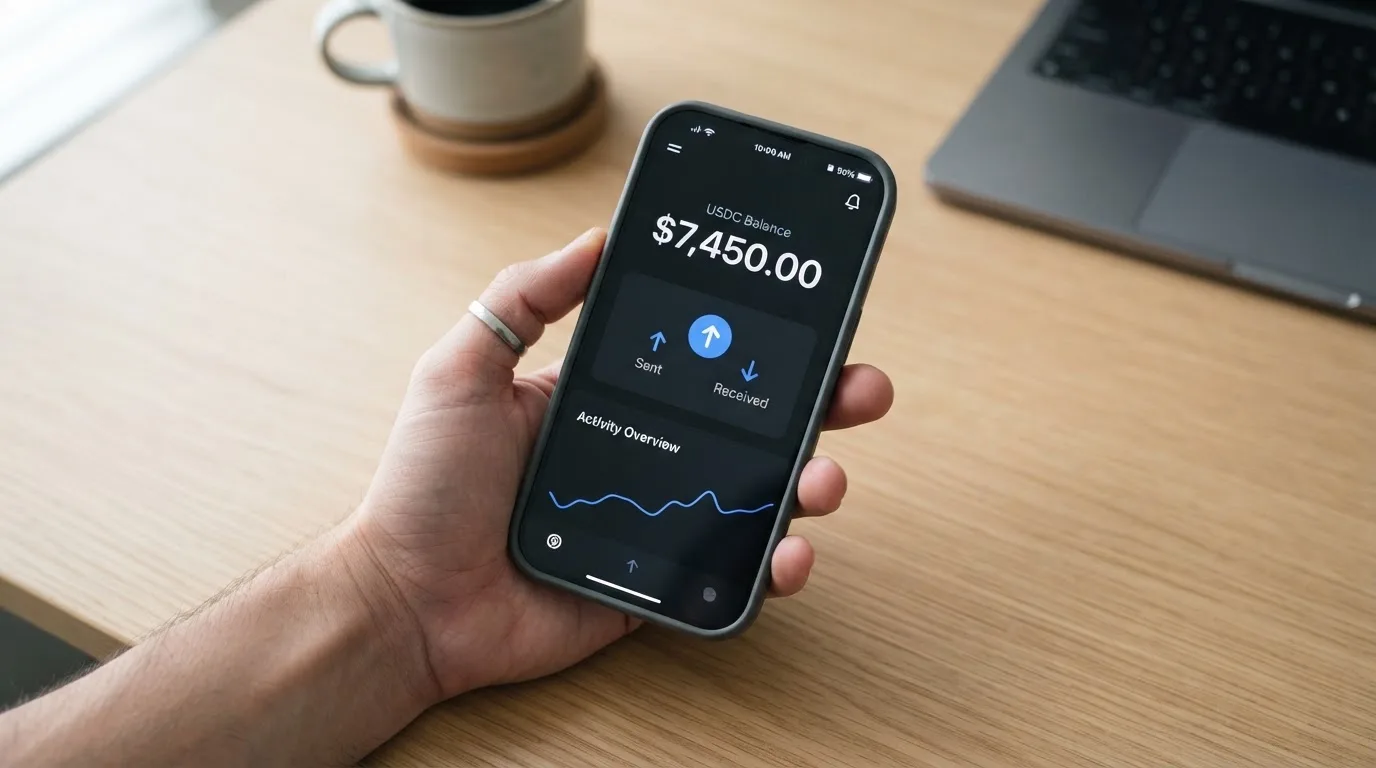
Three practical things follow from that. The network fee for your deposit is paid to the network, not to the provider, so on Tron it is typically under $1 — that is one reason TRC-20 USDT is the workhorse choice for small top-ups. The coin and network both have to be right: transfers on a blockchain are irreversible, and a deposit sent on a network the provider does not support, or to an address belonging to a different network, can be lost or need manual recovery with no guarantee. And fiat top-up is not stated anywhere I could find — do not assume you can walk in somewhere with dollars. The mechanism described is a crypto transfer to a generated address.
What you can also read into the coin list: USDT and USDC are dollar-pegged, so they are the sensible funding choice if you want the amount you send to be the amount you spend. BTC and ETH move. If you load them, the dollar value you get is the dollar value at that hour.
Withdrawing money back out is another gap. The public pages do not describe a withdrawal process, and given that the card is framed as a spend tool rather than a wallet, I would plan on spending rather than recovering. If being able to get money off the card matters to you, ask before you load.
Paying with it every day
For day-to-day use the card is a virtual number in your phone. Apple Pay and Google Pay are both supported, for contactless payments and for online payments. That is the practical answer to “where can I use it” — anywhere a contactless terminal or an online checkout accepts the network, subject to the merchant’s own policy.
The web dashboard at app.waldenpay.com and a Telegram bot are the stated control surfaces: cards, balances, deposits and notifications live there. There is no App Store or Google Play listing that I could find, which tells you something about how this product is built to be used. It is a browser tab and a chat window, not a native app you install and trust with your face ID.
Three honest limits, in order of how likely they are to bite:
- No plastic. There is no physical card at all. Cash-adjacent situations, shops that ask for a card to be swiped, and anything requiring a card you can hand over are simply out.
- Blocked categories are not stated. The pages do not list which merchant categories are restricted, and there are reasons a provider would restrict some — gambling is the classic example, where the merchant category code makes the transaction legible to everyone. You cannot tell in advance what is switched off.
- Disputes are not stated for card payments. What is stated is that incomplete Collect Payments are refunded automatically, which is a nice detail about a separate feature. For an ordinary purchase you cannot pay for, a refund route through the issuer is not described. That is a real gap, and it is worth asking about directly.
Also worth remembering when a payment fails: a declined authorisation can leave a hold on your funds that persists for days. That is true of prepaid cards generally, not a specific accusation against this one.
What can go wrong
This is where a card that says “is not a bank” on its own website asks for the most careful reading.
The entity is named, the bank is not. The issuer is BlueHouse Software B.V., company ID 000062404148, at Bas Jungeriusstraat 200 A, 3081VP Rotterdam, Netherlands. The site states that WaldenPay “is not a bank” and that partners provide the accounts, cards and conversion. The issuing bank is not named and the licences are not named. You are therefore not able to check the licence register yourself, which is exactly the check I would want to run before funding anything.
Frozen accounts are a real category of risk here. Unofficial reporting — from the aggregator cryptocards.so, which could not be checked against the original threads — describes Reddit sentiment as split: some people find it functional for low-value privacy use, others warn about the absence of KYC and flag both the flat 5% top-up fee and a partner-bank freeze risk. That last part is worth taking seriously precisely because the partner bank is unnamed. I could not find a Trustpilot page for WaldenPay, which means there is no third-party complaints record to consult either.
Security marketing versus security detail. The card cites 256-bit AES encryption, PCI DSS-compliant partners, no storage of full card numbers, and 24/7 monitoring. Those are real safeguards. But custody and safeguarding arrangements, and what controls exist for freezing the app or the account, are not stated. So the encryption is described and the account controls are not.
Reversibility runs one way. Crypto transfers are typically irreversible. A stolen private key has no built-in recovery, because the network cannot freeze or return funds. Historically the custodial side of this industry has failed badly — Mt. Gox at about $350 million reported stolen between 2011 and 2014, Coincheck at about $400 million in 2018, Ronin Network at $625 million in 2022 — and card programmes have been switched off underneath their users, as happened when Visa terminated its global agreements with FTX on 13 November 2022 and WaveCrest’s Visa programmes were suspended in Europe in 2018.
None of that means WaldenPay will do any of those things. It means that when you load money, you are taking counterparty risk on a company whose banking partner you cannot identify, and the price of that risk is a 5% fee that covers the provider’s costs, not your downside.
Support is thin on paper. Free support is offered through a contact page, email and Telegram at @WaldenPay. Hours and languages are not stated, which matters a great deal if your problem is a stuck deposit on a chain at three in the morning.
On the regulatory side, one thing is genuinely reassuring: if you are in the EU, MiCA’s transitional period means providers already operating under national law continue only until 1 July 2026 or until they receive or are refused a MiCA authorisation, whichever comes first, and ESMA keeps a public interim register of authorised crypto-asset service providers and of non-compliant entities. That register is where you would look up WaldenPay’s partners. I have not done that check for you and I am not going to characterise the result. Do it yourself; it takes five minutes and it is the single most useful thing in this review.
What to take instead
Three alternatives came up in the same research, and the comparison is more useful than a ranking — each fails or wins in a different place.
| WaldenPay | Cardex | TakeCard | OkiCard | |
|---|---|---|---|---|
| My score | 6.3 / 10 | 5.6 / 10 | 5.5 / 10 | 6.0 / 10 |
| Card type | Virtual prepaid, Visa/Mastercard, USD | Debit on VERVE, Visa, Mastercard, UnionPay; virtual and physical; Naira per listing | Virtual (immediate) and physical (Bolivia only); Visa; issued in the US; prepaid; USD | Virtual card; Visa/Mastercard unspecified; USD/EUR pegged |
| Countries | Global except 9 restricted jurisdictions | “One crypto card, 200+ countries”; no list or exclusions given | Physical card Bolivia only; country list not published in help articles | “150+ countries” (some pages say “200+”); no geo-blocking on passport; sanctioned jurisdictions excluded |
| Issuance | $10 | Not stated | Virtual $5; physical Bolivia $20 + $20 shipping (one article says $10 — conflicting) | $0 / $0 / $15 starting (pages disagree); initial deposit 100 USDT |
| Monthly fee | $0 | Not stated | Not stated | $0 |
| Spending or top-up fees | 5% top-up, tiered down to 3% at $100k+ | Conversion at the moment of payment with an “AI-Powered Conversion Rate”; no percentage stated | 1% per purchase; USD 1:1 | Load fee 3%; USD transaction fee 0%; “no hidden exchange spreads” |
| Funding | 135+ coins, 35+ networks | USDT, USDC, BTC; networks not stated | Takenos balance; USDC/USDT via Polygon, BNB Chain, Tron or Ethereum per starting data, unverified | USDT on BSC, Ethereum, Tron, Solana; USDC, BTC, altcoins “soon” |
| Rewards | Not stated | Not stated | Not stated | Not stated |
Three observations from that table.
WaldenPay’s funding breadth is unmatched here. Nothing else on this list comes close to 135+ coins across 35+ networks. If you hold something outside the major stablecoins and major chains, that is the reason to stay.
On fees, OkiCard is the one to look at if the 5% bothers you most. A 3% load fee and 0% transaction fee in USD is a materially cheaper structure, and it also has the lowest load fee by a wide margin. Its weakness is the funding list: USDT on four chains today, with USDC, BTC and altcoins marked as coming soon.
TakeCard is the opposite bet: 1% per purchase, no recurring top-up toll, and a card that pays 1:1 in USD. That structure suits someone who loads once and spends steadily. Its limits are sharper — the physical card is Bolivia only, and its funding path runs through the Takenos account rather than a broad network list.
Cardex is the one to watch rather than choose. Its app listing is Naira-focused, its fee percentage is not stated anywhere I could read, and it offers physical as well as virtual cards, which is a genuine gap in the WaldenPay offer. But a card with no published fee is a card you cannot cost.
Who I would recommend it to
I would recommend WaldenPay to someone specific: a person who already holds crypto, already knows which chain they are on, and wants to convert it into everyday spending without opening a bank account. If you are that person, the 10-out-of-10 funding breadth is real, the card arrives in ~10 minutes, and there is no monthly fee draining your balance while you decide what to do with it.
I would not recommend it to someone who needs the card to be the sturdy part of their financial life. If you want plastic, if you want to know what an ATM withdrawal costs, if you want a stated dispute process, or if you want to look up the issuing bank in a public register before you trust it with money — this card will leave you with questions, and unanswered questions are expensive.
The 5% top-up fee decides it for most people. If you are spending in small amounts, frequently, it will dominate everything you gain. If you are loading large balances and turning them over, the ladder brings it down and the deal becomes reasonable.
Before you commit, do three things: check the partner entities in ESMA’s register, send support the question “which bank issues the card and what licence does it hold” and read the reply carefully, and ask what the dispute route is for a purchase you cannot pay for. Those three answers are worth more than anything else on this page.
Frequently asked questions
What is the WaldenPay card?
It is a virtual prepaid card on Visa or Mastercard rails that spends a balance you have loaded in advance. The balance is held in US dollars, and crypto is converted to dollars at the moment of loading rather than at the point of sale. It exists only as a number in your wallet, with no physical plastic version.
How does the WaldenPay card work?
You register, transfer crypto to a generated address, and the amount converts into a dollar balance on your card. The card is issued instantly after that first top-up, and the company says ~10 minutes from sign-up to a working card. You then spend that balance online or in shops through Apple Pay, Google Pay or the card number itself.
Is WaldenPay a bank?
No, and the company says so itself — the site states WaldenPay “is not a bank” and that partners provide the accounts, cards and conversion. The issuer entity named is BlueHouse Software B.V. in Rotterdam. The issuing bank and the licences are not named on the public pages, which is the part worth pressing them on.
Does the WaldenPay card require KYC?
Some card pages say no identity documents are needed to get started, while purchases are stated as subject to AML and regulatory requirements. Which documents, of what kind and at which stage are required is not stated. Do not plan around never providing any; the pages also say availability depends on onboarding and eligibility checks.
Which countries can I use it in?
Registration and card loading are described as supported globally except in the restricted jurisdictions: North Korea, Iran, Syria, Cuba, Russia, Belarus, the Crimea/Donetsk/Luhansk regions, Afghanistan and Myanmar. The Russia entry cites EU restrictions on crypto-asset and payment services (Reg. 833/2014) and Belarus cites EU sectoral sanctions (Reg. 765/2006).
What does it cost to top up and to keep the card?
Issuance is $10 once and the monthly fee is $0. The top-up fee is 5% as a base rate, falling to 4.75% at $2,000+ of card spend over 30 days, 4.5% at $5,000+, 4.25% at $10,000+, 4% at $25,000+, 3.5% at $50,000+ and 3% at $100,000+, with the $250,000+ tier handled individually. There is no currency markup charged by WaldenPay itself.
Can I add the WaldenPay card to Apple Wallet?
Apple Pay is supported, for contactless payments in shops and for online payments. Google Pay is supported too. What is not there is a native mobile app — control happens through the web dashboard at app.waldenpay.com and a Telegram bot, with no App Store or Google Play listing found.
Is WaldenPay card safe?
The security claims are specific: 256-bit AES encryption, PCI DSS-compliant partners, no storage of full card numbers, and 24/7 monitoring. What is not stated is the custody and safeguarding arrangement for your balance, the controls for freezing the app or account, the issuing bank, and the dispute route for card payments. No Trustpilot page exists, so there is no third-party complaints record to consult either.
Why is the 5% top-up fee such a problem?
Because it is charged on the way in and there is no way around it. On a $40 top-up, $5 goes to the provider before you spend anything, and on a $25 minimum top-up the fee is proportionally even heavier. The tier ladder helps only if you actually spend through the card — loading a large balance without spending it changes nothing.
How do I withdraw money from the WaldenPay card?
The public pages do not describe a withdrawal process at all, and the card is presented as a spending tool rather than a wallet. If recovering money matters to your plan, raise it with support and get an answer in writing before you load, because a pre-loaded balance model is built for spending down, not for cashing out.
Virtual card options – cryptocardoptions.com
Content created by the «cryptocardoptions.com» team