
The Wafee Visa card, read closely: a euro IBAN and a crypto balance, with a lot of detail still missing
 Available in US
Wafee is a crypto financial platform that issues Visa cards and provides euro IBAN accounts, and it is aimed squarely at people who already hold cryptocurrency and want to spend it without converting everything in advance. On paper that is a genuinely useful thing: a card that draws on a crypto balance, an account with a European IBAN, an app where you can move between crypto and fiat, Apple Pay and Google Pay on the contactless front. What I found reading the card’s own pages is a product whose headline claims are broad and whose specifics are thin. The scores below come out at 6.5 out of 10 — not because anything here looks like a warning sign, but because the things you would need in order to make a decision are simply not published.

The conditions described here are current as of October 28, 2026
Verdict: 6.5 out of 10
Let me walk you through the score first, criterion by criterion, because the shape of it tells you more than the total does. The total is 6.5 out of 10.
| Criterion | Mark | Why |
|---|---|---|
| Who can get it | 9 / 10 | “Available in 160+ Countries” with no country list; what is actually available is decided by Wafee.co itself |
| Cost | 5 / 10 | Only “competitive exchange rates” — issuance, conversion and ATM fees are not disclosed |
| Top-up options | 5 / 10 | You can spend crypto anywhere Visa is accepted; the coins and networks are not named; the account has a EUR IBAN, SEPA and SWIFT |
| Reliability and complaints | 5 / 10 | Wafee Ltd (Nevis), card partner apparently Walletto, no licences named; no complaints found |
| Everyday use | 8 / 10 | Visa, physical and virtual cards, Apple Pay and Google Pay; ATM terms not disclosed, app store buttons lead nowhere |
| Total | 6.5 / 10 |
The strongest line is who can get it, at 9 out of 10. The site says “Available in 160+ Countries” and shows flags including Brazil, Argentina, Mexico, Egypt, Nigeria, Jamaica, Turkey and the UAE, but there is no country list. So the useful version of that answer is: many countries, an unnamed set, and the actual boundary drawn by Wafee’s own approval rather than by anything you can read in advance.
The weakest lines are cost and top-up options, both 5 out of 10, and they fail for the same reason. The card’s marketing language is “competitive exchange rates”, and no figure is attached to it anywhere I could find. Not the issuance fee, not the monthly fee, not the conversion spread, not the ATM fee, not the daily or monthly limits, not the top-up minimum. For a card whose whole premise is that you convert crypto and spend the result, an unquantified conversion rate is the single most consequential missing number. You can work out whether 1% is acceptable to you. You cannot work out whether an unknown spread is.
Reliability and complaints at 5 out of 10 is not a finding of misconduct — it is the absence of information plus the absence of complaints. Searching for Wafee card reviews on Trustpilot and Reddit returned no pages about Wafee at all, only unrelated companies, and there is no Trustpilot page for Wafee. That cuts both ways. A young product has few complaints; so does a product few people have found.
Everyday use scores well at 8 out of 10 on the strength of the Visa network itself: physical and virtual cards that connect to the same account, plus Apple Pay and Google Pay for contactless payments. The deductions are the same omissions — cash machine terms are not stated, blocked merchant categories are not stated, and the site’s App Store and Google Play buttons point to “#”, so there is no destination to check.
Who this suits: you already hold crypto, you want a euro-denominated account with a real IBAN, you are comfortable with the card network doing the routing, and you can tolerate a fee picture you will only learn at the point of use. Who it does not suit: anyone who needs to know the fee before opening an account; anyone who needs a bank-deposit guarantee; anyone whose country is not on a list that does not exist; anyone who holds a large balance they cannot afford to have frozen while a document request is resolved.
Will they give you the card?
The answer, honestly stated: probably, if you are in one of more than 160 countries, but you will not find out which countries those are.
That is the whole public position. The site says “Available in 160+ Countries” and gives no country list. The flags on the site include Brazil, Argentina, Mexico, Egypt, Nigeria, Jamaica, Turkey and the UAE. Seven countries shown, 160+ claimed, zero listed. Whether your particular country is served — and which of Wafee’s products are offered there — is settled by Wafee.co, the site itself, not by anything you can read.
That matters more than it sounds. Eligibility for a crypto card is not one test but several, applied by different bodies at different moments. In the EU, customer due diligence covers your name, address, date of birth, nationality and identity documentation, a sanctions check, the purpose of the relationship, and whether you are a politically exposed person. In the US, the customer identification programme requires your name, date of birth, address and an identification number, with electronic systems also validating proof-of-address documents against records. Nationality is recorded and screened separately from residence, because sanctions screening and issuer risk policy are often applied to citizenship and country of birth as well as to your address.
So “available in 160+ countries” tells you the marketing reach, not your odds. A card issued in one country can look foreign to a shop in another: a merchant can look up the card’s issuer identification number — the six or eight digit prefix that identifies the issuing institution — and see the issuer country, and may apply extra scrutiny when that differs from the billing address on the payment. If you are in a jurisdiction where such scrutiny is routine, that is a friction you inherit regardless of what the marketing says.
Two things the pages do not state at all, and I want to be plain about them rather than fill the gap with assumptions. The card’s public pages do not say what identity verification is required — the KYC standard is not stated. Nor do they say whether there are different verification tiers for different products. Both absences are worth treating as information in themselves: a provider that publishes “available in 160+ countries” without publishing a country list or a verification standard is asking you to apply and find out.
How to get it
The application route is the ordinary one, and the card you get can be either form.
Wafee offers physical and virtual cards, described as letting you “seamlessly connect physical and virtual cards to your account”. The card is Visa. That is the complete product description on the pages: form factor yes, network yes, and nothing further. The currency the card is denominated in is not stated — you get a euro IBAN account, but the card’s own currency is a separate question the site leaves open.
Beyond that, the mechanics of getting in are undocumented on the public pages. How long it takes to verify your identity is not stated. What documents you need is not stated. How long delivery of a physical card takes is not stated. Whether verification tiers exist, and what triggers them, is not stated. All four are things you would want before you start, and none of them are published.
There is one concrete thing you can check, and it is worth checking: the site shows App Store and Google Play buttons that both link to “#”, meaning no destination. There is a web sign-in at app.wafee.co. So the app is reachable in a browser; the app store listings, where you would find the age rating, the privacy labels, the release history and the developer name, are not linked from the marketing site. That is a small detail, but it is one of the few verifiable things about the software side, and it is not there.
One thing to set expectations on, because it applies to every prepaid or debit card in this category: these are generally available to adults, 18 and over, and some issuers set higher limits. Nothing in Wafee’s pages suggests a different age floor, but nothing states one either.
Fees: what it really costs
This is where I have to tell you the card does not answer the question. Not one monetary figure appears in the public material.
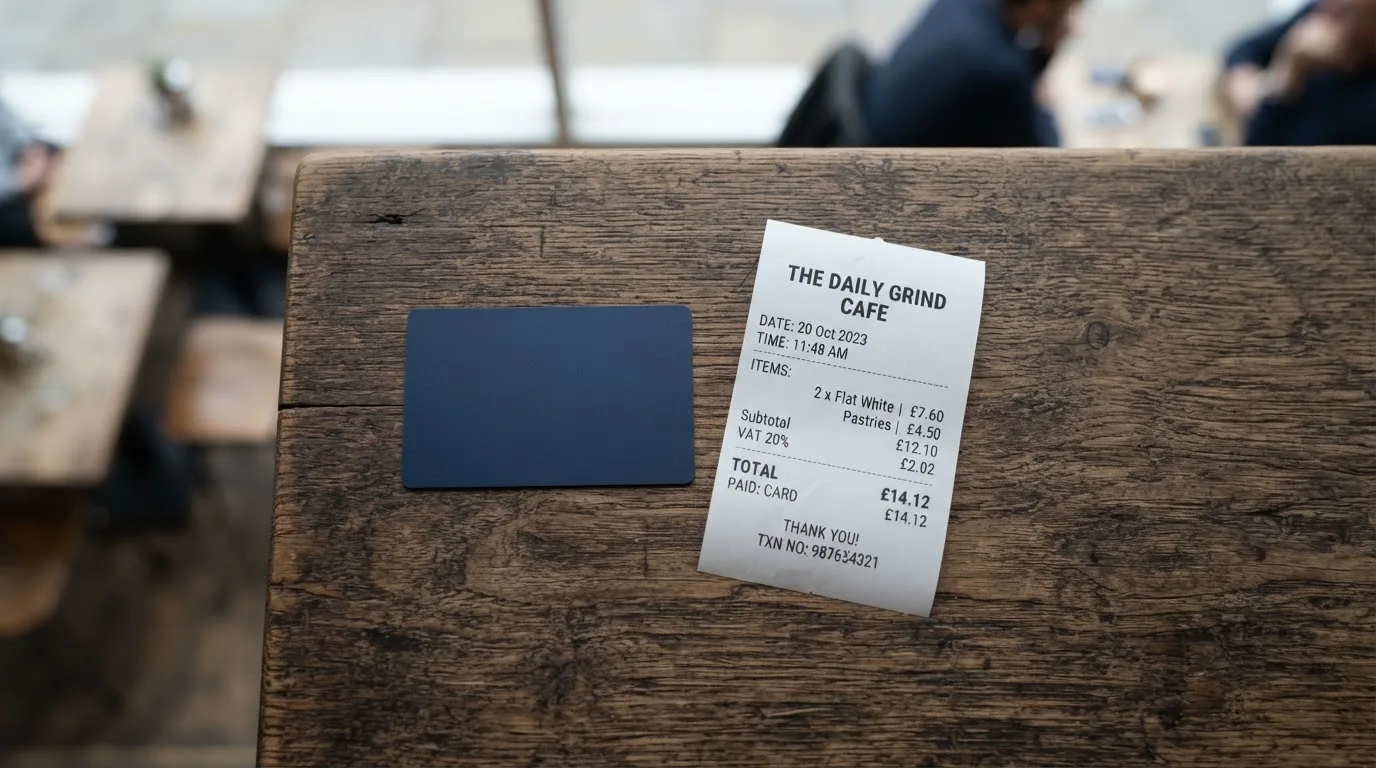
Wafee describes cards loaded and spent “at competitive exchange rates”, and cards that can be used abroad at those same rates. “Competitive” is a comparative word with no second term. There is no rate, no spread, no percentage, and no example. What that leaves on the table:
| Fee or limit | What is published |
|---|---|
| Issuance fee | not stated |
| Monthly fee | not stated |
| Conversion fee (crypto to fiat) | not stated — only “competitive exchange rates” |
| FX fee when spending abroad | not stated |
| ATM / cash withdrawal fee | not stated |
| Daily spending limit | not stated |
| Monthly spending limit | not stated |
| Tiers or subscription levels | not stated |
| Card currency | not stated |
I could have filled that table with typical marketplace numbers. I have not, because you would be comparing Wafee against an average built from other providers, and averages are exactly how people get surprised. Every row above reads “not stated” because that is what the card’s public pages say, and “not stated” is a real answer that has real consequences.
Three everyday payments, and which fees touch them
So let me walk through three ordinary situations and mark which of the missing numbers would have mattered. This is the section I would want if I were you, because it converts an absence into a checklist.
Paying for a coffee in your own country. You have a balance loaded, the card is Visa, you tap. The fees in play: none that are documented, because none are published. What you actually need to know is what the minimum or maximum load is and whether a card balance can be topped up in small increments. The top-up fees and minimum are not stated.
Paying for something online abroad, in a currency that is not your account currency. This is the payment where “competitive exchange rates” earns or loses the argument. Your load converts from crypto to a fiat balance; the purchase then converts whatever remains from that fiat balance into the merchant’s currency. That is two conversions, and the card publishes figures for neither. The card currency is also not stated, which is unusual to have to ask. If you travel or buy in foreign currencies at all, this is the payment to interrogate, and the honest answer is that you cannot from public information.
Taking cash out of an ATM. The card publishes no ATM fee, no per-withdrawal charge, no in-network or out-of-network rate, no daily cash limit. Cash is also the transaction most likely to trip the separate problem of a card looking foreign: some merchants decline prepaid or foreign-issued cards because the BIN lookup reveals the card type and the issuer country.
There is one category-level cost that is not the card’s to charge, and it is worth separating so you do not go looking for it in the wrong place. On-chain network fees — gas, bandwidth — for your deposit are charged by the blockchain, not by the card provider. If you are topping up from a self-custody wallet, that is a separate cost line that will not appear anywhere in Wafee’s pricing, because it does not exist in Wafee’s pricing.
And one that may bite you regardless of fees: a declined authorisation can leave a hold on funds that can remain for several days, typically up to 7. That is a balance you cannot spend for a week because a hotel or a car hire desk did an online authorisation first.
Top up: getting crypto onto the card
The mechanism is simple and the details are missing. That is the honest summary of this section.
The site says you can spend crypto anywhere Visa is accepted, and that you can “top up your payment cards”. The coins and networks are not stated. That single omission is doing a lot of work, so let me explain why it matters rather than just flag it.
If you have a stablecoin and send it on the wrong network, the money is generally gone. Blockchain transfers are irreversible, so a deposit sent on a network the card provider does not support, or to an address belonging to another network, can be lost, or need manual support recovery with no guarantee of success. There is no “wrong address” reversal built into the system. So the question “which coins, on which networks, to which address” is not a technicality — it is the difference between a working balance and an incident.
Two network details worth knowing before you touch a stablecoin at all, because they explain why “which network” is a genuinely tricky question in 2026 rather than a formality. ERC-20 is the Ethereum token standard, and on that network fees are paid only in ETH — so a wallet holding USDT and no ETH cannot actually send. Circle stopped supporting USDC on Tron in February 2024, so “USDC over TRC20” is not a native option. Circle lists USDC as natively supported on 38 networks as of 16 September 2026, including Ethereum, Solana, Base, Polygon PoS, Avalanche, Arbitrum and Stellar, and Tether describes USDT as a token built on multiple blockchains with reserves intended to back it one-to-one.
And the coins themselves are not risk-free. A stablecoin aims to hold a stable value against a fiat currency, but despite the name, stablecoins are not necessarily stable. Tether’s USDT and Circle’s USDC are dollar-pegged, and the BIS in July 2025 put about 90% of stablecoin market capitalisation in those two. Circle says USDC is redeemable one-to-one for USD and fully backed by cash and cash equivalents, mostly in an SEC-registered government money market fund, with monthly reserve attestations by a Big Four firm. USDC lost its peg temporarily in March 2023 during the US banking crisis, and TerraUSD collapsed outright in May 2022. Tether also says it disables tokens in wallets on the OFAC sanctions list and has frozen funds tied to illicit activity — stablecoins are not censorship-proof.
On the account side, the structure is better documented. You get EUR IBAN accounts linked to the crypto wallet. You can exchange between crypto and fiat in the app. You can cash out crypto and convert it into traditional currency “whenever you need it with our instant conversion feature”. And you can make outgoing SEPA euro transfers, SWIFT transfers and P2P transfers from the account. That is a real set of rails — SEPA in particular is what makes a euro IBAN useful day to day inside the euro area.
The unspecified parts: top-up fees are not stated, the minimum top-up is not stated, and withdrawal fees are not stated. On cash-out specifically, note that “instant conversion” describes speed, not cost.
Paying with it every day
The mechanics are the ordinary Visa ones, and for most everyday use the card will feel like a normal card. That is the good news and it is not small.
- The card is Visa, so it works wherever Visa is accepted, online and in stores.
- Physical and virtual cards connect to the same account.
- Apple Pay and Google Pay are supported for contactless payments.
- A merchant category code is a four-digit number classifying a business, assigned when a business starts accepting cards. The one to know here is 7995, gambling — casinos, betting, lotteries — which many issuers block by policy rather than by law. Wafee does not state which categories it blocks.
A few things that will matter in practice and that the pages leave open. Blocked merchant categories are not stated. Whether online payments use 3-D Secure is not stated, and that is not a minor gap: 3-D Secure adds an identity check to online payments, where the issuer either approves frictionlessly or challenges you with a one-time code or biometrics, and Visa’s brand for it is Visa Secure. Liability for fraudulent online payments can shift under 3-D Secure, from the merchant to your bank — or, per critics, to you.
There is a related point about phone payments that works in your favour quietly. Apple Pay replaces the card number with a device-specific Device Account Number held in the device’s Secure Element, never on Apple’s servers, and each payment uses a one-time dynamic security code. The issuer can restrict a tokenised number — block it on magnetic stripe, on phone, or on websites. So adding the card to your phone wallet is one of the higher-value things you can do with it, and the search terms people use for this — how to add a Wafee card to Apple Wallet — have a straightforward answer in principle: it is an Apple Pay card, so the normal wallet flow applies once the card is in your account.
On disputes, the card’s public pages say nothing. And that is not a small omission. A chargeback is a refund ordered by the card issuer to settle a dispute, with reason codes such as fraud, duplicate billing or goods not received. In the US, debit card reversal rights come from Regulation E and credit card rights from Regulation Z; prepaid-card coverage varies and should not be assumed. In the EU you have different statutory protections under the payment services rules, but the point for a reader here is narrower: nothing tells you what Wafee will do, how long it will take, or whether you must first complain to the merchant. If a prepaid arrangement is what you are choosing, assume you are building your own case with your own evidence.
What can go wrong
Nothing I found here suggests a bad actor. The risks below are of two kinds: the structural risks that attach to this whole category, and the specific blanks in Wafee’s disclosure. Both matter to you, and I would read the second list with as much care as the first.
The structural ones, which apply to any card like this.
- *Counterparty risk.* The card number is issued by a licensed issuer; the crypto brand is often only a programme manager and front-end. In Wafee’s case the FAQ page links “Walletto Terms & Conditions” and a “Walletto Annex Prohibited Activity List”, so Walletto appears to be the card partner, though the page does not explain the role. Wafee Ltd is registered in Nevis, Suite 1, A.L. Evelyn Ltd Building, Main Street, Charlestown, registration C 57790. No licences are named on the pages.
- *Custody risk.* Whoever holds the private key or seed phrase controls the crypto. With a custodial wallet the provider holds the credentials and you must trust it completely; with a self-custody-linked card the funds stay in your wallet until the moment of payment, but you carry sole responsibility for key loss, phishing, and clipboard-hijacking malware that silently swaps copied addresses. Wafee’s site mentions “cutting-edge encryption”, multi-factor authentication and security audits, all in general terms rather than card-specific, and links a “Custody Note” PDF, but the custody model is not stated.
- *Programme-closure risk.* This is the one that catches people out. Cards in this category have been switched off before: Visa terminated its global agreements with FTX on 13 November 2022 and the FTX US debit card was wound down by its issuer; WaveCrest, a Visa issuer that supplied crypto card brands, was suspended by Visa in Europe in 2018, closing all WaveCrest-issued Visa programmes. A closure typically means a notice period, then spending and loading stop, then you are asked to withdraw remaining balances.
- *Deposit-guarantee risk.* A euro IBAN is not the same as a euro bank deposit. An electronic money institution in the EU can issue e-money, payment cards and e-wallets but cannot lend, and must safeguard customer funds by segregating them in dedicated accounts or insuring them — such funds are not bank deposits and may not be covered by a deposit guarantee scheme.
- *Compliance holds.* If due diligence cannot be completed, EU rules require the institution to refrain from the transaction or relationship and, where necessary, end existing relationships. That is why accounts get closed or frozen pending documents, and it is a normal, lawful outcome of an application rather than a judgement about you.
- *Acceptance risk.* Some merchants decline prepaid or foreign BINs. Address Verification Service, which compares the numeric parts of the billing address a buyer typed with issuer records, is mainly offered in the US, Canada and the UK and is generally unavailable for foreign-issued cards, which can cause declines.
The specific Wafee ones, which are really disclosure gaps.
- No fee figures at all. Not issuance, monthly, conversion, FX or ATM.
- No limits published — daily, monthly or per transaction.
- No card currency, no country list, no KYC standard, no delivery time, no ATM terms, no blocked categories.
- No dispute or chargeback policy published.
- App store buttons lead nowhere; web sign-in only.
- Support is an email, [email protected], a contact form, an FAQ page, and social links on X, Facebook, Instagram, Discord and Telegram — where the Telegram icon points at the Discord invite. Hours and languages are not stated.
- No news to speak of, and no complaints — but also, as noted, no Trustpilot page and no reviews at all.
There is a regulatory angle that is easy to miss and worth one line. MiCA, the EU’s markets-in-crypto-assets regulation, took legal effect in June 2023, with rules on asset-referenced tokens and e-money tokens applying from 30 June 2024 and the remaining provisions, including crypto-asset service provider rules, from 30 December 2024. Under MiCA, e-money tokens may be issued only by a credit institution or an electronic money institution. The transitional period lets providers already operating under national law continue only until 1 July 2026 or until they receive or are refused a MiCA authorisation, whichever comes first, and ESMA keeps an interim register of authorised providers, white papers and non-compliant entities that you can consult. A card itself is a payment service regulated separately — so a crypto card often rests on two licences at once, and the crypto-side status and the card-side status can differ.
What to take instead
I want to be careful here. None of these are better than Wafee at everything; they are better at different things, and the scoring shows it. But the comparison is instructive, because these alternatives publish more of what matters.
| Wafee | Whop Cards | Stella | UniFi Card | |
|---|---|---|---|---|
| Score | 6.5 / 10 | 5.2 / 10 | 6.5 / 10 | 4.7 / 10 |
| Network | Visa | Visa | VISA | Prepaid Debit Visa, issued by Lead Bank |
| Card forms | Physical and virtual | Not stated | Virtual and physical | Not stated |
| Countries | “160+”, no list | 31 US states for consumers, 41 for businesses; long unsupported list | Not stated | Not confirmed from official pages |
| Costs | Not stated | “No extra fees” | Not stated | Not stated (“Fees may apply”) |
| Funding | Crypto, coins and networks not stated | Whop balance backed by stablecoin collateral | Crypto deposit auto-tops the card | ACH, wire, SEPA, SPEI; get paid to a USDC wallet |
| IBAN | EUR IBAN, SEPA, SWIFT, P2P | Not stated | Not stated | Eurozone (EUR) route in app |
| Rewards | Not stated | 5% cashback at select merchants, currently Uber | No cashback stated | “3% rewards on balances” claimed in listing |
| Card currency | Not stated | Not stated | Not stated | USD |
Where each one wins:
- Whop Cards is the most transparent about who it is for. It states the exact 31 US states for consumers — Alabama through Wyoming, listed in full — and 41 for businesses, and names the unsupported consumer countries including Belarus, China (Mainland), Cuba, Hong Kong, India, Iran, Iraq, Israel, Myanmar, Nepal, Nicaragua, North Korea, Russia, Syria, Turkey, Ukraine, Venezuela and Vietnam, with Russia and Belarus among unsupported corporate countries. It says “No extra fees” and pays 5% cashback at select merchants, currently Uber. It also says plainly that the basis — citizenship or residence — is not stated, that cards can be issued to team members, and that a pending balance is usable as soon as a payment arrives while standard withdrawals use settled funds. If you are in the US and want a published country list, this is the more informative page.
- Stella scores the same 6.5 as Wafee but gets there differently. It is virtual and physical VISA, working at what it calls “over 40 million VISA merchants globally”, and its funding model is the tidiest of the three: you deposit crypto into the account and it automatically tops up the card, through an in-app custodial wallet. Its official site does not state countries, but its terms do two things Wafee’s do not: they bar users under economic sanctions programmes, and they route US and European users through affiliates. Fees are not stated officially, only described as set out in the User Agreement or the app, and the official card page states no cashback — the Earn product is separate yield, which is worth distinguishing from spending rewards.
- UniFi Card scores lowest at 4.7 out of 10, and the reasons are about thinness rather than red flags. Its eligibility is not confirmed from official pages at all: the App Store lists send-money routes to the Philippines (PHP), Mexico (MXN) and the eurozone (EUR), with recent release notes mentioning Colombia, Brazil (PIX) and the UK (GBP) — useful information, but from a store listing rather than from the company. It is a prepaid debit Visa issued by Lead Bank, card currency USD, spending from the USD balance. Funding comes in through ACH, wire, SEPA (IBAN) or SPEI (CLABE), and you can get paid to a USDC wallet. Its own wording on cost is “Fees may apply. See UniFi website for more details.” The listing claims “3% rewards on balances”, which is a balance yield, not card cashback.
Two category-level facts frame all of these. Visa and Mastercard do not issue crypto cards to consumers; they license issuers and can suspend a programme. And in the US, FinCEN guidance treats administrators and exchangers of convertible virtual currency as money transmitters, while people merely buying goods or services are not money services businesses.
Who I would recommend it to
I would recommend it to someone specific, and I would tell the rest of you to read the fee table first.
Recommended if: you already hold crypto and want to spend it without selling it into a bank account in advance; you are in a country where Wafee will confirm your eligibility; you want a euro IBAN with SEPA and SWIFT behind it, because that is a genuinely useful rail set and Wafee describes it more concretely than most rivals describe anything; you can live with an unknown conversion spread and will discover it at the point of use rather than the point of signing; and your balance is a working balance, not savings.
Not recommended if: you are choosing on price — the price is not published; you are holding a large sum, because with no named licences, no stated custody model and a partner relationship that is not explained on the page, you are taking counterparty risk you cannot size; you need deposit-guarantee protection, because an IBAN is not a deposit; you need your money back on demand, because custodial balances, irreversible transfers and possible compliance holds all point the same way; or you are in a country that might be on a list nobody has printed.
My own decision rule would be this. Open an account only after three answers arrive in writing or in the app itself: the conversion rate and spread, the full schedule of fees including ATM and foreign-currency spending, and the identity of the licensed entity that issues the card with its licence named. None of the three is on the public pages today. All three are answerable by Wafee’s support before you load anything. If you get all three, this is a reasonable card for the job. If you get two, you can still use it deliberately. If you get one, fund it with an amount you would be content to lose to a bad rate.
And one last thing that belongs in any decision about spending crypto by card, not because it is card-specific but because it changes what a payment is. The IRS treats digital assets as property, so exchanging them for goods, services, dollars or other digital assets generally produces a taxable gain or loss. For personal holdings that result is a capital gain or loss, short-term if held a year or less, measured in the local fiat currency at fair market value on the date of the transaction — which means each card payment funded from crypto may be a separate disposal. That is not tax advice and I am not offering any; it is simply a consequence of the structure, and it is easier to plan for if you know about it before your first tap than after.
Frequently asked questions
What is Wafee card?
Wafee is a crypto financial platform that issues Visa cards alongside euro IBAN accounts. You convert cryptocurrency into a fiat balance, load that balance onto a physical or virtual card, and spend it wherever Visa is accepted. The site says it is available in more than 160 countries and describes cards loaded and spent “at competitive exchange rates” abroad, though no rate is published.
How does the Wafee card actually work?
Your crypto is exchanged for fiat inside the app and held as a balance, and the card spends that balance — so it behaves like a prepaid card rather than a bank debit card. Underneath, a licensed issuer holds the card programme under Visa’s licence while Wafee markets and manages it. From the same account you can make SEPA euro transfers, SWIFT transfers and P2P transfers, and cash out crypto through an instant conversion feature.
Is Wafee a bank?
Not on the evidence available. Wafee Ltd is registered in Nevis at Suite 1, A.L. Evelyn Ltd Building, Main Street, Charlestown, registration C 57790, and no licences are named on its public pages. Its FAQ page links Walletto’s terms, so Walletto appears to be the card partner. An IBAN does not make an account a bank deposit: e-money funds must be safeguarded but are not covered by deposit guarantee schemes.
Who owns Wafee?
The operator is Wafee Ltd, registered in Nevis. The card itself is almost certainly issued by a separate licensed partner — the site’s FAQ links “Walletto Terms & Conditions” and “Walletto Annex Prohibited Activity List”, though it does not explain Walletto’s role. No issuing bank or licensed e-money institution is named on the pages, which is the first thing you would want clarified.
Does Wafee require KYC, and can I use it in my country?
The card’s public pages do not state what identity verification is required, and there is no country list — only “Available in 160+ Countries” with flags shown for Brazil, Argentina, Mexico, Egypt, Nigeria, Jamaica, Turkey and the UAE. Whether you qualify is decided by Wafee. In the EU, due diligence normally covers identity documents, a sanctions check and politically-exposed-person screening, so expect some form of check before funds move.
How much does the Wafee card cost?
No figures are published. Issuance fee, monthly fee, conversion fee, foreign-exchange fee, ATM fee, daily limits and monthly limits are all not stated, and the only pricing language is “competitive exchange rates”. Any tier or subscription structure is also unmentioned. This is the single biggest practical gap: for a card that converts and then spends, the conversion spread is the number that matters most, and you would only learn it at the point of use.
How do I top up the Wafee card?
You transfer crypto in, or use the in-app exchange between crypto and fiat, and the card spends the resulting balance — the site says you can “top up your payment cards” and spend crypto anywhere Visa is accepted. Which coins and which networks are accepted is not stated, and that is critical: transfers are irreversible, so sending on an unsupported network or to the wrong address can mean lost funds needing manual recovery with no guarantee.
Is the Wafee card safe for my money?
Nothing suggests misconduct, but the information needed to judge is missing. The site mentions “cutting-edge encryption”, multi-factor authentication and security audits in general terms and links a “Custody Note” PDF, yet the custody model is not stated and no licences are named. Custody history in this sector is not reassuring — Mt. Gox, Coincheck and Ronin have all failed — so treat any balance as money you may need support to access.
Can I add the Wafee card to Apple Wallet?
Apple Pay and Google Pay are both supported for contactless payments, so the standard wallet flow should apply. It is also the safer way to use the card: Apple Pay replaces the card number with a device-specific number kept in the Secure Element, and each payment uses a one-time code. Note that the site’s App Store and Google Play buttons currently link nowhere, so the app listings are not reachable from the main site — sign-in is via app.wafee.co.
Is the Wafee card worth it, and can I get my money out?
For someone already holding crypto who wants a euro IBAN and a Visa card without selling first, the structure fits and the rails — SEPA, SWIFT, P2P — are genuinely useful. What holds it back is disclosure: no fees, no limits, no country list, no KYC standard, no dispute policy, no named licence. You can cash out crypto and convert it to traditional currency through the instant conversion feature, but withdrawal fees are not stated, and neither are top-up fees or minimums.
App and neobank card options – cryptocardoptions.com
Content created by the «cryptocardoptions.com» team