
The no-monthly-fee crypto card built for freelancers paid from abroad
 Available in US
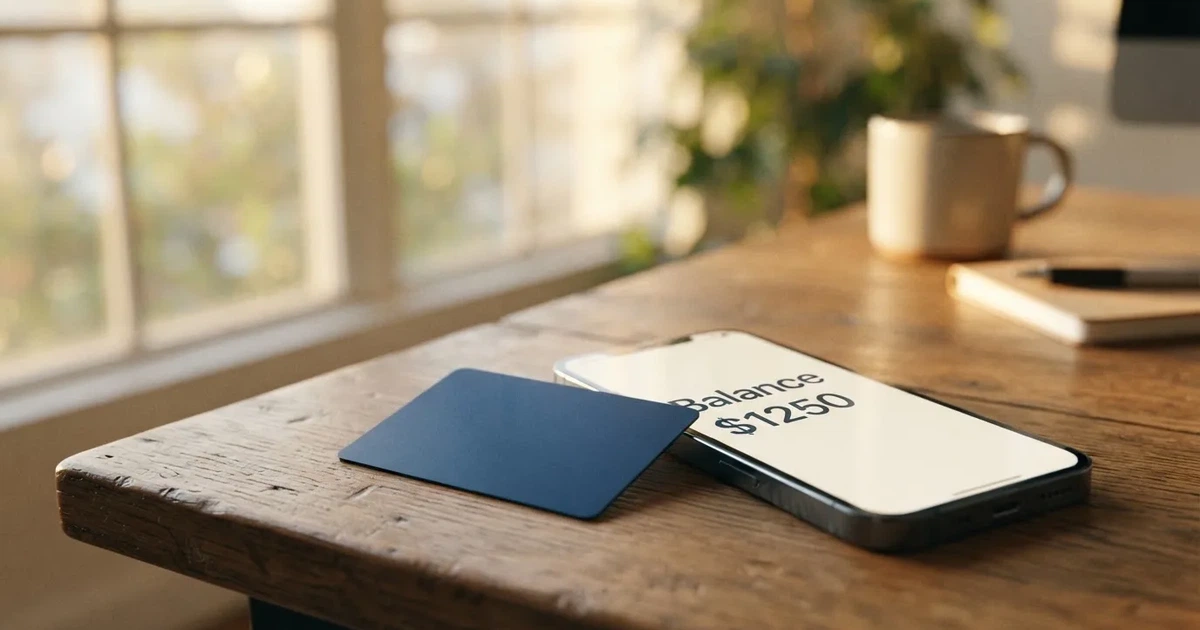
Higlobe is a virtual Visa card that spends from a US-dollar balance you top up with stablecoin, aimed squarely at freelancers and contractors in Latin America and Asia whose clients pay from the United States or Europe. On paper it ticks the boxes that matter to someone who cannot get a normal bank card: no monthly fee, a transaction fee the pricing page lists as $0, a card number in minutes, and a company with visible licences. In practice you are trusting a fintech that is not a bank, funding it with a balance that is an unsecured claim on that company, and topping it up through a network the public pages never name. It is a competent card for its stated job, not a general-purpose replacement for everyday banking.
The conditions described below are current as of October 28, 2026.
Verdict: 6.4 out of 10, a specialist tool rather than a main card
Higlobe scores 6.4 / 10 overall. That middle-of-the-road number is not a condemnation; it is what a well-built single-purpose card looks like when you hold it against everything a person might want from a card. The honest summary is this: excellent for a freelancer in Mexico or the Philippines who is paid in dollars and wants to spend without a monthly charge, and much less convincing for anyone who needs a plastic card, cash withdrawals, a wide spread of countries, or the everyday protections a regulated bank gives you by default.
Before the number, a word on who this is genuinely for. If you invoice clients abroad, if your income arrives in USD, EUR or GBP and your local banking is slow, expensive or simply awkward, then the problem Higlobe solves is real and the card solves it cheaply. If you already hold a normal bank card that works, the case for switching is weak: you would be trading a deposit-insured balance for an unsecured claim on a fintech to save a monthly fee you may not be paying anyway.
| Criterion | Mark | Why |
|---|---|---|
| Who can get it | 6 / 10 | Open to residents of Mexico, Brazil, Philippines, Argentina, Colombia, India; US residents are not permitted to open an account; residence-based rules |
| Cost | 7 / 10 | “No monthly fees”, transaction fee $0, FX markup Mexico 0 bps, Brazil 20 bps (0.20%), Philippines 60 bps (0.60%); issuance fee not disclosed |
| Top-up options | 5 / 10 | Balance held in USDC, card spends a USD balance, transfers from clients welcome; the coins and networks for top-up are not named |
| Reliability and complaints | 8 / 10 | Higlobe Inc. is a FinCEN-registered MSB; card issued by Nimbus LLC (Third National), Visa Principal Member, PR license TM-0207; SOC 2 Type II; Trustpilot 4.7 from 407 reviews |
| Everyday use | 5 / 10 | Virtual Visa “in minutes”, Apple Pay and Google Wallet; no plastic card, ATM details not disclosed |
So: a strong 8 on the plumbing and the paperwork, a middling 7 on cost, and two soft spots — top-up flexibility and everyday use — that keep the whole thing from being a card I would hand to everyone. The score table above breaks each of these down; the sections that follow take them one at a time.
Who will they actually give the card to
Eligibility is more specific than the marketing suggests, and the first thing to check is where you live. The regulations page names seven countries — Mexico, Brazil, the Philippines, Argentina, Colombia, India and the United States — but then carves the US straight back out. The account holder must be “a legal, permanent resident of a country other than the United States”, and the card states plainly that “U.S. residents are not permitted to open a Higlobe account”. That is unusual and worth pausing on: Americans reading the country list may assume they are eligible, and they are not. It also means the test is framed around where you reside, not where you were born.
On top of residence there is the standard sanctions screen. The terms bar anyone “embargoed or blocked by any government”, which is the OFAC list in practice. There is nothing exotic about that clause — it is standard across the industry — but it is the line that ends the conversation for people under sanctions, and no amount of documentation changes it.
If you are reading this from one of the other countries on the list, the hurdle is verification rather than geography, which is the next section.
How to get it: an identity check, not a download
Getting a Higlobe card is a verification exercise, not a one-tap sign-up. You open a free account, complete verification, and the virtual card arrives “in minutes”. The documents asked for are ordinary: name, address, email, tax ID, valid bank account details, and either a passport or national ID plus a selfie. Business accounts additionally need information about the entity.
Two things the public pages do not say: whether proof of address is required, and what age you must be. In the wider prepaid-card world the usual floor is 18, some issuers set higher limits, but Higlobe’s own pages do not state an age requirement — do not assume one either way, and ask if it matters to you. Nor does it publish its account tiers. What it does say is that limits vary by account type and verification level, which tells you the structure exists without telling you where you sit inside it. The KYC checks themselves are not optional background: anti-money-laundering law requires regulated businesses to verify customers, monitor transactions and report suspicious activity, so expect this part to be the gate rather than a formality.
What you get after verification is a virtual Visa with Visa Signature benefits, linked to a USD balance, and you can push it into Apple Pay or Google Wallet straight away. Whether a physical card exists at all is not stated on the pages; the delivery information is explicit that the virtual card is the one you get, in minutes. If you need something you can hand to a shop that refuses to take a phone, stop here and read the everyday-use section — that is the most common reason people close this review and move on.
Fees and what a payment really costs you
The headline numbers are good: no monthly fees, and a listed transaction fee of $0. Where the disclosure thins out is exactly where money leaves your hand. The issuance fee is not stated. ATM fees are disclosed “before you accept them” rather than published as amounts. So is the FX-related fee. And the pricing table’s FX markups — Mexico 0 bps, Brazil 20 bps (0.20%), Philippines 60 bps (0.60%), Argentina 0, Colombia 0 — belong to transfer corridors, not to the card, so do not read them as the rate you will pay when your card converts at a terminal.

| Fee or limit | What the card states |
|---|---|
| Monthly fee | “No monthly fees” |
| Issuance fee | Not stated |
| Transaction fee | $0 |
| FX markup | Mexico 0 bps, Brazil 20 bps (0.20%), Philippines 60 bps (0.60%) — transfer corridors, not the card |
| ATM fees | Disclosed before you accept them; amount and availability not stated |
| Card spending limits | Not stated; send/withdraw described as having “no fixed limits”, daily/monthly caps vary by account type and verification level |
| Tiers | Single tier |
| Card currency | USD; page advises choosing local currency at checkout; USD/EUR/GBP balances |
Let me walk three ordinary payments through that table, because the difference between the headline and the reality shows up in the small print.
Paying for a coffee in your own country in local currency. If you are in Brazil, the page advises choosing local currency at checkout rather than letting the terminal convert to dollars. The card’s own conversion fee is listed at $0, and the 20 bps Brazil markup belongs to transfers, not this purchase — so on the published numbers this is the cheapest of the three, and the main risk is the merchant’s own terminal rate if you let it convert.
Paying online for a subscription billed in dollars while you live in the Philippines. Here the number that matters is the 60 bps Philippines markup, the highest of the countries listed, and whether it attaches to the card or only to inbound transfers is precisely what the pages do not make clear. Expect to pay a fraction over face value, and check the checkout for a currency choice.
Paying a foreign merchant from Mexico. Mexico shows 0 bps and Argentina and Colombia also show 0, so on transfers you pay nothing. But remember the ATM and FX fees are only disclosed at acceptance, not published. The first time you convert, you will see the real figure, and that is the moment to judge whether “no monthly fees” still describes this card honestly for your own spending pattern.
Top up: the balance is USDC, the network is unstated
To use the card you first have to load it, and this is the part to read twice. The balance is held in USDC, a dollar-pegged stablecoin, and the card spends from a USD balance off that. You can receive USD, EUR or GBP from clients, and transfers from US and EU clients into your Higlobe USD or EUR account are free. Deposits sit as USD-backed stablecoins.
What is not stated, and it is the gap that costs people money: which coins and which networks you can use to top up. That matters more here than in most crypto products because a transfer sent on the wrong network, or to an address belonging to another network, can simply be lost — blockchain transfers are irreversible, and recovery from support is a manual process with no guarantee. Before your first top-up, confirm with Higlobe which network and which asset it expects. The minimum top-up is also not stated.
Getting money back out is the better-documented side. Withdrawals to a local bank are free and fast where the rails exist:
- Mexico via SPEI in under 30 seconds
- Brazil via PIX in under 10 seconds
- The Philippines via InstaPay in under 20 seconds
- Argentina in under 25 seconds
- Colombia via PSE in under 60 seconds
There is a Bitso crypto off-ramp if you want to go back to digital assets rather than cash. Two closing notes: if you close the account, withdraw first, because Higlobe may transfer any remaining balance to your registered local bank; and dormant balances may become subject to escheat after six months, meaning unclaimed money can eventually be handed to a state authority.
Paying with it day to day
Day-to-day use is where this card is at its most convenient and its most limited. Add the virtual Visa to Apple Pay or Google Wallet and you have a card in your pocket at every contactless terminal, with tokenisation doing the security work: Apple Pay substitutes a device-specific number for your card number, stores it in the phone’s Secure Element rather than on Apple’s servers, and attaches a fresh one-time code to each payment. That is a genuinely good way to use a virtual card, and it is the card’s best everyday argument.
Set against that: no plastic card is offered, only the virtual one. ATM availability and allowances are not disclosed, and the card’s prohibited-spend categories are referenced as a “card prohibitions list” that the pages do not reproduce, so you cannot read ahead to check whether your usual subscriptions will go through. It is worth knowing generally that many issuers block the merchant category for gambling on specific cards by policy rather than law, and that a merchant category code is simply a four-digit classification assigned to a business — so the blocked list is a policy choice, and it varies from issuer to issuer.
Three everyday snags deserve a sentence each:
- Address verification compares the numeric parts of your billing address with issuer records and is mostly a US, Canada and UK service, so it often cannot help a card issued elsewhere and declines can follow.
- Some merchants simply refuse prepaid or foreign-issued cards, because the issuer lookup reveals the card type and country.
- A declined authorisation can leave a hold on your funds for several days, in some cases up to seven, which is worth knowing before you conclude you have been overcharged.
One more quiet point: no cashback is stated, and disputes are not stated either. The card terms sit in a separate Cardholder Agreement, and Higlobe itself is not the issuer, so before you rely on this card for a large purchase, find that agreement and read it. On the platform side, the product is described as a web app, a mobile app is not confirmed, and an App Store search for the name returned no results — so do not plan your day around a polished phone experience until you have seen it yourself.
What can go wrong
The main risk is structural, and you should hold it in view the whole time you use the card. This is a custodial arrangement. The balance is held by Higlobe, not by you in your own wallet, and the card states plainly that your funds are “an unsecured claim against us” — they are not FDIC-insured. Pooled funds are held separately from corporate funds, which is a real safeguard, but it is not a bank deposit guarantee. If Higlobe fails, you are a creditor, not an account holder with a deposit. Whether two-factor authentication and an instant card freeze are offered is not stated, so do not assume a stolen phone cannot reach your money; use the platform’s own controls if they exist.
The second risk is the money you do not get back. One Trustpilot reviewer reported in October 2026 that the USDC/BRL withdrawal rate was worse than Wise or Nomad, and another noted there is no outbound ACH, wire or SWIFT. Those are individual reports, not a pattern the score reflects — Trustpilot sits at 4.7 from 407 reviews, 81% of them five-star — but they point at the same soft spot: getting funds out to a bank can be slower or thinner than the card’s own marketing implies, particularly outside the instant-rail corridors above.
The third is the category’s own history, which is worth knowing so you are not surprised. Crypto card programmes can be wound down. Visa terminated its global agreements with FTX in November 2022 and the card was wound down by its issuer; Visa suspended WaveCrest in Europe in 2018, closing every WaveCrest-issued Visa programme. Closures follow a pattern: a notice period, then spending and loading stop, then you are asked to withdraw what is left. That is not a prediction about Higlobe — there is no news found against it and no incident — it is the shape of the risk you accept when the card is virtual, custodial and issued by a partner rather than by a bank you can walk into.
On the regulatory side, a note for anyone wondering whether this is a bank: it is not. Higlobe, Inc. is a fintech and a FinCEN-registered money services business. The card itself is issued by Nimbus LLC, doing business as Third National, a Visa Principal Member licensed as a Money Transmitter by the Puerto Rico Commissioner of Financial Institutions (License #TM-0207, NMLS #2612780). Local partners are regulated by CNBV in Mexico, BCB in Brazil, BSP in the Philippines, BCRA in Argentina, SFC in Colombia and RBI in India. Higlobe holds SOC 2 Type II. Support runs 24/7 through the Visa benefits portal plus Higlobe’s own support centre and FAQ, though languages are not stated.
Finally, the money side of using crypto to pay can have consequences you did not plan for. In the United States the IRS treats digital assets as property, so funding a purchase from crypto is generally a taxable disposal measured in local currency at the fair market value on the date. I am not giving tax advice — but if you will be spending repeatedly, it is worth checking with a professional what each payment from a stablecoin balance means for you.
What to take instead
Three alternatives came up in the same review process, and the comparison is instructive mainly because each one solves a slightly different problem.
| Alternative | Score | Who it suits | Main difference |
|---|---|---|---|
| Whop Cards | 5.2 / 10 | US consumers in 31 states, businesses in 41 | Creator-economy balance, 5% cashback at select merchants (currently Uber) |
| Stella | 6.5 / 10 | Users outside US and Europe, crypto-native | Virtual and physical VISA, crypto deposit auto-tops the card; fees and countries not stated |
| UniFi Card | 4.7 / 10 | People sending money to Latin America and Asia | Prepaid Debit Visa from Lead Bank, USDC wallet, ACH/wire/SEPA/SPEI funding |
Whop Cards score 5.2 / 10. They are a Visa that works online and in stores wherever Visa is accepted, spending from a Whop balance — a pending balance is usable as soon as a payment arrives, standard withdrawals use settled funds — with 5% cashback at select merchants, currently Uber. The catch is reach: consumers in 31 US states, businesses in 41, and a long unsupported-country list including Russia, Belarus, China, Turkey, Ukraine and Venezuela. The basis of eligibility, citizenship or residence, is not stated. For you reading this outside the US, that is the whole answer.
Stella score 6.5 / 10, the closest to Higlobe on paper. It offers virtual and physical VISA working at “over 40 million VISA merchants globally”, and you deposit crypto into an in-app custodial wallet that automatically tops up the card. The terms route US and European users through affiliates and bar anyone under economic sanctions programmes. But the countries it supports are not stated on the official site, and no fees are published — they are “described under this User Agreement and/or on the App”. Its cashback is not stated either; an Earn yield product is separate. So if you want a physical card and can live with reading the fees in-app, Stella is worth a look; if you want published numbers, Higlobe’s are clearer.
UniFi Card scores 4.7 / 10. It is a prepaid Debit Visa issued by Lead Bank, card currency USD, works with Apple Pay, funded via ACH, wire, SEPA or SPEI (CLABE) or by getting paid to a USDC wallet. Its listing mentions send-money routes to the Philippines, Mexico, the eurozone and, in recent release notes, Colombia, Brazil (PIX) and the UK. Fees are simply “may apply”. Nothing about it is confirmed from the official pages beyond that listing. If your need is receiving money in those corridors rather than spending from a crypto balance, UniFi is closer to the job than Higlobe is.
Who I would recommend it to
I would point this card at one person: a freelancer or contractor in Mexico, Brazil, the Philippines, Argentina, Colombia or India, living there as a permanent resident, paid by clients in the United States or Europe, who wants a no-monthly-fee Visa to spend from a dollar balance and does not need a plastic card or cash from an ATM. For that person, Higlobe does a real job well, at a cost of $0 in listed transaction fees, with fast free withdrawals to a local bank on the right rail.
I would not point it at someone in the United States, who cannot open an account at all. Nor at someone whose income is local-currency and whose local banking already works, who would be swapping an insured bank balance for an unsecured claim on a fintech in exchange for a fee they probably were not paying. Nor at anyone who needs the consumer protections that come from a bank-issued card under Regulation E or Z — because Higlobe is not the issuer, prepaid coverage varies and should not be assumed, and disputes sit in a separate agreement.
The general lesson about this whole category is the one to carry to any crypto card: the card number is the easy part. What you are actually choosing is who holds your money and what happens when something goes wrong. A card number begins with a six or eight digit issuer identifier, and any shop can look it up to see which institution and country issued it — which is why a card issued in one country can look foreign in another, and why some merchants apply extra scrutiny. Keep enough of your balance on the card for the payment in front of you, understand that transfers into it are irreversible, and read the Cardholder Agreement before the first large spend. Ask the questions the pages leave open — network for top-up, issuance fee, ATM charges — and if the answers satisfy you, the card is a good one.
Frequently asked questions
What is the Higlobe card?
Higlobe is a virtual Visa card that spends from a US-dollar balance you load with stablecoin. It comes with Visa Signature benefits, links to Apple Pay and Google Wallet, and is aimed at freelancers and contractors paid from abroad. The card is issued by Nimbus LLC (Third National), not by Higlobe itself, which is a fintech rather than a bank.
How does the Higlobe card work?
You open a free account, verify your identity, and receive a virtual Visa “in minutes”. Your balance is held in USDC, a dollar-pegged stablecoin, and the card draws down a USD balance from it. You can hold USD, EUR or GBP, receive money from clients, and choose local currency at checkout to avoid the terminal’s own conversion rate.
Is Higlobe a bank?
No. Higlobe, Inc. is a fintech registered with FinCEN as a money services business. Your funds are “an unsecured claim against us” and are not FDIC-insured, although pooled funds are held separately from corporate funds. The card programme runs through an external issuer, which is why the Cardholder Agreement is a separate document.
Who can open a Higlobe account?
Permanent legal residents of Mexico, Brazil, the Philippines, Argentina, Colombia and India. The regulations page also lists the United States but then excludes it: “U.S. residents are not permitted to open a Higlobe account”. The test is residence, not citizenship, and the terms bar anyone embargoed or blocked by any government.
Does Higlobe require KYC?
Yes, and it is a real gate rather than a formality. You supply name, address, email, tax ID, valid bank account details, and a passport or national ID plus a selfie; business accounts add entity information. Whether proof of address is required and what the minimum age is are not stated on the public pages, so ask if either matters to you.
How much does the Higlobe card cost to keep and use?
The card states “No monthly fees” and lists a transaction fee of $0. The issuance fee is not stated, and ATM and FX-related fees are disclosed before you accept them rather than published. The listed FX markups — Mexico 0 bps, Brazil 20 bps, Philippines 60 bps — apply to transfer corridors, not to card conversion, so treat them as indicative.
How do I top up the Higlobe card, and which network do I use?
You top up by depositing stablecoins, with the balance held in USDC, and transfers from US and EU clients into your Higlobe USD or EUR account are free. The card does not state which coins or networks it accepts, and that matters: a transfer on an unsupported network can be lost, because blockchain transfers are irreversible. Confirm the network and asset before your first deposit.
Can I withdraw money from Higlobe?
Yes, and withdrawals to a local bank are free and fast on the supported rails: Mexico SPEI under 30 seconds, Brazil PIX under 10, the Philippines InstaPay under 20, Argentina under 25, Colombia PSE under 60. There is also a Bitso crypto off-ramp. One reviewer reported a worse USDC/BRL rate than Wise or Nomad, and another noted there is no outbound ACH, wire or SWIFT.
Is the Higlobe card safe, and is it insured?
The safeguards are real but partial. Higlobe holds SOC 2 Type II and local partners are regulated in each market, yet the balance is custodial and uninsured, and whether two-factor authentication and an instant card freeze exist is not stated. Crypto card programmes can also be wound down — Visa ended its agreements with FTX in November 2022 — so read the Cardholder Agreement before a large spend.
Is a Higlobe account worth it, or should I use another card?
For a permanent resident of Mexico, Brazil, the Philippines, Argentina, Colombia or India who is paid in dollars by foreign clients and wants to spend without a monthly fee, it is worth a look. If you need a physical card, a US address, or bank-deposit protection, look at Stella for physical plastic, UniFi for receiving money in Latin American and Asian corridors, or an ordinary bank card instead.
App and neobank card options – cryptocardoptions.com
Content created by the «cryptocardoptions.com» team