
A prepaid crypto card with a cheap plastic option and a lot of blank spaces
 Available in US
There is a particular kind of person this card is built for. You hold stablecoins, most of them USDT or USDC, you sit in a country where opening an ordinary bank account is slow, expensive or impossible, and you would like those coins to behave like ordinary spending money at an ordinary shop. If that is you, BKJ is not a bad fit on the fundamentals: it is scored 6.9 out of 10 here, and the reasons are worth reading to the end rather than skimming.
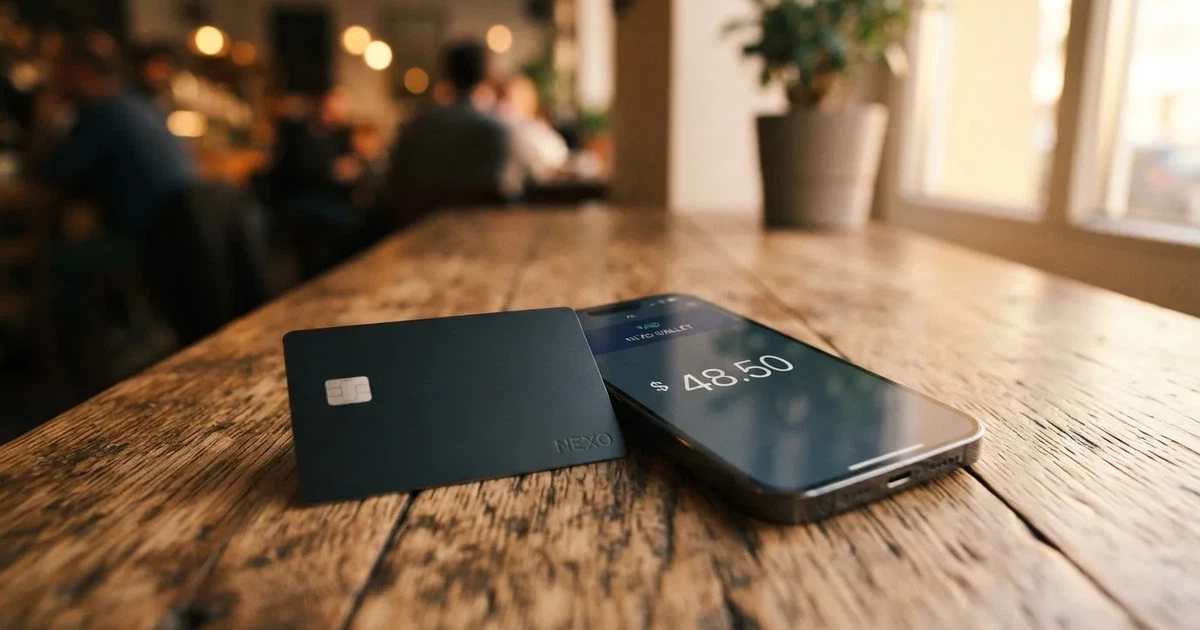
But the same review has to say plainly that this is a card whose public pages describe the happy path in detail and leave the cost of everything else unsaid. The physical card price is public. The annual fee is public, and it is zero. The exchange rate you get when you spend, the fee on a cash withdrawal, the monthly spending ceiling, the card currency, the terms of a refund — none of those are published on the pages I could read. That is not a flaw in the product so much as a limit on what anyone outside can responsibly promise you about it.
The conditions described here are current as of October 28, 2026.
Verdict: 6.9 out of 10, strong on funding and everyday use, thin on published costs
The card gets its score from a genuinely good top-up story and genuinely convenient daily use, offset by an costs section that is mostly empty and a regional policy that can change without you choosing it. If you are a stablecoin holder who wants to spend on Tron or Ethereum, holds a coin balance and accepts that some numbers are simply not published, this is a workable tool. If you are someone who needs to know the exchange rate before they commit to a purchase, or who is near a sanctioned-region border, the missing information is itself the answer.
Here is the breakdown, criterion by criterion.
| Criterion | Mark | Why |
|---|---|---|
| Who can get it | 8 / 10 | Russia, Belarus, North Korea, Iran, Myanmar, Cuba, Syria, Ukraine including Crimea, Venezuela, mainland China and others closed on 11 September 2026; the listing claims a payment network in 180+ countries |
| Cost | 4 / 10 | Physical card 100 USDT with delivery, zero yearly fee; virtual card fee and conversion charges not disclosed |
| Top-up options | 9 / 10 | USDT and USDC on major networks including Ethereum and Tron, plus conversion between 40+ fiat currencies and crypto |
| Reliability and complaints | 6 / 10 | BKJ PAYMENT INC in Canada, MSB licence C10001249 (FINTRAC), issuer not named; no complaints found, few App Store ratings; terms allow closing the service without notice |
| Everyday use | 9 / 10 | Virtual and physical cards, Apple Pay and Google Pay, ATM access on the physical card |
| Total | 6.9 / 10 | — |
The “who can get it” mark is high but not perfect because the claim and the rule pull in different directions. The listing advertises a payment network in 180+ countries and regions. The 11 September 2026 announcement restricted service to a named blocklist. So the footprint is broad and the exclusions are real and, in the company’s own words, changeable.
The cost mark of 4 out of 10 is the one that should make you pause before anything else. One known number — 100 USDT for the plastic card including shipping, zero annual fee — is not enough to model what a year of spending will cost you, because the conversion rate and the currency fee are the things you actually pay on every purchase. Both are unstated.
Will they give you the card?
They will give it to you if you complete identity verification and you live somewhere the service is available. That second condition is the one people get caught on.
The listing claims a payment network reaching “180+ countries and regions”, but neither the site nor the listing gives an actual country list. The card’s own terms are the operative statement: services are not available in Russia, Belarus, North Korea, Iran, Myanmar, Cuba, Syria, Ukraine including Crimea, Venezuela, mainland China and other jurisdictions on the restricted list, and users are required to “reside in a country where the Services are available”.
Residence is the test the terms name, not citizenship or passport. That distinction matters more than it sounds, and it cuts both ways. It means that a person living legally in a permitted country is not excluded simply by holding a passport from a restricted one — but it also means that anyone who is physically in a restricted country fails the stated condition regardless of what their documents say.
And the list is not fixed. The 11 September 2026 help-centre announcement adjusted regional access permissions and states that the list “can change”. If your country is close to that list, or if you travel, the honest answer is that your access depends on a decision made somewhere else, at a time you cannot predict.
What I could not find is any country list on the public pages themselves. So if your question is “is BKJ available in my country”, the reliable route is not a marketing page — it is asking support directly and getting the answer in writing.
| Question | What the card’s public material says |
|---|---|
| Is there a country list? | No — not stated on the site or listing |
| What footprint is claimed? | A payment network in “180+ countries and regions” |
| What is the eligibility condition? | Users must “reside in a country where the Services are available” |
| What is restricted? | Russia, Belarus and the other jurisdictions on the 11 September 2026 list |
| Can the list change? | Yes, the announcement says the list “can change” |
How to get it
The signup path is short: download the app, register, verify your identity, then request the card. There are no tiers described anywhere on the card page or in the help collections, so there is nothing to choose between at this stage.
Two things are firmly established. First, identity verification must be completed before you can apply for a card — this is in the terms, not just the marketing. Second, the terms add that more documents may be requested at any time. That is standard in this industry and it is worth internalising: the check that gets you past the door is not necessarily the last one.
What is not stated is almost everything you would want to know at this point. Which documents count. How long verification takes. Why a verification might be refused. The terms reference sections 5.1 and 5.5(f) on this point, and there are two help articles — “How to Conduct KYC Identity Verification” and “What functions can be used on BKJ without completing KYC verification” — which exist but which I did not read. So treat the sequence as accurate and the detail as something you will learn inside the app.
On the cards themselves: both a virtual and a physical card are offered. The virtual card is for Apple Pay and online purchases. The help centre contains an article titled “BIN449924 Singapore Virtual Card”, which tells you the virtual card’s issuing region is Singapore, but the card network is officially not stated. If network matters to you — and it does, because it decides how often a shop abroad will wave you through — this is an open question.
For the physical card, the detail is much richer:
- Issuance: 100 USDT, described as covering card production and global logistics shipping costs. It is non-refundable, and the order cannot be cancelled after payment.
- Production: about one week.
- Delivery: normally around 20 business days, varying by country or region — and no countries are listed as eligible or excluded.
- Activation: by an emailed code. Then you set a PIN and a contactless limit.
- Replacement: not covered. A lost card is a second 100 USDT.
That last line deserves a moment. In many countries a replacement card is free or cheap. Here, the cost of a lost card is the cost of a new card, and the shipping that made the first one arrive does not become cheaper the second time.
| Card type | What it is | What it costs | What is not stated |
|---|---|---|---|
| Virtual | For Apple Pay and online purchases | Not stated | Network, currency |
| Physical | Production about one week, delivery normally around 20 business days | 100 USDT including shipping, non-refundable, cannot be cancelled after payment | Eligible countries, replacement cost |
Fees: what a payment actually costs you
Here is the honest situation. Of the fee categories that decide what a card costs you in daily use, the card publishes one clearly and leaves the rest unstated. The table below is a faithful inventory, not a price list.
| Fee or limit | Value |
|---|---|
| Physical card issuance | 100 USDT, covering production and global logistics shipping, non-refundable |
| Monthly fee | None — “Zero annual fee” is stated; no monthly fee is stated |
| Virtual card issuance | Not stated |
| Crypto-to-fiat conversion | Not stated |
| Foreign exchange / other currencies | Not stated |
| ATM withdrawal | Physical card has “Access to the global ATM network with instant fiat withdrawals”; fee and limits not stated |
| Daily limits | Not stated |
| Monthly limits | Not stated; the physical-card application page shows a “monthly limit” but gives no tier details |
| Card currency | Not stated — home-page sample transactions show USDT, USDC, VND and KRW |
| Marketing claim | “Save up to 90% on fees” — a listing claim with no fee schedule behind it |
Now let me walk through three ordinary payments, because that is where the missing numbers actually land.
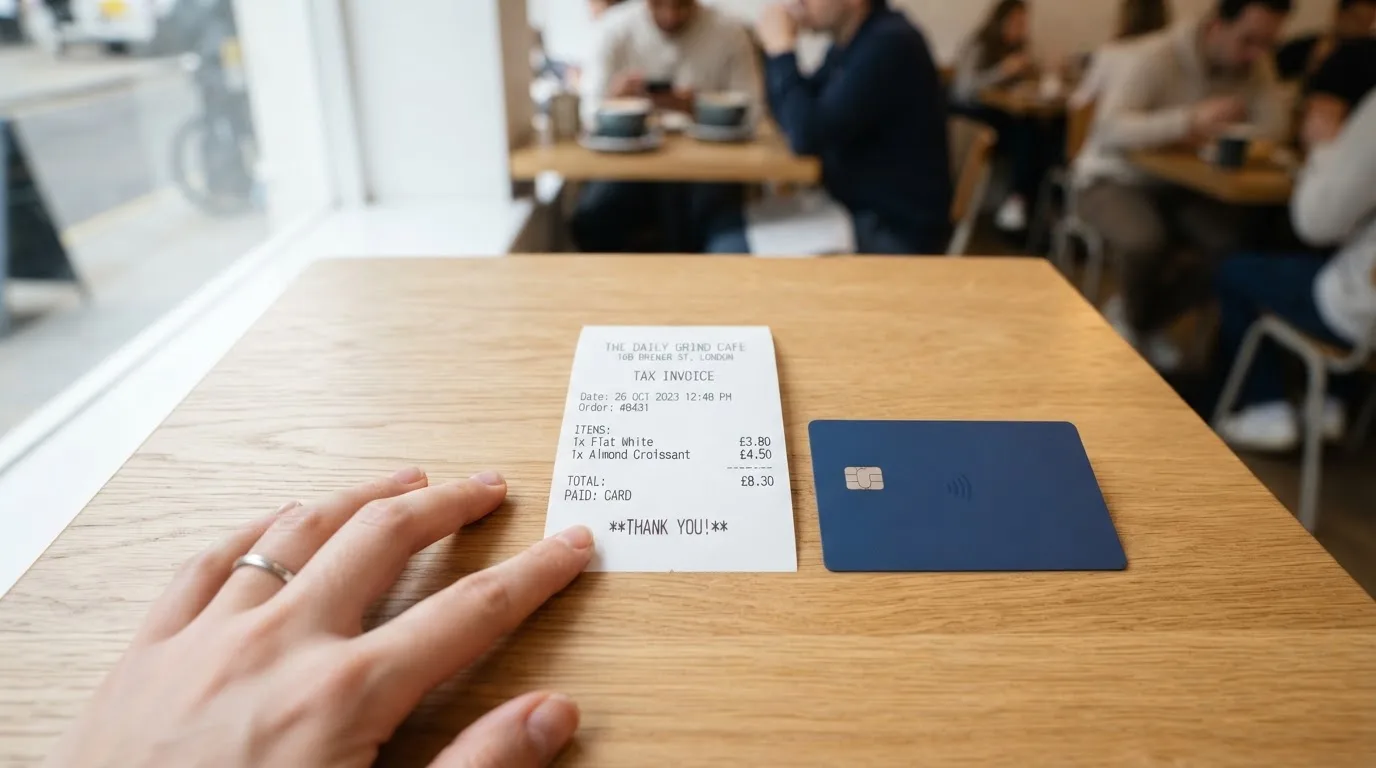
A coffee, roughly $4. You tap, and the shop’s terminal authorises the amount. What happens next depends on how your crypto balance becomes a fiat amount for the terminal. The card page does not state a conversion fee, and there is a help article titled “Explanation of Deduction Amount Difference” that suggests the difference between what was charged and what left your balance is something users ask about. Whether that difference is a spread, a fee, or a movement in the rate between the two moments, I cannot tell you from the public pages. This is the single number most worth asking support about before you rely on the card day to day.
An online subscription, say $10 a month. For this you would add the virtual card to Apple Pay and pay the same way. Two things could bite. The card currency is not stated, so a subscription priced in a currency other than your balance’s currency may introduce an exchange step whose cost is not disclosed. And 3-D Secure may add an identity challenge in the form of a one-time code or biometric check — a normal, expected interruption, not a fault, but worth knowing about before a payment fails at a renewal.
A cash withdrawal abroad, say $50. The physical card carries the claim of access to the global ATM network with instant fiat withdrawals. What that withdrawal costs — a per-transaction fee, a percentage, a minimum, a daily cap — is not stated. Nor is whether the machine converts at the terminal’s rate or at a network rate, and those two are often very different numbers. The help centre does hold an article called “BKJ Card Multi-Currency Transfer Limits & Fees Instructions”, so the information exists; it is simply not on the pages I could read.
Taken together: you can budget the card’s price and its annual fee with confidence, and you cannot budget its spending cost. If that asymmetry is acceptable — if you are spending small amounts, testing the product, and willing to measure your own effective rate from your transaction history — the situation is workable. If you are planning to run payroll-sized volume through it, no. You would be setting up a business expense on numbers that are not published.
One more distinction worth keeping in view. On-chain network fees — gas on Ethereum, bandwidth and energy on Tron — are charged by the blockchain for your deposit, not by the card company. That cost belongs to topping up, not to spending, and I return to it below.
Top up: where the card is genuinely strong
This is the strongest part of the product, and it earned 9 out of 10 for a reason.
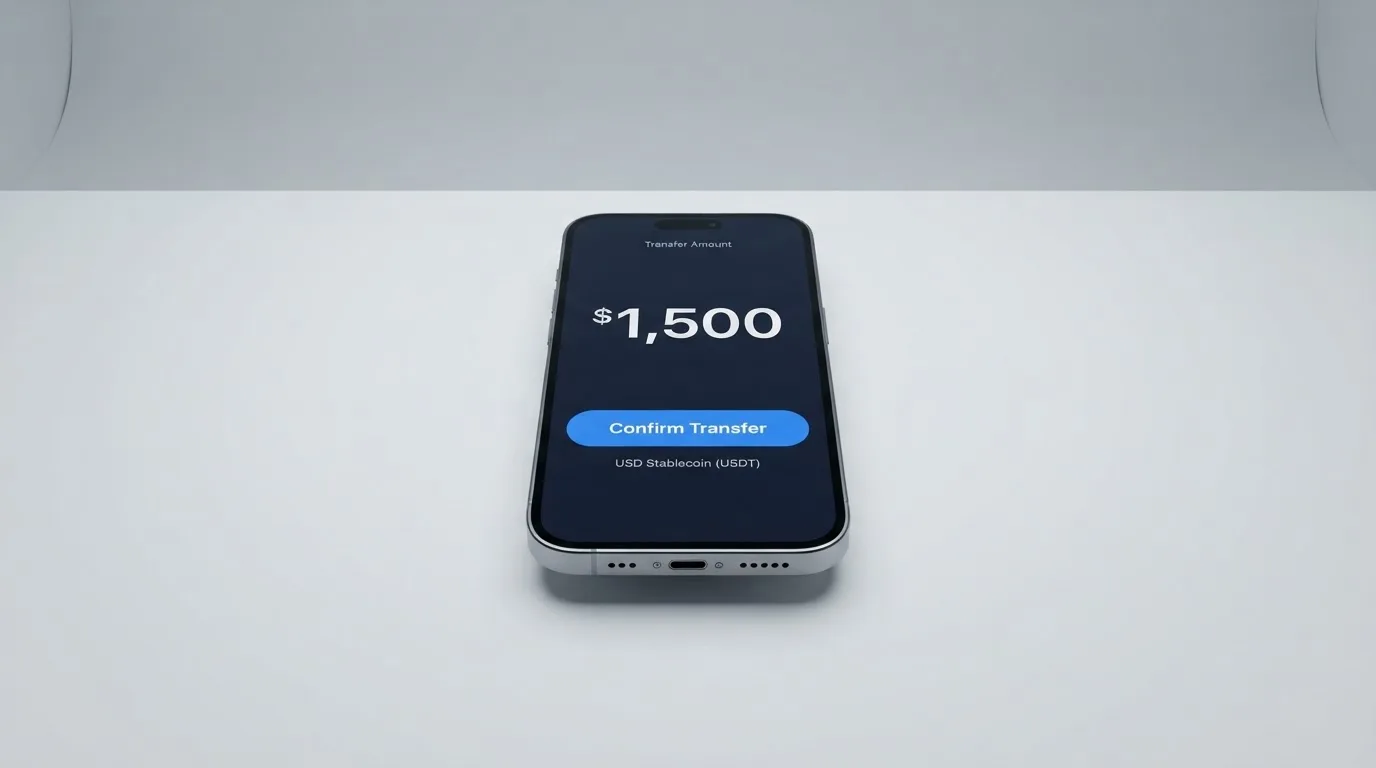
BKJ supports USDT and USDC top-ups on major blockchains, explicitly including Ethereum and Tron. That covers the two networks most stablecoin holders actually use. Beyond that, the app listing describes conversion between more than 40 fiat currencies and crypto, which means you are not locked into holding dollars through every step of a local spending need.
Now the practical part, which is where self-inflicted losses happen in this category. The card’s page does not state a deposit fee, a minimum top-up, or who pays the network fee. Two failures account for a large share of lost deposits across crypto cards generally, and both are structural, not carelessness:
- Sending on a network the provider does not support. Blockchain transfers are irreversible. A deposit that arrives on an unsupported network can be lost, or can need manual support recovery with no guarantee of outcome.
- Sending to an address belonging to a different network. The same irreversibility applies. Clipboard-hijacking malware that silently swaps a copied address for its own is a real and recurring attack.
There is a third thing worth knowing about stablecoins specifically, because it bites people who assume “USDC” is network-agnostic. Circle stopped supporting USDC on Tron in February 2024, so “USDC over TRC20” is not a native option. USDC is US-dollar-pegged and Circle lists it as natively supported on 38 networks as of 16 September 2026, including Ethereum, Solana, Base, Polygon PoS, Avalanche, Arbitrum and Stellar. USDT, by contrast, has been issued on Ethereum, Tron, Solana, Polygon, Avalanche and others. If you hold USDC, check which chain before you transfer, not after.
One reassurance that cuts both ways: Tether says it disables tokens in wallets on the OFAC sanctions list and has frozen funds tied to illicit activity. Stablecoins are not censorship-proof, and that is a genuine risk when you are relying on a specific token staying spendable.
| Top-up route | What is stated | What is not stated |
|---|---|---|
| USDT | Supported on major blockchains including Ethereum and Tron | Deposit fee, minimum top-up, who pays network fee |
| USDC | Supported on major blockchains | Same unknowns; note USDC is not native on Tron since February 2024 |
| Fiat | App listing describes conversion between 40+ fiat currencies and crypto | Not stated on the card page |
Paying with it every day
Day-to-day use is where this card scores 9 out of 10, and the reasons are concrete rather than promotional.
Apple Pay and Google Pay are both supported, as of app version 1.2.0. That matters more than it sounds: tokenised mobile wallets replace your card number with a device-specific number stored in the phone’s secure element, and every payment carries a one-time dynamic security code. Practically, it means you are not typing card details into websites and you are not handing over a long-lived number. It also means a lost phone is a contained problem rather than an open card.
The physical card gives you an ATM as well, with the global-network and instant-withdrawal claim noted above — claim, not published fee.
Rewards exist in a thin form: spending rewards as points exchangeable for BTC, with the rate not stated, and a US$5 sign-up reward. If you are deciding on the back of the reward, the rate being unstated makes the maths impossible. Treat it as incidental.
The apps are on iOS (16.0 and above, plus Mac M1 and visionOS) and Android, on Google Play as com.bkjapp.global with an APK on static.bkj.com. The latest iOS version I could see was 1.4.5, dated 24 September. The Indian App Store listing shows no rating at all — “has not received enough ratings or reviews to display an overview”, as read on 20 October 2026. That is worth pausing on for a moment. An app with no visible rating history has no public track record of user experience, in either direction. You are not being warned away from something bad; you are looking at something with no track record at all. The Google Play rating was not read.
There is one merchant-side behaviour to expect. A card number begins with a 6- or 8-digit issuer identification number, and merchants can look it up to see which institution and country issued the card — applying extra scrutiny when the issuer country differs from the billing address. Because the virtual card’s BIN is Singapore, a card issued there can look foreign to a shop elsewhere. Some merchants decline prepaid or foreign BINs for exactly this reason, and address verification, which compares the numeric parts of your billing address against issuer records, is mainly available in the US, Canada and the UK and is generally unavailable for foreign-issued cards. So expect occasional declines that have nothing to do with your balance.
Also worth knowing: gambling and similar categories carry their own four-digit classification, and many issuers block them by policy rather than by law. Whether BKJ blocks any categories is not stated. If gambling or adult content matters to you, ask. And note that a declined authorisation can leave a hold on your funds for several days — typically up to seven.
On money going back the other way, the terms describe no withdrawal process. That is a genuine gap. What the terms do say is that BKJ may set off any of your liability against your balances, may terminate services without notice, and that a closed user may not open a new account. What happens to a balance on closure is not stated.
What can go wrong
Most of what can go wrong here has a named shape, and none of it depends on anything you did wrong.
The service closes. The terms permit BKJ to terminate services without notice. Programme closures in this category follow a pattern: a notice period, then spending and loading stop, then users are asked to withdraw remaining balances. The trouble is that “without notice” compresses that pattern. If the balance on your card is money you need, it is money exposed. A closure reported by a secondary source in 2026 ended new loads on 8 July and spending on 8 August — I could not confirm that in a primary document, so treat it as a shape, not a forecast.
The region changes under you. This one is not hypothetical; it happened. The 11 September 2026 announcement adjusted regional access permissions across a long list of jurisdictions, and says the list can change. Read the eligibility section again before you plan a trip.
The counterparty. BKJ PAYMENT INC is registered in Canada with an MSB licence numbered C10001249 under FINTRAC. The app developer is BKJ TECHNOLOGY LIMITED. Cards are “issued by partners holding appropriate licences”, and the issuer is not named. So the entity you contract with is named and licensed, but the entity that actually issues the card is not — and it is the issuer that stands between you and a payment network when something goes wrong.
Your funds are custodial. The terms mention “Custodian Account(s)” and state that an account is not a banking service. That is the shape of custody: the provider holds the credentials, so you must trust the provider completely. Control of crypto belongs to whoever holds the private key, and a seed phrase — typically 12 to 24 words — is an unencrypted form of it that anyone who obtains it can use to restore the wallet and spend the funds. There is no built-in recovery: transfers are typically irreversible, and no network can freeze or return money. This is not a hypothetical category of risk. Mt. Gox reported about US$350 million stolen between 2011 and 2014, Coincheck about US$400 million in 2018, Ronin Network US$625 million in 2022. Safeguarding is not stated for BKJ.
Disputes are hard. Under the terms, disputes with BKJ go to arbitration at the Hong Kong International Arbitration Centre, in English, under Hong Kong law. Chargebacks are not mentioned anywhere. Fees are non-refundable. In the US, debit card reversal rights come from Regulation E and credit card rights from Regulation Z, with prepaid-card coverage varying and not to be assumed. If you are outside Hong Kong or the US, you are choosing arbitration in English as your remedy, and it is not a cheap one.
No complaints is not a clean record. I found no complaints about BKJ. That is genuinely good news, and it is also what a very young product looks like. The App Store listing’s absence of ratings points the same way.
On tax, one factual note and no advice: the IRS treats digital assets as property, so exchanging them for goods, services, dollars or other digital assets generally produces a taxable gain or loss, measured in local fiat currency at fair market value on the date of the transaction. For personal or investment holdings this is a capital gain or loss, short-term if held a year or less. Your rules are your own; check them where you live.
What to take instead
None of the three alternatives below scores higher than BKJ. That is worth saying plainly, because a comparison that always produces a better option is marketing rather than analysis. What differs is *which* unknowns you accept.
The comparison at a glance
| BKJ | Cardex | TakeCard | OkiCard | |
|---|---|---|---|---|
| Score here | 6.9 / 10 | 5.6 / 10 | 5.5 / 10 | 6.0 / 10 |
| Footprint claim | 180+ countries; restricted list published 11 Sept 2026 | “One crypto card, 200+ countries”; App Store listing is Naira-focused | Physical card “available only to Bolivian users for now” | “150+ countries” (some pages say 200+); no geo-blocking on passport |
| Cards | Virtual and physical | Virtual and physical | Virtual; physical Bolivia only | Virtual; physical mentioned, no detail |
| Network | Not stated | VERVE, VISA, Mastercard, UnionPay | Visa, issued in the US | “Visa/Mastercard”, not specified |
| Card currency | Not stated | Naira per listing | USD, 1:1 | USD/EUR pegged |
| Funding | USDT and USDC incl. Ethereum and Tron | USDT, USDC, BTC | Top up from Takenos balance; coins not named | USDT on BSC, Ethereum, Tron, Solana; USDC “soon” |
| Published fees | Physical 100 USDT; zero annual fee | Conversion at spend time, “AI-Powered Conversion Rate”, no percentage stated | 1% per purchase | Load fee 3%; USD transaction fee 0% |
Cardex
Cardex is a debit crypto card on VERVE, VISA, Mastercard and UnionPay, with virtual and physical options, and it converts crypto to fiat in real time at the moment of payment. Its site describes an “AI-Powered Conversion Rate” that scans global exchange rates and picks the best one when you spend — a mechanism, not a number. No fee percentage is stated. Its App Store listing is Naira-focused, so it is worth asking whether it is built for your currency or for Nigeria’s. Costs are not stated.
TakeCard
TakeCard is the most transparent of the three on price: 1% commission per purchase, USD payments at 1:1 with no currency adjustment, other currencies at the official Visa rate of the transaction day. It is also the most restricted on geography — the physical card is Bolivia-only for now, and although the Takenos site says the wallet can receive payments from any country, the starting data listing virtual-card countries was not confirmed on a page I could read. Prices are USD 5 for the virtual card; for Bolivia, USD 20 issuance plus USD 20 shipping in one article and USD 10 in another within the same help centre — a conflict worth noticing as a signal about documentation quality.
OkiCard
OkiCard publishes the most complete fee schedule of the three: a 3% load fee, 0% transaction fee in USD, and “no hidden exchange spreads”, with an initial deposit of 100 USDT. But its own pages disagree — the pricing page shows issuance at $0 and monthly at $0 with a starting price of $15 for the virtual card, while the FAQ mentions a one-time issuance fee. The card network is given only as “Visa/Mastercard”, and USDC support is “soon” while BTC and altcoins are “coming soon”. Reasonable if your priority is knowing the load fee in advance; weaker if you need a named network.
How I would choose
If your constraint is not being in a restricted country and holding USDT on Tron or Ethereum, BKJ is the strongest of the four on funding and everyday use. If your constraint is knowing your per-purchase cost in advance, OkiCard publishes more. If your constraint is a published commission and USD spending, TakeCard, if Bolivia suits you. If your constraint is a named card network including UnionPay or VERVE, Cardex. And if your constraint is living in a sanctioned jurisdiction, none of these is a route — the restriction is a legal condition, not a technical obstacle.
Who I would recommend it to
I would recommend BKJ to a stablecoin holder who has already decided they are not getting a bank card, who funds from Tron or Ethereum, who keeps a modest balance on the card rather than a large one, and who is willing to measure the card’s real cost themselves from their own transaction history because the publisher will not state it. Under those conditions the fundamentals are good: free annual fee, mainstream stablecoins, mainstream networks, Apple Pay and Google Pay, an ATM on the physical card, and a US$5 sign-up reward.
I would not recommend it to someone whose income depends on the card, who holds a large balance, who needs a chargeback route or a published exchange rate, or who plans to use it in a region close to the restricted list. The missing numbers are not a temporary gap I expect to be filled next month — they are the defining feature of this card today.
If you are considering it, the three questions worth asking support, in writing, are narrow: what rate and what fee apply when I spend; what does an ATM withdrawal cost and what are the daily and monthly ceilings; and what happens to my balance if the service closes. Nobody can answer those for you from the public pages. Whoever can answer them in writing is the one worth listening to.
Frequently asked questions
What is BKJ card?
BKJ is a prepaid payment card that spends a balance you load with stablecoins rather than a bank account. BKJ PAYMENT INC is registered in Canada and holds MSB licence C10001249 under FINTRAC; the app developer is BKJ TECHNOLOGY LIMITED, and cards are issued by unnamed partners holding appropriate licences. You get a virtual card for Apple Pay and online purchases, and a physical card for 100 USDT including shipping. Scores 6.9 out of 10 in this review.
How does BKJ card work?
You download the app, register and complete identity verification, then request a card. You top up with USDT or USDC on major networks including Ethereum and Tron, and the card spends the resulting balance. Most crypto cards behave like prepaid cards rather than debit cards: the crypto is converted and loaded as a fiat or stablecoin balance, and the card can only spend what is already there. Which is why the unstated conversion fee matters so much.
Is BKJ a bank?
No, and the terms say so. The terms refer to “Custodian Account(s)” and state that an account is not a banking service. What that means practically is that your funds sit with a custodian rather than at a deposit-taking bank, and the terms reserve the right to set off any of your liability against your balances. Safeguarding arrangements are not stated, so do not assume the protections that come with a bank deposit.
Who owns BKJ card?
Two named entities: BKJ PAYMENT INC, registered in Canada with MSB licence C10001249 (FINTRAC), and BKJ TECHNOLOGY LIMITED as app developer. The card issuer is not named — the cards are described as “issued by partners holding appropriate licences”. The help centre also references a “BIN449924 Singapore Virtual Card”, which points to Singapore as the virtual card’s issuing region.
Does BKJ card require KYC?
Yes. Identity verification must be completed before you can apply for a card, which is stated in the terms as well as on the site. The terms also say more documents may be requested at any time. Which documents are accepted, how long processing takes, and the grounds for refusal are not stated on the public pages. Two help articles exist on KYC verification and on what you can use without completing it.
How much does a BKJ card cost?
The physical card is 100 USDT, described as covering card production and global logistics shipping. It is non-refundable and the order cannot be cancelled after payment, and a replacement is not covered. The annual fee is zero. The virtual card’s issuance fee, the conversion fee, the foreign-exchange fee and the ATM fee are all not stated. Production takes about a week and delivery normally around 20 business days, varying by country.
How do I top up a BKJ card?
Send USDT or USDC to a generated address on a major blockchain — Ethereum and Tron are explicitly named. Deposit fees, minimum top-up amounts and who pays the on-chain network fee are not stated. Be careful with the network: transfers are irreversible, and USDC has not been natively supported on Tron since February 2024. A wrong-network deposit may be lost or need manual support recovery with no guarantee.
Can I add BKJ card to Apple Wallet?
Yes. Apple Pay and Google Pay are both supported, as of app version 1.2.0. A virtual card is available for Apple Pay and online purchases. Wallet payments are tokenised: the card number is replaced by a device-specific number stored in the phone’s secure element, with a fresh one-time security code each payment. Note that the card network is not stated, and foreign-issued BINs are declined by some merchants.
Is BKJ card available in my country?
The listing claims a payment network in 180+ countries and regions, but no country list is published. The terms require you to “reside in a country where the Services are available”, and an 11 September 2026 announcement restricted service in Russia, Belarus, North Korea, Iran, Myanmar, Cuba, Syria, Ukraine including Crimea, Venezuela, mainland China and others, stating the list can change. Residence is the stated test. Ask support about your specific country before you plan around the card.
What happens if I want to delete my BKJ account or the service closes?
The terms let BKJ terminate services without notice, and a closed user may not open a new account. Section 7.2 allows BKJ to set off any of your liability against your balances. What happens to a balance on closure is not stated, and the terms describe no withdrawal process. Because of that, the safest posture is to treat the card balance as spendable money you keep topped up, not as savings you accumulate.
Virtual card options – cryptocardoptions.com
Content created by the «cryptocardoptions.com» team