
A self-custody crypto card with honest fees and one big unanswered question: who is allowed in
 Available in US
If you hold stablecoins in a wallet you control and you want a card that spends them, the Prive card is worth putting on a shortlist — with one large asterisk. The card itself is straightforward: a Visa Platinum, virtual or metal, loaded from USDC, USDT, EURC or PYUSD straight out of your own wallet, with published fees you can actually read and no monthly charge. What is not straightforward is who may open one. The site shows no list of eligible countries, the terms describe the service as intended for Hong Kong residents, and outside sources contradict each other on whether Hong Kong is in or out. Add an unnamed issuing partner, no published FCA number, no published chargeback process, and a 5.1 out of 10 becomes a fair verdict rather than a harsh one.
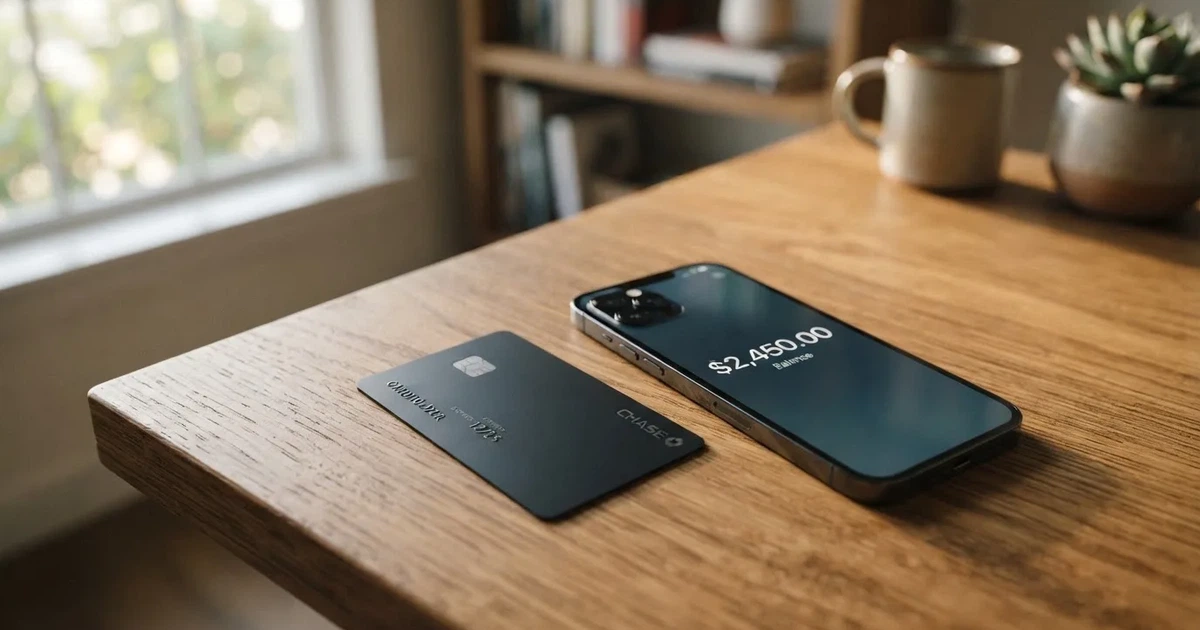
My overall score is 5.1 / 10. The card is genuinely well built on the parts it publishes — self-custody, no monthly fee, sensible top-up mechanics — and genuinely incomplete on the parts that decide whether you can use it at all. Read the eligibility section below before you spend any time on the app, because if your country is not served, nothing else on this page matters.
The conditions described here are current as of October 28, 2026.
Who this card suits, and who it does not
This card suits the person who already has USDC or USDT sitting in a self-custodial wallet, who wants to spend it at ordinary shops without touching an exchange, and who is content to treat the card balance like a prepaid wallet rather than a bank account. It also suits anyone who simply dislikes paying a monthly card fee — there is not one.
It does not suit you if you need a card that a shop will never question, if you need a credit card, if you need a card you can rely on for a subscription that renews while you are asleep in another timezone, or if you need to know exactly which institution stands behind your money when something goes wrong. The Prive card does not tell you that institution.
| Criterion | Mark | Why |
|---|---|---|
| Who can get it | 5 / 10 | No country list published; off-ramps to bank accounts in 80+ countries; site terms aimed at Hong Kong residents; outside sources disagree on whether Hong Kong is available; early access by invitation reported unofficially |
| Cost | 3 / 10 | Metal card $99.00, virtual card $10.00 shown discounted to $5.00, top-up 0.50% plus $0.05 network fee, FX markup 2.00%, ATM markup 1.00% |
| Top-up options | 7 / 10 | USDC, USDT, EURC, PYUSD from a non-custodial wallet, plus fiat through FPS, ACH and SEPA — but no network names given |
| Reliability and complaints | 5 / 10 | Prive Technologies Limited says it is “not a bank”; issuer and FCA number not named; reports of login failures after an update and slow support; iOS App Store 4.3 from 20 ratings |
| Everyday use | 7 / 10 | Virtual and metal card, ATM at a 1.00% markup, a Google Pay terms page exists; mobile wallet support reported unofficially as unavailable |
Add those five marks up and you get the 5.1. The spread is instructive: the strongest number is everyday use, the weakest is cost, and cost is weak not because the fees are predatory but because the metal card at $99.00 is a lot to pay before you have proven the thing works for you. Start with the virtual card at $5.00 if you are experimenting. That single decision saves you most of the risk.
Will they give you the card
The honest answer is that nobody outside the company can tell you with confidence.
The Prive website shows no list of supported countries. What it does say is that off-ramps — withdrawals to your own bank account — go out to bank accounts “in 80+ countries”. That is a statement about where money can leave, not about who can open an account. Those are different questions, and plenty of readers confuse them.
Then there is the terms page, which says the content is “intended exclusively for Hong Kong residents”. Elsewhere in my checking, Hong Kong came up as the answer from the terms themselves, while a third-party card catalogue says the opposite — that Prive is not available in Hong Kong. The sources genuinely disagree, and I will not pretend to resolve it for you. What I can tell you is which document to trust when they conflict: your own answer from the company’s onboarding flow beats both a marketing page and a catalogue written by someone else.
A third-party source also describes early access by invitation and says the card is not available in Hong Kong. That is unofficially reported and not confirmed by the card, so treat it as a hint rather than a rule.
The audience this card is genuinely built for is narrower than the marketing suggests: people who hold stablecoins and spend USDC and USDT from their own wallet. If that is not you, the honest thing is that this card is not aimed at you, and no fee schedule will change that.
How to get it
The signup path the company describes is four steps: install the app, onboard and verify your identity, order the virtual card, and then request the metal card inside the app if you want one. Verification goes through Sumsub and Bridge, and the help centre carries eight knowledge-base articles on KYC — though the documents themselves are not published there.
Membership is “subject to application and verification” at Prive’s discretion. That wording matters. It is not an eligibility promise; it is a statement that they can say no. Age is 18 or the age of majority in your country, under the terms.
On documents, a third-party catalogue says an email address, a phone number and an identity document are required, and that proof of address and a selfie are not. That is unofficially reported and not confirmed by the card, so do not plan around skipping anything — the verification provider you are routed through sets its own requirements.
The part I would flag hardest: your verification tier sets your card limits, and the tier names, what each tier unlocks, how long review takes, and why an application might be refused are all not stated. A catalogue lists a single level called “ID Verification” and reports complaints about slow KYC review — again unofficially. So expect the entry gate to be slower than the app’s own tone suggests.
Fees and what a payment really costs
The fee schedule is effective 12 April 2026, and this is the strongest part of the whole package: the card publishes numbers you can check against.

| Item | Fee |
|---|---|
| Metal card purchase | $99.00 — a $39.00 card fee plus $60.00 shipping |
| Metal card shipping | $60.00, included in the $99.00 |
| Replacement of a lost, stolen or damaged metal card | $99.00 |
| Virtual card | $10.00, shown discounted 50% to $5.00 |
| Monthly fee | None listed |
| Card closure | Free |
| Top-up | 0.50% ($0.50 minimum, $999,999 maximum) plus $0.05 network fee for USDT and USDC |
| FX markup | 2.00% |
| Domestic payments | No extra fee |
| ATM withdrawal | 1.00% markup |
| Declined authorisation | $0.50, and only if your decline rate exceeds 5% over 10 or more attempts |
| Withdrawal | 0.00% ($0.01 minimum) plus $0.05 network fee for USDT and USDC |
| Stated per-transaction ceiling | “up to $100,000 per transaction” |
Now let me walk you through three ordinary days and show you where those lines bite, because a fee schedule is only useful if you can see it apply.
A coffee in your own city, card in hand. If the transaction is domestic, there is no extra fee on top of whatever the shop charges. The card currency itself is not stated on the schedule, while cash balances are held in GBP, USD, EUR, NGN, KES, MXN and BRL. If you are holding, say, NGN and spending USD, the 2.00% FX markup applies — that is the line that quietly costs you.
A subscription in a foreign currency, paid automatically. The 2.00% FX markup again, on every single charge, for as long as you keep it. Multiply it by twelve. On a $10 monthly service that is about $2.40 a year for the privilege of not touching an exchange, which is a perfectly reasonable trade in some cases and a silly one in others.
Cash from a machine at 11pm. A 1.00% markup, and whether there is any free allowance is not stated. There is also the network fee the machine’s own operator charges, which this card does not list and I will not invent for you.
Two limits deserve their own note. First, the “up to $100,000 per transaction” figure is a ceiling, not an allowance — actual limits “depend on your verification tier”, and the daily and monthly figures are not stated. So you cannot tell from the public pages what your card will do per day. Second, a third-party catalogue lists daily, monthly and ATM usage as unlimited, and lists every fee as free. That directly contradicts the official schedule above. Believe the schedule.
And the fees can move: they may change with fifteen days’ notice.
Top up: where the money comes from
Top-up is the cleanest part of the design. You hold USDC, USDT, EURC or PYUSD in a non-custodial wallet, and the card tops up instantly from that wallet balance. That instant top-up is what separates this from cards where you wait for a blockchain confirmation before you can spend.
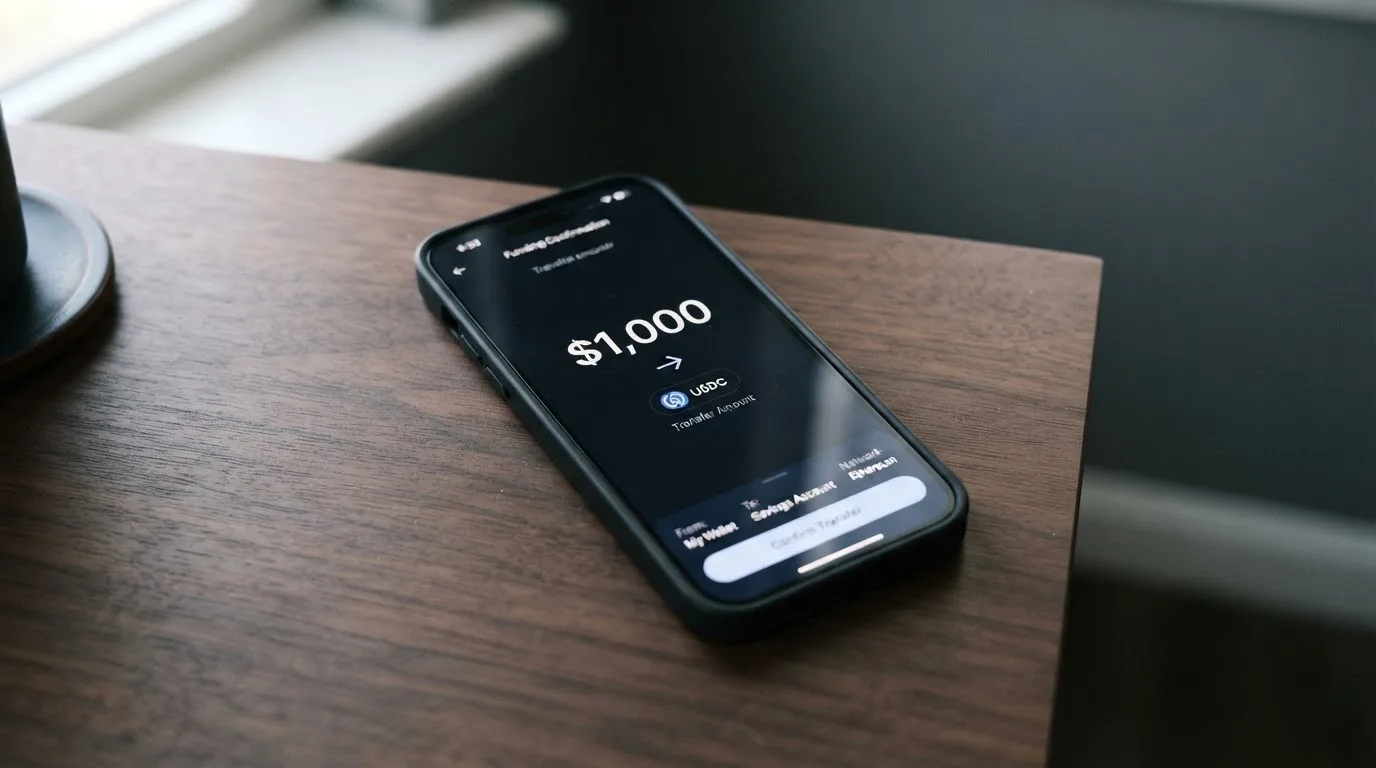
The cost is 0.50% with a $0.50 minimum, plus a $0.05 network fee on USDT and USDC. No minimum top-up is stated beyond that fee minimum, and the maximum is $999,999.
Fiat is the second route: you can top up in GBP, USD, EUR, NGN, KES, MXN or BRL through FPS, ACH or SEPA. The fiat fees are not stated, which is a real gap if you plan to use this as your main funding route rather than a crypto bridge.
One thing to settle before your first transfer: the network names are not stated. This is not pedantry. A stablecoin transfer sent on the wrong network can be lost or need manual recovery, and blockchain transfers are irreversible. EURC, PYUSD, USDC and USDT each exist on several chains, and picking the one the card expects is your responsibility. Confirm it in the app before you send anything.
Cashing out runs the other way: withdrawal is 0.00% with a $0.01 minimum plus the $0.05 network fee, out to local bank accounts in 80+ countries. Two closing details worth reading: on termination, outstanding balances become due under the terms, and there is a separate account-closure disclosure page.
Paying with it every day
You get two forms of the same product: a virtual card for immediate use, and a physical “premium metal” card. The card page says they differ by price only. That means you are not choosing between a basic and a premium product — you are choosing between paying $5.00 and paying $99.00.
Points accrue from top-ups, payments, withdrawals and referrals, and they are usable only inside the app. No cashback is stated anywhere.
Mobile wallets are genuinely muddled in the public record. A Google Pay terms page exists on Prive’s own legal section, which suggests Google Pay is at least contemplated. A third-party catalogue says both Apple Pay and Google Pay are “not supported”, which contradicts that page. Apple Pay is simply not stated. Blocked merchant categories are not stated either — so if gambling or similar categories matter to you, ask, because in this industry issuers usually block them by policy rather than by law, and the list varies by issuer.
On payments being declined: the address check that merchants run compares the numeric parts of your billing address with your issuer’s records, and it is generally unavailable for foreign-issued cards. This is the everyday reason a card like this gets refused at a till, and it is not a fault in the card.
Two consumer protections you would want and will not find here. The terms put disputes through arbitration in Hong Kong under HKIAC rules. The card agreement page on chargebacks and time frames shows “content not yet available” — no published process, no stated deadlines. If a charge is taken and you cannot reverse it, you will be working that out later.
App-wise: iOS sits at 4.3 out of 5 from 20 ratings. A Google Play listing exists but its rating could not be read.
What can go wrong
I found no official incident involving this card. That is mild comfort and nothing more — the absence of a recorded disaster is not evidence of a well-run business.
The user reports that do exist are secondhand and unflattering: login failures after an update, slow and vague support, and payment links that require the payer to register and complete KYC before they can pay you. Searches of Reddit and Trustpilot returned only unrelated “Privé” shopping sites, and no Trustpilot page for Prive Money was found.
The structural risks are clearer than the anecdotes.
You do not know who issues the card. Prive Technologies Limited states it is “not a bank”. Card services run through unnamed “licensed card programme partners”, and no FCA authorisation number and no issuer are named. The terms are governed by Hong Kong law. When something goes wrong — a frozen balance, a closed programme, a disputed charge — the counterparty you will be dealing with is not identified on any page you can read.
Your crypto stays yours, but your fiat does not. The wallet side is non-custodial, under the slogan “Your Wallet. Your Keys.” Cash balances are held with “regulated partners”. Deposit protection of the kind bank depositors assume does not apply here.
Support is promised around the clock. The Help Center and online support are stated as 24/7, with an email address published, and the app is in English plus ten other languages — Russian is not confirmed. That 24/7 claim sits next to reports of slow responses, which is the kind of combination that wears people down.
Programmes do close. This is a category lesson rather than a Prive-specific warning, and it is worth internalising: the card networks do not issue crypto cards to consumers themselves, they license issuers, and they can suspend a programme. Visa terminated its global agreements with FTX in November 2022. WaveCrest, a Visa issuer that supplied several crypto card brands, was suspended in Europe in 2018. When a programme winds down, loading stops, then spending stops, then you are asked to withdraw what remains. Since this card names no issuer, you cannot even check that issuer’s track record.
A stablecoin is not a dollar. Stablecoins aim for stability and do not always deliver: TerraUSD collapsed in May 2022 and USDC lost its peg briefly in March 2023. If the card converts your USDC into a fiat balance at a moment of stress, that is when you learn what “1:1” was worth.
What to take instead
Three alternatives, each with its own trade-off. None of them fixes the whole problem either — that is the nature of this corner of the market.
| Prive | BloFin Wallet Card | Decaf | SafePal | |
|---|---|---|---|---|
| Score | 5.1 / 10 | 6.9 / 10 | 6.2 / 10 | 6.2 / 10 |
| Card | Visa Platinum, virtual or metal | Visa Platinum, virtual/physical not stated | Visa, virtual or physical with tracked delivery | Virtual Mastercard debit |
| Entry cost | $5.00 virtual, $99.00 metal | $0.00 activation, annual, issuance and dormancy fees | $5 virtual worldwide; $10 physical US only, $90 elsewhere | No account or management fees; issuance fee not stated |
| Ongoing | No monthly fee; 2.00% FX; 1.00% ATM | Spend fee 1.00% or lower by VIP tier, down to 0.00% at VIP 5; FX not stated | No FX fee added, “the FX is the one Visa offers” | Top-up 0% standard; 1% FX on Mastercard non-USD settlement |
| Eligibility clarity | No country list; terms say Hong Kong residents | No list on the card page; a separate data list names 35 countries | Long restricted-countries and restricted-US-states list | Region list required, but the page was empty when fetched |
| Top-up | USDC, USDT, EURC, PYUSD; fiat via FPS, ACH, SEPA | USDT and USDC on Arbitrum and Base | Payment links or account details by card, bank transfer or USDC | Crypto from 40+ blockchains, converted to USDC or fiat |
BloFin Wallet Card scores highest here at 6.9, and its reason is unglamorous: it costs nothing to hold. Activation, annual, issuance and dormancy fees are all $0.00, and cancellation is free. Its cost is per payment — 1.00% at VIP 0, stepping down to 0.00% at VIP 5 — which means you pay per use rather than per card. If you are only occasionally converting crypto into spending money, that is a better shape than Prive’s $99 metal card. Its weakness is the same one Prive has: the card page shows no country list.
Decaf is the one to look at if the FX markup is what bothers you most. It adds no FX fee of its own and states that “the FX is the one Visa offers”. It also has the clearest eligibility information in this group, because it publishes a long list of restricted countries and restricted US states. That transparency is worth something on its own. Its entry cost is $5 virtual worldwide, and it pays out in stablecoins on Solana and Stellar.
SafePal sits at 6.2 and is the most conventional: a virtual Mastercard with standard 0% top-up fees, a 1% FX fee on Mastercard non-USD settlement, and crypto deposits from 40+ blockchain networks converted to USDC or fiat. It is built for people already inside that ecosystem. No cashback; the reward is referral commissions and tier privileges tied to deposits and staking.
The pattern to notice: Prive is the only one of the four charging real money to hold the card. If that bothers you, start anywhere else.
Who I would recommend it to
I would recommend this card to a specific person: someone who already holds USDC or USDT in a self-custodial wallet, who is comfortable with blockchain transfers and irreversible on-chain actions, who lives in a country Prive actually serves, and who wants a spending card without touching a centralised exchange again. That person gets a real Visa Platinum, instant top-up from their own wallet, no monthly fee, and a published fee schedule that does not hide anything behind “variable”.
I would not recommend it as a first crypto card, because you would be paying $99.00 for a metal object before you know whether the eligibility, the KYC tier and the app will suit you. Start on the $5.00 virtual card if you must.
And I would hold off entirely if any of these apply to you:
- You cannot confirm from Prive’s own onboarding flow that your country is served.
- You need a card that will not be declined abroad, because a 2.00% FX markup and a foreign BIN are both friction.
- You need published chargeback rules. This card has none.
- You need to know the name of the institution holding your fiat balance. This card does not say.
- You need deposit protection. It does not apply.
- You are planning to hold a large balance in the card for a long period. With an unnamed issuer and no published complaints process, the downside case is not something you can model.
Frequently asked questions
What is the Prive card?
It is a Visa Platinum payment card, available as a virtual card or a physical premium metal one, that spends a balance you load from your own crypto wallet. You hold USDC, USDT, EURC or PYUSD in a non-custodial wallet and top the card up from it, and the card then behaves like a prepaid card drawing on that balance. The company behind it, Prive Technologies Limited, describes itself as “not a bank”.
Is Prive a bank, and who owns it?
No — the company states plainly that it is “not a bank”. Card services run through unnamed “licensed card programme partners”, and neither the issuing institution nor an FCA authorisation number is published. Prive Technologies Limited is the named company, the terms are governed by Hong Kong law, and identity checks are handled through Sumsub and Bridge. So if you need to know the institution standing behind your money, that question is currently unanswered.
Which countries can use the Prive card?
The website publishes no country list, which is the central problem with this card. The terms say the content is “intended exclusively for Hong Kong residents”, while a third-party catalogue says Prive is not available in Hong Kong — the sources contradict each other. What is stated is that withdrawals go out to bank accounts in 80+ countries. That is about where money can leave, not who can sign up.
How do I get a Prive card?
Four steps: install the app, onboard and complete identity verification, order the virtual card, then request the metal card inside the app if you want it. You must be 18 or the age of majority, and membership is “subject to application and verification” at Prive’s discretion. Your verification tier determines your card limits, but the tier names, unlocks and review times are not published.
What does Prive card cost to hold?
The metal card is $99.00, made up of a $39.00 card fee and $60.00 shipping, and replacing a lost, stolen or damaged metal card costs another $99.00. The virtual card is $10.00, currently shown discounted 50% to $5.00. No monthly fee is listed and closing the card is free. On the fee side, top-up is 0.50% with a $0.50 minimum, FX markup is 2.00%, ATM withdrawals carry a 1.00% markup.
Is the Prive card free?
Not entirely. Holding it costs nothing monthly, but the card purchase does: $5.00 discounted for the virtual version and $99.00 for metal. Spending costs too — 2.00% whenever you pay in a currency other than the balance’s, 1.00% at an ATM, and 0.50% plus a $0.05 network fee on top-ups. A third-party catalogue lists everything as free, which contradicts the official schedule effective 12 April 2026; go with the schedule.
How do I top up the Prive card?
Hold USDC, USDT, EURC or PYUSD in a non-custodial wallet and top up instantly from that balance, paying 0.50% with a $0.50 minimum plus a $0.05 network fee on USDT and USDC. You can also add fiat in GBP, USD, EUR, NGN, KES, MXN or BRL through FPS, ACH or SEPA, though those fees are not stated. Check the network in the app before sending — the network names are not published, and transfers on the wrong chain can be lost.
Is the Prive card safe?
Fiat balances are held with “regulated partners” and deposit protection does not apply, so this is not a bank deposit. Your crypto stays in your own wallet until payment, which protects the crypto but leaves you responsible for keys, phishing and address-swapping malware. The app offers biometric login, two-factor authentication and real-time fraud detection. But no issuer is named and no chargeback process is published, so the practical answer is that the safety story has an unfilled gap.
Can I add Prive card to Apple Wallet or Google Pay?
Nobody can tell you reliably. Prive’s own site carries a Google Pay terms page, which suggests Google Pay is contemplated, while a third-party catalogue says both Apple Pay and Google Pay are “not supported”. Apple Pay is simply not stated anywhere. Since mobile wallets are how most people pay day to day, ask the company directly before you rely on the card for anything regular.
What are the limits on a Prive card?
The published figure is “up to $100,000 per transaction”, and card limits “depend on your verification tier”. Daily and monthly figures are not published, and the tier structure that sets them is not published either. A third-party catalogue lists daily, monthly and ATM usage as unlimited, but that same catalogue lists every fee as free, so it contradicts the official schedule — I would treat the unlimited claim as unreliable.
Wallet card options – cryptocardoptions.com
Content created by the «cryptocardoptions.com» team