
A Telegram-based card that only really works for Hong Kong residents
 Available in US
AnyXPay is not really a bank card. It is a way to hold stablecoins inside a Telegram mini-app and spend them through ordinary card numbers — MasterCard Basic, MasterCard Pro, Visa e-commerce and Visa Premium — that behave like prepaid cards everywhere Visa and Mastercard are accepted. That framing tells you most of what you need to know in the first thirty seconds: the balance you spend is a balance you loaded yourself, not money sitting in a current account at a bank, and the whole thing is reached through Telegram rather than through an app you install from an app store.
My verdict up front: I scored this card 3.5 out of 10, and I want to be honest about why that is not simply a snap judgement. The funding options are genuinely the best I have seen in this category — eight different tokens across three networks, plus a bank card and a peer-to-peer route. But the terms restrict the service to Hong Kong residents, the card costs 50 USDT per card, top-ups cost 4%, and the legal pages name a developer called “CSB” without naming a registered address, an issuing bank or any licence. For a reader outside Hong Kong the residency line alone settles most questions. For a reader inside Hong Kong, the missing issuer information is what should make you pause.
Who this suits: a Hong Kong resident who already holds stablecoins on TRC-20, ERC-20 or BEP-20, spends in Hong Kong, and is comfortable treating the balance as money in a wallet rather than money in a bank. Who it does not suit: anyone who needs a bank card with a bank behind it, anyone who needs proof of address or a chargeback process they can rely on, and anyone who cannot clear the residency condition.
The conditions described here are current as of October 28, 2026.
Verdict: 3.5 out of 10
Here is how the score breaks down, and what each mark rests on. The total is the sum of the marks below.
| Criterion | Mark | Why |
|---|---|---|
| Who can get it | 2 / 10 | Terms say services are intended only for Hong Kong residents; refusal is possible in sanctioned jurisdictions; the card page lists no countries |
| Cost | 1 / 10 | 50 USDT per card, 4% top-up fee, fees may change without notice; an acquirer markup may apply outside Hong Kong |
| Top-up options | 9 / 10 | USDT, USDC, USDR, USDQ, EURQ, XAUT, EurR, aUSDT on TRC-20, ERC-20 and BEP-20, plus bank-card top-up and P2P purchase |
| Reliability and complaints | 3 / 10 | Developer “CSB”, Hong Kong law, issuer and licences not named; terms allow freezing or closing the account at any time without compensation; no independent reviews found |
| Everyday use | 5 / 10 | MasterCard Basic, MasterCard Pro, Visa e-commerce, Visa Premium, Apple Pay and Google Pay; virtual versus physical and ATM not stated |
| Total | 3.5 / 10 | — |
The shape of that table matters more than any single row. The top-up row is a 9 because the funding rails are wide and cheap to use from many networks. The cost row is a 1 because the card itself is expensive in fee terms and the exchange rate you get on top-ups is not fixed. When a service is excellent at one narrow thing and weak on the two things that decide whether you can actually live on it, the average lands where this does.
I also want to name the audience the card appears built for, because it changes how you read everything else: Hong Kong residents paying from a Telegram mini-app. That is a very specific person. If that is you, the funding options are a real advantage over most alternatives. If it is not you, the same features are decoration.
Will they give you the card?
Short answer: expect a yes if you live in Hong Kong and a complicated maybe everywhere else.
The terms state plainly that services are intended only for Hong Kong residents. That is the first line of the answer and it is the one that decides most cases. The service may also be refused for sanctioned jurisdictions, and the list names Belarus and Russia, with Cuba, DPRK, Iran, Syria, Venezuela and others listed as “etc.” — which tells you the published list is not the whole list.
What is not there matters just as much. The card page lists no countries at all. Some starting data suggested 200+ countries, but that is not confirmed anywhere on the site, so I would not treat it as a fact. If you are outside Hong Kong, then your case turns on whether the company will accept you despite the residency wording, and nothing published answers that in advance.
One practical thing worth knowing about this whole category, not just this card: a card number starts with an issuer identification number — a BIN or IIN of six or eight digits — that tells merchants which institution and country issued it. Merchants can look that up, and some apply extra scrutiny when the issuer country differs from the billing address. That is why a card issued in Hong Kong can look “foreign” to a shop in London or Lagos, and it is one reason the missing issuer information here is not a cosmetic gap.
How to get it
The registration levels are simple, which is both the good news and the reason for the low mark on reliability.
Level 1 needs an email address and a phone number. Of the four card products, only Visa Premium is marked as requiring KYC. The terms also say that identification data and source-of-funds documents can be requested on demand, but they do not describe the procedure, and they do not say what happens while you wait. Proof of address and an age requirement are not stated anywhere I could find.
So the honest sequence is: you can start with little more than a phone and an email, and the extra documents may arrive as a condition later rather than as a step you complete up front. The terms do require re-verification if your data has gone out of date, and access may be refused if information you supplied is false. Processing time is not stated, and neither are the reasons a request would be rejected — so if your application stalls, you will not find a published list of grounds to check against.
On the cards themselves: you choose between MasterCard Basic, MasterCard Pro, Visa e-commerce and Visa Premium. The activation text also names “Mastercard Infinity”, which appears nowhere else in the card list — a small inconsistency worth keeping in mind. Whether you receive a virtual card, a physical card, or both is not stated, and neither is the currency the card is issued in. Delivery is also not stated; the product is described as virtual.
That last cluster of unstated things is why I treat the signup process as cheap and fast but not fully documented. You can get in with little friction. What you cannot do from the published pages is plan the rest.
Fees: what a payment really costs
This is where the card is weakest, and it is worth walking through a few ordinary payments rather than reading a fee list.
| Fee or limit | Value |
|---|---|
| Card issuance | 50 USDT for each card |
| Monthly fee | Not stated |
| Card top-up | 4% |
| Conversion / exchange | Fees can change without notice; card payments outside Hong Kong may carry an acquirer conversion markup paid by the user, no figure given |
| ATM | Not stated |
| Per transaction / daily / monthly limits | MasterCard Basic: $20,000 / $250,000 / $1,000,000; MasterCard Pro: $50,000 / $250,000 / $1,000,000; Visa e-commerce: $20,000 / unlimited / unlimited; Visa Premium: $200,000 / $200,000 / $6,000,000 |
Three payments, and what applies to each.
A coffee in Hong Kong. You loaded your balance at 4% on the way in, and the purchase itself is covered by whatever rate the card uses. No figure for that rate is published, and fees can change without notice, which is the version of that sentence you should keep in your head.
A hotel in Europe booked from Hong Kong. This is the payment the acquirer markup is aimed at, and it is the one that can surprise you: card payments outside Hong Kong may carry a conversion markup added by the acquiring bank and paid by you. No figure is given for it. The hotel may also add its own currency handling. And if the booking site checks your billing address against the card, a Hong Kong-issued card with a foreign billing address is exactly the case where Address Verification Service tends to fail — it is mainly offered in the US, Canada and the UK and is generally unavailable for foreign-issued cards, which can cause declines.
A large purchase, say $150,000 of equipment on Visa Premium. The limits allow it — Premium runs $200,000 per transaction and $6,000,000 monthly — but remember the only Premium tier is the one that requires KYC, so this is the tier where you will meet the identification questions in full.
The 50 USDT card price deserves a second look too. At that price the four products cost exactly the same, and the difference between them is the limits above. Basic and Visa e-commerce are the cheap-to-enter options; Premium is the only one that opens up large numbers, and only after KYC.
Top up: the one thing this card does well
Topping up is where AnyXPay earns its 9 out of 10, and if there is a single reason to keep an account open, it is this.
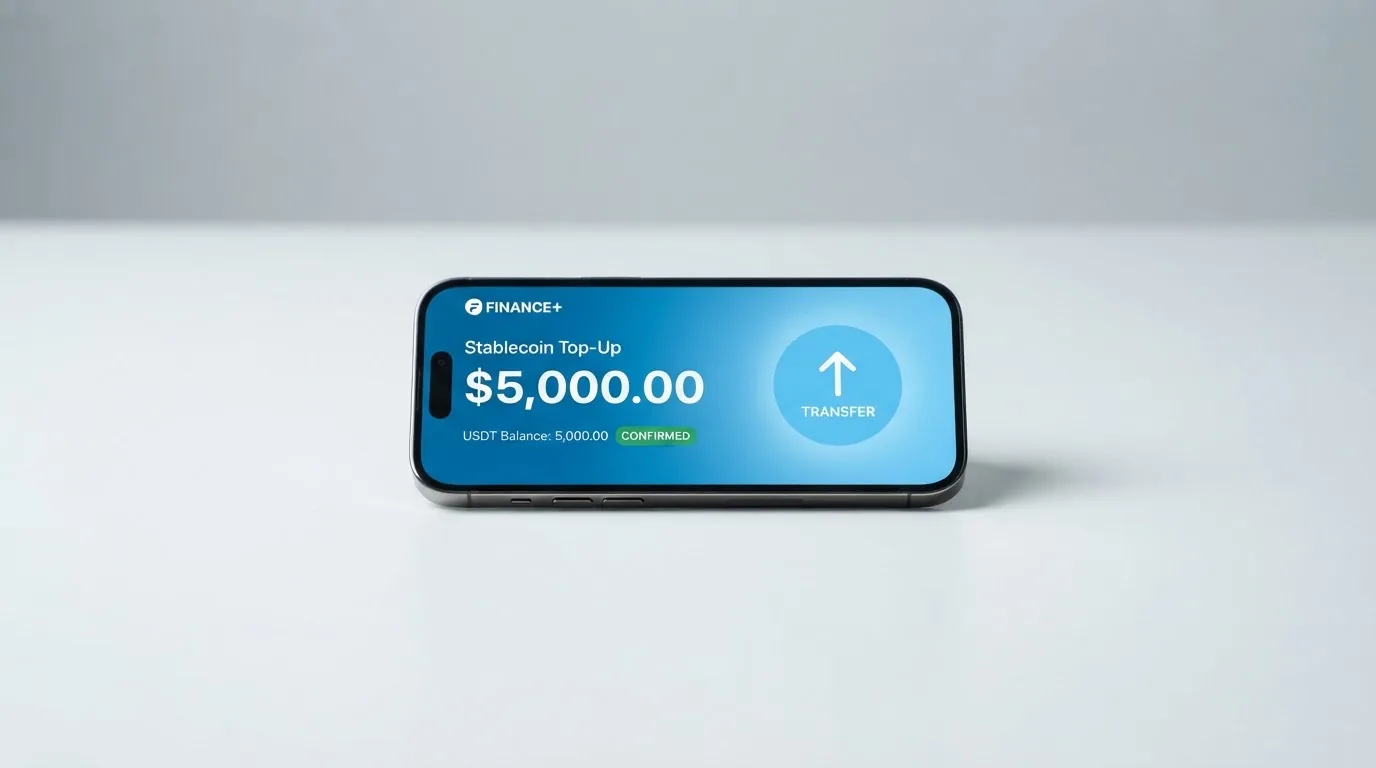
You can top up directly with USDT, USDC, USDR, USDQ, EURQ, XAUT, EurR and aUSDT over the TRC-20, ERC-20 and BEP-20 networks. You can also top up by bank card, and you can buy through a peer-to-peer route. Eight assets across three chains, plus two conventional rails, is a wider door than most cards in this category offer.
The costs: 4% on the card top-up. Blockchain network fees are paid separately by you — the chain charges them, not the card provider. The fees for the fiat routes through bank card and P2P are not stated, and neither is a minimum top-up.
One warning that matters more here than anywhere else in this review. Blockchain transfers are irreversible, so a deposit sent on a network the provider does not support, or to an address belonging to a different network, can be lost or need manual support recovery with no guarantee. Pick the network first, then the token.
Also worth knowing before you plan around it: withdrawal from the Wallet is possible minus the network fee, but withdrawal from the Card account is not possible. Fees already paid are not refunded. So the card balance is a spending balance, not a savings balance.
Paying with it every day
The everyday mechanics are fine. Cards can be added to Apple Pay and Google Pay. Four card products cover the range from light spending to large transactions. There is a referral programme, and the site and terms are in Russian.
What is missing is the detail that decides whether daily use is smooth. Blocked merchant categories are not stated. Whether a virtual card, a physical card or both are issued is not stated. Cash withdrawal terms are not stated — this is the ATM row above, and it is blank. There is no cashback stated, so the referral programme is the only incentive on offer.
The way you reach all of this is worth noting. AnyXPay runs as a Telegram mini-app (@anyxpay_bot) and a web app at app.anyxpay.com; no App Store or Google Play listing was found. That is convenient — Telegram is already open — but it also means the interface you trust your money through sits inside a messenger account.
If a payment goes wrong, the published route is negotiation first, then mediation or HKIAC arbitration in English. Claims on transactions have to be filed within the deadline set by the rules or the right is lost. The chargeback process itself is not described, and in this category that omission is worth pausing on: prepaid-card coverage varies by scheme and should not be assumed, so do not plan around a refund you have not confirmed.
What can go wrong
I found no official incidents — no licence action, no fine, no public enforcement. I also found no independent user reviews of AnyXPay at all, and no Trustpilot page. The site carries five self-published reviews from August and September 2025, which are user reports and unverified.
That leaves the terms themselves, and they are where I would focus.
The terms allow the account to be frozen or closed at any time, without notice and without compensation. You should read that as the largest single risk in this review. It sits underneath everything else: a card you cannot reach is a balance you cannot spend, and no refund schedule is promised.
The company details are thin. The developer is named as “CSB”, operating through the Telegram mini-app. The terms are governed by Hong Kong law. The registered address is not stated, the issuing bank is not stated, and no licences are stated. When a payment company cannot name the institution that stands behind its card numbers, that is a structural gap, not a detail — because in this category the issuer is the party that holds the programme and handles disputes.
Then there is a contradiction you should see rather than resolve. The site describes itself as an open-source non-custodial Telegram wallet, while the terms say the wallet is custodial and “not a banking service”. Those are different architectures with different consequences. The terms also place responsibility on you for your Telegram account and any trusted device, and warn that high-risk assets may be frozen. Whether 2FA or a card-freeze control exists is not stated.
Support is an in-app button, also in the Hub tab. Hours are not stated, and no specific language for support is explicitly promised.
One last data point on currency of information: the terms were updated on 7 July 2026, and the blog carries card guides from 9 October 2025 and 5 May 2026.
What to take instead
None of these is a recommendation for you — I am showing you the shapes available, not ranking them for your situation.
| Alternative | Score | Card and cost | Fees and funding | Who can get it |
|---|---|---|---|---|
| Ape Wallet | 5.5 / 10 | Virtual Visa: a “service card” for subscriptions and online payments, plus an Apple Pay / Google Pay card; issuance price not stated | No amounts published; total shown before confirming; transfers to other users by Telegram username are free | No country list; site says the card works “wherever Visa is accepted”; Russian focus, with SBP payments and KYC using a Russian passport |
| MaxSwap | 5.2 / 10 | Virtual only, Mastercard; 50 USD card with 25 USD first deposit required, total issuance listed 77.125 USD; monthly fee not stated | Top-up 4.5% plus $1; transaction 0.25 USD plus 0.4%; no separate FX rate; crypto funding across a long token list including BTC, ETH, TON, USDT, USDC and others | Not stated; site claims “no geographical restrictions” |
| AnoCard | 5.9 / 10 | Virtual cards (VCC), reloadable and one-time, from several BINs, chosen with filters in the SORN web dashboard; network and currency depend on the BIN | Creation fee varies by BIN, some products carry a maintenance fee; top-up percentage and minimum depend on the asset route; all shown in SORN before payment | Not stated on the page read in a browser on 22 October 2026; ano.cards was down |
Three different bets, if you want to read them that way.
Ape Wallet is the one with the clearest country story and the weakest cost transparency — no amounts published, and a referral programme that pays a share of invited users’ purchases rather than cashback.
MaxSwap is the one with the most explicit pricing, and also the highest top-up figure of the three: 4.5% plus $1, against AnyXPay’s flat 4%. Its claim of no geographical restrictions is the reason it sits at 5.2 rather than lower.
AnoCard is the most product-like, with reloadable and one-time virtual cards across several BINs, and a referral programme paying $5 per referred card creation and 0.25% of referred top-ups. Its public site was down when I checked, so treat everything about it as unconfirmed.
Against all three, AnyXPay’s honest advantage is top-up breadth: eight assets, three networks, bank card and P2P. Its disadvantage is that it is the only one of the four whose terms restrict it to residents of a single city.
Who I would recommend it to
If you live in Hong Kong, hold stablecoins already, and mostly spend in Hong Kong: worth a try. The funding options are the best in this group, you can add the cards to your phone, and the top-up cost is the lowest of the four cards compared here.
If you live anywhere else: I would not start here. The residency wording is the reason, and it is in the terms rather than in a support answer.
If your main worry is getting a card at all, because ordinary banking has been difficult where you live: I understand why you are reading this. But this card does not solve that problem in a way I can vouch for. The issuer is not named, no licence is named, there is no independent review record to look at, and the terms let the account be frozen or closed at any time without compensation. A service that helps you get a card number is not the same as a service that gives you the protections a licensed institution would.
Before you commit money, four checks. Ask support in writing who the issuing bank is and where it is licensed. Ask what happens to your balance if the account is closed — the terms do not promise a payout. Confirm the card currency and whether you get a physical card, a virtual one or both. And run a small top-up before a large one, so any problem with a network or address shows up while the amount is small.
Frequently asked questions
What is the AnyXPay card?
It is a prepaid-style payment card issued inside a Telegram mini-app. You load a balance — mostly stablecoins, converted into a spendable amount — and you pay with card numbers that behave like ordinary prepaid cards anywhere the network is accepted. It is a way to spend crypto balances, not a bank account and not a bank card.
How does the AnyXPay card work?
You fund a balance first, and the card spends only that balance, so it cannot overdraw. Four products exist: MasterCard Basic, MasterCard Pro, Visa e-commerce and Visa Premium. Cards can be added to Apple Pay and Google Pay, and you reach everything through the Telegram mini-app or the web app.
Is AnyXPay a bank?
No, and the terms say so themselves: they describe the wallet as custodial and “not a banking service”. The developer is named as “CSB” and the terms are governed by Hong Kong law, but the issuing bank is not stated and no licence is named. Treat this as a payment service, not a bank, and do not assume deposit protections apply.
Who owns AnyXPay?
The developer is named as “CSB”, operating through the Telegram mini-app. Beyond that name the picture is thin: no registered address is stated, no issuing bank, no licences. I found no independent user reviews and no Trustpilot page, so there is no independent picture of the operator either.
Can I use the AnyXPay card in my country?
That depends first on whether you live in Hong Kong, because the terms say services are intended only for Hong Kong residents. The card page lists no countries at all, so a “yes” for anywhere else would be an assumption, not a published fact. Service may also be refused for sanctioned jurisdictions, and that list names more than it spells out.
Does the AnyXPay card require KYC?
Only one of the four products is marked as requiring it: Visa Premium. Level 1 registration needs just an email address and a phone number. Separately, the terms allow the company to request identification data and source-of-funds documents on demand, without describing the procedure or a processing time.
How do I top up the AnyXPay card?
You can send USDT, USDC, USDR, USDQ, EURQ, XAUT, EurR or aUSDT over TRC-20, ERC-20 or BEP-20, or top up by bank card or P2P. The card top-up fee is 4%, and blockchain network fees are paid separately by you. Minimums are not stated, so check before sending.
What does it cost to hold the AnyXPay card?
The card costs 50 USDT for each card, and top-ups cost 4%. No monthly or annual fee is stated. Card payments outside Hong Kong may carry an acquirer conversion markup that you pay, with no figure published — that is the line most likely to make an overseas payment cost more than you expect.
Can I withdraw money from AnyXPay?
From the Wallet, yes, minus the network fee. From the Card account, no — withdrawal is not possible, and fees already paid are not refunded. Plan the Card balance as spending money, not as a balance you can move back to your own wallet.
Is the AnyXPay card safe to use?
I found no official incidents and no independent reviews, which is not the same as a clean record — it is an empty one. The terms let the account be frozen or closed at any time without notice or compensation, and the site calls the wallet non-custodial while the terms call it custodial. I would not treat this card as a place to hold an amount you cannot afford to lose access to.
Virtual card options – cryptocardoptions.com
Content created by the «cryptocardoptions.com» team