
Tonhub card review: EU-only, self-custody, and missing a published fee schedule
 Available in US
The Tonhub card is a Visa debit card that spends directly from a crypto balance in your own wallet rather than from a custodial account. That is its main idea, and it is what sets it apart from most crypto cards. The problem is that what surrounds the idea is thin: the eligibility list is limited to the EU, the fee schedule is not published on the card’s pages, and the only public review I could find describes a dispute process that was lengthy. This review walks through what Tonhub does well, where it leaves you guessing, and who I think it actually suits.

The conditions described here are current as of October 28, 2026.
Verdict
Tonhub earns 5.3 out of 10. It is not a poor product; the score reflects how much it asks you to take on trust. The card spends from a self-custody wallet audited by Trail of Bits, which is genuinely reassuring, but the issuer, the operator entity and the standard fee amounts are not published. If you live in the EU, hold TON or USDC in your own wallet, and want to pay directly from that balance without handing custody to a third party, Tonhub is one of the few options that fits. If you are outside the EU, want a physical card, or need a card with a transparent fee schedule, this is not the one.
Score breakdown
| Criterion | Mark | Why |
|---|---|---|
| Who can get it | 5/10 | Limited to EU residents aged 18+; “25+” countries are cited only as a usage stat, not as eligibility. |
| Cost | 7/10 | No published fees on the card’s pages; an unofficial figure puts the transaction fee at 1.5%. |
| Top-up options | 5/10 | TON and USDC are shown; one user review mentions USDT; SEPA and SWIFT bank transfers are offered. |
| Reliability and complaints | 4/10 | Operator and card issuer are not named; smart contracts are audited by Trail of Bits; a single Trustpilot review reports a dispute process that was lengthy with money still not returned. |
| Everyday use | 5/10 | Virtual Visa Debit only after verification; unofficial sources say Apple Pay and Google Pay are supported; ATM details are not disclosed. |
| Total | 5.3/10 | A reasonable choice for a narrow audience, but light on disclosure. |
The card suits EU residents who already keep their crypto in a self-custody wallet and want to spend TON or USDC without converting through an exchange. It does not suit anyone outside the EU, anyone who needs a physical card, or anyone who insists on seeing a fee schedule before signing up.
Who will give you the card
Tonhub restricts the card to people aged 18 or older who live in the European Union. That second clause matters: it is residency, not citizenship, so an EU resident with a non-EU passport can in principle qualify, while an EU citizen living in, say, the UK or Switzerland would not. The card’s own pages refer to “25+” countries as a usage statistic rather than a published eligibility list, which I read as marketing copy rather than a promise that those 25 places are all accepted.
The single-user, single-wallet design is worth flagging here too. Because the funds live in your own non-custodial wallet, there is no joint account or business card feature. If you need a card for a company or for a family member, Tonhub is not built for that.
A practical note: the EU rule means you should expect to provide proof of address as part of the identity verification, even though the card’s pages do not spell out which documents are accepted. Treat verification as a step that may take a few business days rather than a few minutes.
How to get it
Sign-up runs through the Tonhub app, and the order of operations is short. First you set up a wallet inside the app. Then you tap the Tonhub Card banner, complete identity verification, and a virtual card is issued once that step clears. The whole flow is digital: there is no physical card mentioned on the card’s pages, and the only card product described is a virtual Visa Debit.
Identity verification is mandatory before the card is issued, and the page explicitly labels this step “Verify Your identity.” What that step asks for in practice is not described: the documents, the address proof, the expected processing time and the reasons a verification might be rejected are not stated on the card’s own pages. If you have been through KYC with a European bank or exchange before, you have a reasonable idea of what to expect, but be prepared for the actual experience to vary.
The card currency is not disclosed, and neither is the form factor beyond “virtual.” If you specifically need a plastic card to tap at a terminal, you will not get one from Tonhub, and that is the first thing to check before you download the app.
Fees: what it really costs
This is the section where the review becomes difficult to write, because the card’s own pages do not publish the numbers. A “Fees & Conditions” page exists but does not state the amounts. What I have is one unofficial figure: a 1.5% transaction fee, reported by Forklog in November 2024 and repeated in a company profile on Dealroom. Treat that as a working estimate, not a guarantee.

Costs at a glance
| Fee or limit | Amount |
|---|---|
| Issuance fee | Not stated |
| Monthly fee | Not stated |
| Conversion fee | 1.5% (unofficial) |
| FX fee | Not stated |
| ATM fee | Not stated |
| Daily spending limit | Not stated (user-set on-chain caps available) |
| Monthly spending limit | Not stated (user-set on-chain caps available) |
The card does let you set custom spending limits directly on-chain, which is genuinely useful if you want to cap how much the card can move in a given period. What it does not give you is a published hard ceiling, so you cannot compare Tonhub to other cards on a like-for-like basis.
Three everyday payments
To make the abstract fees feel concrete, here is what three common scenarios might cost. I am not estimating the merchant’s own costs; only the card’s side.
A €40 grocery run in a country that uses the euro would be the simplest case. With a 1.5% unofficial transaction fee, that is about €0.60 on top of the price you see at the till. The euro is the card’s implicit base currency, so no FX conversion applies.
A €25 streaming subscription paid in US dollars is the case that exposes the hidden cost. If the card does charge a foreign-exchange fee, the unofficial sources do not give a number for it, so the true cost is unknown. At 1% it would be about €0.25; at 3% it would be closer to €0.75. The right move is to assume there is an FX fee and check the actual statement on your first cross-border purchase.
A €100 online purchase in a non-euro currency is the one that hurts if there is an FX margin. Even a 1% FX fee is €1, and the unofficial 1.5% conversion fee on top brings the surcharge to roughly €2.50. If you are paying in a non-major currency, expect the network and conversion costs to add up.
The honest summary is this: Tonhub’s pricing page is not complete, and anyone who is sensitive to fees should wait for the published schedule or make a small test purchase before relying on the card for anything significant.
Top up: how to fund the card
The card does not hold a balance in the way a prepaid travel card does. It spends from a crypto balance in your own wallet, with Tonhub pre-funding the payment at the till and debiting your balance after the network and the merchant both confirm. If your balance is insufficient, the payment is declined and your funds stay where they are. That pre-funding model is unusual and worth understanding: at the moment you tap to pay, Tonhub is already out of pocket, and the on-chain settlement happens a moment later.
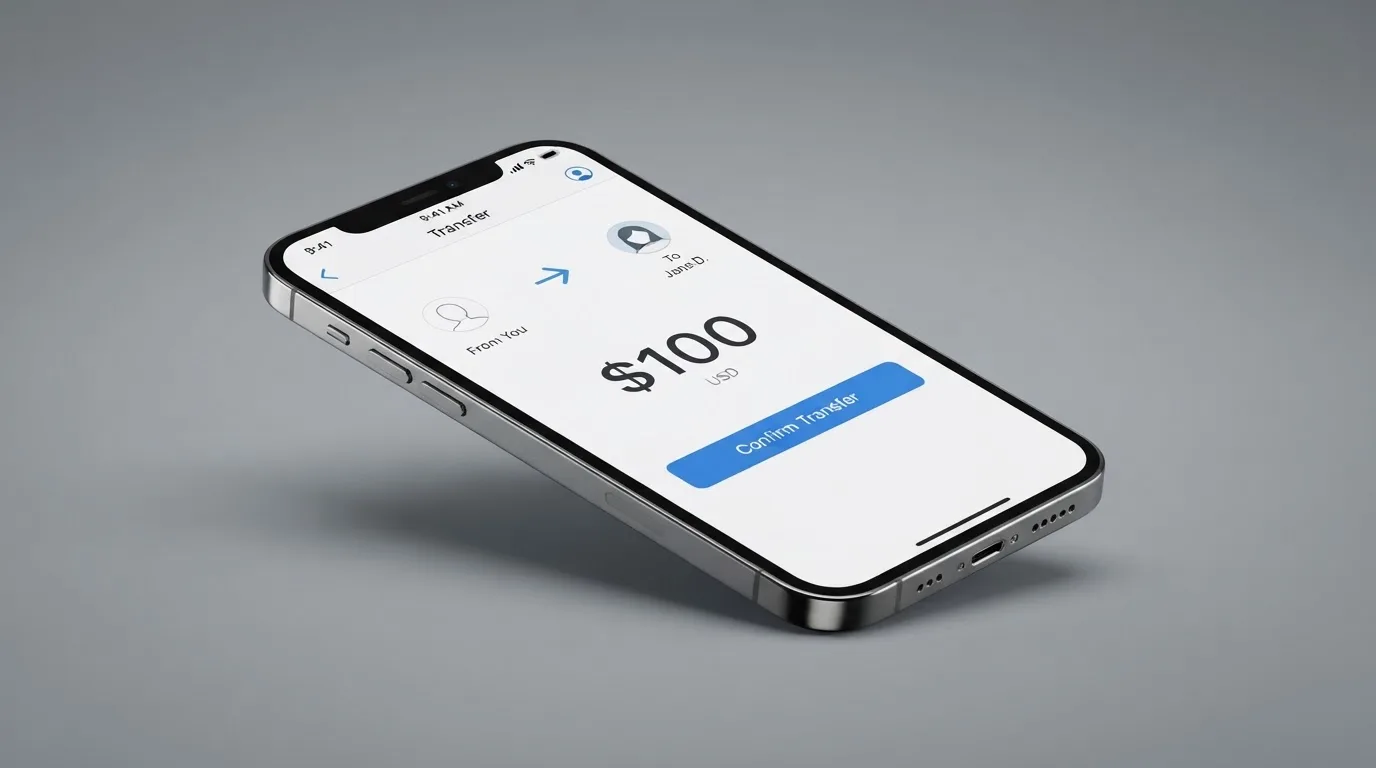
For actual top-ups, the page shows TON and USDC. A user review quoted on the card’s own pages mentions paying with USDT, although USDT is not on the official coin list. The card is also funded by SEPA and SWIFT bank transfers, which means you can move euros in by bank and then convert inside the app. Fiat top-up fees and minimums are not stated.
A few practical points on the top-up flow:
- The card balance must be topped up before a payment. There is no overdraft and no “pay later” arrangement.
- Network fees for the on-chain transfer are paid by the user, not by Tonhub, so a small top-up on Ethereum or another gas-heavy chain can be uneconomic.
- Sending a stablecoin on a network the card does not support is a real risk. Circle stopped supporting USDC on Tron in February 2024, so “USDC over TRC20” is not a native option. If the page says USDC, assume it means USDC on a supported network, not the cheapest network you can find.
- The card sits inside a non-custodial setup, so an “Emergency Withdrawal” mechanism is described: designated heirs can retrieve card-linked funds on-chain in case the cardholder loses access. That is a thoughtful feature, but the conditions and any fees around it are not published.
The unofficial mention of USDT is the kind of detail that a careful user should confirm before relying on it. Treat it as a signal that USDT has worked for someone, not as a guarantee.
Paying with it every day
The card is a virtual Visa Debit, so it works anywhere Visa is accepted online. For in-store payments, you would typically load it into a mobile wallet; the card’s own pages do not state mobile-wallet support, but unofficial reporting from November 2024 says both Apple Pay and Google Pay work. Treat that as plausible rather than confirmed.
The card is managed through the Tonhub app, which is also the wallet. Once you have added the wallet and tapped the Card banner, the rest of the day-to-day experience runs from the same place: you set the spending limit, you initiate a payment, you watch the pre-funding and the on-chain settlement in the same interface. That is convenient, and it means there is no separate banking app to learn.
The card does not publish a cashback or rewards rate, so the working assumption is that there is none. There is also no published list of blocked merchant categories. Many issuers block gambling transactions (MCC 7995) by policy rather than by law, and the precise blocked list varies by issuer. If you have a specific category in mind, the only safe way to find out is to attempt a small test transaction.
Disputes and refunds
Tonhub’s page says refunds are issued only for legitimate, verified transactions, and it describes a flow in which Tonhub pre-funds a purchase and then debits the balance after network and merchant confirmation. If a payment fails or is declined, the funds are not touched. Chargeback time frames are not stated, and the public experience I could find is not encouraging: a single Trustpilot reviewer reports that a dispute process that was lengthy, that disputes were eventually won, and that the money had still not been returned by mid-February 2026. The same reviewer describes slow, copy-paste support replies and an extra AML video-call check despite prior verification. That is one data point, not a pattern, but it is the only one I have.
What can go wrong
The single biggest unknown is the issuer. The card’s pages do not name the operator entity or the card issuer, and that matters because, in a normal card product, the issuer is the bank or e-money institution that actually holds the licence, segregates the funds and is responsible in a dispute. A crypto brand being a “programme manager” rather than the issuer is common in this category, but the standard expectation is that the issuer is named somewhere. Tonhub’s pages do not do that.
Things that are well done
- Smart contracts are audited by Trail of Bits, which is a well-regarded security firm.
- The wallet is non-custodial, so you hold the keys. With a custodial wallet the provider holds the credentials, and the user has to trust the provider completely. Here that risk is reduced.
- A Ledger hardware wallet is supported, so you can keep the keys on a hardware device rather than on a phone.
- User-set on-chain spending limits are available, which is a useful safeguard if the card details are leaked.
- Transactions are monitored by anti-fraud and AML systems, and suspicious activity is blocked automatically.
Things that are not stated
- Insurance on funds is not stated, and the card is not a bank deposit. EU rules require e-money institutions to safeguard customer funds, but those safeguarded funds are not the same as bank deposits and may not be covered by deposit guarantee schemes.
- In-app card freeze is not stated. Given the user-set on-chain limits, you can recreate some of that, but it is not the same as a one-tap freeze.
- The dispute timeline is not stated. The single public Trustpilot review describes a wait to file a dispute, which is long.
- The MiCA status of the provider is not confirmed on the card’s pages. The EU’s markets-in-crypto-assets regulation took effect in stages through 2024, with the remaining crypto-asset service provider rules applying from 30 December 2024. If the card is offered in the EU, the operator should be visible on ESMA’s interim register of authorised CASPs, and the card’s own pages do not point to a specific entry.
The complaint record
Trustpilot shows a 3.2 out of 5 score for Tonhub, but it is based on a single review, so the score is essentially that one person’s experience. The review, posted in February 2026, is the dispute story I described above. There is no recurring pattern because there is no other data. That is itself a finding: a card with a public Trustpilot page and a single one-star review is not the same as a card with hundreds of reviews averaging three stars. It is closer to a brand that is still new and has not yet built a public reputation.
A wider point about crypto cards: card programmes can be closed. Visa terminated its global agreements with FTX in November 2022, and the FTX US debit card was wound down by its issuer. Earlier, in 2018, Visa suspended WaveCrest in Europe, closing all WaveCrest-issued Visa programmes at once. When a programme closes, the typical pattern is a notice period, then a stop on new loads, then a stop on spending, then a request to withdraw remaining balances. A crypto card whose issuer is not publicly named makes that kind of closure harder to anticipate, because the responsible party is not obvious.
What to take instead
If Tonhub’s narrow EU-only eligibility or its unpublished fees are deal-breakers, three other cards are worth looking at. None of them is a self-custody card in the Tonhub sense; they are custodial or hybrid products with their own trade-offs.
| Card | Score | Card type | Notable feature |
|---|---|---|---|
| BloFin Wallet Card | 6.9/10 | Visa Platinum | Activation, annual, issuance and dormancy fees are $0; spend fee from 1% down to 0% at the top VIP tier. |
| Decaf | 6.2/10 | Visa, virtual or physical | Activation $5 for the virtual card ($10 for US-delivery physical, $90 physical elsewhere); Decaf adds no FX fee on top of Visa’s. |
| SafePal | 6.2/10 | Virtual Mastercard debit | No account or management fees; 1% FX on non-USD Mastercard settlement; standard top-up fee 0%. |
BloFin Wallet Card
The BloFin card is a Visa Platinum that charges zero for activation, the annual fee, issuance and dormancy. The spend fee is the interesting number: it is “1% or lower” depending on VIP tier, with VIP 0 at 1.00% down to VIP 5 at 0.00%, charged at the moment of payment. There is no cashback or rebate. Eligibility covers a list that starts with 35 countries including the US, Australia, Japan, the UAE, Brazil, Mexico, Malaysia and New Zealand, although the public card page simply asks you to select your country in the app, and the question of citizenship versus residence is not spelled out. Top-up is by USDT and USDC on Arbitrum and Base.
Decaf
Decaf is a Visa card available as a virtual card worldwide ($5 activation) or as a physical card delivered in the US ($10) or internationally ($90). There is no annual or monthly fee. Decaf says it adds no FX fee on top of Visa’s exchange rate, which is unusually clean. The catch is the restricted-country list, which is long: Belarus, China, North Korea, India, Iran, Iraq, Israel, Myanmar, Nepal, Russia, Syria, Turkey, Cuba, Ukraine, Venezuela, Vietnam, Nicaragua, Puerto Rico and Nigeria are not issued, and in the US the restricted states are Arizona, Delaware, Georgia, Idaho, Louisiana, Maryland, Montana, Ohio, Oregon, Rhode Island, Washington and Wisconsin. The app runs on Solana and Stellar, and the card is funded through payment links, account details, bank transfer or USDC. Which coins and networks actually top up the card itself is not stated.
SafePal
SafePal issues a virtual Mastercard debit. There are no account creation or management fees, and the standard top-up fee is 0%. The non-USD Mastercard settlement carries a 1% FX fee, refunds cost 1 USD/EUR/CHF or 7 CNH, and swaps include an unpublished spread; the bank’s own pages elsewhere mention a crypto top-up “as low as 0.4%” on the top tier. Top-up is from 40+ blockchains, converted to USDC by default or to fiat, with transactions on Arbitrum. There is no cashback; instead there are referral commissions of up to 40% of referred top-up fees and tier privileges tied to deposits, referrals and SFP staking. The published region list was empty when the supporting research was done, so eligibility is effectively “citizens of supported regions who live in supported areas,” with the actual list not visible.
Who I would recommend it to
I would recommend Tonhub to a fairly specific reader. If you live in the EU, are 18 or older, and already keep a self-custody wallet in TON or USDC, and if the main reason you want a card is to spend that balance without first sending it to an exchange, Tonhub is a credible answer. The Trail of Bits audit and the Ledger support are real reassurances, and the user-set on-chain spending limits are a thoughtful touch. The emergency-heir feature, which lets designated people retrieve card-linked funds on-chain if you lose access, is unusually considerate for a crypto card.
I would not recommend it to anyone who needs a physical card, anyone who lives outside the EU, anyone who wants to see a fee schedule before signing up, or anyone who is not comfortable holding their own keys. The single public complaint, although it is just one data point, also makes me cautious about using this card as your primary payment method. A second card, or a traditional bank account as a fallback, is a sensible hedge.
The card is also not a good fit if you want cashback or rewards: none are advertised, and there is no published rate to evaluate. If a small percentage back would change your behaviour, this card is unlikely to be the one that does it.
A last practical tip. If you decide to try Tonhub, start with a small amount, top up a few tens of euros, and make one online and one in-store purchase before relying on the card. That gives you a real transaction fee and an FX fee to look at, instead of a guess. If the fees you see are within your tolerance, scale up. If they are not, you can walk away without having risked a meaningful amount.
Frequently asked questions
What is the Tonhub card?
The Tonhub card is a virtual Visa Debit that spends from a crypto balance in your own non-custody wallet, with Tonhub pre-funding the payment at the till and then debiting your on-chain balance after the merchant and the network both confirm. The card is restricted to EU residents aged 18 or older, and only a virtual card is described; no physical card is mentioned on the card’s pages.
Is Tonhub a bank?
Tonhub is not a bank. The brand presents the card product, and the card’s pages do not name a separate bank or e-money institution as the issuer. Funds stay in the user’s own non-custody wallet rather than in a custodial account, which is the opposite of how a bank card normally works, and the card does not describe itself as a bank account.
Who owns Tonhub?
The card’s pages do not name the operating company or the card issuer. The brand is “Tonhub,” and the pages also reference “Holders”; smart contracts are audited by Trail of Bits. Without a named issuer, the legal counterparty in a dispute is harder to identify than with a typical bank-issued card.
How does the Tonhub card work?
You add a wallet inside the Tonhub app, tap the Tonhub Card banner, complete identity verification, and a virtual Visa Debit is issued. At payment, Tonhub pre-funds the merchant and then settles the amount from your on-chain balance after the network and the merchant both confirm; if the balance is insufficient, the payment is declined. The card supports TON and USDC, and unofficial sources also mention USDT.
Does the Tonhub card require KYC?
Yes. Identity verification is mandatory before the card is issued, and the sign-up step is explicitly labelled “Verify Your identity.” The exact documents, address proof, processing time and possible reasons for rejection are not stated on the card’s pages, but EU applicants should expect a standard KYC flow with name, address, date of birth, nationality and identity documentation, plus a sanctions check.
Is the Tonhub card free?
The card’s own pages do not publish a fee schedule. An unofficial figure from November 2024 puts the transaction fee at 1.5%, and the same unofficial source is the only place I found a number at all. Without published issuance, monthly, FX or ATM fees, you should treat the cost as unknown until the card states it, and a small test purchase is the cleanest way to find out.
How do I add the Tonhub card to Apple Wallet or Google Pay?
The card’s pages do not confirm mobile-wallet support, but unofficial reporting from November 2024 says both Apple Pay and Google Pay work. Treat that as plausible rather than confirmed; the most reliable way to verify is to add the card inside the wallet app and see whether it tokenises. If tokenisation fails, the card is not supported in your region.
Where can I use the Tonhub card?
Anywhere a Visa card is accepted online, and in stores through a mobile wallet if your phone supports it. The card’s pages do not publish a list of blocked merchant categories, and there is no published list of supported countries for spending. As with any Visa issued in the EU, you can expect some merchants to apply extra scrutiny if the card is used outside the EU, and prepaid or foreign BINs are sometimes declined.
Is the Tonhub card safe?
The card is non-custody: you hold the keys, and the smart contracts are audited by Trail of Bits. A Ledger hardware wallet is supported, and user-set on-chain spending limits are available. What is not stated is in-app card freeze, insurance on funds, the dispute timeline and the identity of the issuer. The single public Trustpilot review describes a wait to file a dispute, with the money still not returned, so safety is reasonable at the cryptographic level but harder to judge at the customer-service level.
Can I withdraw money from the Tonhub card?
The card’s pages do not describe an ATM withdrawal flow or its fees, which is unusual for a debit card. The non-custody design includes an “Emergency Withdrawal” mechanism that lets designated heirs retrieve card-linked funds on-chain, and SEPA and SWIFT bank transfers are offered. For ATM access specifically, the only honest answer is that it is not stated, and a small ATM test is the way to find out.
Wallet card options – cryptocardoptions.com
Content created by the «cryptocardoptions.com» team