
Tangem Pay reviewed: a virtual Visa for your stablecoin balance
 Available in US
Tangem Pay is a Visa debit card you can load with USDC, spend wherever Visa is accepted, and top up straight from a self-custody wallet. The free Basic tier is a virtual-only card with a 1% cashback; the Plus tier adds a physical card and more insurance for $29.99 a month; Prestige is on the way. The issuer is Third National, the programme is run by Rain, and Paera LLC handles onboarding. Tangem itself stays a wallet maker, not a bank.
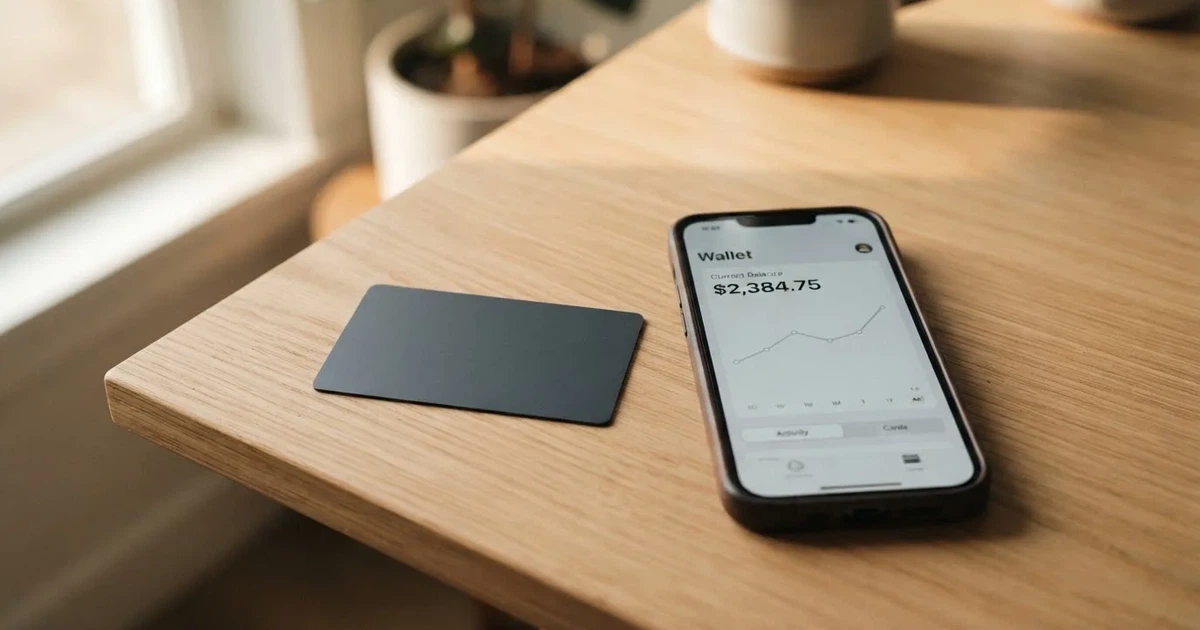
This review is based on Tangem’s own pages, a fees PDF dated September 2026 and user reports from Reddit and Trustpilot. Conditions are current as of October 28, 2026.
Verdict
I gave Tangem Pay 6.9 out of 10 overall. That score is not flattering or harsh — it reflects a card that is genuinely free at the entry tier, settles a real Visa, and ties back to a non-custodial USDC balance, but is still rough around the edges: the country list is not public, the physical card is barely in circulation, and support complaints are real. It is a strong fit for a Tangem Wallet owner who already holds USDC on Polygon and just wants a free virtual Visa to pay with. It is a weak fit for someone outside the published regions, anyone who needs a metal card today, or anyone who expects traditional bank-style support.
Here is how the score breaks down:
| Criterion | Mark | Why it earns that mark |
|---|---|---|
| Who can get it | 7 / 10 | Available in the U.S. and select LATAM, APAC, MEA and Africa countries, but the full country list is not published, and the UK and EU are only planned for 2026 |
| Cost | 7 / 10 | Basic is free, Plus is $29.99/month; the transaction fee is $0 but non-USD purchases pay Visa’s rate plus 1.5%, and plastic delivery ranges from $14.53 to $82.10 |
| Top-up options | 6 / 10 | Native USDC on Polygon from any wallet, plus ACH/FedWire in some regions; few fiat rails, no support for USDT or other networks at the moment |
| Reliability and complaints | 7 / 10 | Card issued by Third National, programme run by Rain, service by Paera LLC; Tangem itself is not regulated as a financial provider; users report gas-pump declines and KYC lockouts |
| Everyday use | 7 / 10 | Basic is virtual, Plus is plastic, both can be added to Apple Pay and Google Pay via card details; ATM fees are 4% on Basic and 2% on Plus, and ATM withdrawals on Basic are reportedly not live yet |
| Total | 6.9 / 10 | A solid free virtual Visa for Tangem Wallet users, with a few rough edges that stop it from going higher |
If you already use the Tangem Wallet and want to spend USDC without selling it first, this is one of the cleanest setups I have seen. If you do not, you will be installing a wallet app just to use the card, and that is a heavier lift than opening a normal crypto card app.
Who will they give you the card
Tangem does not publish a public country list. The public card page only says it works at “Visa-accepting merchants in over 150 countries”, which is true of any Visa, not a useful eligibility statement. Eligibility is “determined based on your country and region of residence” and is checked inside the app during onboarding. Tangem announced on 26 March 2026 (updated 27 May 2026) that Tangem Pay is available to all users in the United States (not every state) and selected countries across Latin America, Asia-Pacific, the Middle East and Africa, with the United Kingdom and the European Union planned for 2026. A third-party aggregator, writing in August 2026, listed 31 countries where the card is available (including the U.S., Australia, Brazil, Mexico, Japan, Singapore, Hong Kong, the Philippines, the UAE, South Africa and others) and 29 where it is restricted, including the UK, Andorra and the EU member states. Treat that list as unofficial and not confirmed by Tangem.
A few rules are clear. You must be at least 18 (typical for prepaid and debit cards). You need to pass an identity check, and a Tangem press note says physical shipping is excluded for around 20 countries, including China, Russia, North Korea and Palestine, so a physical card will not arrive even if the virtual one works in your country. If you live in a country where the card is not yet shipped or where local rules block Visa’s onboarding partner, you will not be able to finish the sign-up.
In short: the card is live in a select range of countries, but Tangem has not committed to a stable list, so the only way to know is to start the in-app flow.
How to get it
Getting a Tangem Pay card is different from a normal crypto card, because you do it inside the Tangem Wallet app, not on a separate card website. The flow is roughly:
- Install or update the Tangem app to version 5.35 or later (iOS 16.4+ or Android) and open the Pay section.
- Pick the country where you live. The app shows you whether Tangem Pay is available where you are.
- Run the identity check, which is done by Sumsub. You will need a government ID and a face verification. Tangem does not see the identity data. The Pay account is verified separately from the wallet itself.
- Once approved, you can order a virtual card (Basic and above) and, on the Plus and Prestige tiers, a physical card.
The KYC step is the same as for any regulated card: a Sumsub check covering government ID and a selfie, with the exact documents and any proof of address not stated on Tangem’s public pages. Most cards, according to CryptoCardHub (unofficial, August 2026), issue within five minutes; manual review can take up to 48 hours. A first physical card is free on Basic and Plus, an extra virtual card costs $5, a replacement card is $1 and physical delivery is shown in the app at checkout, between $14.53 and $82.10 depending on the address.
A practical note: there is a hard cap on the first physical batch (around 5,000 cards, per Tangem press coverage) and, as of August 2026, CryptoCardHub says most users only have access to a virtual card. If you specifically need a plastic card, expect to wait.
Fees and what they really cost
This is where Tangem Pay is genuinely interesting, because the headline number — the transaction fee — is $0. The structure is otherwise split across three tiers with very different monthly costs, and the foreign-exchange line is the one most people will actually pay.

Here are the published costs as of 2026-10-20:
| Fee or limit | Basic | Plus | Prestige |
|---|---|---|---|
| Monthly or annual plan fee | $0 | $29.99 / month | $999 / year (shown as a single yearly payment) |
| First physical card issuing | $0 | $0 | not stated |
| Additional virtual card | $5 | $5 | $5 |
| Replacement card | $1 | $1 | $1 |
| Physical delivery | $14.53 to $82.10 | $14.53 to $82.10 | $14.53 to $82.10 |
| ATM fee | 4% | 2% | 1% |
| Foreign exchange (non-USD) | Visa rate + 1.5% | Visa rate + 1.5% | Visa rate + 1.5% |
| Bank onramp (ACH / FedWire) | $1 / $10 | $0 | $0 |
| Bank offramp (ACH / FedWire) | $1 / $11 | $1 / $11 | $1 / $11 |
| Crypto conversion | USDC 1:1 to USD | USDC 1:1 to USD | USDC 1:1 to USD |
| Dispute fee | $30 | $30 | $30 |
| Daily spend per card | $10,000 | $50,000 | $100,000 |
| Cards per user | 3 | 5 | 10 |
| Annual limit per card | $10,000,000 | $10,000,000 | $10,000,000 |
| Cashback | 1% (cap $100 / month) | 2% (cap $300 / month) | 4% (cap $1,000 / month) |
| 100 transactions a day, 1,000 a month | yes | yes | yes |
A few everyday examples will help you see the cost. Say you are a Basic user and you pay a €40 hotel bill while travelling: Visa converts euros to dollars at its wholesale rate and Tangem adds 1.5%, so your $42 or so gets a further ~$0.63 on top, plus the 1% cashback (about $0.42). A $5 coffee in New York on Basic costs you exactly $5 minus 5 cents cashback, no FX line at all. A $200 ATM withdrawal abroad on Basic would be 4%, or $8, on top of whatever the ATM owner charges — and CryptoCardHub says Basic ATM withdrawals are not actually live in practice as of August 2026. A USDC top-up is free; on-chain Polygon gas is paid by you to the network, not to Tangem.
The pattern is clear. If you spend in USD from a USDC balance on Polygon, your marginal cost is the gas to send USDC and the opportunity cost of any small spread. If you spend in another currency, the 1.5% FX mark-up is the price of admission, and the Plus tier halves the ATM fee and doubles the cashback cap for $29.99 a month — worth it if you travel or use the card heavily, expensive if you do not.
Top up the card
Topping up Tangem Pay is built around USDC, the US-dollar stablecoin issued by Circle. The card is denominated in USD, and USDC converts 1:1 to USD at load time, so you do not lose anything to a crypto-to-fiat spread at that step.
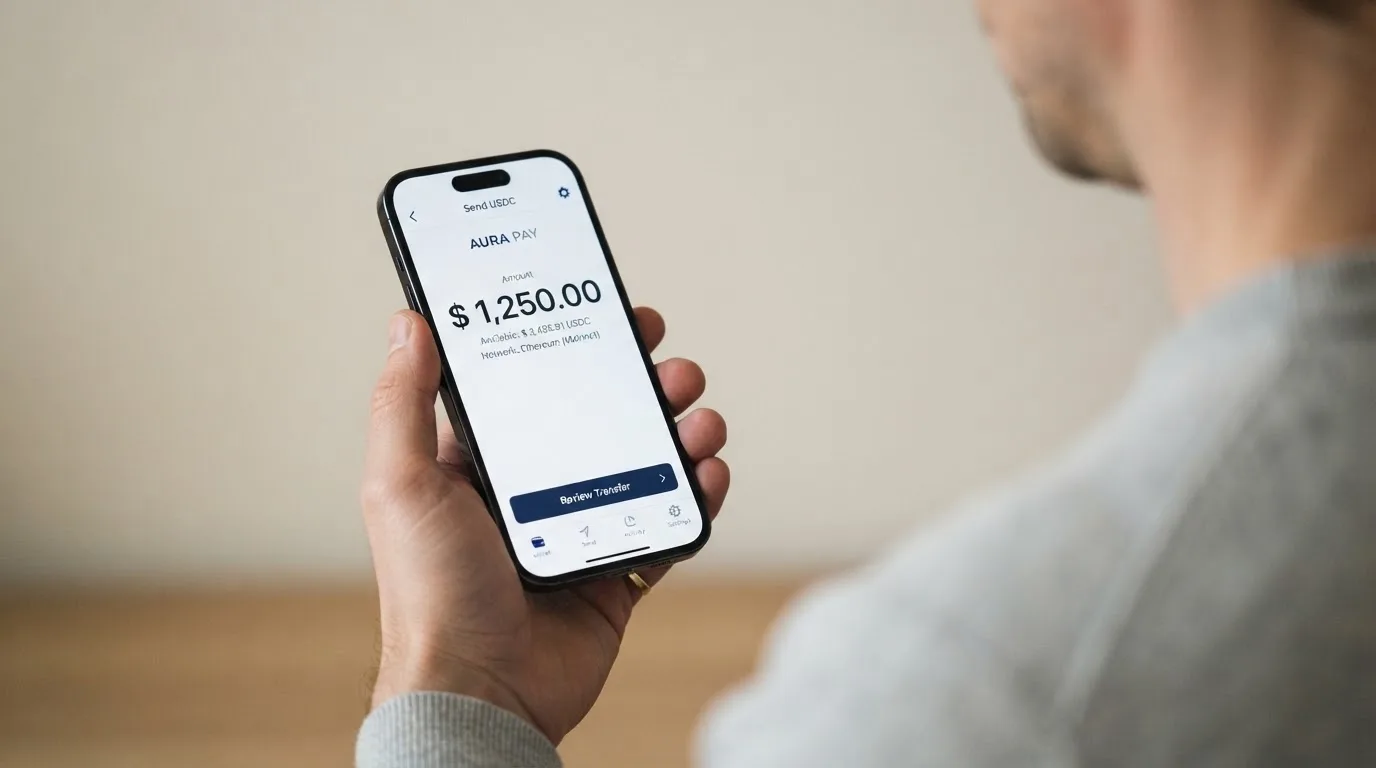
There are two ways to fund the balance. The first is the on-chain route: you send native USDC on the Polygon network to the card account from any wallet that supports it. Polygon gas is paid in POL (the network’s native token) by you, the sender, not by Tangem, so you need a small amount of POL in the wallet you send from or the transfer will fail. The second is the in-app route: you swap another token inside the Tangem app into USDC and the card is credited in one motion. The minimum top-up is not stated on the public pages.
The other route is a bank rail, where available. Tangem lists ACH and FedWire through the onramp at $1 (ACH) and $10 (FedWire) for Basic users, free for Plus users. The offramp is $1 (ACH) or $11 (FedWire) for both Basic and Plus, in line with US banking norms for wires. The bank rails are only available in the regions where Paera has set them up; the fees PDF does not list every supported country.
A few things to be careful about. Circle stopped supporting USDC on Tron in February 2024, so there is no native USDC on TRC20 to send; if a service offers “USDC over TRC20”, it is a wrapped version and Tangem will not credit it. Sending USDT instead of USDC also will not work, because the card account only recognises native USDC on Polygon. Blockchain transfers are irreversible, so sending on the wrong network or to the wrong address can mean the funds need manual support intervention with no guarantee of recovery.
Pulling money back is symmetric. The fees PDF lists on-chain withdrawal at $0; the bank offramp is the same $1 ACH / $11 FedWire as for loading. The remaining balance, the card’s own documentation says, “stays in the account you control” — meaning it sits in a smart contract you hold the keys to, not on Tangem’s balance sheet.
Paying with it every day
The day-to-day experience is a normal Visa card experience, with a few crypto-specific quirks.
Adding the card to a phone wallet is straightforward: the in-app card details let you enrol the card into Apple Pay or Google Pay, and the network tokenisation on the device behaves like any other Visa token. A one-time dynamic security code is used per payment in the same way as for a regular bank-issued card. The card can be used at any merchant that accepts Visa, online and offline, including contactless and online checkout.
There are a few friction points worth knowing. Several merchant categories are blocked, including gambling, online casinos and liquor stores, with the full list not stated on the public pages. Pre-authorisation holds, for example at petrol stations, hotels and car rentals, are a known pain point: a $175 hold at a US petrol station has been reported, and the hold is separate from the final settled amount. A few merchants decline prepaid or foreign-issued BINs altogether, which is a category-wide problem rather than something Tangem can fix.
Cashback is paid on each spend: 1% on Basic, 2% on Plus, 4% on Prestige, with monthly caps of $100, $300 and $1,000 respectively. A “boosted” 5%, 10% or 15% on the first $500 of spend is advertised as “coming soon”, as is a welcome bonus “up to $75”. The payout currency is not stated on the public pages. The card is also billed as a debit card, so it spends only the loaded balance and cannot overdraw, which is the safer model for anyone who does not want surprise overdraft fees.
The app is the Tangem Wallet app itself, with Pay as a section. The iOS App Store listing, as of 2026-10-20, shows a 4.9/5 average from about 25,000 ratings, but that is the rating for the whole wallet app, not for Pay specifically. There is no Tangem Pay-specific Trustpilot page. Disputes carry a $30 fee, which is in line with industry norms; timeframes for resolution are not stated.
What can go wrong
There are three layers of risk to think about: the card programme, the company, and your own setup.
On the card side, user reports I read on Reddit and third-party aggregators (not verified) point to a few recurring issues. The card can be declined at petrol pumps, hotels and some restaurants because the pre-authorisation hold exceeds the available balance, or because the merchant declines the BIN. Some users have had KYC lockouts after the card was already issued, leaving them with a virtual card they cannot top up. A few have reported activation problems where support asked for video proof, which is heavy for a prepaid card. These are not unique to Tangem Pay, but they are visible in the discussion.
On the company side, the structure is layered: Third National issues the Visa card, Rain manages the programme, Paera LLC (a US company) runs the service, and Tangem AG is the wallet maker. Rain is described in Tangem’s pages as “a Visa Principal Member”, which is the right to issue Visa cards directly without a sponsor bank. Tangem’s own footer says the company “does not hold, custody, or control users’ assets” and “is not regulated as a financial services provider”. Insurance of funds is not stated. That is not automatically a red flag — the smart contract model genuinely puts the USDC outside Tangem’s reach — but it does mean the recovery story is different from a regulated e-money account. Sumsub handles the KYC and Elliptic monitors transactions, both reasonable choices.
On your side, the non-custodial setup is a feature and a footgun. Freezing the card disconnects it from Visa but does not affect the on-chain balance, so a stolen card number is not a stolen balance. The opposite is also true: lose the seed phrase and the USDC is gone, with no Tangem support line that can restore it. Blockchain transfers are irreversible, so sending USDC on the wrong network or to the wrong address is not a transaction you can reverse by calling the bank. Tether’s published sanctions policy shows stablecoin issuers can and do freeze funds tied to OFAC-listed wallets, so “self-custody” and “censorship-proof” are not the same thing.
One last point that matters in practice: Tangem’s site languages include English, German, French, Spanish, Portuguese, Turkish, Chinese, Korean, Japanese and Ukrainian, but not Russian, which is a small but real signal of which markets the company is set up to support.
What to take instead
Tangem Pay is a good answer to a specific question, but it is not the only answer. Here are three alternatives I have looked at, with the same kind of facts:
BloFin Wallet Card — also scored 6.9/10. A Visa Platinum card with no activation, annual, issuance or dormancy fees. Spend fee is “1% or lower”, tiered by VIP level from 1.00% down to 0.00% at VIP 5. Top-up is with USDT or USDC on Arbitrum or Base, so it is friendlier if your stablecoin is on Ethereum L2s other than Polygon. The country list is not published on the card page; the third-party listing I saw had 35 countries including the US, Australia, Japan, the UAE, Brazil, Mexico, Malaysia and New Zealand. No cashback or rebates, just the reduced spend rate. A good alternative if you are on Arbitrum or Base rather than Polygon.
Decaf — scored 6.2/10. A Visa card, virtual or physical, with no annual or monthly fees. Activation is $5 for a virtual card worldwide and $10 for a physical card in the US or $90 elsewhere. FX is the Visa rate, no mark-up. Top-up is by Decaf payment link, bank transfer or USDC; the app runs on Solana and Stellar, which is unusual. Restricted countries include Belarus, China, North Korea, India, Iran, Iraq, Israel, Myanmar, Nepal, Russia, Syria, Turkey, Cuba, Ukraine, Venezuela, Vietnam, Nicaragua, Puerto Rico and Nigeria; restricted US states include Arizona, Delaware, Georgia, Idaho, Louisiana, Maryland, Montana, Ohio, Oregon, Rhode Island, Washington and Wisconsin. Pick this if Decaf’s networks suit your balance better.
SafePal — scored 6.2/10. A virtual Mastercard debit card, linked to a Swiss Fiat24 account in EUR. No account or management fees. Mastercard adds a 1% FX fee for non-EUR settlement, swaps include an unquantified spread, and the bank page advertises crypto top-up “as low as 0.4%” on the top tier. Top-up is from 40+ blockchains, converted to USDC or fiat on Arbitrum. No cashback; instead you get referral commissions up to 40% of referred top-up fees and tier privileges tied to deposits, referrals and SFP staking. The right pick if you are already in the SafePal ecosystem.
If I had to choose, BloFin is the closer twin to Tangem Pay in feel, while Decaf is a better pick if you want a real physical card today and SafePal is the right call if you live in EUR and want Mastercard over Visa.
Who I would recommend it to
Tangem Pay makes sense in a narrow but real set of situations.
It makes sense if you are already a Tangem Wallet user, hold USDC on Polygon, and want a free virtual Visa to spend it without selling on an exchange first. The free tier, the 1% cashback, the no-transaction-fee model, and the self-custody of the underlying USDC line up well with that audience. If you are an early Tangem fan, this is finally the card you have been waiting for.
It makes sense if you live in the United States, or in one of the published Asia-Pacific, Latin American, Middle Eastern or African countries, and you only need a virtual card for online and contactless spend. The Basic tier is genuinely free, the cashback is paid in dollars, and the FX is the standard Visa rate plus 1.5%, which is competitive with most crypto cards.
It does not make sense if you are in the UK or the EU and were hoping for a 2026 launch — it is still planned, not live. It does not make sense if you need a metal card today; Prestige is “coming soon” and the Plus plastic is barely in circulation. It does not make sense if your main use case is ATM withdrawals, which are blocked or not yet live on Basic in practice. It does not make sense if you need a debit card linked to a regular bank account in your name, because Tangem is explicit that it is not a financial-services provider and the KYC is on a separate Pay account, not a bank account.
The honest summary: Tangem Pay is a self-custody-friendly virtual Visa with USDC at its core and a free entry tier. The score, the structure and the friction all point in the same direction — a credible answer for a specific user, with the rough edges you would expect from a programme that has been live for less than a year.
Frequently asked questions
What is the Tangem Pay card?
Tangem Pay is a Visa debit card issued by Third National, with the programme managed by Rain and the day-to-day service run by Paera LLC. It is sold and operated from inside the Tangem Wallet app, and the balance is funded with USDC on the Polygon network. The Basic tier is a virtual card, Plus adds a physical card and Prestige is the planned top tier.
How does Tangem Pay work?
USDC is held in a smart contract you control. When you load the card, USDC is converted 1:1 to USD and the card draws on that USD balance at Visa merchants. Freezing the card disconnects it from Visa but does not affect the on-chain USDC balance. Tangem does not hold or custody the assets.
Is Tangem Pay a bank or a regulated financial provider?
No. Tangem’s own pages state that the company is “not regulated as a financial services provider”. The card itself is issued by Third National, a US bank, under a Visa programme managed by Rain, with Paera LLC handling onboarding, KYC and AML. Your USDC balance sits in a self-custody smart contract, not in a bank account.
In which countries is Tangem Pay available?
Tangem announced the card in March 2026 for the United States (not all states) and select countries across Latin America, Asia-Pacific, the Middle East and Africa, with the UK and the EU planned for 2026. A third-party source lists around 31 available and 29 restricted countries; Tangem has not published a definitive list, so the only way to know is to start the in-app flow. Physical shipping is excluded for about 20 countries, including China, Russia, North Korea and Palestine.
How do I apply for a Tangem Pay card?
Install the Tangem app (version 5.35 or later), open the Pay section, confirm your country of residence, and run the Sumsub identity check, which uses a government ID and a face verification. Once approved, you can order a virtual card immediately and a physical card on Plus and Prestige.
Does Tangem Pay require KYC?
Yes. The Pay account is verified by Sumsub, a third-party KYC provider, with a government ID and a selfie. Tangem does not see the identity data. The verification is separate from the Tangem Wallet itself, and the level of limits depends on your risk profile, verification level and account history.
How do I top up the Tangem Pay card?
The main route is native USDC on the Polygon network, sent from any wallet that supports it. You can also swap another token into USDC inside the Tangem app, and in some regions you can fund by ACH ($1) or FedWire ($10) on Basic, free on Plus. Polygon gas is paid in POL by the sender, not by Tangem.
Is the Tangem Pay card free?
The Basic tier has no monthly fee and no transaction fee, and the first virtual card is free. The Plus tier is $29.99 per month. Non-USD transactions carry a 1.5% FX mark-up on top of the Visa rate, ATM withdrawals are 4% on Basic and 2% on Plus, and a physical card delivery costs between $14.53 and $82.10. There is a $5 fee for additional virtual cards and a $1 fee for replacements.
How do I add the Tangem Pay card to Apple Pay or Google Pay?
Open the card in the Tangem app, copy or view the card details, and add the card manually in Apple Pay or Google Pay. The card is tokenised on your device; Tangem’s pages do not mention automatic enrolment through the wallet app, so manual entry is the standard path at the moment.
Is the Tangem Pay card safe?
The on-chain USDC is self-custodial, so the balance is not held by Tangem. Sumsub handles KYC, Elliptic monitors transactions, and Tangem says the company does not see your identity data. Risks include KYC lockouts, pre-authorisation holds, declined BINs at some merchants, and the usual self-custody risks: lost seed phrase, wrong network, clipboard-hijack malware. There is no stated insurance of funds.
Wallet card options – cryptocardoptions.com
Content created by the «cryptocardoptions.com» team