
XCARDS review — a virtual card with an 8% ceiling and a 10% exit fee, and no bank named
 Available in US
Every crypto card comparison eventually runs into the same awkward question: what happens when the provider is the one holding your money and no bank is willing to say its name? XCARDS is a good place to ask it, because the service is openly structured that way — virtual cards, funded in BTC or USDT, issued immediately, with the terms stating in plain capitals that you should not keep money on the card and that its safety is not guaranteed. That candour is unusual, and it is also the review in one sentence.
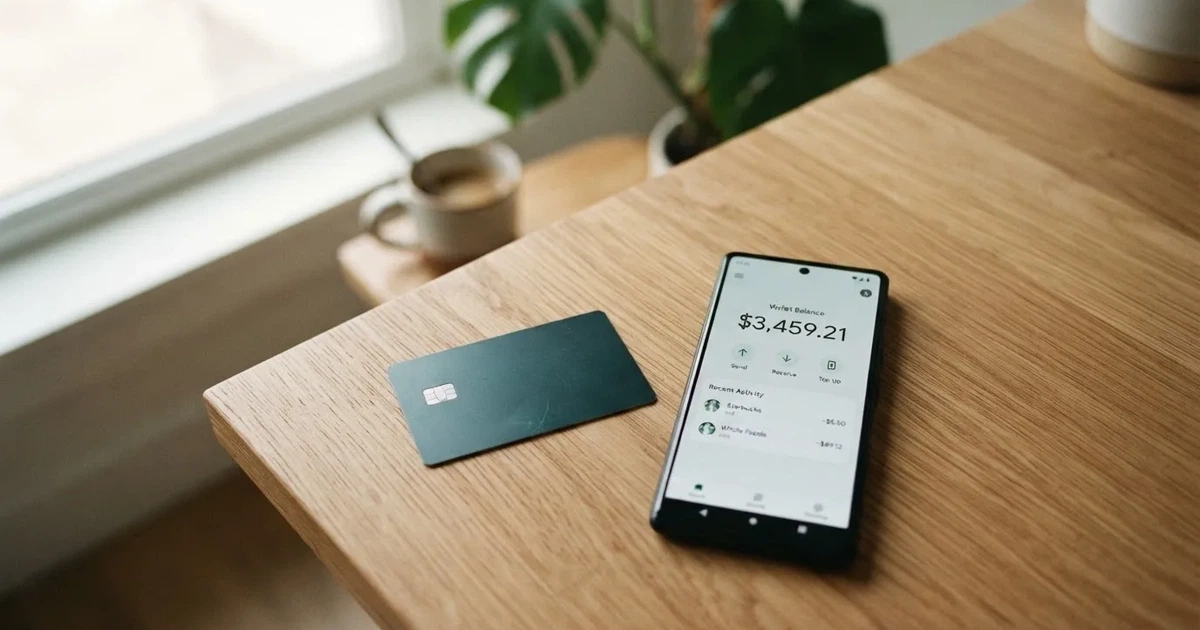
I gave it 3.6 out of 10. That is a low score, and I want to be precise about why, because “low” here does not mean “scam” and I did not find evidence of it being one. It means the economics are heavy, the funding options are narrow, and the parts of a card you actually depend on in daily life — the payment network, the currency it settles in, whether Apple Pay or a cash machine works — are simply not stated on the public pages. For a reader who wants a card to spend a crypto balance in a shop today, that is a lot of unanswered questions for a product that asks for identity documents and a minimum 100 USD deposit.
The conditions described here are current as of October 28, 2026.
The score in detail
| Criterion | Mark | Why |
|---|---|---|
| Who can get it | 6 / 10 | No issuing-country list; use prohibited in Belarus, Russia, Ukraine (Crimea, Donetsk and Luhansk regions only), Iran, Syria, Cuba, North Korea and others; rules follow where you are, not your citizenship |
| Cost | 1 / 10 | Maintenance 2–4 USD per month, service fee 4–8% of the amount, 10% withdrawal fee with a 100 USD minimum |
| Top-up options | 4 / 10 | BTC or USDT only via the Accounts section, auto-top-up available at issuance; networks not disclosed, 100.00 USD minimum; untopped-up cards are blocked |
| Reliability and complaints | 4 / 10 | 4P SOLUTIONS LTD, Malta, described as an “intermediary between the customer and the banks”; banks and licences not named; terms ask users not to store funds on the card; no reviews found |
| Everyday use | 3 / 10 | Virtual cards only, issued immediately, no app; Apple Pay, Google Pay and ATM support not disclosed |
| Total | 3.6 / 10 |
Who this suits, in one sentence: a verified user who wants unlimited virtual cards funded with BTC or USDT, who spends rarely and in amounts where a 4–8% service fee is a rounding error, and who has read the terms. Who it does not suit: anyone whose income depends on this card being accepted everywhere, anyone who needs a physical card in hand, anyone who wants to know which bank is behind it, and anyone who plans to move money back out more than once.
Will they give you the card
There is no list of issuing countries. That is the honest answer, and it cuts both ways: it means the service does not advertise a nationality gate, but it also means you cannot check your own country against a published list before applying.
What the terms do publish is a prohibition. Annex 1 of the terms forbids use “in, from, or to” comprehensively sanctioned jurisdictions, including Belarus, Russia, Ukraine (Crimea, Donetsk and Luhansk regions only), Iran, Syria, Cuba, North Korea and others. Two details in that sentence matter more than they first look. The wording is by location — of individuals and entities — and citizenship is not mentioned at all. So the question the terms answer is where you are, not what your passport says. And the Ukraine carve-out is narrow on paper: Crimea, Donetsk and Luhansk regions only. Separately, the FAQ states that transfers to legal entities registered in Ukraine and the Russian Federation are prohibited, while a merchant located elsewhere is not blocked — which is a slightly different rule from the geographic one, and worth keeping in your head if you sell to Ukrainian or Russian companies.
The card is also described as virtual only — the FAQ calls them “Virtual Payment Solutions”. The payment network and the currency the card holds are not stated. Whether that will matter to you depends entirely on where you spend: a card on a network you have never heard of will work in some stores and fail silently in others, and I would not want to learn which from a declined payment.
How to get it
Full KYC is required for all clients — that is stated directly in the FAQ. The AML/KYC policy asks for proof of identity (passport, driver’s licence or national ID card), proof of address (tenancy agreement, utility or phone bills, bank statements and similar), and a phone number verified by an SMS code. A video call is possible. The terms set the minimum age at 18.
There is also an “Unverified Account” with limitations, so you are not forced into full documentation at the very first step — but the terms do not quantify what those limitations are, which means you would be discovering them by hitting them.
There are two levels, and it helps to hold them in your head separately. Unverified accounts carry limits that the terms do not spell out. Verified accounts can issue an unlimited number of cards. Processing time is not stated, though the policy warns that higher-risk customers may face longer checks, and both refusal and closure are listed as outcomes where the suspicion grounds include AML concerns and missing documents. A freeze at the verification stage is not unusual in this category; it is a compliance step, not necessarily a judgement about you.
The sequence itself is short: register with an email address, verify, top up with BTC or USDT, issue the card. Cards are issued immediately, and no physical delivery is described — because there are no physical cards.
What it really costs: the Fees
The costs table is the most useful thing on this page, so I will put it first and then walk through three ordinary payments.
| Fee or limit | What the card states |
|---|---|
| Issuance | No minimum deposit at issuance; virtual cards issued immediately |
| Monthly fee | Maintenance 2–4 USD per month |
| Service fee | Flat 4–8% depending on the amount |
| Exchange rate | Rates shown on the website; FX fee not stated |
| ATM | Not stated |
| Withdrawal fee | 10% of the amount, minimum 100 USD |
| Minimum top-up | 100.00 USD |
| Minimum withdrawal | 100 USD |
| Maximums | Not stated |
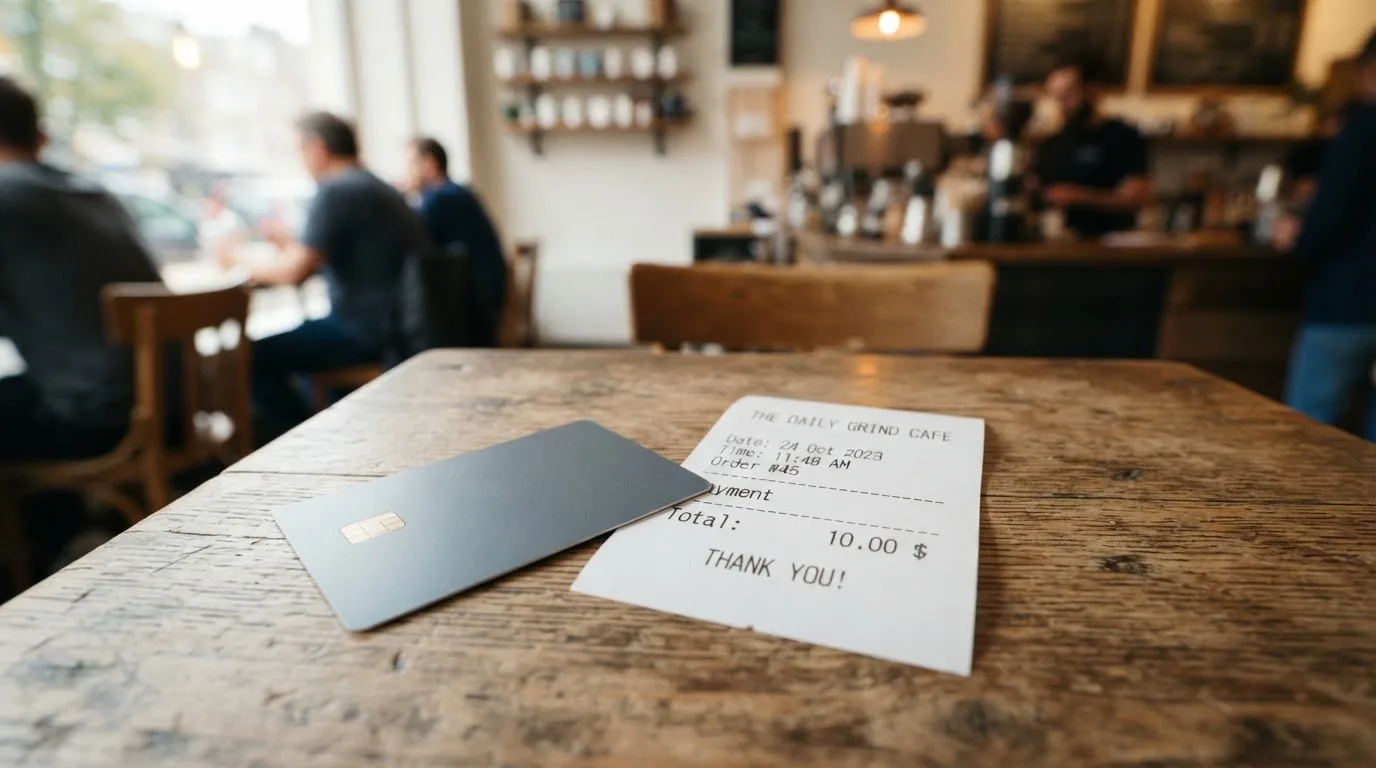
Now the part that actually matters. Take a 20 USD coffee. The service fee is 4–8% depending on the amount, so somewhere between 0.80 and 1.60 USD goes on top of the price before the shop sees a thing — and the exchange rate used is whatever is shown on the site at that moment, with no FX fee disclosed on top. Take a 200 USD weekly shop: 8 to 16 USD. Take a 1,000 USD month of ordinary spending at the ceiling rate: 80 USD gone before anything else. The fee is not a subscription you can opt out of; it scales with the amount, which means the more you actually use the card, the more it costs you. That is the opposite of how a normal card behaves, and it is the single biggest reason for the 1 out of 10 on cost.
The monthly maintenance of 2–4 USD sits on top of that, and you pay it whether or not you spend. There is no minimum deposit at issuance, so you can hold the card without a balance being burned, but the 4–8% applies the moment money moves.
The second everyday payment is one made in a currency other than the card’s — and here I have to tell you plainly that the card’s public pages do not say what currency it holds or what happens on a foreign-currency transaction. Fees are described as generally expressed in US dollars, the exchange rate is shown on the website, and no FX fee is stated. That is not the same as “there is no FX fee.” Treat it as unknown and check the rate on the site yourself before a large purchase abroad.
The third is taking money back out. A transfer from the card to your account balance takes no more than 1 day, and the commission is 10% of the amount with a 100 USD minimum. A 150 USD withdrawal costs 15 USD. A 100 USD withdrawal costs 10 USD — ten per cent, and the minimum bites hardest exactly when the amount is small. If you intend to move funds back more than once a year, do that arithmetic before you deposit anything.
How to Top up the card
Top-ups go through the Accounts section, in BTC or USDT, and those are the only two assets named. Auto-top-up can be enabled at issuance or later under Cards > Auto-top-up. There is no stated top-up fee separate from the 4–8% service fee, which means I cannot tell you whether topping up is charged at both ends or one.
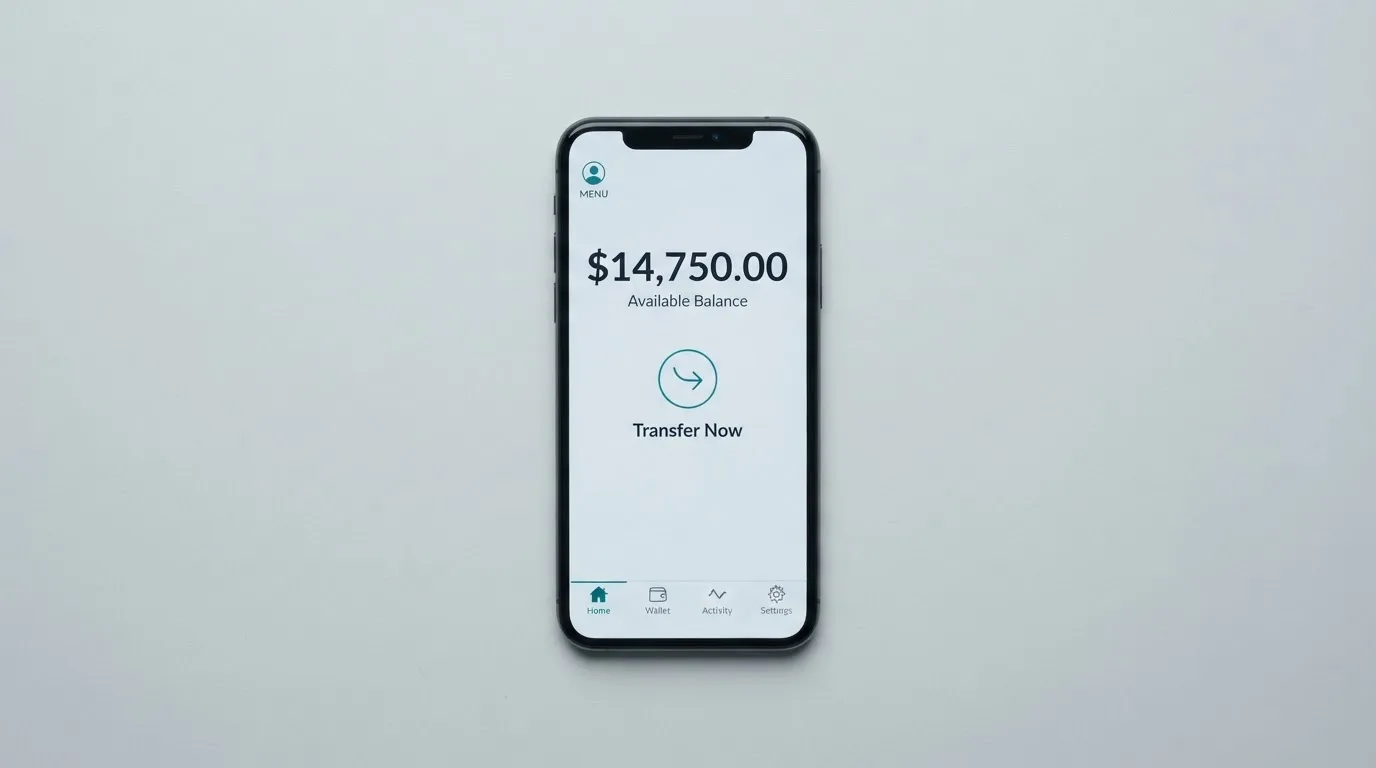
Two things to know before you send anything. The minimum top-up is 100.00 USD, and the maximum is not stated. And the networks are not stated — that is a real problem, not a technicality. Blockchain transfers are irreversible. If you send USDT over a network the provider does not support, or to an address belonging to a different network, the money can be gone and the only remedy is manual support recovery, with no guarantee it succeeds. Ask support which networks are supported, in writing, and keep the answer.
The card also has a rule that catches people out: cards that are not topped up are blocked and cannot be unlocked. Combined with the 100 USD minimum and a service fee that punishes small balances, this means a card sitting under the minimum is not a dormant card, it is a dead one.
One more thing about money that comes back out. Funds unclaimed after suspension or termination are held for one year, after which the rights to them are lost (Terms 2.8). If your account is frozen, the clock is already running.
Paying with it every day
Everyday use is where this card is thinnest. There is no app, no store listing, and no Apple Pay, Google Pay or ATM support stated. No wallet integration is described. There are no rewards, and no cashback mentioned.
So the realistic daily picture is: open a browser, find your virtual card number, type it into a checkout. That works fine for subscriptions and online shops. It does not work for a tap at a terminal, and until someone confirms cash-machine support, you should assume a physical purchase needs a different arrangement.
What the terms do forbid is worth reading, because these blocks happen without refund. Gambling and betting, dating, crypto purchases, and payment-system or broker top-ups are prohibited. The annex adds adult content and escort services. A merchant category code is a four-digit number classifying a business, assigned when a shop starts accepting cards, and issuers block categories such as gambling by policy rather than by law — so if your card is declined in an unfamiliar shop, this list is the first place to look.
On disputes, complaints are answered within 15 working days and the statute of limitations is one calendar year. No chargeback process is described, which is not the same as saying you have no chargeback rights under the law of your own country — but it does mean the provider has not committed to one here. And prohibited-use blocks carry no refund, at all.
One practical point about declines: a rejected authorisation can leave a hold on your funds that stays for several days, in some cases up to seven. That is worth knowing before you assume a declined payment cost you nothing.
What can go wrong
This is a custodial setup, and the terms are unusually blunt about it. In capitals, the customer is told not to store funds on accounts or cards, and that XCARDS does not guarantee their safety. The terms also state that banks may block funds. The provider describes itself as an “intermediary between the customer and the banks” — and the banks are not named. Licences are not stated.
The company is 4P SOLUTIONS LTD, registered under Maltese law at Aurora House, Level 3, 184 Triq-il-Kappillan Mifsud, Birkirkara BKR 1904, Malta. The terms also give a mail address in Mahé, Seychelles, and the AML policy refers to Seychelles sanctions. None of that is damning on its own; it is a structure, and structures vary. What it means for you is that the credit risk on your balance sits with an entity you cannot name from the public pages.
Why does this matter at category level? Because custody is where the historical damage happened. Mt. Gox reported roughly US$350 million stolen between 2011 and 2014, Coincheck about US$400 million in 2018, and the Ronin Network US$625 million in 2022. Blockchain transfers are typically irreversible, and a stolen key has no built-in recovery — the network cannot freeze or return funds. Tether itself says it disables tokens in wallets on the OFAC sanctions list and has frozen funds tied to illicit activity, so stablecoins are not censorship-proof in the direction you would want either.
There is a second operational risk. Transfer orders need a confirmation code sent to email or Telegram. That is a workable design, but it means the security of a withdrawal rests on how well that inbox is protected. A freeze function in an app is not stated — and there is no app.
On the record of incidents: I found no official incidents and no reviews. Searching for reviews returned only other card sites, and there is no Trustpilot page for xcards.net. That cuts both ways. No complaints is not evidence of a good track record on a product this new; it is also not evidence of a bad one. The terms of service and the AML/KYC policy were last amended 21.04.2025 — those are the only dated events I found. Support is described as 24/7 personal support, with an online chat on Telegram and [email protected]; the languages are not stated.
On the regulatory side, worth knowing as context: a card is a payment service regulated separately from the crypto side, so a crypto card often depends on two licences. EU e-money institutions must safeguard customer funds by segregating them or insuring them, and such funds are not bank deposits and may not sit under a deposit guarantee scheme. Under MiCA, e-money tokens may be issued only by a credit institution or an electronic money institution, and ESMA maintains a public interim register of authorised providers that you can check.
What to take instead
If you have decided the 4–8% service fee is too heavy or the missing details are too many, these are the three alternatives I looked at, with their own gaps named honestly.
| XCARDS | Cardex | TakeCard | OkiCard | |
|---|---|---|---|---|
| Score | 3.6 / 10 | 5.6 / 10 | 5.5 / 10 | 6.0 / 10 |
| Card type | Virtual only | Virtual and physical | Virtual immediately; physical Bolivia only | Virtual (physical mentioned) |
| Networks | Not stated | VERVE, Visa, Mastercard, UnionPay | Visa named in article; issued in the US | “Visa/Mastercard”, unspecified |
| Funding | BTC or USDT | USDT, USDC, BTC | Takenos balance; coins not named in article | USDT on BSC, Ethereum, Tron, Solana |
| Cost signals | 4–8% service fee | No percentage stated | USD 5 virtual; USD 20 physical plus shipping (Bolivia) | USD 15 starting price for virtual; pages disagree on an issuance fee |
| Loading fee | Not separate | — | — | 3% |
| Geography | No issuing-country list | “200+ countries”; app listing is Naira-focused | Physical Bolivia only; countries not listed | “150+ countries”, some pages “200+” |
Cardex converts crypto to fiat at the moment of payment, and the site describes an “AI-Powered Conversion Rate” that scans global exchange rates and picks the best one when you spend. That is a claim I can report but not verify. What is missing is a percentage: no fee figure is stated, so I cannot tell you whether it is cheaper than 8% or simply hides the number. Its app listing is Naira-focused.
TakeCard is the most transparent on price: 1% commission per purchase, USD payments 1:1 with no currency adjustment, other currencies at the official Visa rate of the transaction day. That is a far easier number to reason about than a 4–8% band. The catch is access — the physical card is available only to Bolivian users for now, and the countries for the virtual card were not listed on the pages I could read. TakeCard is the one to look at first if you can use a virtual card, purely on the fee arithmetic.
OkiCard has the most explicit top-up structure: USDT on BSC, Ethereum, Tron or Solana, USDC “soon”, BTC and altcoins “coming soon”, with deposits to a generated address and conversion at the moment of spending. It also says no geo-blocking based on your passport, though you must confirm you are not in a sanctioned jurisdiction. The pages disagree with each other on whether there is an issuance fee, and it asks for an initial deposit of 100 USDT — the same order of magnitude as XCARDS’s 100 USD minimum.
My honest summary of the comparison: if your priority is a known, low percentage, TakeCard’s stated 1% is the clearest number on the table. If your priority is a broad network list you can read, Cardex and OkiCard publish more than XCARDS does. XCARDS is the only one of the four whose card currency and payment network are not stated at all — which is why it scores lowest on everyday use regardless of how its fees compare.
Who I would recommend it to
I would recommend XCARDS to someone in a narrow and specific situation: you already hold BTC or USDT, you already need a virtual card number for online payments, you spend in small amounts, you are verified and comfortable uploading identity documents to an intermediary that will not name its banks, and you have read the terms rather than skimmed them. For that person, a 4–8% fee on a 30 USD purchase is 1.20 to 2.40 USD, and a card that exists immediately may be worth more than that.
I would not recommend it to you if any of the following is true. You spend most of your money in physical shops — there is no confirmed wallet support and no confirmed ATM access. You need a card that works everywhere, because the network is not disclosed. You plan to move funds in and out repeatedly — the 10% withdrawal fee, with a 100 USD floor, is severe. You are holding a large balance for any length of time, because the terms themselves say not to store funds there and do not guarantee their safety. Or you simply want to know what you would be dealing with if something went wrong; the answer on the public pages is an unnamed bank behind a Maltese company, and that is a legitimate reason to walk away.
The cheapest way to test it is to start with the 100 USD minimum, spend a little, and try one withdrawal to see what the 10% actually costs you in practice. If those two numbers feel wrong to you, no amount of support quality — which does sound genuinely good, 24/7 — will change the arithmetic.
Frequently asked questions
What is XCARDS card?
XCARDS is a service that turns crypto into virtual payment cards. You register with an email, verify your identity, send BTC or USDT to your account, and receive a virtual card number immediately. There is no physical card and no app — you use the website. The card is issued by 4P SOLUTIONS LTD in Malta, which describes itself in its terms as an intermediary between the customer and the banks.
Is XCARDS a bank?
No, not on the evidence of its public pages. The terms say the service acts as an intermediary between the customer and the banks, and no banks are named. Licences are not stated either. That structure is common for crypto card programmes, where a card issuer sits behind the brand, but it means you cannot read the issuer’s name anywhere on the pages I reviewed.
How much does an XCARDS card cost?
Maintenance is 2–4 USD per month, with no minimum deposit at issuance. On top of that sits a flat service fee of 4–8% depending on the amount, charged on what you spend. Because it scales with the transaction rather than being a fixed subscription, heavier use costs proportionally more. Exchange rates are shown on the site, and no separate FX fee is stated.
Do I need to complete KYC to get one?
Full KYC is required for all clients, according to the FAQ. That means proof of identity such as a passport, driver’s licence or national ID, proof of address such as a tenancy agreement or utility bill, and a phone number verified by SMS. A video call is possible. There is also an Unverified Account with limitations that the terms do not quantify.
Which countries can use XCARDS?
There is no list of issuing countries. The terms do prohibit use in, from or to comprehensively sanctioned jurisdictions — including Belarus, Russia, Ukraine (Crimea, Donetsk and Luhansk regions only), Iran, Syria, Cuba and North Korea. Importantly, the restriction is written by location, not citizenship. Transfers to legal entities registered in Ukraine and Russia are separately prohibited.
What coins can I use to top up?
Only BTC and USDT, through the Accounts section. The minimum top-up is 100.00 USD, and the maximum is not stated. Critically, the supported blockchain networks are not disclosed, and blockchain transfers are irreversible — send on the wrong network and recovery depends on support, with no guarantee. Ask which networks are supported before sending anything.
Can I withdraw money from an XCARDS card?
You can transfer from the card to your account balance in no more than a day. The commission is 10% of the amount with a minimum of 100 USD, so a 150 USD withdrawal costs 15 USD and a 100 USD withdrawal costs 10 USD. Funds unclaimed after an account is suspended or terminated are held for one year, after which the rights to them are lost.
Is the XCARDS card safe to use?
It depends on your tolerance for custody, and the terms are unusually direct about it: they say in capitals that customers should not store funds on accounts or cards and that the provider does not guarantee their safety, and that banks may block funds. Transfers to a card number need a confirmation code sent to email or Telegram. I found no reviews and no reported incidents, which is too little history to draw comfort from either way.
Can I add the card to Apple Pay or Google Pay?
The public pages do not say, and I would treat it as unsupported until the support team confirms it in writing. Apple Pay, Google Pay and ATM access are all unmentioned, there is no app, and no store listing is named. There is also a rule worth knowing: cards that are not topped up are blocked and cannot be unlocked, so an unfunded card is not dormant, it is unusable.
What happens if I want to delete my account or close it?
The public pages do not describe a deletion process I could verify, and this is worth asking before you deposit. What the terms do address is the end state: unclaimed funds after suspension or termination are held for one year, after which rights to them are lost. Complaint handling runs to 15 working days, with a statute of limitations of one calendar year.
Virtual card options – cryptocardoptions.com
Content created by the «cryptocardoptions.com» team