
Trocador review: a crypto exchange that hands out prepaid cards
 Available in US
Trocador is best understood as a crypto exchange that also sells prepaid payment cards, not as a bank or a card issuer in its own right. That distinction runs through everything about the product: the card is bought with crypto, loaded with a fixed fiat value at the moment of purchase, and issued by one of several third-party providers. For someone who cannot get an ordinary bank card — or who simply prefers not to hand over personal documents to a card issuer — that model has real appeal. For everyone else, the missing details are hard to ignore, and I mean that literally: the public pages state almost none of the numbers you would need to price this thing.
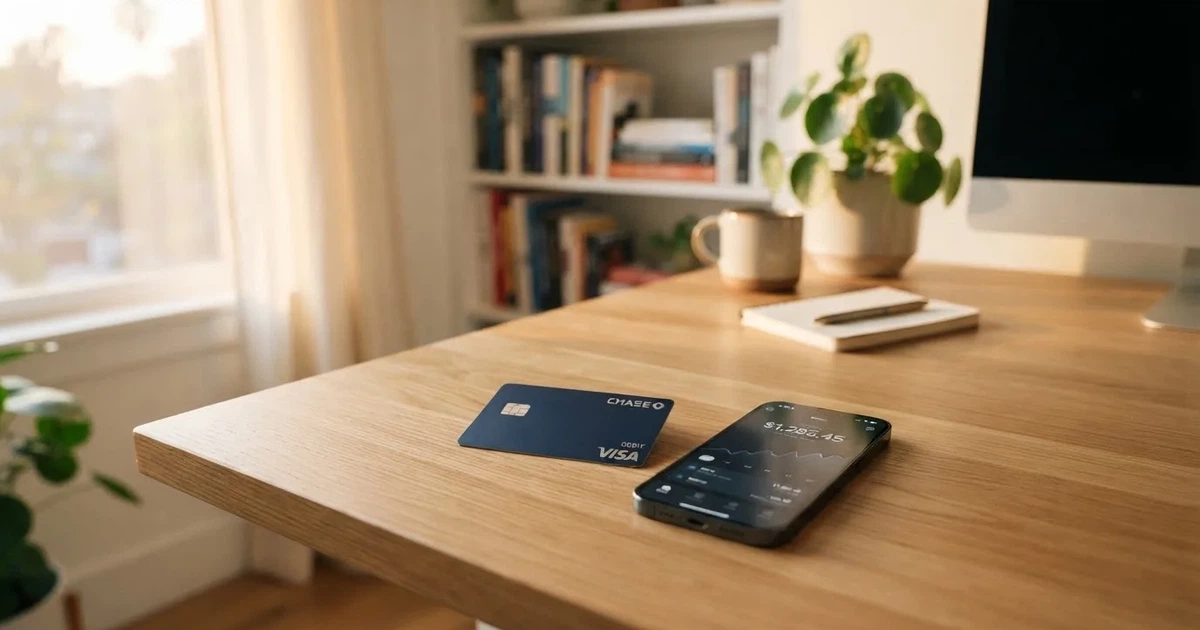
I scored it 5.4 out of 10. That is not a condemnation; it is the arithmetic of a service that works in the way described and refuses, publicly, to say what it costs.
Conditions described here are current as of October 28, 2026.
Verdict: 5.4 out of 10
| Criterion | Mark | Why |
|---|---|---|
| Who can get it | 8 / 10 | Country restrictions vary by provider; unofficial figures say available in 164 countries, closed in 11, with Reward and MyPrepaidCenter cards US-only |
| Cost | 3 / 10 | Nothing is disclosed officially; unofficial figures describe a 3% commission plus $2, or Obsidian’s $0.60 per purchase and $5 a month after the second month, plus 2.75% on non-USD payments |
| Top-up options | 7 / 10 | Cards are bought with crypto; starting data names BTC, XMR, LTC, stablecoins and others via AnonPay, exact list unconfirmed |
| Reliability and complaints | 5 / 10 | Operated by Reta Development Assets LLC, cards delivered by Reward, MyPrepaidCenter and Obsidian; the issuing bank is not named, and there are reports of activation and decline problems |
| Everyday use | 4 / 10 | Virtual cards and Apple Pay, Google Pay and Samsung Pay “usually” work, but not where 3DS is required; no ATM, no top-up after purchase, and unofficial reports mention no plastic |
Who this suits: privacy-minded users buying a prepaid card with crypto, who treat it as a spending tool rather than a bank account, who are comfortable converting once and accepting that the balance runs down. Who it does not suit: anyone planning to use it as a primary everyday card, anyone who needs an ATM, anyone travelling to countries whose merchants refuse prepaid or foreign-issued cards, and anyone who needs to know the fee schedule before committing money.
Will they give you the card?
Yes — but the answer depends on which provider is issuing it, and the card’s own pages do not say which countries that means. The official position is that country restrictions vary by provider. An unofficial line, which the card does not confirm, says the service is available in 164 countries and closed in 11, with the Reward and MyPrepaidCenter cards restricted to the United States. Treat that as a description of what third-party sites report, not as a promise.
The reason country rules vary at all is structural. A prepaid card is issued by somebody else — here, Reward, MyPrepaidCenter or Obsidian — and that issuer applies its own country policy. The same site can therefore show you a card you can buy and a card you cannot, depending on which provider stands behind it. It also means a simple question like “is Trocador available in my country” has no single answer, and I would treat any clear yes or no you find elsewhere with suspicion until you have seen it on the purchase screen yourself.
Beyond country, there is the general point that prepaid cards are normally sold to adults, and some issuers set higher limits than others.
How to get it
The card is a prepaid Mastercard or Visa from several providers, and that is the whole purchase flow: you pick one, pay for it in crypto, and receive the card details. There is no app — the purchase happens on the web.
What I could not find on the public pages is worth stating plainly once, because it is the reason the cost and trust marks are low:
- Identity verification requirements are not stated officially.
- Delivery — whether the card arrives by post, and how long it takes — is not stated officially.
- Verification tiers are not described.
In practice this means “how to get it” has a short answer and a long set of unknowns. The three-odd questions people search for are what card it is (prepaid Mastercard or Visa, provider-dependent), how to apply (buy on the web with crypto), and whether it needs KYC (the public pages do not say). If any of those answers matters to you, the honest move is to ask the provider directly before sending funds, because an irreversible crypto transfer is a poor way to find out.
Fees: what it really costs
Nothing on this card’s public pages is stated officially: not the price of issuance, not the monthly fee, not the conversion fee, not the ATM situation, not the spending or monthly limits, not whether tiers exist, and not the card currency. I want to be careful here — that is not a claim that the fees are hidden from you at checkout, only that they are not published where a reviewer could read them.
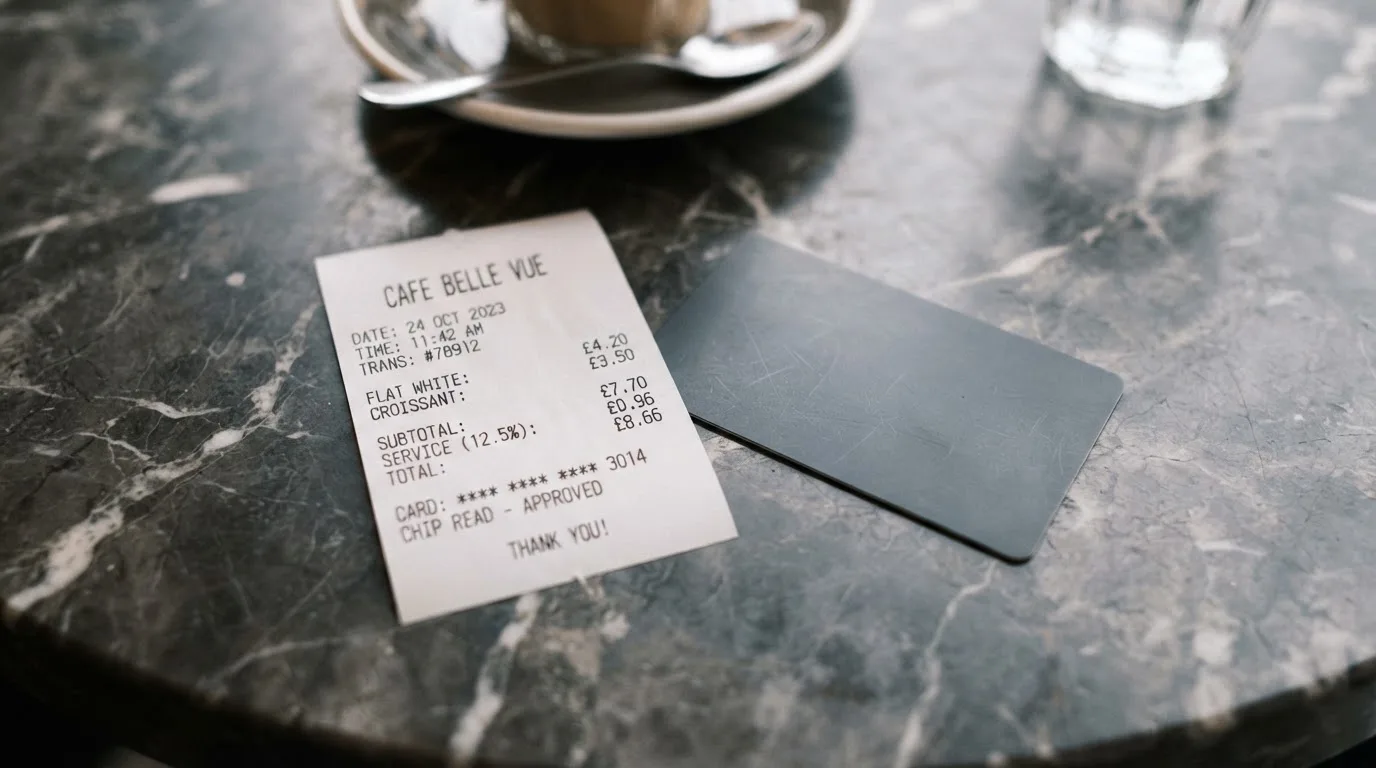
What third-party sources report, unofficial and unconfirmed by the card: a Trocador commission of 3% of the nominal value plus $2; an Obsidian schedule of $0.60 per purchase and $5 per month after the second month, with 2.75% on payments not in USD.
| Item | What the card’s public pages say | What unofficial sources report |
|---|---|---|
| Issuance | not stated | part of the 3% plus $2 commission for Trocador; Obsidian per-purchase charge of $0.60 |
| Monthly fee | not stated | Obsidian $5 a month after the second month |
| Conversion | not stated | included in the reported Trocador commission; Obsidian transaction fee in USD reported as 0% with no hidden exchange spreads claimed |
| Currency / FX | card currency not stated officially | 2.75% on payments not in USD (Obsidian) |
| ATM | not stated officially | unofficial reports of no ATM access |
| Daily and monthly limits | not stated officially | not stated officially |
Three everyday payments, so the fees stop being abstract:
- A coffee in your own country, in dollars, on an Obsidian card: the reported $0.60 per purchase is the whole charge, plus whatever the network and the network fee cost, which are outside the card’s pricing.
- A subscription in euros, on the same card: the same $0.60, plus 2.75% on a payment not in USD, plus the conversion your payment goes through.
- A one-off larger purchase on a Trocador card: the reported 3% of the nominal value plus $2, so the effective cost sits on top of the amount you pay with.
The pattern to notice is that the two unofficial schedules are structured differently — one charges on purchase, the other charges on volume plus a monthly fee after a trial period — and they belong to different providers under the same brand. Comparing them as if they were one price list would be wrong.
Top up: how the money actually gets in
There is no top-up in the usual sense. You convert crypto once, at the moment you buy the card, and what you receive is a card with a fixed value. After that the balance is a prepaid balance that goes down as you spend; there is no stated mechanism for adding to it later, and withdrawal is not stated officially either.
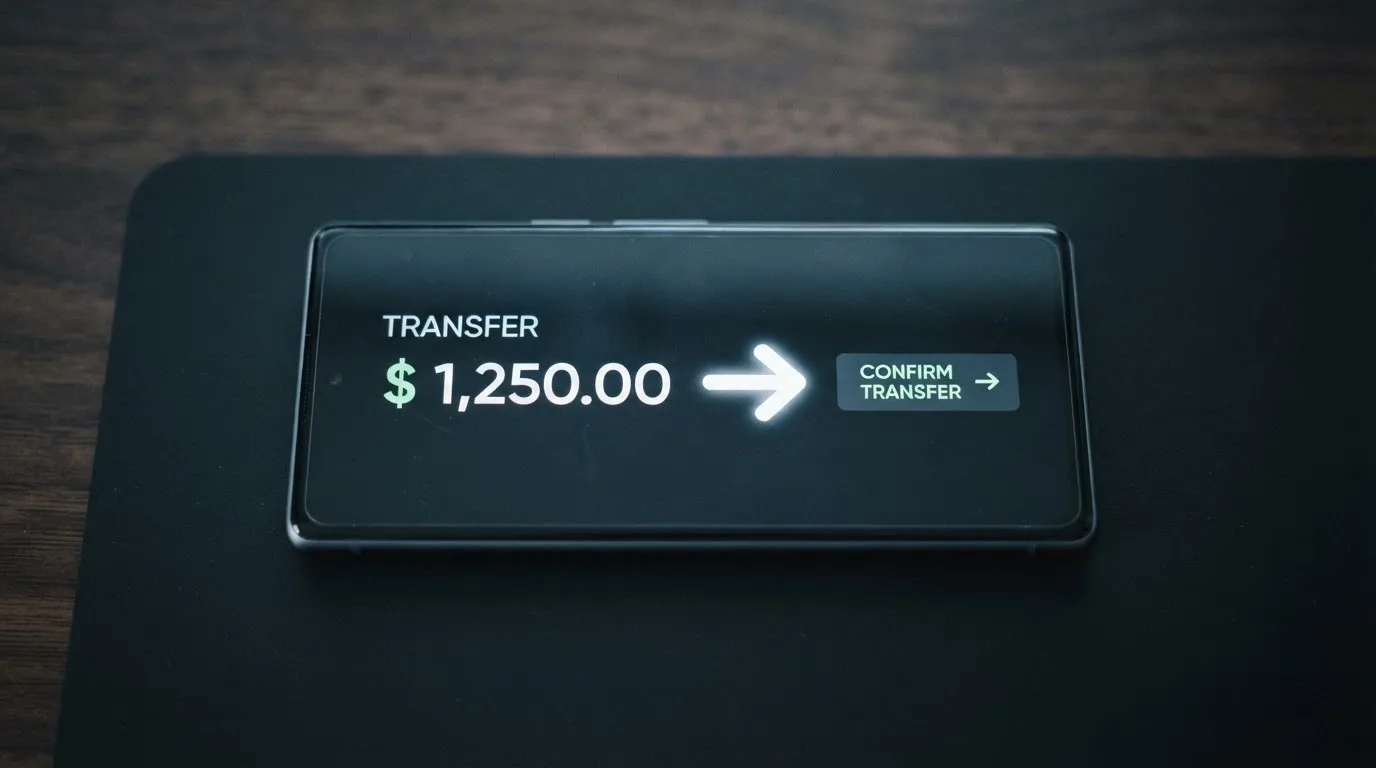
What can be sent, according to starting data: BTC, XMR, LTC, stablecoins, and others via AnonPay — but the exact coin list is not confirmed, and an unofficial line adds that a conversion fee may apply. Cards are bought with crypto, so the sequence is: pick a card and its value, send crypto to the destination the site gives you, and receive card details. Monero appears in the unofficial material as supported.
The one thing worth drilling in, because it is where people lose money and it has nothing to do with the card’s fees: the network you send on must match what the provider expects. Crypto transfers are irreversible, and a deposit sent on a network the provider does not support, or to an address belonging to a different network, can be lost or may need manual support recovery with no guarantee. Also remember that on-chain network fees are charged by the blockchain, not by the card.
Paying with it every day
Card payments at a shop, online, and in a mobile wallet. Apple Pay, Google Pay and Samsung Pay are described as “usually” working, which is doing a lot of honest work in that sentence — mostly, not always. The same official line is blunt about the limits: not accepted where 3-D Secure is required, and not accepted where gift or prepaid cards are refused.
Rewards are not stated officially, and there is no app. Purchases are made from the web, and how disputes are handled is not stated.
For daily use, the practical constraints stack up quickly:
- No ATM, per unofficial reports.
- No plastic, per the same reports, which leaves virtual cards and mobile wallets.
- No ability to add funds after purchase, so the card works down to zero and stays there.
- 3-D Secure is the hard wall, not a soft one: a card that cannot authenticate online cannot be used at the many merchants where that check is standard.
What can go wrong
No official incident involving this card came up in my checking. That is not the same as a clean record — it is the absence of a documented event I could find.
What users have reported, undated and third-party: MyPrepaidCenter cards with activation problems, billing-address validation failures, declines, locked access and slow support. Separately, for the exchange side rather than the card: delayed swaps through partner exchanges in June and July 2026, long AML/KYC holds from March to May 2026, and remarks about support tone in September 2026. The MyPrepaidCenter profile is described as weak by one secondary source in August 2026.
On the company’s structure: the operation is attributed to Reta Development Assets LLC in starting data, cards are delivered by Reward, MyPrepaidCenter and Obsidian, the issuing institution is not named, and licences are not stated. That last combination is the part I would weigh most heavily. When the bank behind a card is not named, the card exists under the licence of a provider you cannot inspect, and the protections that follow from knowing your issuer — chargebacks, complaint routes, safeguarding — are hard to reason about in advance.
Trustpilot, read on 2026-10-21, shows 4.8 out of 5 from 267 reviews — but that rating is for Trocador as an exchange service, not for the cards. I would not carry it over.
Security safeguards are not stated officially, card support is not stated officially, and no dated card events came up. So the questions I would want answered before loading money — who the issuer is, how a blocked card is unblocked, how long a support ticket takes, what happens to a remaining balance if the provider stops — have no published answers to weigh.
What to take instead
None of these is a recommendation; all three score in the same neighbourhood, and the differences are structural.
| Trocador | Cardex | TakeCard | OkiCard | |
|---|---|---|---|---|
| Score | 5.4 / 10 | 5.6 / 10 | 5.5 / 10 | 6.0 / 10 |
| Card | Prepaid Mastercard or Visa, several providers | Debit crypto card on VERVE, VISA, Mastercard and UnionPay; virtual and physical | Virtual card, plus physical for Bolivia only; Visa network, issued in the US | Virtual card; a physical card is mentioned without detail |
| Countries | Varies by provider; unofficial figures say 164 available, 11 closed | “One crypto card, 200+ countries”, no list or exclusions; app listing is Naira-focused | Physical card “available only to Bolivian users for now”; wallet receivable “from any country” | “150+ countries” (some pages “200+”), no geo-blocking based on passport |
| Funding | Crypto, list unconfirmed | USDT, USDC and BTC wallets; networks not stated | Top up from the Takenos balance, coins not named | USDT on BSC, Ethereum, Tron, Solana |
| Stated fees | nothing official | conversion at payment time via an “AI-Powered Conversion Rate”, no percentage stated | 1% per purchase; 1:1 in USD, official Visa rate otherwise | load fee 3%; USD transaction fee 0% |
| Price | not stated | not stated | virtual USD 5; physical (Bolivia) USD 20 issuance plus USD 20 shipping, with a conflicting article saying USD 10 | issuance $0, monthly $0, starting price $15, initial deposit 100 USDT |
How I would read that table. Cardex at least describes its conversion mechanism and names four networks, but publishes no fee percentage, which makes the number you pay unknowable in advance. TakeCard is the only one of the four with a per-purchase commission stated in figures, and the only one whose physical card is clearly restricted — Bolivia — so it serves a narrower problem than it first appears. OkiCard publishes the most complete-looking schedule of the four, with an explicit load fee and a stated zero transaction fee in USD, and it names four networks for USDT; its own pages disagree with each other on the issuance fee, which is the kind of thing that should lower your confidence rather than raise it. Rewards are not stated for any of them.
If your problem is “no ordinary bank card”, the deciding factor is rarely the fee table. It is whether the issuer is named, whether you can see the network, and whether the provider operates in a regime you recognise.
Who I would recommend it to
I would recommend Trocador to someone in the situation the product actually fits: you have crypto, you do not want to open a bank account, you want a fixed amount of spending power that nobody can add to without you, and you plan to spend it in places that take prepaid cards and do not insist on 3-D Secure. Buy a small value first. Treat the balance as spent the moment it lands, because there is no top-up.
I would not recommend it as your main card, and I would think twice before recommending it to someone who is not already comfortable with irreversible transfers and unanswered support questions — because on this card the issuer is not named, the fees are not published, and the provider behind the plastic is not the company you are dealing with.
The card’s own audience note describes privacy-minded users buying a prepaid card with crypto, and on those terms it does what it says. The 5.4 is not a judgement about that use. It is what happens when a score has to weigh the best case against how little is publicly documented.
Frequently asked questions
What is the Trocador card?
It is a prepaid Mastercard or Visa bought with cryptocurrency, delivered by one of several third-party providers — Reward, MyPrepaidCenter or Obsidian. Trocador itself is an exchange that sells the card rather than a bank that issues it. You choose a fixed value at purchase and the crypto is converted once, so what you hold afterwards is a prepaid balance that only goes down.
How does the Trocador card work?
You pick a card on the web, pay for it in crypto, and get card details. Spending draws on that stored balance, much like a gift card, rather than on a bank account. Official pages say Apple Pay, Google Pay and Samsung Pay “usually” work, and that the card is not accepted where 3-D Secure is required or where prepaid cards are refused.
Is Trocador a bank?
No. Starting data attributes the operation to Reta Development Assets LLC, the cards are delivered by Reward, MyPrepaidCenter and Obsidian, the issuing institution is not named, and licences are not stated. In practice the licence that matters sits with a provider you cannot inspect from the public pages, which is worth weighing before you load money.
Does the Trocador card require KYC?
The public pages do not say. Identity verification requirements are not stated officially, and neither are verification tiers. Cards are generally sold to adults, and KYC rules apply to regulated businesses generally, but neither point answers the question for this specific product — so ask the provider before sending funds.
How much does the Trocador card cost?
Nothing is stated officially: not issuance, not the monthly fee, not conversion, not ATM, not limits, not the card currency. Unofficial sources report a 3% commission plus $2, or an Obsidian schedule of $0.60 per purchase and $5 a month after the second month with 2.75% on non-USD payments. Treat all of that as unconfirmed.
How do I top up the Trocador card?
You do not, in the usual sense. The crypto is converted once when you buy the card, and the result is a fixed-value prepaid balance; no mechanism for adding funds afterwards is stated, and withdrawal is not stated either. What you can send, per starting data, is BTC, XMR, LTC, stablecoins and others via AnonPay — with the exact list unconfirmed.
Can I use the Trocador card in my country?
It depends on which provider issues it, because country restrictions vary by provider. Unofficial figures say the service is available in 164 countries and closed in 11, with Reward and MyPrepaidCenter cards US-only. Merchants can also refuse prepaid or foreign-issued cards on their own policy, so availability is not the same as acceptance.
Is the Trocador card safe?
I would not answer that with a yes or no. There are user reports of activation problems, billing-address validation failures, declines and slow support with MyPrepaidCenter cards, and no official incident surfaced either way. The real question is risk: the issuer is unnamed, transfers are irreversible, and a decline can leave a hold on funds for several days.
Can I add the Trocador card to Apple Pay?
It is reported as usually working, but treat it as a probability rather than a certainty. Tokenised mobile wallets replace the card number with a device-specific number and use a one-time code per payment, which is a meaningful safety improvement — but if the underlying card is refused by a merchant, the wallet will be too.
Is the Trocador card worth it?
For a fixed, one-off amount of spending power bought with crypto, and for someone who cannot or will not open a bank account, the model makes sense. As a primary card it does not: no ATM, no top-up, no 3-D Secure, and no published fee schedule to plan against. Buy the smallest value first and see how it behaves.
Virtual card options – cryptocardoptions.com
Content created by the «cryptocardoptions.com» team