
I read the DPT card's terms, fees and app claims, and here is who it actually works for
 Available in US
If ordinary bank cards are the problem — declined applications, a country your bank will not open an account for, a card that has been frozen twice before — then a crypto card looks like the obvious way out. The DPT card is one of these: a Visa card, issued by a US bank, paid for from a stablecoin balance you hold in an app. On paper it is built for exactly that person. I went through its terms, fee pages, help articles and app claims to see whether the paper version holds up, and mostly it does — with a few places where the public pages simply do not tell you what you would need to know before committing.
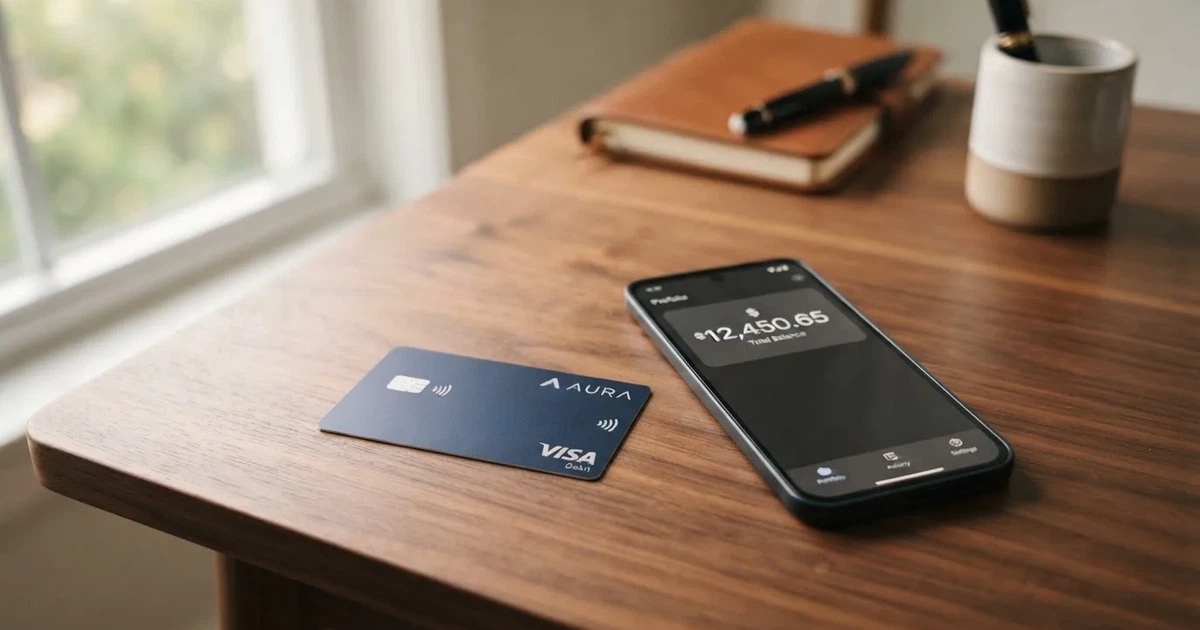
The headline: DPT scores 8.5 out of 10. It is a strong option if you already hold USDC or USDT and want a US-issued Visa that spends anywhere Visa is accepted. It is a poor fit if you need a card in your local currency, if you need cash from ATMs at a predictable cost, or if you would be guessing at the fee schedule because the app is the only place it exists.
Conditions are current as of October 28, 2026.
Verdict: 8.5 out of 10, aimed at stablecoin holders
The score is high because the fundamentals are unusually solid for this category: a genuine bank issuer (U.S. Bank under a Visa licence), a named custodian in BitGo, a Hong Kong-licensed operator with a licence number printed on the terms, and no complaint history I could find. It is not a 10 because too much of what you need to live with — the fee schedule, your spending limits, your tier, the ATM terms — is visible only inside the app, and because one of the two official pages that describe the sign-up documents contradicts the other.
Who it suits: you already hold USDC or USDT, you can get a USDC/USDT transfer to Ethereum, Polygon, Tron or Solana, and you want to spend that balance through a US Bank-issued Visa without a traditional bank in your country saying no. Who it does not suit: anyone who needs a local-currency account, a predictable ATM, or a fee schedule they can read before opening the app.
| Criterion | Mark | Why |
|---|---|---|
| Who can get it | 9 / 10 | Spending in “150+ countries” wherever Visa is accepted; services are not offered to persons located in, incorporated in or resident of the United States or Canada, or comprehensive-sanctions jurisdictions |
| Cost | 8 / 10 | Issuance and monthly fee are not disclosed, there is no monthly fee in the text; operations in USD are free, in another currency 0% to 2.00% FX, no DPT top-up commission |
| Top-up options | 9 / 10 | USDC or USDT on Ethereum, Polygon, Tron, Solana; Base, BNB and fiat still planned |
| Reliability and complaints | 9 / 10 | Operator DPT (HK) Limited with TCSP licence TC010834, the card issued by U.S. Bank under a Visa licence, custody with BitGo; no complaints found |
| Everyday use | 7 / 10 | Virtual (Apple Pay and Google Pay) and physical (chip and contactless); ATM terms not disclosed, wallets “where available” |
| Total | 8.5 / 10 | — |
Will they give you the card
Yes, in a lot of countries, but not everywhere, and not on the basis of citizenship alone. DPT says spending works in “150+ countries” wherever Visa is accepted — that is the spending side, not the sign-up side. Whether you can open the account depends on your country of residence, and you find out inside the app. The terms add the hard line: services are not offered to persons located in, incorporated in or resident of the United States or Canada, or in comprehensive-sanctions jurisdictions.
Two things follow from that, and both matter if you are reading this because a bank turned you down.
- Residence and location are checked separately from citizenship. The wording covers where you are, where the entity is incorporated and where you reside.
- A failed identity check is not always about a bad document. DPT names an “unsupported jurisdiction” as one of the reasons verification can fail — that is, you may be perfectly well documented and still be outside the covered area.
So the practical question is not “can I get a crypto card” but “is my country of residence inside DPT’s eligibility list”. The app is the authority on that, and there is no public list to check first.
How to get it
You need 18 or over, one DPT account per individual, and you verify inside the app with a government-issued ID plus a live selfie. That normally takes minutes; DPT allows up to 24 hours. Verification is not optional — it is required for the card, for deposits at full capacity, and for payouts.
Here is something to be aware of before you start, because it is the kind of small contradiction that wastes an afternoon: the two official pages that describe the documents do not agree. One describes government-issued ID and a live selfie in the app. The Learn guide instead says passport or national ID plus proof of address — a utility bill or bank statement no more than three months old. If you have only an ID, you may pass. If your name and address on that ID do not line up with your documents, keep the proof of address ready anyway.
What the card is, once you are through: a Visa, issued by U.S. Bank under a Visa licence. You choose a virtual card for Apple Pay or Google Pay, or a physical card with chip and contactless. The card currency is USD — that is implied by USD transactions being free of any FX fee, rather than stated outright on the pages.
What you will not learn in advance:
- Physical card delivery time, delivery cost and replacement cost are not stated.
- DPT tiers are not described in specific terms on the public pages; your limits appear in the app after verification, and a higher tier carries larger limits.
- Verification failures are usually a blurry or expired ID, personal information that does not match, or an unsupported jurisdiction.
Fees: what it really costs
The headline number is good: spending in USD is free. The awkward number is that the fee schedule itself lives in the app, and DPT does not publish the issuance fee or a monthly fee on its public pages — there is no monthly fee mentioned in the text at all, which I read as “none” but which I would confirm in the app before you rely on it.
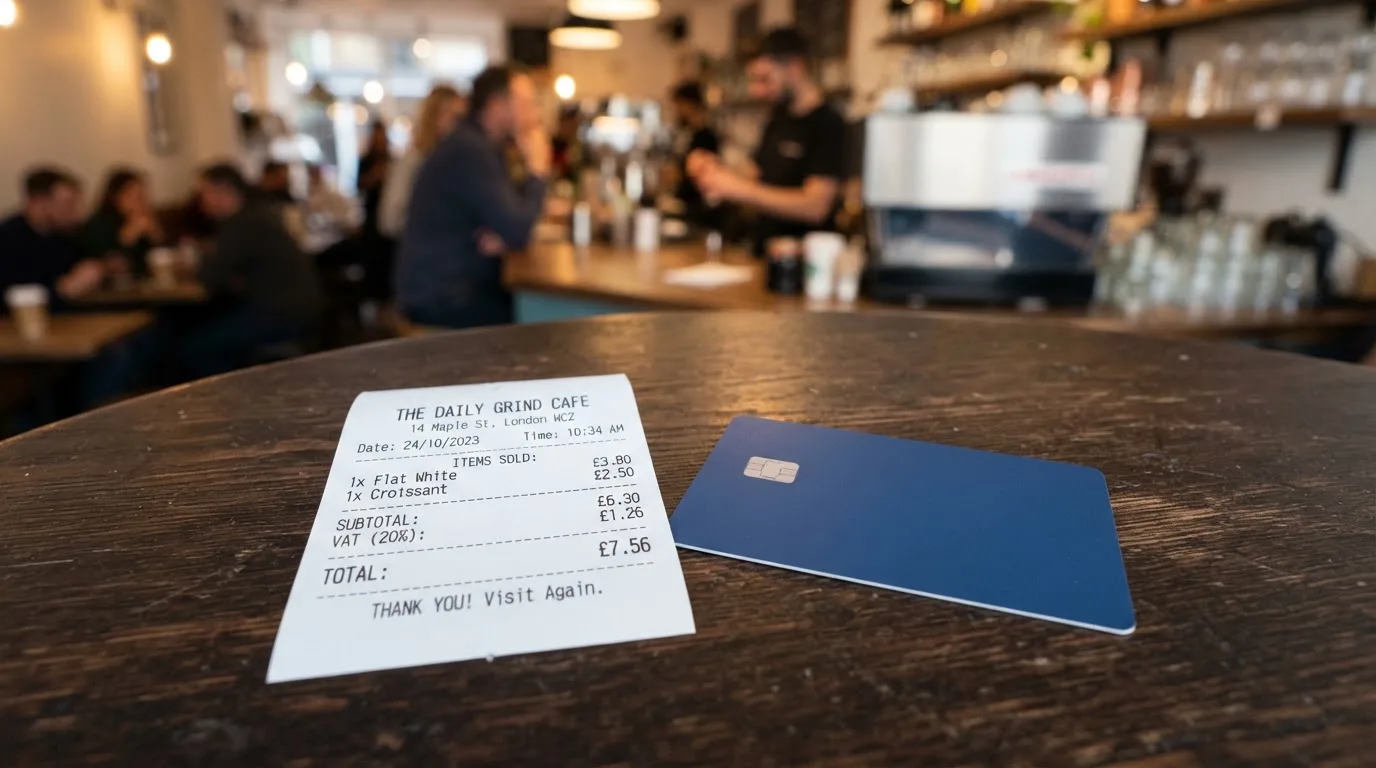
Here is everything the public pages do state, in one place:
| Fee or limit | What DPT states |
|---|---|
| Issuance fee | Not stated; the fee schedule is in the app |
| Monthly fee | Not mentioned in the text |
| USD transactions | Free |
| Foreign-currency transactions | 0% to 2.00% FX fee, depending on the currency |
| Transactions of $25 or less | $0.10 fee, currently waived as a limited-time promotion |
| Declined transactions | First 3 declines per calendar month free, then $0.50 each |
| DPT deposit (top-up) fee | None |
| ATM withdrawal | 2% of the amount, plus a 0% to 1.75% FX surcharge depending on location, plus any ATM operator fee; free allowance not stated |
| Spending limits | Not stated; shown in the app after verification, larger on the higher tier |
Now let three everyday payments run through that table, because fees behave differently depending on which currency your card is actually charged in.
A coffee in your own country, in dollars: nothing. USD transactions are free, and the small-transaction fee of $0.10 is currently waived as a limited-time promotion — though that waiver is undated, so it is worth assuming the $0.10 is the base case rather than the exception.
A weekend abroad, paid in euros or baht: the FX fee. That is the 0% to 2.00% band depending on the currency, applied on top of the conversion. The band is wide, so which end of it you pay is not something the pages tell you in advance.
An online payment your card issuer declines: nothing for the first three declines each calendar month, $0.50 for each one after. Worth knowing, because repeated declines are how a lot of people discover their card is being blocked by risk systems rather than by anything they did wrong.
The tier structure is also fee-adjacent, because the higher tier is where the benefits live. Oxygen is a Visa Platinum with travel accident insurance up to US $500,000, instant digital cards and member prize draws. Obsidian is a Visa Infinite tier, invite-only, with insurance up to US $1.5M, a 24/7 concierge, a dedicated lifestyle manager, Priority Pass lounge access and DPT events. Top-spending Oxygen holders are auto-upgraded. That is a real benefit ladder, but the pages do not say what the upgrade threshold is, and neither tier’s price is public.
Top up: sending USDC or USDT in
This is the part that is unusually well documented, and it is the strongest part of the offer. The live options are USDC or USDT on Ethereum, Polygon, Tron or Solana. Base, BNB and fiat deposits are on the roadmap, not available — I would treat those as marketing until you see them working.
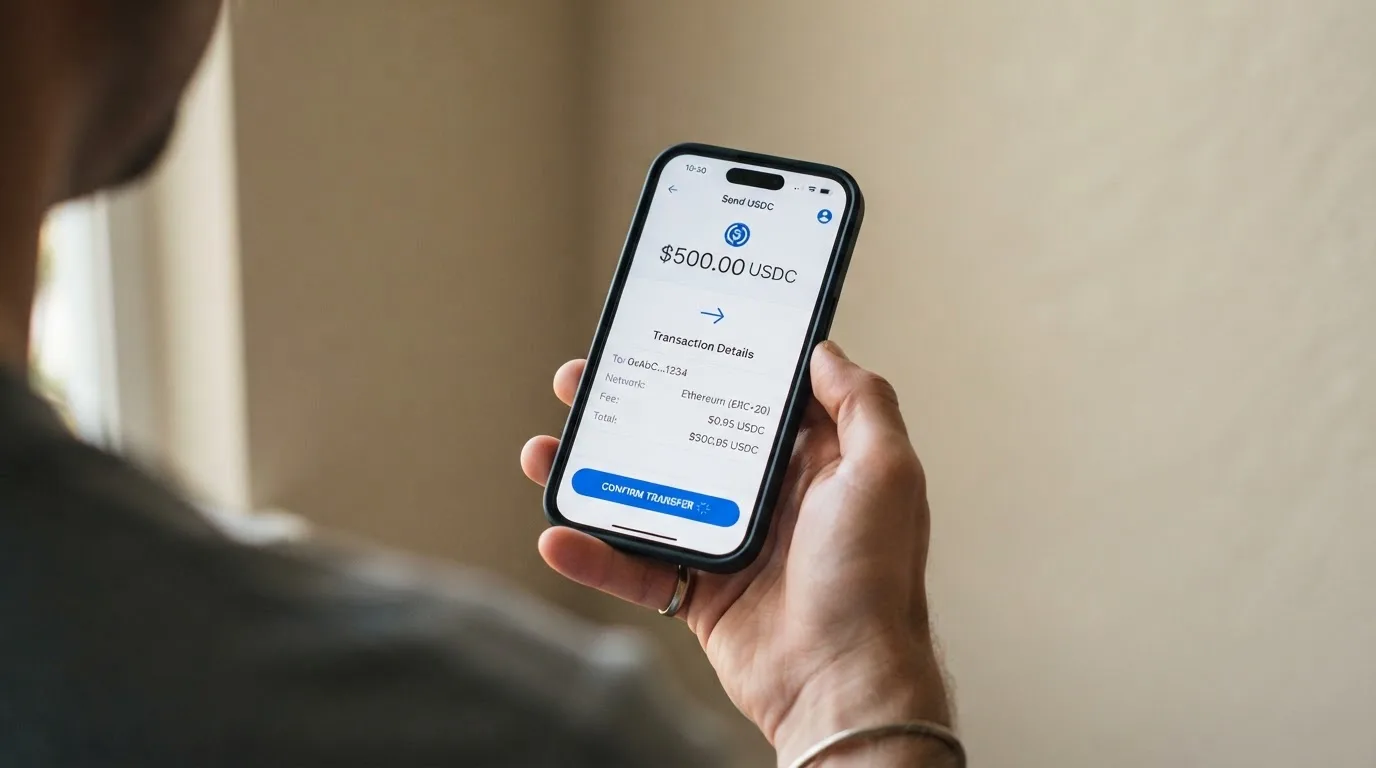
The mechanics are simple. Your card balance and your account balance are the same thing: a stablecoin balance, converted at the moment the Visa transaction is made. There is no separate fiat wallet to fund.
| Top-up detail | What DPT states |
|---|---|
| Live assets and networks | USDC or USDT on Ethereum, Polygon, Tron, Solana |
| DPT deposit fee | None |
| Network fee (gas) | Paid by the sender, not by DPT |
| Minimum top-up | 1 USDC/USDT on Ethereum, Polygon, Solana; 10 USDT on Tron |
| Crediting time | About 1 minute after confirmation |
| Base, BNB, fiat | Roadmap, not live |
Two cautions that belong here rather than later. First, gas is yours: on Ethereum a transfer costs more than on Polygon or Solana, and on Tron it is priced differently again. If you send a tiny amount over an expensive network, the network fee can eat a noticeable share of it. Second, sending on a network DPT does not support, or to an address belonging to a different network, can lose the funds or need manual support recovery with no guarantee — blockchain transfers do not reverse. Circle also stopped supporting USDC on Tron in February 2024, so if your USDC sits on TRC-20 it is not a native option; use Ethereum, Polygon or Solana for USDC, and Tron for USDT.
Getting money back out is a different set of numbers, and it is the part people rarely check until they need it. A crypto withdrawal costs 0.1% DPT commission plus gas — roughly $2.00 on Ethereum, $1.00 on Polygon, $1.00 on Solana, $5.00 on Tron. A bank payout costs a provider fee per corridor: India 0.30%, Nigeria 0.80%, Vietnam 0.60%, Philippines 0.50%, Brazil 0.45%, Mexico 0.50%, Indonesia 0.55%, Thailand 0.40%, Europe SEPA Instant 0.35%, UK Faster Payments 0.35%. And note the balance question that should worry you least but is worth reading anyway: what happens to a remaining balance on closure is not stated, and DPT may delete an account on seven days’ notice.
Paying with it every day
The everyday experience is conventional in the ways that matter. A physical card with chip and contactless for the shop, a virtual card for your phone. Apple Pay and Google Pay are supported “where available” — and DPT does not state whether that applies to the physical card as well, which is a small but annoying thing not to know.
What is not disclosed is as interesting as what is. No card cashback is stated on the card itself; there is a Rewards and Referral Program covering referral commissions, points and elite rewards, and a separate DPT Earn stablecoin yield vault, but neither is described as a rebate on your card spend. Blocked merchant categories are not stated either — the help centre has articles on merchant restrictions that I have not read, so I cannot tell you which categories are closed. Payouts are offered in 100+ currencies, with the navigation bar describing 80+ corridors, and multi-currency balances are not stated, so do not assume you can hold euros and dollars side by side.
The app itself: Apple App Store and Google Play, plus an Android APK at download.dpt.xyz. I could not find store ratings — no listing was located by search — so I have no read on how users rate it in practice.
If a payment goes wrong, the dispute route is worth memorising before you need it. DPT’s Learn guide says file with support within 60 days of the statement posting date for unauthorised charges; the Terms say card disputes or chargebacks within 90 days of the transaction date. Decisions by DPT or its Service Partners are generally final, with Hong Kong courts or LCIA arbitration in London as the escalation. Take the earlier of the two deadlines as the real one.
What can go wrong
Three risks are specific to this card. The rest are the normal risks of holding stablecoins on someone else’s platform.
The card could be declined in ways you do not expect. Two mechanisms cause most of it, and neither is a DPT bug. A declined authorisation can leave a hold on your funds for several days, typically up to seven — so a failed attempt at a till can quietly tie up money. And merchants can look up the issuing country and card type from the card number itself, then apply extra scrutiny or decline prepaid and foreign cards outright. A US Bank-issued Visa will read as a US card; that helps in most countries and is not a universal advantage. Address verification, which compares the street number and postcode a buyer types against issuer records, is mainly offered in the US, Canada and the UK and is generally unavailable for foreign-issued cards — a routine cause of declines online.
The card could be frozen or closed. Losing it is easy to handle: freeze it instantly in the app, and three wrong CVV, expiry or PIN attempts auto-lock the card for 24 hours. The help centre mentions two-factor authentication, anti-phishing and spending alerts. Closure is less comfortable: DPT may delete an account on seven days’ notice, and the terms do not state what happens to a balance on closure.
Custody is the structural risk. Here is the honest picture, and it is more nuanced than “your money is with a third party”. The homepage says assets are held with BitGo, described as a qualified custodian with coverage up to $250M subject to terms. The Terms say users do not deposit funds with DPT on a custodial basis. Those two statements are not identical, and which of them governs your balance is exactly the sort of thing to put to support in writing before you hold a large sum. What is clear is the counterparty risk that runs through any custodial arrangement: cryptocurrency transfers are irreversible, a stolen key has no built-in recovery, and the sector has a record of it — Mt. Gox at about US$350 million reported stolen between 2011 and 2014, Coincheck at about US$400 million in 2018, and the Ronin Network at US$625 million in 2022.
There is one more card-shaped risk worth naming even though it did not happen here. Visa terminated its global agreements with FTX on 13 November 2022 and the FTX US debit card programme was wound down. In 2018 Visa suspended WaveCrest in Europe, closing all WaveCrest-issued Visa programmes. Programme closures typically mean a notice period, then loading stops, then spending stops, then you are asked to withdraw what is left. DPT shows no such history — I found no official incidents, and a search for reviews returned nothing on Trustpilot or Reddit; there is no Trustpilot page for dpt.xyz and no review-site results at all. But an empty complaint record is also an empty record, and I would not read it as proof of anything.
On the company itself: the operator is DPT (HK) Limited, holding a Hong Kong TCSP licence no. TC010834 under AMLO Cap. 615. The card is issued by U.S. Bank under a Visa licence. Custody is with BitGo. The Terms say DPT arranges issuance through a Service Partner, and that Hong Kong law governs. One third-party data point, unofficial and not confirmed by DPT: a single KuCoin-hosted post by DeFi Warhol noted the Android app at about 5,000 downloads and no public card-volume figures. That is one author’s view on one platform — useful only as a reminder that the public footprint here is thin, which is why I have weighed the licence numbers and the issuer relationship more heavily than the absence of reviews.
Dated events: not stated. I found no dated licence milestones or programme announcements. The Obsidian tier and the limited-time waiver of the $0.10 small-transaction fee are both undated, which means both could end without warning.
What to take instead
None of these is a DPT problem — they are the alternatives you would be choosing between if DPT did not fit. I have scored them on the same scale so you can see the gap.
| Card | Score | Countries | Networks and format | Stated costs |
|---|---|---|---|---|
| DPT | 8.5 / 10 | “150+ countries”; not offered in the US, Canada or comprehensive-sanctions jurisdictions | Visa issued by U.S. Bank; virtual and physical | USD free; 0–2.00% FX elsewhere; no DPT top-up fee; issuance and monthly fee not stated |
| OkiCard | 6.0 / 10 | “150+ countries” (some pages say “200+”); no geo-blocking based on passport; users must confirm they are not sanctioned | Virtual card, network given as “Visa/Mastercard” without detail; physical card mentioned | Issuance $0, monthly $0, starting price $15 for the virtual card — pages disagree; initial deposit 100 USDT; 3% load fee; 0% transaction fee in USD |
| Cardex | 5.6 / 10 | “One crypto card, 200+ countries”; no country list or exclusions | Debit crypto card on VERVE, VISA, Mastercard and UnionPay; virtual and physical; listing is Naira-focused | Not stated; conversion at the moment of payment with an “AI-Powered Conversion Rate”, no percentage published |
| TakeCard | 5.5 / 10 | Physical card “available only to Bolivian users for now”; countries not listed | Virtual card immediately, physical for Bolivia; Visa named; issued in the US; prepaid; USD 1:1 | Virtual USD 5; physical USD 20 issuance + USD 20 shipping, with another article saying USD 10 — conflicting; 1% commission per purchase |
Two of these deserve a note, because their headline numbers flatter them.
OkiCard’s zero-fee, zero-spread pitch is the most interesting of the three, and it is undercut by a 3% load fee — so the free part is the spend, not the funding. Its own pages disagree on the price ($0 issuance and $0 monthly on the pricing page, a $15 starting price for the virtual card, and a one-time issuance fee in the FAQ), which is the same documentation problem DPT has, in a smaller package. It funds with USDT on BSC, Ethereum, Tron and Solana; USDC is “soon”, BTC and other coins “coming soon”.
Cardex converts crypto to fiat at the moment of payment and claims an “AI-Powered Conversion Rate” that scans global exchange rates and picks the best one — which is a description of a mechanism, not a price. No percentage is published, and the app listing is Naira-focused, which tells you more about who it is built for than the “200+ countries” line does.
TakeCard is the only one of the four with published purchase prices, and they contradict each other in its own help centre ($20 + $20 shipping versus $10 for a physical card in Bolivia). Its 1% per-purchase commission is the clearest fee statement any of these alternatives makes. Starting data — not confirmed on a page I could read — lists a virtual card for Argentina, Bolivia, Peru, Chile, Paraguay, Colombia, Ecuador, the US, Spain and Italy.
Who I would recommend it to
Recommend DPT if you hold USDC or USDT, you can move them on Ethereum, Polygon, Solana or Tron, and the thing you need is a US-issued Visa that spends anywhere — particularly if a traditional bank has been the obstacle. The issuer is a real bank, the operator is licensed and named, custody is with a named institution, USD spending is free, and I could not find a single complaint.
Check these first before you commit:
- Your country of residence is inside the eligibility list — the app decides, and the US, Canada and comprehensive-sanctions jurisdictions are out.
- The fee schedule in the app, because issuance, the monthly position and your spending limits are not on the public pages.
- Whether the $0.10 small-transaction waiver is still running, since nothing dates it.
- What happens to a balance if you close the account, because seven days’ notice is stated and the treatment of the balance is not.
I would look elsewhere if you need a card denominated in your local currency, if ATM cash is central to your life — 2% plus up to 1.75% plus the operator’s own fee, with no free allowance disclosed, is expensive — or if you are not already holding stablecoins, since fiat deposits are not live and you would be buying the asset before you could use the card.
Frequently asked questions
What is the DPT card?
The DPT card is a Visa payment card you fund with crypto rather than a bank account. The operator is DPT (HK) Limited, a Hong Kong company with TCSP licence TC010834, and the card itself is issued by U.S. Bank under a Visa licence, with assets held with BitGo. You load USDC or USDT, and the stablecoin balance converts at the moment of each Visa transaction.
Is DPT a bank?
No — DPT is a Hong Kong-registered company, not a bank. It holds a TCSP licence under AMLO Cap. 615 and arranges issuance through a Service Partner. The card is issued by U.S. Bank, which is the bank in the structure, but DPT itself is the programme manager and the front end you deal with.
How do I get the DPT card?
You need to be 18 or over, one account per person, and you verify in the app with a government-issued ID and a live selfie — usually minutes, DPT allows up to 24. The Learn guide also mentions proof of address such as a utility bill or bank statement no more than three months old, so the two official pages differ slightly. Eligibility depends on your country of residence and is checked in the app.
Does the DPT card require KYC?
Yes, and verification is required not just for the card but for deposits at full capacity and for payouts. Typical failures are a blurry or expired ID, personal details that do not match across your documents, or an unsupported jurisdiction — that last one is the reason to read the country terms before you upload anything.
Is DPT card free?
Spending in USD is free, and DPT charges no fee on a top-up. But the card is not free in every sense: foreign-currency transactions cost 0% to 2.00% in FX, a transaction of $25 or less carries a $0.10 fee that is currently waived as a limited-time promotion, declines beyond the first three per month cost $0.50 each, and the issuance and monthly figures are not published — the schedule is in the app.
Can I use the DPT card in my country?
Spending works in “150+ countries” wherever Visa is accepted, but the US and Canada are excluded, along with comprehensive-sanctions jurisdictions. Whether you can open the account depends on your country of residence and is checked in the app. A virtual card is available immediately; physical card delivery times and cost are not stated.
How do I top up the DPT card?
You send USDC or USDT on Ethereum, Polygon, Tron or Solana to DPT’s address. There is no DPT deposit fee, you pay the network’s gas, the minimum is 1 USDC/USDT or 10 USDT on Tron, and the balance is credited about a minute after confirmation. Card balance and account balance are the same thing — a stablecoin balance converted at the transaction.
How do I withdraw money from DPT?
A crypto withdrawal costs 0.1% plus network gas — roughly $2.00 on Ethereum, $1.00 on Polygon, $1.00 on Solana, $5.00 on Tron. Bank payouts charge a provider fee per corridor, from 0.30% in India and 0.35% in Europe and the UK up to 0.80% in Nigeria, with Vietnam, the Philippines, Brazil, Mexico, Indonesia and Thailand between 0.40% and 0.60%.
Is the DPT card safe?
It is structured better than most of this category: a bank issuer, a licensed operator, named custody with BitGo, instant card freeze, a 24-hour lock after three wrong PIN, CVV or expiry attempts, and 2FA and spending alerts. The risk that remains is ordinary counterparty risk — you trust BitGo and U.S. Bank — plus the fact that crypto transfers cannot be reversed.
How do I delete my DPT account?
The terms say DPT may delete an account on seven days’ notice, and the public pages do not say what happens to any balance left on it. That gap is worth resolving with support before you close anything, and worth withdrawing your funds as the active step when you decide to leave.
Virtual card options – cryptocardoptions.com
Content created by the «cryptocardoptions.com» team