
IMBA Wallet, reviewed as a virtual crypto card for everyday spending
 Available in US
IMBA Wallet sells virtual Visa and Mastercard cards that you load with USDT, and it lets users turn rubles into USDT through a bank transfer. The five product tiers are aimed at people who would rather hold Tether than open a bank account, and who only need the card online or in a phone wallet. The whole package sits in a Telegram bot, a mobile app and a small web panel, with no plastic card and no ATM access. This review walks through who the service is for, what each tier costs, how the top-up and ruble payout path actually works, and where the gaps and risks sit.
The conditions in this review are current as of October 28, 2026.
Verdict
I have read through IMBA Wallet’s public pages, looked at how the cards are positioned and compared the cost structure with the other crypto cards I cover. The overall score for the card is 4.8 out of 10. That number is not a feeling I had at the end — it is a weighted sum across who can get it, the cost of using it, the top-up options, the everyday use, and the reliability and complaints picture.
The short version is that IMBA Wallet is best understood as a ruble-friendly way to convert bank transfers into USDT and to spend that USDT through a virtual card, with no plastic, no ATM, and no banking licence behind it. If that is the use case you have, the card is straightforward. If you want a physical card, an ATM, cashback, an EU-licensed issuer, or a list of supported countries, this is not the product.
| Criterion | Mark | Why it lands there |
|---|---|---|
| Who can get it | 5 / 10 | The service is positioned for “users in Russia and the CIS”, but no country list and no exclusions are stated. The cards are issued in Singapore, which means they look foreign to a lot of merchants. |
| Cost | 3 / 10 | Five products with five different top-up fees — from 12% down to 3% — plus USD 10 to USD 60 to issue. The two cheapest tiers are the most expensive to fund. |
| Top-up options | 7 / 10 | USDT on TRC-20 or TON into a shared balance, plus rubles via SBP into USDT. ERC-20 and BEP-20 are not supported and the wrong network is an easy way to lose funds. |
| Reliability and complaints | 5 / 10 | Custodial, no banking licence, no public incident, and no Trustpilot or Reddit footprint I could find. The provider is Asha Wallet LLC; the legal entity behind the FAQ is not named. |
| Everyday use | 5 / 10 | Virtual only, issued instantly, Apple Pay and Google Pay work with compatible cards. No physical card, no ATM, transfers to PayPal or other cards (MCC 6537) are blocked. |
| Total | 4.8 / 10 |
The audience IMBA Wallet is built for is the user who wants a virtual card funded by USDT, with ruble in and ruble out through SBP, and who is comfortable that the card is custodial, foreign-issued and “payment only”. If that describes what you are looking for, the card does that job. If you wanted a more general-purpose crypto card, the alternatives section is where you should read next.
Who will they give you the card
IMBA Wallet’s own description of the target audience is “users in Russia and the CIS”. The card programme is run out of Singapore, but the front-end, support and ruble rails all assume a user. The FAQ does not publish a country list, and it does not publish a list of exclusions. If you live somewhere other than these countries, the public pages do not tell you whether you can open an account or not, which is itself worth noticing.
What the public pages do say is that the cards are issued in Singapore, that the service is not a bank and does not hold a banking licence, and that the provider, per an earlier check, is Asha Wallet LLC. A Singapore-issued card is not automatically a problem, but it does mean that the BIN (the first six to eight digits of any card number) identifies Singapore as the issuing country, and a number of merchants apply extra scrutiny to cards that look foreign compared with the billing address you give them. Some online shops decline such cards outright. If you have been declined at checkout on a non-domestic BIN before, IMBA Wallet’s cards will probably behave the same way.
There is no statement about minimum age, no statement about proof of address, and no statement about which nationalities are screened out. The two KYC steps the FAQ describes are a simplified one for issuing the card (email and phone on the order form, no passport biometrics), and a full one for buying or selling USDT for rubles (passport and selfie, said to take 1 to 2 minutes). USDT deposit, USDT withdrawal, C2C inside IMBA and the referral programme are listed as requiring no KYC. Rejection reasons are not stated.
For a reader who has had trouble getting an ordinary bank card, the practical question is whether IMBA Wallet is a more accessible on-ramp. The answer is: maybe, but only because the simplified KYC is light, and only if you are happy with a card that is foreign-issued, custodial, and “payment only”. The friction is not in identity checks — it is in the card itself.
How to get it
Getting the card is split into two parts: opening the wallet, and choosing which of the five card products to issue. The wallet is available as a Telegram bot, an app on Google Play and RuStore, a direct APK download, the MAX messenger and a web panel. The product list inside the app covers five tiers, and the FAQ says you can have up to five cards on one account.
The five card products are:
- VISA micro — the entry tier, no monthly fee, but the most expensive to fund.
- IMBA Light — middle-of-the-road, with both an issuance fee and a small monthly fee.
- IMBA Classic — the main product, with a higher issuance fee and a higher top-up cap.
- IMBA Apple Pay — the tier built around the Apple Pay token, with its own fee structure.
- IMBA Black — the top tier, the cheapest to fund and the most expensive to issue.
The order form itself is the simplified KYC step: email and phone, with no passport biometrics requested at this stage. Once submitted, the card is issued virtually and immediately. The number, CVV and expiry show up inside the app, and from that point the card can be added to Apple Pay or Google Pay where the product supports it. No plastic card exists, and no card is shipped.
The full KYC step is the one that matters if you want to move rubles in or out. Passport and a selfie are uploaded once; the FAQ says the review is short, but it is also the only point at which IMBA Wallet checks your identity document, and it is the step that gates the RUB/USDT exchange and the SBP top-up path. USDT deposit, USDT withdrawal, C2C transfers inside IMBA and the referral programme do not need this KYC step, which is unusual and worth knowing in both directions: it lowers the barrier to small USDT-only use, but it also means the identity check is not necessarily continuous.
The card currency is not stated in the public pages. The wallet balance is in USDT, which is what the card is funded from. The five tiers all spend from that same balance, so the difference between them is in fees and limits rather than in the underlying currency.
What is not stated anywhere I could find: the countries the order form will accept, the age threshold, whether proof of address is required at any point, the rejection reasons, and the card’s settlement currency. The site is in Russian, and the support channels for access recovery are Telegram, MAX or email, with no published hours or service-level promise.
What it really costs
The cost story has three layers: what you pay to issue and hold the card, what you pay to top it up, and what you pay when you spend. IMBA Wallet publishes the first two clearly, and is silent on most of the third.
The table below uses the fees the FAQ states as of 2026-10-20. All values are in USD; top-up fees are taken from the published per-product numbers, and the issuance and monthly fees are exactly as the FAQ lists them.
| Fee or limit | VISA micro | IMBA Light | IMBA Classic | IMBA Apple Pay | IMBA Black |
|---|---|---|---|---|---|
| Issuance | 10 | 20 | 30 | 30 | 60 |
| Monthly fee | 0 | 3 | 5 | 4 | 10 |
| Top-up fee | 12% | 8% | 4% | 4.2% | 3% |
| USDT → RUB exchange | about 1–2% | about 1–2% | about 1–2% | about 1–2% | about 1–2% |
| FX fee on card payments | not stated | not stated | not stated | not stated | not stated |
| ATM withdrawal | not stated (cards are “payment only”) | not stated | not stated | not stated | not stated |
| Card spending limits | not stated | not stated | not stated | not stated | not stated |
| Bank-payment top-up (RUB) | — | — | — | — | max 100,000 per operation |
A few points to take away from this table.
The first is the inversion between issuance and top-up fee. The cheaper the card is to issue, the more expensive it is to fund. VISA micro is free per month, but you give back 12% of every top-up in fees; IMBA Black charges USD 10 a month and USD 60 to issue, but only 3% on top-up. For a user who tops up regularly, the break-even point is well below the second month on the higher tiers.
The second is that the FAQ says the USDT-to-RUB exchange is “about 1–2%”. That is a separate fee on top of the top-up fee, and it applies whenever you sell USDT into rubles. If you are converting a thousand USDT into rubles, you should expect to lose around 1–2% on the FX side and another 3–12% on the funding side, depending on which tier you are on.
The third is that several numbers a cardholder would normally expect to see are simply not stated. The FX fee at the moment of card payment is not stated, even though the card is foreign-issued and many of the merchants you would use it with bill in a currency other than USDT. The ATM fee is not stated, and the card is described as “payment only” anyway — so even if there were a fee, there is no ATM to use. Card spending limits are not stated either, although the app shows a “Limits & fees” screen before you confirm a top-up, which is the only place those numbers are surfaced in the flow.
The fourth is the bank-payment top-up cap: 100,000 RUB per operation is the maximum. There is also a published minimum of about 1,050 RUB including the gateway fee, which means small test top-ups are possible but the largest single transfer is fixed.
To put some of this in everyday terms, three worked examples:
- A 5,000 RUB SBP top-up on IMBA Classic. The top-up fee at 4% is 200 RUB. The USDT-to-RUB exchange at 1–2% is 50–100 RUB. You land with USDT worth about 4,700–4,750 RUB, before any card-payment FX. If you then spend 100 USDT in a non-USD currency and the card-side FX is the kind of markup crypto cards typically charge, the realised cost goes higher.
- A 5,000 RUB SBP top-up on VISA micro. Top-up fee at 12% is 600 RUB. Add the 1–2% exchange and you are already at 650–700 RUB of cost on a 5,000 RUB top-up, before you have paid for anything. This is why the micro tier is mostly useful for small, occasional loads.
- A 100,000 RUB SBP top-up on IMBA Black. Top-up fee at 3% is 3,000 RUB, plus about 1–2% on the exchange. That is the cheapest end of the cost spectrum, and the only tier where the headline cost is in single digits on a six-figure transfer.
The cardholder’s checklist before any top-up is therefore: which tier you are on, the published top-up fee for that tier, the 1–2% USDT/RUB exchange cost, and the fact that the card-side FX is not stated anywhere. The app’s “Limits & fees” screen before confirmation is the only place some of those numbers appear, and it is worth reading carefully.
Top up: how to fund the card
The card is funded from a USDT balance that lives inside the IMBA Wallet account. There is no direct fiat top-up; fiat only enters as a ruble bank payment, which IMBA Wallet converts into USDT, which then sits on the balance until you spend it or withdraw it. The supported routes are deliberately narrow.
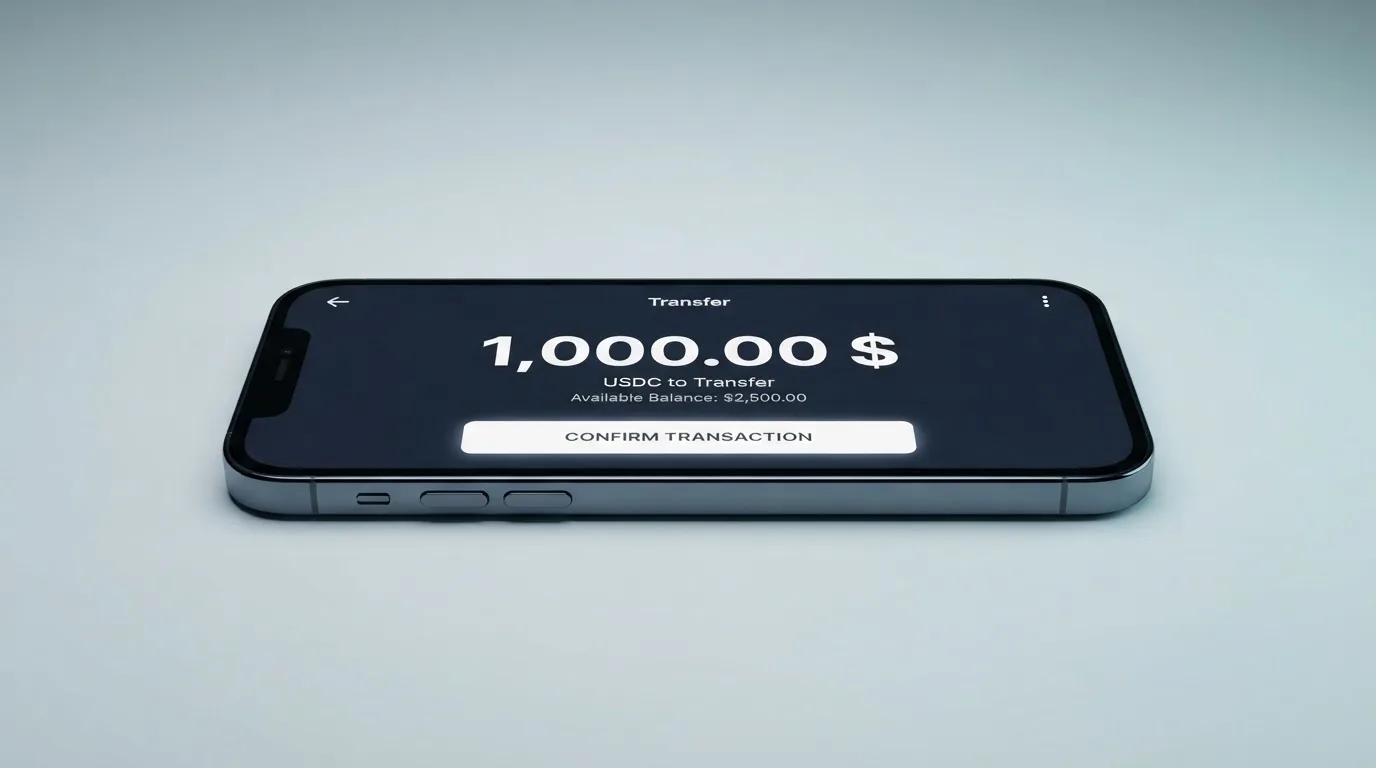
The first route is USDT from another wallet, on TRC-20 (Tron) or TON (The Open Network). These two networks share a single balance, so the funds land on the same IMBA Wallet balance regardless of which one you sent them on. Deposits are said to credit in 1 to 30 minutes, which is fast in normal conditions but says nothing about what happens under network congestion. ERC-20 (Ethereum) and BEP-20 (BNB Smart Chain) are explicitly listed as networks you must not send on, and the standard warning applies: a token sent on the wrong network is generally lost, or at best requires manual support recovery with no guarantee of return.
The second route is a Russian bank payment via SBP (the Faster Payments System). You send rubles from a Russian bank account to a beneficiary shown in the app, IMBA Wallet converts the rubles to USDT and credits the wallet. The published minimum is about 1,050 RUB including the gateway fee, the maximum is 100,000 RUB per operation, and the fee for the conversion is the per-product top-up fee plus the 1–2% USDT-to-RUB spread described in the cost section. There is no mention of incoming bank-payment fees from the sending bank, so you should assume the sender’s bank may add its own charge.
The third route is C2C inside IMBA Wallet, which is a peer-to-peer transfer between two IMBA Wallet users. The fee is published as 0%, which makes sense for an internal transfer but is not the same as a free top-up if you have to acquire the rubles to fund the C2C side first.
The fourth route is the referral programme, which pays in USDT across three levels. The rates are not stated, so I cannot say what a typical referral earns, only that the programme exists and is paid in the same USDT balance the card spends from.
What is not stated: any support for other stablecoins such as USDC, any support for BTC or other cryptocurrencies, any support for non-Russian bank transfers, and any direct debit-card or credit-card top-up. If you do not hold USDT and you do not have a Russian bank account, there is no third path in.
For the withdrawal side — which is the same flow in reverse — the FAQ says USDT withdrawals to an external wallet cost USD 0 to USD 1.5, that selling USDT for rubles to a Russian bank card or via bank payment settles in seconds to minutes, and that direct card-to-card or card-to-PayPal transfers (MCC 6537) are unavailable. The asymmetry is worth noticing: it is easy to push USDT out, easy to push rubles out, and impossible to push the card balance out as a card payment to another card.
Paying with it every day
A virtual card that is issued in seconds, with the number shown in the app, is built for two everyday situations: online checkout, and tap-to-pay through a phone wallet. Both work, with the limits the FAQ sets out.
For online checkout, the card is a normal Visa or Mastercard number with a CVV and an expiry. The published caveat is that transfers to or from the card are unavailable — that includes PayPal top-ups and MoneySend-style person-to-person transfers, which are blocked under MCC 6537. If a merchant tries to send a refund back to the card, in many cases it will not arrive as a card-to-card transfer but may need to be returned to the underlying balance. Digital gift card codes, in particular, are usually non-refundable once issued, which the FAQ flags directly.
For phone-wallet payments, Apple Pay works with the IMBA Apple Pay product and with other compatible cards; Google Pay works with compatible cards including IMBA Classic. The card number itself is replaced by a device-specific token in the Secure Element, the way Apple Pay and Google Pay normally work, and a one-time dynamic security code is used per transaction. The card issuer can restrict where a tokenised number works — for example, blocking it on magnetic-stripe or website use — and that restriction is the issuer’s call, not the cardholder’s.
For physical spending, there is no physical card. There is also no ATM access. The FAQ is explicit that the cards are “payment only”. If a merchant’s payment terminal does not accept a virtual card, or if a country you are travelling to has a market that demands a physical card, you cannot fall back on a piece of plastic.
Cashback and rewards are not stated. The FAQ describes a referral programme paid in USDT across three levels, but no card-spending cashback rate, no merchant-category bonus, and no staking or yield feature for the USDT balance. The app stores are listed (Telegram bot, Google Play, RuStore, direct APK, MAX, web) but the store ratings are not stated.
Disputes and chargebacks are the area I would treat most carefully. The FAQ does not describe a general dispute or chargeback process; it warns that digital gift card codes usually cannot be refunded, and that bank payments from unverified devices or accounts may be reversed. The combination of a foreign-issued card, a custodial wallet and no published dispute path is a good reason to keep individual transactions small and to favour merchants you would be willing to lose the transaction value to in the worst case.
A short list of what this means in practice:
- Online checkout: works for normal merchant flows, may be declined on merchants that screen foreign BINs, and refund paths vary by merchant.
- Apple Pay and Google Pay: work on the products that support them, with the usual tokenisation protections and the issuer’s per-token controls.
- Physical POS: not available, no plastic card to fall back on.
- ATM: not available.
- Card-to-card or card-to-wallet transfers: blocked under MCC 6537.
- Disputed transactions: no published process; treat each transaction as small and reversible only by the merchant.
What can go wrong
The risk picture has three layers: the company behind the service, the security of the funds, and the regulatory standing of the product.
On the company side, the FAQ is unusually direct about one point: IMBA Wallet is not a bank and does not hold a banking licence. The provider, per an earlier check of the service, is Asha Wallet LLC, and the cards are issued in Singapore. The FAQ does not name a legal entity beyond that. There is no MiCA authorisation, no US money-transmitter registration that I could verify, and no published safeguarding regime for the customer balances. Searching the public web on 2026-10-21 for “IMBA Wallet card reviews trustpilot reddit” did not surface an IMBA-specific result, which is consistent either with a small user base or with a service that has not been independently reviewed. I could not find a Trustpilot page for the brand. The absence of complaints is not the same as a clean record, and I would not read the silence as a positive signal.
On the security side, the wallet is custodial. There is no seed phrase for the user to hold, which removes one category of self-inflicted loss but transfers the counterparty risk to the provider. PIN, email and optional 2FA are the listed protections; the cards can be frozen in the app, and the top-up flow shows a “Limits & fees” screen before confirmation. There is no statement on how customer balances are safeguarded, whether they are segregated, whether they are insured, or what happens in the event of the provider becoming insolvent. Custodial platforms have a long record of failure, and the IMBA Wallet customer is exposed to the same category of risk in principle, even though there is no incident I could find.
On the regulatory side, a crypto card in the EU typically depends on two licences: a MiCA authorisation for the crypto-asset service (custody, exchange, transfer) and a payment-services or e-money licence for the card itself. IMBA Wallet’s public pages do not list either. A Singapore-issued programme can be perfectly lawful, but it also means the cardholder is relying on a regulatory framework that is not the EU’s and is not the US’s, and the protections those frameworks offer — segregated client funds, deposit guarantee, an EU-authorised complaint body — are not in scope. If the issuer’s programme is suspended by Visa or Mastercard, the cards stop working, and the FAQ’s normal pattern is a notice period, then a load stop, then a spend stop, then a request for users to withdraw the remaining balance.
A second regulatory risk is the ruble rail. SBP top-ups depend on the sending bank’s willingness to process the transfer, on the beneficiary account the app shows at the time, and on the provider’s continued access to Russian banking. A change in any of these — a sanctioned bank, a closed beneficiary account, a partner bank’s exit — can stop the ruble in-route overnight. The same applies in reverse for ruble withdrawals to a Russian bank card.
A third risk is operational. The card is foreign-issued, so Address Verification Service, which is mostly used in the US, Canada and the UK, often does not work for these cards and can cause declines. Some merchants decline prepaid or foreign-BIN cards outright, on the basis of the BIN lookup. 3-D Secure challenges may push the transaction to an issuer-side flow the customer does not recognise. Each of these is a friction that does not exist on a domestic debit card, and each is more likely to bite on small, occasional purchases than on a regular payment you make every month.
The list of what can go wrong, in one place:
- Counterparty risk: the wallet is custodial, the legal entity behind the FAQ is not named, and the service is not a bank.
- Safeguarding: not stated for customer balances, no insurance or segregation described.
- Programme risk: a Visa or Mastercard suspension would stop the cards on a published notice-and-wind-down path.
- Ruble rail risk: SBP top-ups and payouts depend on Russian banking access that can change.
- Network risk: USDT on the wrong network (ERC-20, BEP-20) is hard to recover, and a typo in the address is irreversible.
- Decline risk: foreign-issued virtual cards are more often declined at checkout, especially by merchants that screen BINs.
- Dispute risk: no published chargeback or dispute process, and digital gift card codes are explicitly non-refundable.
- Stablecoin risk: USDT is the only funding route, and stablecoins can depeg; Tether has historically frozen addresses on sanctions grounds.
What to take instead
If the IMBA Wallet pitch does not quite fit, three other crypto cards are worth a look. The first two are ruble-or-fiat-friendly products with different cost structures, and the third is a broader international option. None of them is a direct replacement, and the score for each comes from the same kind of review I would write for those products on their own pages.
| Card | Score | What it is, in one line | Cost, in one line | Funding, in one line |
|---|---|---|---|---|
| Cardex | 5.6 / 10 | A single crypto card positioned as available in 200+ countries, with a Naira-focused app listing. | Real-time crypto-to-fiat conversion at payment time, using an “AI-powered” best-rate scan; no published percentage. | USDT, USDC and BTC wallets, networks not stated. |
| TakeCard | 5.5 / 10 | A virtual card for Argentina, Bolivia, Peru, Chile, Paraguay, Colombia, Ecuador, US, Spain and Italy, with a physical card that is Bolivia-only. | 1% commission per purchase; USD 5 for a virtual card; USD 20 issuance plus USD 20 shipping for the physical card (one Bolivian article says USD 10 for the physical — the two pages disagree). | Top up from a Takenos balance; USDC and USDT via Polygon, BNB Chain, Tron or Ethereum into the Takenos account (the latter not verified by me). |
| OkiCard | 6.0 / 10 | A virtual Visa/Mastercard-style card aimed at 150+ to 200+ countries, with a published “no geo-blocking based on passport” stance and a sanctions self-check. | USD 0 issuance, USD 0 monthly, with a USD 15 starting price for a virtual card; load fee 3%, USD transaction fee 0%, FX fee not stated. | USDT on BSC, Ethereum, Tron and Solana; USDC “soon”, BTC and other coins “coming soon”; initial deposit 100 USDT. |
A few notes to take away from the table.
Cardex is the broadest in country terms — 200+ countries is a wide net — but the app listing is positioned around Naira, and the published fee structure is the “best exchange rate at the moment of payment” claim, with no percentage given. For a reader who already pays in Naira, that framing is reasonable; for a reader who pays in rubles or in EUR, the same framing is harder to evaluate.
TakeCard is the most specific in country terms, with a Latin American and Southern European starting list. The cost is transparent at 1% per purchase on a USD-denominated card, and the only friction is that the physical card is Bolivia-only, which is a meaningful constraint for anyone outside that country. The two Bolivian sources disagree on the physical-card cost (USD 20 vs USD 10), so I would treat the issuance number as approximate until the issuer confirms.
OkiCard has the cleanest cost structure of the three: 3% load, 0% USD transaction, USD 15 starting price. The trade-off is that the funding is USDT-only (USDC is on the way), the FX fee is not stated, and the initial deposit is 100 USDT, which is a higher bar to clear than a 1,000 RUB SBP top-up. The “no geo-blocking based on passport” line is unusually explicit and is paired with a user-side sanctions self-check, which is the kind of policy the reader should still satisfy themselves with before applying.
None of these is a clear upgrade across the board. IMBA Wallet wins on ruble-in / ruble-out and on a low starting cost (the VISA micro at USD 10 issuance, no monthly fee). Cardex wins on country reach. TakeCard wins on a published 1% per-purchase fee for a USD card. OkiCard wins on a clean published cost structure for a USDT-funded card. The right choice depends on which of those trade-offs matters most to you.
Who I would recommend it to
I would recommend the IMBA Wallet card to a reader who:
- already holds USDT, or has a Russian bank account and is comfortable moving rubles in via SBP and out to a Russian bank card;
- is happy with a virtual-only card, no physical plastic and no ATM access;
- is comfortable with a foreign-issued, custodial card and understands the counterparty risk that comes with it;
- uses the card mostly online or in a phone wallet, and is prepared to be declined at some merchants because of the foreign BIN;
- does not need a published cashback or rewards rate, a MiCA-style authorisation, an EU-licensed issuer, or a published dispute process.
I would not recommend it to a reader who:
- needs a physical card to tap at a turnstile or to use at an ATM;
- wants a card whose spending cashback or staking yield is published and easy to compare;
- is outside the target user base the service is built for and is not sure whether their country is supported;
- needs a card whose issuing licence and customer-funds safeguarding regime are clearly described on the public pages;
- wants to use the card to send money to other cards or to PayPal, both of which the FAQ blocks.
The single most useful thing you can do before you top up is to read the “Limits & fees” screen inside the app on the tier you are considering, and to confirm the 1–2% USDT-to-RUB spread is acceptable for the size of the transfer you intend to make. The single most useful thing you can do before you spend is to keep individual transactions small enough that a failed refund would be an annoyance and not a loss, given the absence of a published dispute process.
Frequently asked questions
What is IMBA Wallet card?
IMBA Wallet card is a virtual Visa or Mastercard sold through the IMBA Wallet app, paid from a USDT balance inside the wallet. The cards are issued in Singapore and the service is positioned for users in Russia and the CIS. There are five product tiers with different issuance, monthly and top-up fees, and the card itself is virtual only — no plastic, no ATM.
How does IMBA Wallet card work?
You open an account through the Telegram bot, the mobile app or the web panel, choose one of the five products, and the card is issued instantly with the number, CVV and expiry shown in the app. You fund the card by sending USDT on TRC-20 or TON to the wallet, or by sending rubles through SBP, which IMBA Wallet converts to USDT. Each spend draws on that USDT balance.
Is IMBA Wallet a bank?
No. The FAQ is explicit that IMBA Wallet is not a bank and does not hold a banking licence. The cards are issued in Singapore, the provider per an earlier check is Asha Wallet LLC, and the wallet is custodial — the provider holds the credentials rather than giving the user a seed phrase.
Who owns IMBA Wallet?
The public pages do not name a parent company or a legal entity behind the FAQ. The provider listed in an earlier check of the service is Asha Wallet LLC, and the cards are issued in Singapore. There is no MiCA authorisation, no US money-transmitter registration, and no banking licence on the public pages.
Is IMBA Wallet card available in my country?
The service is positioned for “users in Russia and the CIS”, and the cards are Singapore-issued. The FAQ does not publish a country list or a list of excluded countries. If you are not in Russia, Belarus, Kazakhstan, Armenia, Kyrgyzstan or another CIS country, the public pages do not tell you whether you can open an account or not.
How do I get the IMBA Wallet card?
Open the wallet through the Telegram bot, Google Play, RuStore, the direct APK, the MAX messenger or the web panel, pick a product tier and complete the simplified KYC step (email and phone). The card is issued instantly. To move rubles in or out you also need the full KYC step, which is a passport and a selfie.
Does IMBA Wallet card require KYC?
The card itself is issued under a simplified KYC step that asks for email and phone only. The full KYC step — passport and selfie, said to take 1 to 2 minutes — is required once, and only when you buy or sell USDT for rubles. USDT deposit, USDT withdrawal, C2C inside IMBA and the referral programme do not need this KYC step.
How do I top up the IMBA Wallet card?
Send USDT on TRC-20 or TON to the wallet, or send rubles through SBP. IMBA Wallet converts the rubles to USDT and credits the balance. The published minimum is about 1,050 RUB including the gateway fee and the maximum is 100,000 RUB per operation. USDT sent on ERC-20 or BEP-20 is not supported and may be lost.
How do I add IMBA Wallet card to Apple Wallet?
Open the card in the IMBA Wallet app, choose the option to add it to Apple Wallet, and follow the device-side prompts. The card number is replaced by a device-specific token in the Secure Element, and the same one-time dynamic security code flow used by other Apple Pay cards applies. The IMBA Apple Pay product is the tier built around this flow; other tiers may also work where compatible.
Is IMBA Wallet card safe?
The wallet is custodial, so the provider holds the credentials and you rely on the provider for the balance. PIN, email and optional 2FA are the listed protections, the cards can be frozen in the app, and the top-up flow shows a “Limits & fees” screen before confirmation. The FAQ does not describe a safeguarding regime, an insurance arrangement or a dispute process, and a Singapore-issued card programme can be suspended by the network on a published wind-down path. Treat each transaction as small enough that a failed refund would be an annoyance rather than a loss.
Virtual card options – cryptocardoptions.com
Content created by the «cryptocardoptions.com» team