
A euro card funded from crypto, with a real licence behind it and a thin public record of its own
 Available in US
Kauri is not a bank, and it is not trying to be one. It is an Estonian virtual asset service provider that converts crypto into euros, loads that euro balance into a card, and — for people inside the EEA and EU — hands out a card number and an IBAN that behave like an ordinary payment instrument. The Kauri Licence is real, the card programme is run by a licensed Polish payment institution, and the fees are printed on the page rather than buried. What you will not find is a country list, a network name, or a support record that would reassure someone who has been frozen by a card issuer before. That combination is what the score of 5.3 out of 10 is really describing: a competent operation, thinly documented, and asking you to trust it before it tells you everything.

The conditions described here are current as of October 28, 2026.
The verdict: who this card is for, and who it will not help
I rate Kauri 5.3 out of 10. That is not a scolding and not an endorsement; it is a card that does one job competently and asks for trust in the gaps. The score table below breaks the number down. But you should read the score as one thing and the audience as another, because they do not agree.
- Who it suits: residents of the EU who want a euro card and an IBAN, hold crypto they are comfortable converting, and can live with a custodial setup. If your problem is “I need to spend euros and my bank will not open an account for me,” this is one of the few crypto cards in this category that actually issues the IBAN in the EU.
- Who it will not help: anyone who needs a long published list of supported countries, a named card network, or a card they can get without waiting for verification. Kauri does not publish the coins or networks it accepts, and it does not publish a country list on its card page.
Let me put the reasoning behind each mark next to it so you can disagree with me rather than just accept the total.
| criterion | mark | why |
|---|---|---|
| Who can get it | 6 / 10 | Virtual cards in many countries; physical card and IBAN only in the EEA/EU. No country list on the page. |
| Cost | 4 / 10 | Issuance 20 EUR, maintenance 1 EUR a month per card, top-up 1%, auto conversion 1%, ATM 1.5% plus 1.5 EUR, delivery 30 EUR. |
| Top-up options | 5 / 10 | Crypto into a custodial wallet, converted to EUR at payment. Coins and networks are not listed. |
| Reliability and complaints | 4 / 10 | VASP licence in Estonia; card issued through Quicko sp. z o.o. in Poland. Trustpilot 2.8 from 16 reviews, including reports of frozen accounts after deposits and a closure notice in July 2026. |
| Everyday use | 8 / 10 | Virtual and physical card, Apple Pay, a design for Google Wallet, ATM withdrawals. |
| total | 5.3 / 10 |
The single highest mark is everyday use, and it deserves it: a virtual card, a physical card, Apple Pay, a Google Wallet-ready design and cash at ATMs is everything you actually touch day to day, and Kauri has all of it. The single lowest marks are cost and reliability. The cost mark is low not because the fees are outrageous but because they stack — a 20 EUR physical card, a monthly fee per card, a 30 EUR delivery, 1% on top-up and 1% again on automatic conversion — and because the FX fee is not listed separately, so you cannot compute what a foreign-currency purchase will cost you from the published numbers. The reliability mark is low because of what reviewers report, not because of anything official; I will come back to that in detail.
Will they give you the card?
The short answer is: probably, if you are an adult somewhere the virtual card works, and definitely not as a guaranteed outcome anywhere, because the page never names the countries it supports.
Kauri’s own starting information gives you a three-way split rather than a list. Virtual cards are available in many countries. The physical card and the IBAN are limited to the EEA and EU. That is a meaningful restriction and it is the single most useful thing the page tells you, because the IBAN is what makes this card different from a prepaid gift card — it lets you receive money as a creditor, not just spend. If you are outside Europe and you were hoping for an IBAN, this is the point at which to stop reading and look at the alternatives instead.
The other thing worth knowing is that the User Agreement itself says it does not supersede the law of your country. That sentence does a lot of quiet work. It means that even if Kauri will onboard you, your own local rules about crypto, cards and money transmission still apply to you, and nobody at Kauri is going to interpret them for you. I am not a lawyer and this page is not legal advice; if the interaction between crypto holding and the rules in your country is unclear to you, that is a question for a professional in your jurisdiction, not for me and not for a card issuer’s support line.
Beyond the geography, there is the age and identity layer, which I cover in the next section. But the honest summary of this section is that the eligibility question is half-answered. The card’s own material answers “which document do I need?” not at all, and does not publish a country list.
How to get it
You apply, you prove who you are, and the level of proof you are asked for is not published — which is the main practical surprise.
Kauri will not open an account for anyone below the legal age of majority in their country. That much is stated. Beyond it, the User Agreement commits Kauri to identifying you under its AML policy, but the card page does not list which documents it accepts. There is an address for identity questions, [email protected]. I would treat that as the place to ask “what exactly do you need from me” before you upload anything, because a rejected document is the single most common thing people complain about on this card, and a rejected document costs you days.
Three forms of card exist: the main virtual card, additional virtual cards, and a physical card. The card currency is EUR. The card network is not stated on the page, which for a payments person is the first question and for a normal person is the second — you may not know the network is something you need to know, but any comparison you make later with another card will need it, and Kauri does not give it.
The physical card is delivered to your door. The cost is 30 EUR delivery plus 20 EUR issuance, and delivery countries are limited to the EEA/EU. Delivery time is not stated and neither is the cost of a replacement. Both of those gaps matter more than they sound: if a card takes a week and a half to arrive and a lost card costs money you do not know in advance, that is a real cost of choosing the physical option over the virtual one.
On the verification levels: not stated. What is stated, on Trustpilot, is user reports of ID rejections — the platform carries a 2.8 rating out of 16 reviews, six of them in the last 12 months, and rejected identity documents are one of the recurring themes in those reviews. That is user report, not official record, and I will not present it as either more or less than what it is.
Who is running it
Three companies, three jurisdictions, and this is where the review’s licence assessment comes from.
- KAURIFINANCE OÜ — Tallinn, Estonia, registration 14559136. Holds a virtual asset service provider licence, FVT000328, issued 17.11.2020. The Estonian licence is described as upgraded in 2023.
- Quicko sp. z o.o. — Poland. A national payment institution, UKNF IP52/2021. This company is the card issuer behind the card programme.
- Breinrock LTD — Canada, FINTRAC M20573902. This is the company behind the IBAN.
A PCI DSS certificate is listed. If you want to check any of this yourself, the details are the kind that can be looked up in the relevant public registers rather than taken on trust from a marketing page.
Fees: what it really costs
The headline fees are modest and specific. What makes the total expensive is that several of them stack on a single purchase, and one of them — the foreign-exchange fee — is not published at all.
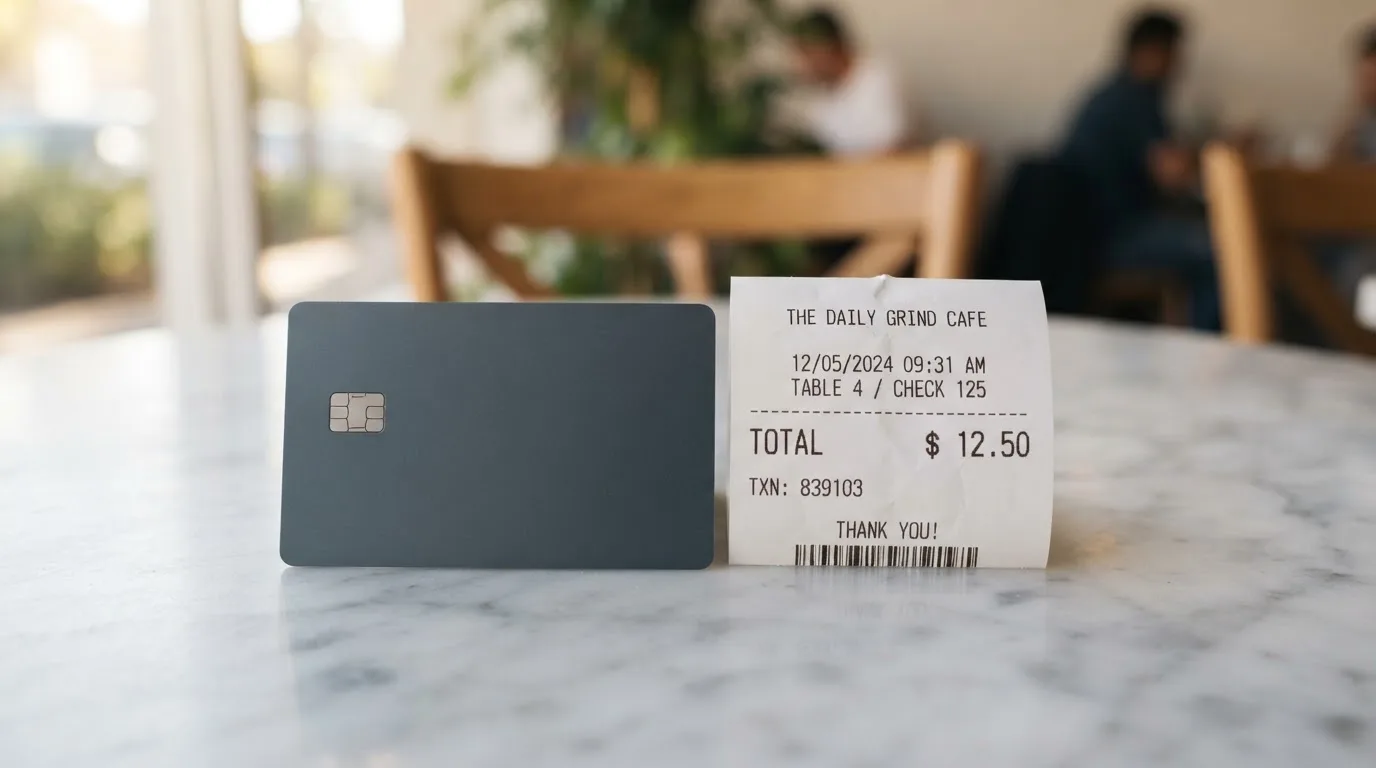
The table gives the published figures. Where something is not listed, I say so rather than guessing, because a missing fee is not a zero fee.
| fee or limit | value |
|---|---|
| issuance (virtual main, virtual additional, physical) | 20 EUR |
| monthly maintenance | 1 EUR per card |
| top-up fee (including P2P) | 1% |
| auto conversion (deposit, exchange, payment) | 1% |
| FX fee | not listed separately |
| ATM cash | 1.5% plus 1.5 EUR |
| PIN change | 0.5 EUR |
| balance inquiry | 0.5 EUR |
| monthly transaction limit | 3 BTC |
| chargeback fee | 30 EUR |
Now let me walk three everyday payments through those numbers, because a percentage on its own tells you nothing.
A coffee at a local café, paid from a crypto balance. If you have already converted and hold euros on the card, this is the cheapest version of spending: your crypto was converted earlier, and the card spends the euro balance. The conversion at the top-up cost you 1% then; the 1% auto-conversion fee is charged on deposit, exchange and payment, so if your euros were produced by an exchange inside Kauri, that second 1% applies at that point. A local payment with no currency conversion on top of it is the good case, and it is genuinely cheap by the standards of this category.
A subscription in dollars. This is where the gaps bite. The card is in EUR. Paying a US merchant means a currency conversion, and the FX fee is not listed separately on the Kauri card page, so I cannot tell you what it is — only that it exists as an unlisted component. Add to that the 1% auto-conversion fee if the conversion happens inside Kauri rather than in the network. If you are going to live mostly in euros and treat anything foreign as occasional, this is tolerable. If you intend to live mostly in dollars, you are buying a euro card to spend dollars, and I would think hard before doing that on published information alone.
Withdrawing cash from an ATM. 1.5% plus 1.5 EUR. The fixed 1.5 EUR part is the sting on small amounts: on a 40 EUR withdrawal that fixed component alone is close to 4% on top of the percentage, which puts the real cost of a small ATM cash withdrawal well above the headline. Cash is also where the country question resurfaces — you can hold a euro card and still find yourself somewhere your own rules do not permit using it.
One more number that is easy to misread: the monthly transaction limit is expressed as 3 BTC, not as euros or dollars. It is a ceiling on volume, not a promise of what your balance will be worth, and per-level limits are not stated.
Top up: how money gets onto the card
You top up with crypto, into a custodial wallet, and the euro balance arrives through automatic conversion when you pay.
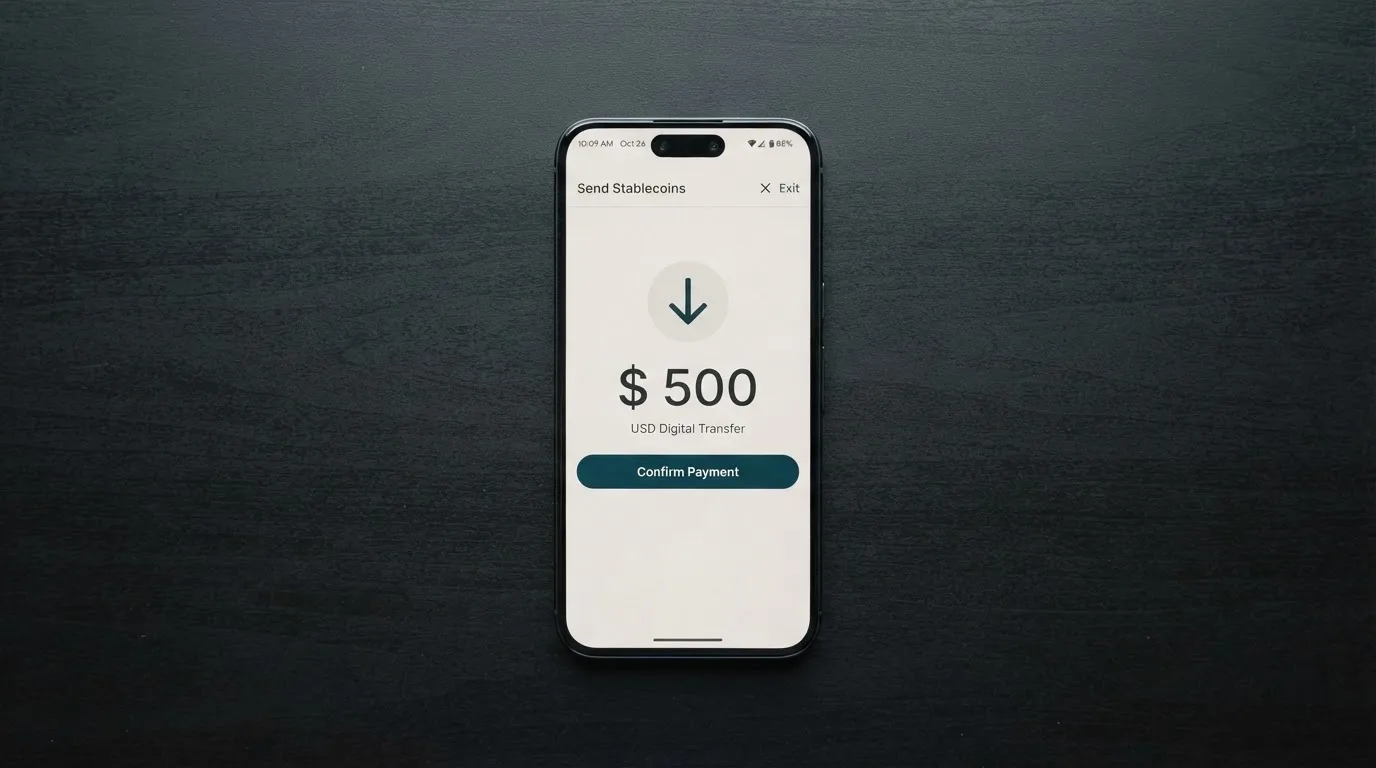
That is the whole mechanism, and the important word in it is custodial. Your crypto goes to a wallet Kauri holds credentials for. Kauri states that user funds are held in a segregated safeguarding account, which is the correct arrangement for an EU-regulated provider and is much better than an unaccounted-for pool. But “Kauri holds the keys” is still the plain description, and it is the same arrangement that has failed at Mt. Gox, Coincheck and Ronin Network, for reported losses of roughly US$350 million, US$400 million and US$625 million respectively. I am not saying Kauri is that kind of company; I am saying that the structure carries counterparty risk by definition.
The top-up fee is 1%. There is a minimum, and the card page does not state what it is. Coins and networks are not listed. That last point is not a technicality — sending crypto on a network the provider does not support, or to an address belonging to a different network, can simply be lost, because blockchain transfers cannot be reversed and there is no customer service guarantee attached to a mistake. This is the single question I would put to support before sending anything: which coins, which networks, and what is the minimum.
There is one free path worth knowing: sending crypto to another Kauri member’s card costs 0 fee. If you are sending to your own Kauri account, that is the cheapest way in.
Two things about money coming back out, both from the User Agreement rather than the marketing page. If the closure is AML-related, funds are sent to an EU/EEA-licensed credit institution. Otherwise they are returned in fiat or crypto at the company’s discretion — “the company’s discretion” is doing real work in that sentence, and you do not get to pick the currency you are given back. Dormant accounts are charged a fee after six months.
A short guide to stablecoins, since you will need it
You will be sending a stablecoin, and the word is misleading. A stablecoin aims to hold a stable value against a fiat currency, but stablecoins are not necessarily stable: TerraUSD collapsed in May 2022, and USDC temporarily lost its peg in March 2023 during the US banking crisis. The BIS put roughly 90% of stablecoin market capitalisation in two tokens in July 2025 — Tether’s USDT and Circle’s USDC.
Two practical consequences. First, if you send on Ethereum you need ETH in the wallet to pay gas; a wallet holding USDT and nothing else cannot send. Second, USDT exists on Ethereum, Tron, Solana, Polygon, Avalanche and others, while USDC is natively supported on 38 networks as of 16 September 2026, including Ethereum, Solana, Base, Polygon PoS, Avalanche, Arbitrum and Stellar — but Circle stopped supporting USDC on Tron in February 2024, so “USDC over TRC20” is not a native option. Tether also says it disables tokens in wallets on the OFAC sanctions list. None of this is a reason not to use these tokens; it is a reason to check the network field twice.
Paying with it every day
This is where the card does its best work, and where the review’s highest mark comes from.
You get a virtual card for online use and a physical card for everything else, both in EUR. Apple Pay is supported — and the mechanism is worth one sentence of explanation, because it answers a question people ask: Apple Pay replaces your card number with a device-specific Device Account Number stored in the Secure Element on your phone, never on Apple’s servers, and each payment uses a one-time dynamic security code. The Google Wallet design is mentioned on the card page; the app itself is on the Apple App Store. Ratings for the app were not retrieved, so I cannot tell you how people rate it.
Cash is available at ATMs, at the cost set out above.
The card blocks after three wrong PIN entries. That is a sensible default and it is also a small operational risk: three fat-fingered taps and you need support to unfreeze it.
What is not stated, and what you should therefore not assume: blocked merchant categories. In this category that generally means gambling — merchant category 7995 covers casinos, betting and lotteries, and many issuers block it by policy rather than by law, with the list differing by issuer. Kauri does not publish a blocked list, so I cannot tell you whether travel, adult content, fuel or online betting will decline. That is a question for support, and for a person who spends in those categories it may be the deciding question.
Two more payment realities that apply here as much as to any card. A declined authorisation can leave a hold on your funds that stays for several days, typically up to seven — so a failed hotel booking can tie up money that a prepaid-balance card would otherwise treat as simply gone. And address verification is mainly offered in the US, Canada and the UK, and is generally unavailable for foreign-issued cards, which causes declines: some shops compare the numeric parts of the billing address you typed against the issuer’s records, and a euro card with an address from elsewhere in the world simply fails that check. This is why a card issued in one country can look “foreign” to a shop in another, and why a declined payment does not always mean your balance is wrong.
On rewards: cashback is not mentioned. What exists is a referral — if someone signs up through you, you are paid 15% of commissions.
If you have a dispute with a merchant, a chargeback costs 30 EUR. The chargeback policy is published as a PDF at the site’s docs section; I have not read it, and the agreement that governs disputes is Estonian law with the Estonian County Court. Read the 30 EUR against what a dispute is worth to you before you decide it is worth filing.
What can go wrong
Most of what follows is user report, and I will mark it as such. The official incident record is empty, which is worth knowing and worth not over-reading.
Official incidents: none found.
User reports (Trustpilot, December 2024 to July 2026, platform rating 2.8 from 16 reviews, six in the last 12 months, read 2026-10-21): accounts frozen or locked after deposits; funds not returned; unresponsive support; identity documents rejected; slow verification; accusations of scam; a closure notice in July 2026. High IBAN fees appear in a July 2026 review. Every one of these is a user account, not an established fact, and the sample is sixteen reviews — a small sample, and a self-selected one that over-represents the unhappy.
That said, the themes are consistent with what happens in this category generally, so they are not merely noise. Programme closures typically run in a known order: a notice period, then loading and spending stop, then users are asked to withdraw their balances. In this category, a 2026 closure reported by a secondary source ended new loads on 8 July 2026 and stopped spending on 8 August 2026 — I have only one source for that and it is unconfirmed, so treat it as a shape rather than a fact.
The general risk pattern is worth understanding because it applies to the design, not to this company in particular. Visa and Mastercard do not issue crypto cards to consumers; they license issuers, and they can suspend a programme. Visa said in November 2022 that it had “terminated our global agreements with FTX”, and the FTX US debit card was wound down by its issuer. WaveCrest, a Visa card issuer that supplied crypto card brands, was suspended by Visa in Europe in 2018, closing every WaveCrest-issued Visa programme. A crypto card typically depends on two licences — one for the crypto side under MiCA, one for the payment side under e-money and payment-services law — which means two separate regulators can end your card without either of them having done anything wrong by their own rules.
Under MiCA, the EU’s markets-in-crypto-assets regulation, the rules on stablecoins and asset-referenced tokens applied from 30 June 2024 and the remaining provisions, including crypto-asset service provider rules, from 30 December 2024. The transitional period lets providers already operating under national law continue only until 1 July 2026 or until they receive or are refused a MiCA authorisation, whichever comes first — and the User Agreement for Kauri is dated 30 December 2025, which puts the company’s licence position in that transitional window. That is the kind of thing to re-check rather than assume. ESMA keeps an interim register of authorised providers that you can search.
On KYC itself, and why accounts freeze. In the EU, customer due diligence covers name, address, date of birth, nationality and identity documentation, a sanctions check, the purpose of the relationship, and whether you are a politically exposed person. If due diligence cannot be completed, the rules require the institution to refrain from the transaction or relationship and, where necessary, to end the existing relationship — which is exactly why accounts are closed or frozen pending documents. Nationality is screened separately from residence, because sanctions screening is often applied to citizenship and country of birth as well as to your address. If your nationality or country of birth is on a sanctions list, no amount of correct documentation will fix it, and I am not going to describe a way around that.
On money you send and cannot get back. Blockchain transfers are irreversible. A deposit on an unsupported network can be lost outright. When an account is closed for non-AML reasons, the funds come back in fiat or crypto at the company’s discretion. When the closure is AML-related, funds go to a licensed credit institution in the EU/EEA — which is a regulated destination, but it is not your pocket, and getting them from there is a process rather than a payment.
On money held for you. Kauri states user funds are held in a segregated safeguarding account and the provider is PCI DSS certified. That is the right language for an EU-regulated firm. It is also not the same as a bank deposit: safeguarded e-money funds may not be covered by a deposit guarantee scheme. So the honest version is that your euro balance is safeguarded rather than insured, and your crypto balance sits with a custodian.
Support. [email protected] and a help centre at help.kauri.finance. Unresponsive support is one of the complaint themes, and in practice the thing to take from that is: do not rely on support to recover a bad network transfer. Check first.
What to take instead
None of these is a like-for-like substitute for Kauri’s EU IBAN — that is still unusual in this category. They are the cards I would look at if Kauri fails on a specific point, and each fails on a different one.
| alternative | score | what it does that Kauri does not | what it leaves you wanting |
|---|---|---|---|
| Stella | 6.5 / 10 | Virtual and physical VISA, said to work at “over 40 million VISA merchants globally”; crypto deposit auto-tops the card from an in-app custodial wallet | Countries not stated on the site; terms bar users under economic sanctions programmes and route US and European users through affiliates; fees only “described under this User Agreement and/or on the App” |
| Whop Cards | 5.2 / 10 | Visa, “no extra fees” stated; 5% cashback at select merchants, currently Uber; a named US state coverage list | Balances not euros — you spend from a Whop balance; no issuance or monthly amounts published; consumers covered in 31 US states, businesses in 41 |
| UniFi Card | 4.7 / 10 | Prepaid Debit Visa from Lead Bank, USD; send-money routes to the Philippines, Mexico, the eurozone, and release notes mention Colombia, Brazil and the UK; Apple Pay | Not confirmed from official pages; fees “may apply”; no IBAN in the euro sense; a US dollar card |
Three things to weigh. Stella scores higher and is the nearest neighbour in spirit, but it will not tell you the fee table up front, which is the very thing Kauri does well. Whop is a US-shaped product with a rewards angle and no euro. UniFi is a dollar card with a remittance feature. If your blocker was “no euro IBAN”, only Kauri in this list solves it, and only inside the EU.
If the blocker is reliability, none of these has a clean record either, and I would be misleading you if I suggested otherwise.
Who I would recommend it to
I would recommend Kauri to a person who lives in the EU, already holds euros or a euro-denominated stablecoin, has a bank card that has been declined, refused or closed, and wants an IBAN in their own name that behaves like anyone else’s. For that person, this is a genuinely useful card, and the parts of it that are published — the fees, the licensing, the safeguarding statement — are published clearly enough to decide on.
I would not recommend it to a person who needs to know before they sign up which countries are supported, which coins and networks are accepted, what the FX fee is, how long delivery takes, or how they close their account without a fee. Too many of those are not stated. I would not recommend it to someone whose plan depends on holding crypto long-term, because the conversion is automatic at payment and the whole model is built around converting. And I would be careful with it as a sole means of access to money, because a custodial wallet plus a card means your access to your funds depends on one company’s systems, its licence status and its support desk, all at once.
The KYC is not a barrier I would try to route around and neither should you — the rules require the checks, the checks are why your IBAN works, and a provider offering to skip them is a provider you should be more worried about, not less. Before you send the first deposit, ask support three questions in writing: which coins and networks, what the minimum top-up is, and what the FX fee is. Keep the answers. That is the whole due diligence, and it takes an afternoon.
Frequently asked questions
What is the Kauri card?
It is a EUR payment card funded from a crypto balance, issued by an Estonian virtual asset service provider. You deposit crypto into a custodial wallet, it converts to euros, and you spend that euro balance like a prepaid card. Inside the EEA/EU you can also get an IBAN, which is the part most crypto cards do not offer. It is not a bank account and Kauri’s funds are safeguarded rather than bank-deposit insured.
Is Kauri a bank?
No. Kauri is KAURIFINANCE OÜ of Tallinn, Estonia, registration 14559136, holding a virtual asset service provider licence FVT000328 issued 17.11.2020. The card itself comes from Quicko sp. z o.o. in Poland, a national payment institution, and the IBAN from Breinrock LTD in Canada. So your money sits with a licensed crypto firm and a licensed payment institution, not with a bank.
Does the Kauri card require KYC?
Yes. The User Agreement rules out anyone below the legal age of majority in their country and commits Kauri to identification under its AML policy, which in the EU covers identity documents, address, date of birth, nationality, sanctions screening and politically-exposed-person status. The card page does not list which documents it accepts, and [email protected] is the stated contact for identity questions.
How much does the Kauri card cost?
Issuance is 20 EUR for any of the three card types, maintenance 1 EUR a month per card, top-up 1% and auto conversion 1%. Physical delivery is a further 30 EUR. ATM withdrawals cost 1.5% plus 1.5 EUR, a PIN change 0.5 EUR, a balance inquiry 0.5 EUR and a chargeback 30 EUR. The FX fee is not listed separately, so a foreign-currency purchase cannot be costed from published numbers.
How do I top up the Kauri card?
You send crypto to Kauri’s custodial wallet and the balance converts to euros when you pay. The top-up fee is 1% and no minimum is stated. Coins and networks are not listed on the card page, which matters more than it sounds — a transfer on the wrong network can be lost, because blockchain transfers cannot be reversed. Sending crypto to another Kauri member’s card costs 0 fee.
Is the Kauri card available in my country?
Possibly for the virtual card, which Kauri says is available “in many countries”, but the page publishes no country list, so you cannot answer that from the official material. The physical card and the IBAN are limited to the EEA/EU. The User Agreement also says it does not supersede your country’s law, so your local rules on crypto and cards apply independently.
Is the Kauri card safe?
Safety splits in two. Kauri states user funds are held in a segregated safeguarding account and the provider is PCI DSS certified, and it holds a real Estonian licence — that is the reassuring half. The other half is that the wallet is custodial, the conversion is automatic, and accounts have been reported frozen after deposits with support slow to respond, on Trustpilot at 2.8 from 16 reviews. Safeguarded funds are also not deposit-guarantee insured.
Can I add the Kauri card to Apple Wallet?
Apple Pay is supported, and a Google Wallet design is mentioned on the card page. The Kauri app is on the Apple App Store, though I did not retrieve its ratings. Apple Pay never sends your card number to Apple — it uses a device-specific number in the phone’s Secure Element with a one-time code per payment — so adding it is not the weak link in the setup.
Is the Kauri card worth it?
For an EU resident whose problem is that ordinary cards have been refused, and who holds crypto they are happy to convert, I think yes — the fees are published, the licences check out, and the IBAN is rare in this category. For anyone who needs a published country list, a named coin and network list, a stated FX fee or a self-custody option, no: those gaps are the whole argument against it.
What happens if I close my Kauri account?
If the closure is AML-related, funds are sent to an EU/EEA-licensed credit institution. Otherwise they are returned in fiat or crypto at the company’s discretion, which means you do not choose the currency you get back. Dormant accounts are charged a fee after six months. The KYC email address is the right place to ask what applies to you before you close anything.
App and neobank card options – cryptocardoptions.com
Content created by the «cryptocardoptions.com» team