
A cheap stablecoin-funded Visa for people who cannot get an ordinary bank card
 Available in US
KOSH Global is a crypto card that turns stablecoin balances into an ordinary Visa you can spend in shops, online and at a bank ATM. The virtual card costs $8 a year, there is no monthly fee, USD spending is charged at 0%, and USDC or USDT tops it up for free. On paper that is one of the cheapest ways to hold and spend crypto through a normal card number. I gave it 6.5 out of 10, and the gap between that and a higher score is not about the fees — it is about the missing list of countries, the unnamed issuer, and the fact that the product only launched in June 2026.
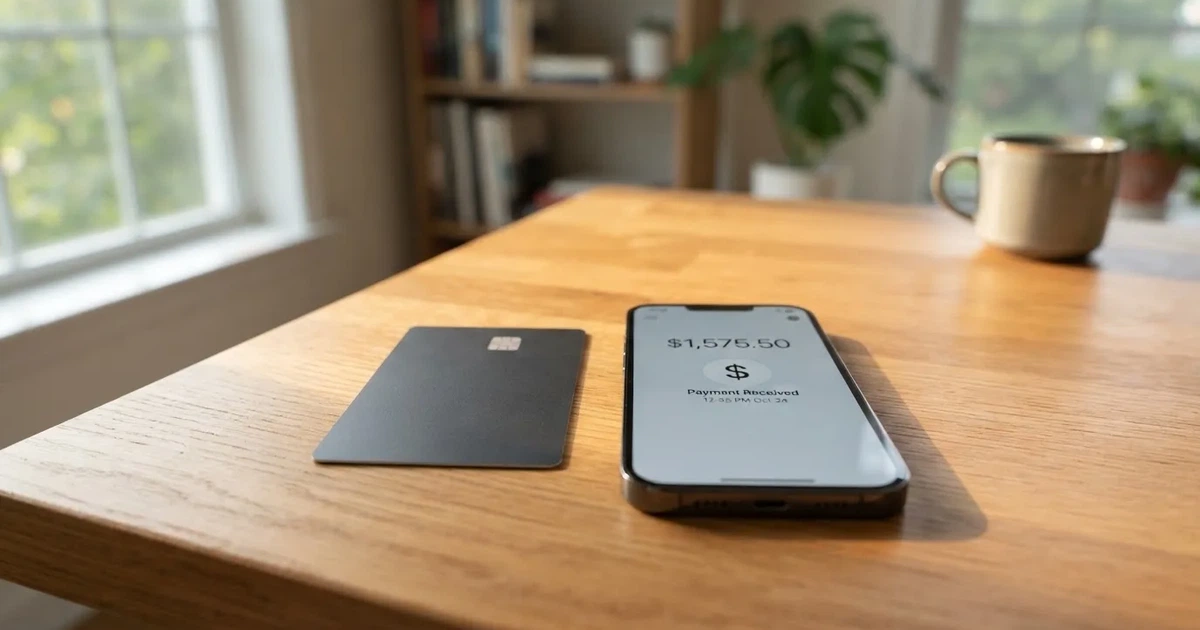
Conditions are current as of October 28, 2026.
This review is for you if you are somewhere that makes a normal bank card hard to get, or if you simply prefer to spend stablecoins rather than move them to a bank first. It is written for readers in many countries, so where the card’s own rules depend on where you live, I say so rather than guessing.
Our verdict: 6.5 / 10
| Criterion | Mark | Why |
|---|---|---|
| Who can get it | 5 / 10 | Depends on country of residence; no list published; the card is “available in select jurisdictions”; countries under comprehensive sanctions are barred |
| Cost | 7 / 10 | Virtual $8 a year, physical $80 a year, no monthly fee, USD payments 0%, FX shown as 0.5% in the fee article (the marketing page says 1.5%), ATM $1 + 1% |
| Top-up options | 6 / 10 | USDT and USDC to the KOSH wallet, top-up free, no minimum or maximum; networks not named |
| Reliability and complaints | 6 / 10 | Piers Technology Inc; issuer not named; licences not named; no complaints or reviews found; launched June 2026 |
| Everyday use | 9 / 10 | Virtual and physical Visa, Apple Pay and Google Pay, ATM $250 per transaction with the physical card |
| Total | 6.5 / 10 |
The one number that stands out is 9 out of 10 for everyday use. Once you have the card, using it is unremarkable in the best way: a Visa number, Apple Pay, a bank ATM. The friction is all in the getting-in, not the spending. And the two lowest marks — who can get it, and reliability — are the same problem seen from two sides: a young product with a short public paper trail.
Here is who I would point it at. Users who want a cheap virtual Visa funded with stablecoins are the obvious fit, especially people who spend mostly in USD or who live somewhere an ordinary card is not offered. Who I would not point it at: anyone whose country is not on the (unpublished) supported list and who cannot use the early-access waitlist; anyone who needs a card this month rather than in a few weeks; anyone for whom the unnamed issuer and unnamed licences are a dealbreaker; and anyone who needs multi-currency balances, which the card does not describe.
Will they give you the card?
Yes — but only if your country of residence is on a list that KOSH does not publish. That single sentence is the biggest practical obstacle, and it deserves to be said plainly before anything else. KOSH Global is not a bank; it is a financial technology company delivering services via licensed partners.
Availability depends on your country of residence. The card option appears in the app’s Cards section only if “the card is available in your region”, and no country list has been published. The marketing page says the card is “available in select jurisdictions” and that Visa merchants in 180+ countries will accept it. Those are two different things and it is easy to confuse them: the 180+ countries are where the card can be *used*, which is not the same as where you can *obtain* it. If your region is not supported, the option simply is not there, and the card’s help material says you can join an early-access list through the in-app chat. Whether the waitlist is honoured, and how fast, is not stated.
There is one partial workaround the card itself offers, and it is genuinely interesting: a physical card “can be shipped to some regions where the card isn’t supported”, with India given as an example. So the virtual card may be region-locked while the plastic one is not. Do not read that as an invitation to work around anything — it is simply that the physical card is issued and shipped through a partner whose reach differs from the app’s own regional logic.
The terms bar users located in or transacting with jurisdictions under “comprehensive sanctions or embargoes”. No specific country is named there. That phrasing is deliberately broad, and if your country or the country you are transacting with falls under such measures, the answer is no regardless of what the app shows you.
If the region question worries you and you cannot resolve it from the app, ask support before you send any money. That is a normal question to ask and it is easier to ask in the in-app chat than to find out afterwards.
How to get it
The path is short on paper: create a KOSH account, pass identity verification, order the virtual card in the Cards section, and optionally order a physical one. That is genuinely it.
Verification needs a government-issued ID plus a selfie with a liveness check, done through the verification partner Sumsub. The marketing page also mentions a recent bank statement. The help article does not mention proof of address, so do not assume you need to dig out utility bills — but do not assume you will not be asked either, because the marketing page mentioning a bank statement signals that they may look for something. The terms set the minimum age at 18.
There is a single personal-card level of verification — ID plus selfie — and approval usually takes 5 to 10 minutes. If you verified in 2025 or earlier, that verification must be resubmitted; the product is recent enough that an old approval from a previous version may not carry over. If you are refused, the card’s own help material points to a separate article on rejection reasons, so the specific reason exists but is not in front of me. Businesses go through a different process, a business verification (KYB) route, which is not what this review covers.
The card itself is a Visa, available as a virtual or a physical card; the marketing page says the metal physical card is “shipped worldwide”. The card currency is USD, which matters more than it sounds and comes back in the costs section below.
Physical delivery is express, up to 10 business days with tracking, costing $80. Which countries, it does not say. A replacement card’s cost is not stated either. You activate the card in the Cards section once it arrives.
So the practical answer to “how long until I can pay with something”: minutes for the virtual card if your region is supported and verification passes; up to 10 business days and $80 for the plastic one. Plan around the virtual card for anything urgent.
Fees: what it really costs
The headline fees here are among the lowest in this category, and the total cost of a year of USD spending can be $8. But two things sit underneath: a foreign-exchange fee whose official number contradicts itself, and a bank ATM charge that adds up faster than most people expect.
| Fee or limit | Value |
|---|---|
| Virtual card | $8 per year |
| Physical card | $80 per year |
| Monthly fee | None |
| Express shipping (physical) | $80 |
| Card authorization | Free |
| USD transactions | 0% |
| FX fee | 0.5% “added FX” in the help-centre fee article; the marketing page says 1.5% per foreign-currency transaction |
| USDC/USDT deposit or settlement | Free |
| ATM withdrawal | $1 + 1%, plus applicable FX |
| ATM balance inquiry | $1 |
| Declined ATM transaction | $1 |
| ATM per-transaction limit | $250 |
| ATM transactions per day | 3, no weekly or monthly limit |
| Spending limit | Set by you in the app; no fixed caps published |
| Top-up | No strict minimum or maximum |
Note that the ATM charge has three parts you can be billed for: KOSH’s $1, KOSH’s 1%, and whatever the ATM operator adds on top — the card’s own material says the operator may charge its own fee, and it does not say no free allowance exists. There is no free withdrawal allowance mentioned anywhere.
Two everyday payments, to make this concrete.
Buying coffee in a US city for $5, on a USD card, costs 0% — you pay $5 and nothing else, because the card currency and the transaction currency match.
Buying a €20 dinner in Europe on the same card costs 0.5% or 1.5% depending on which official page you believe, plus whatever spread the conversion itself carries, plus — and this is the part people forget — the chance the merchant’s terminal offers you a local-currency price in euros instead of converting it back to dollars. A help article titled “Should I pay in USD or the local currency?” exists on KOSH’s help centre; I have not read it, so I cannot tell you which way it advises. Given that article exists, it is worth opening before your first foreign purchase.
Two further limits deserve a line each. The card has no multi-currency balances — the card is USD and non-USD purchases simply incur the FX fee. And there is only one tier, the KOSH Everyday Card in virtual or physical form: no Visa Concierge, no lounge access, no premium tier to upgrade into.
How to top it up
You top the card by loading its underlying wallet with USDC or USDT. The deposit itself is free, with no minimum and no maximum, and the balance appears 5 to 10 minutes after the on-chain confirmation.
That is the short version and it hides the one thing worth thinking hard about: the network is not specified. The card’s article names USDT and USDC but does not say which chains it accepts. This matters more than it sounds. On Ethereum, a transfer costs gas paid in ETH, so a wallet holding USDT but no ETH cannot send at all. Tether has issued USDT on Ethereum, Tron, Solana, Polygon, Avalanche and others; Circle lists USDC as natively supported on 38 networks. And in one direction it is simply unavailable: Circle stopped supporting USDC on Tron in February 2024, so “USDC over TRC20” is not a native option. Transfers are also irreversible — a deposit on a network KOSH does not support, or sent to an address belonging to a different network, can be lost or need manual support recovery with no guarantee of success. On the fee side, one thing is clear and general rather than card-specific: on-chain network fees for your deposit are charged by the blockchain, not by the card provider. Who pays them out of your KOSH balance is not stated.
So the rule that follows from all this is simple: confirm the supported network in the app before you send, and send a small test amount first. Not because the card is dangerous, but because the wrong network is the single most common irreversible mistake in this whole category.
There is a second route in, for people who want to use fiat. KOSH offers a virtual USD account — you can send ACH or wire to a KOSH USD account and it settles as stablecoin. That is genuinely useful for someone with a US bank account who does not want to buy crypto on an exchange first. What it costs in fees is not stated, so treat it as unknown rather than free.
You can also move money back out: the card balance can be withdrawn to the KOSH wallet in the same stablecoin you used to top up, and only on funds you added yourself — welcome bonuses, referral rewards and cashback are excluded. The withdrawal fee is not stated. What happens to any leftover balance if you close the account is not stated either; the account can be closed from the dashboard or via support, but you should move your money out and confirm you have done so before you close anything.
Paying with it every day
This is where the card is at its best, and where it scores 9 out of 10. You get a Visa number, you can add it to Apple Pay wherever Apple Pay works in your country, and Google Pay is supported according to the marketing page (“in two taps”), though the help-centre fee article does not cover it. Mobile wallet use is the practical way to pay — tokenised, with a device-specific number in the Secure Element rather than your actual card number floating around.
Rewards are advertised on the marketing page: 10% reward points on eligible purchases, 5% cashback on hotel bookings, and $5 per referral, all “subject to program terms” and possibly variable. But the help-centre fee article lists the 10% reward points as “coming soon”. That gap is worth naming rather than glossing: the reward headline on the marketing page is ahead of what the help centre describes. I would plan on 0% rewards until you see points in your account.
There are apps for both iOS and Android. Store ratings I did not read, so I am not going to pretend to know how users rate them.
One useful safety feature runs the other way: the app lets you lock the card to specific categories or merchants, and lets you freeze and unfreeze it instantly. Blocked merchant categories are not stated — some issuers block gambling-related categories by policy, and that blocked list varies by issuer — so the category lock is the tool you have rather than a stated policy you can rely on.
If something goes wrong with a purchase, the process is: contact the merchant first, then send your evidence to KOSH through in-app chat or email. KOSH then files through its card partner via the Visa network. There is a $30 fee per dispute request, and investigations typically run 30 to 90 days. That fee is the thing to know before you file anything — it is charged per dispute request regardless of outcome as far as the material states.
What can go wrong
The honest summary of the risk section: there is no history to read, because the product launched on June 12, 2026, and I found no complaints at all. No official incidents, no user reports, no news coverage of problems. Searches for reviews returned no Trustpilot page and no Reddit threads for KOSH — only an unrelated company, koshigroup.com — and comparison sites show no reviews either. Whether that means a clean record or simply a product too young to have one is the fair reading.
That absence pushes the weight onto the structure, so here is the structure. The company is Piers Technology Inc, which describes itself as “a financial technology company, not a bank or a money services business”. Services are delivered “via licensed partners”. The issuer is “the regulated financial institution selected for the Card Program” — and it is not named. No licences are named. The terms are governed by Delaware law with arbitration in New York. A third-party listing says the company was formerly called CopperX, and another profile suggests signups currently route through a partner platform ahead of a planned relaunch under the KOSH brand. Those last two are unofficial, from third-party listings, and are not confirmed by the card.
What that means in plain terms: you are not being told who stands behind the card. In this category that is normal but not nothing. Visa and Mastercard do not issue crypto cards themselves — they license issuers, and Visa can suspend a programme. It has done exactly that: in November 2022 Visa said it had “terminated our global agreements with FTX” and the FTX US debit card was wound down. WaveCrest, a Visa issuer that supplied crypto card brands, was suspended by Visa in Europe in 2018, closing all WaveCrest-issued Visa programmes. Programme closures typically mean a notice period, then spending and loading stop, then you are asked to withdraw your remaining balance. That is the shape of the failure mode, and it is why moving funds off a card balance promptly matters.
On your side of the ledger, the money is custodial: the card is collateralised by the KOSH USD balance, so the provider holds the credentials and you must trust them completely. Transfers are irreversible and a stolen key has no built-in recovery — the network cannot freeze or return funds. Custodial platforms have a real record of failures: Mt. Gox (about US$350 million reported stolen, 2011–2014), Coincheck (about US$400 million, 2018), Ronin Network (US$625 million, 2022). Stablecoins themselves can depeg — TerraUSD collapsed in May 2022, and USDC temporarily lost its peg in March 2023 during the US banking crisis — and while Circle says USDC is redeemable 1:1 for USD and fully backed by cash and cash equivalents with monthly reserve attestations, “stable” is a description of intent, not a guarantee.
Two things about the card’s own security that I can confirm and one I cannot: you can freeze and unfreeze the card in the app, set spending limits, and lock categories and merchants, and there are help articles on lost or stolen cards and on suspicious activity. Whether two-factor authentication is offered is not stated. Whether customer funds are safeguarded in any way — segregated accounts or insurance — is also not stated, and in this category that distinction matters: safeguarded e-money funds are not the same as bank deposits and may not sit under a deposit guarantee scheme.
Support is a help centre at support.koshmoney.com, in-app chat, and a support email. Languages and hours are not stated; the help centre I saw is in English.
Three smaller things that can break a payment, in case you hit them. Merchants can look up the card’s issuing country and apply extra scrutiny when it differs from your billing address, and some simply decline prepaid or foreign card numbers as a matter of policy — which is why a card issued in one country can look “foreign” to a shop in another. Address verification, which compares the numeric parts of your billing address with issuer records, is mainly offered in the US, Canada and the UK and is generally unavailable for foreign-issued cards, which can cause declines. And a declined authorisation can leave a hold on your funds for several days, typically up to 7.
Alternatives worth comparing
If the unnamed issuer or the unpublished country list is what stops you, these are the other ways to spend from a crypto balance. I include their own gaps, because they have them.
| Card | Score | Where it works | Card type | Fees stated | Funding | Rewards |
|---|---|---|---|---|---|---|
| KOSH Global | 6.5 / 10 | Depends on residence; country list not published; barred under comprehensive sanctions | Visa, virtual or physical, USD | Virtual $8/yr, physical $80/yr, no monthly fee, USD 0%, FX 0.5% (marketing says 1.5%), ATM $1 + 1% | USDT and USDC to the KOSH wallet, free, no minimum or maximum | 10% points and 5% hotel cashback per marketing page; 10% listed as coming soon in the help centre |
| Whop Cards | 5.2 / 10 | 31 US states for consumers, 41 for businesses; consumer use unsupported in Belarus, China (Mainland), Cuba, Hong Kong, India, Iran, Iraq, Israel, Myanmar, Nepal, Nicaragua, North Korea, Russia, Syria, Turkey, Ukraine, Venezuela, Vietnam | Visa; virtual/physical type and card currency not stated | Page says “No extra fees”; no amounts listed | Spends from a Whop balance, backed by stablecoin collateral from a linked wallet; coins and networks not stated | 5% cashback at select merchants, currently Uber |
| Stella | 6.5 / 10 | Countries not stated; terms bar users under economic sanctions programmes and route US and European users through affiliates | Virtual and physical VISA | Not stated | Deposit crypto into the account, which automatically tops up the card; custodial in-app wallet | No cashback stated on the card page |
| UniFi Card | 4.7 / 10 | Not confirmed from official pages; app routes to Philippines, Mexico, eurozone, and release notes mention Colombia, Brazil and UK | Prepaid Debit Visa Card, issued by Lead Bank, USD | “Fees may apply” — no amounts | ACH, wire, SEPA, SPEI; or get paid to a USDC wallet | Listing claims 3% rewards on balances; card cashback not stated |
Read that table with the caveats attached, because the alternatives are not more transparent. Whop’s state list is the most specific availability information in the whole group — 31 consumer states, and a named list of countries where consumer use is unsupported — but its fees are not stated at all, so “No extra fees” is a slogan rather than a schedule, and on my scoring it still comes out below KOSH. Stella ties KOSH at 6.5 but states no fees and no country list either; its routing of US and European users through affiliates is a structural difference you should notice rather than skip past. UniFi is the furthest from what this review is about: a prepaid Visa spending a USD balance funded by bank rails, not a stablecoin card, and its own availability and fees are not confirmed from official pages. If your problem is “I cannot get a normal card”, UniFi’s bank-rail funding is actually the point in its favour; if your problem is “I want to spend crypto”, it is the wrong shape.
One general note that applies to all four: Visa and Mastercard do not issue these to consumers. The card network routes messages and sets the rules, an issuer holds the programme, and the crypto brand is often only a programme manager or front end. Whop’s page, for example, is a front end.
Who I would recommend it to
I would recommend KOSH Global to you if all three of these are true. You want a cheap virtual Visa rather than a fancy metal one — $8 a year with no monthly fee is hard to argue with. You are comfortable funding it with USDC or USDT and you have checked, in the app, which network those funds should travel on. And you can tolerate the product’s youth: an unnamed issuer, unnamed licences, no reviews anywhere, and a launch date of June 2026.
I would not recommend it to you if any of these apply. You need to be spending this week and cannot wait up to 10 business days and $80 for the physical card. You are in a region where the Cards section does not show you the card and you need certainty rather than an early-access list. You need multi-currency balances, lounge access, or a concierge tier — there is one tier and it is USD. Or you need a provider whose issuer and licences are named in public before you hand over money.
Before you send your first stablecoin, three checks, in this order: confirm your region is supported by seeing the card in the app; confirm the network for your deposit and send a small test amount; and ask support what happens to a remaining balance if you close the account, because that is not stated anywhere public. After that, the card does its job quietly, which is the highest compliment a payment card can earn.
I should add the obvious caution about taxes, without advising you on any of it: digital assets are treated as property for tax purposes, and exchanging them for goods, services or dollars generally produces a taxable gain or loss measured in local currency at the value on the transaction date. Each card payment funded from crypto may count as a separate disposal. How that applies to you is a question for a qualified professional in your country, not for me.
FAQ
What is the KOSH Global card?
KOSH Global is a crypto card that converts and loads a stablecoin balance as spending money on a Visa. You hold USDC or USDT in the KOSH wallet, and the card draws on that balance like a prepaid card. There is a virtual version and a physical one, both Visa, and the card currency is USD. It is aimed at people who want to spend crypto directly, or who cannot easily get an ordinary bank card.
How does the KOSH Global card work?
The card spends a balance, not a bank account. You send USDC or USDT to the KOSH wallet, the balance updates 5 to 10 minutes after the on-chain confirmation, and the card draws down that balance as you pay. Because it behaves like a prepaid card it cannot overdraw. The company is Piers Technology Inc, which describes itself as a financial technology company rather than a bank, with services delivered through licensed partners.
Is KOSH Global a bank?
No. KOSH describes itself as “a financial technology company, not a bank or a money services business”, and it delivers its services “via licensed partners”. The card issuer is described as “the regulated financial institution selected for the Card Program”, and that institution is not named. No licences are named either. So the money sits with a fintech working through partners, not with a bank in your country.
Who owns KOSH Global?
KOSH Global is operated by Piers Technology Inc. A third-party listing says the company was formerly called CopperX, and another profile says signups currently route through a partner platform ahead of a planned relaunch under the KOSH brand. Those two details come from third-party listings rather than KOSH itself, so treat them as unofficial. The terms are governed by Delaware law, with arbitration in New York.
Does the KOSH Global card require KYC?
Yes. You need a government-issued ID plus a selfie with a liveness check, handled by the verification partner Sumsub, and the marketing page also mentions a recent bank statement. There is a single personal-card verification level and approval usually takes 5 to 10 minutes. If you verified in 2025 or earlier you must resubmit. The minimum age is 18. Businesses go through a separate business verification route.
Is the KOSH Global card free?
Not quite, but it is close. The virtual card is $8 per year and the physical card $80 per year, with no monthly fee, and USD transactions are charged at 0%. Tops-ups in USDC or USDT are free with no minimum or maximum. What is not free: cash withdrawals cost $1 plus 1% plus the FX fee, a balance inquiry costs $1, a declined ATM transaction costs $1, and a dispute request costs $30.
How do I top up the KOSH Global card?
Send USDC or USDT to the KOSH wallet; the deposit is free and there is no minimum or maximum. You can also send ACH or wire to a virtual KOSH USD account, which settles as stablecoin, though those fees are not stated. One important gap: the card’s own material does not name which networks it accepts, so confirm that in the app first and send a small test amount, because transfers on the wrong network are irreversible.
Can I use the KOSH Global card in my country?
That is two questions, and the card answers them differently. Using it is broad — Visa merchants in 180+ countries, per the marketing page. Getting it is narrow: it depends on your country of residence, the card appears in the Cards section only if it is available in your region, no country list is published, and the terms bar jurisdictions under comprehensive sanctions or embargoes. There is a partial exception: a physical card can ship to some regions where the card is not supported.
Is the KOSH Global card safe?
There is no track record to judge, because it launched on June 12, 2026, and no Trustpilot page or Reddit threads for KOSH could be found. The funds are custodial, held by the provider rather than by you, which carries counterparty and hack risk — Mt. Gox, Coincheck and Ronin Network are the standard examples. On your side the card is useful: you can freeze and unfreeze it in the app, set spending limits, and lock categories and merchants. Whether 2FA and fund safeguarding apply is not stated.
How do I withdraw money from KOSH Global?
You move the card balance back to the KOSH wallet in the same stablecoin you used to top up, and only on funds you added yourself — welcome bonuses, referral rewards and cashback cannot be withdrawn. The withdrawal fee is not stated. Separately, bank ATM withdrawals work only with the physical card, at $250 per transaction and three transactions per day, for $1 plus 1% plus the applicable FX fee.
App and neobank card options – cryptocardoptions.com
Content created by the «cryptocardoptions.com» team