
A well-priced crypto card for Argentina, thin on top-up choice and outside coverage
 Available in US
The Lemon card is a prepaid Visa built around a crypto balance, aimed at people who want to spend without an ordinary bank card. On the card’s own numbers it is genuinely cheap to hold — no shipping fee and no maintenance fee — and it pays up to 2% cashback in Bitcoin. But the ground is narrow where it matters most for a non-Argentine reader: the official pages name only Argentina, other coins and networks for topping up are not listed, and the wallet is custodial. My score for it is 4.7 out of 10.

The conditions described here are current as of October 28, 2026.
Verdict: a 4.7 out of 10, and who it suits
Lemon gets the basics right for its home market and thin margins everywhere else. The score out of 10 is 4.7, and here is how it breaks down criterion by criterion.
| Criterion | Mark | Why |
|---|---|---|
| Who can get it | 2 / 10 | Official pages name only Argentina, with QR payments in Argentina and Brazil; unofficial reports mention a waitlist in Colombia |
| Cost | 8 / 10 | No shipping and no maintenance fee; an unofficial 0.5% charge on point-of-sale auto-sale of crypto is not re-verified |
| Top-up options | 3 / 10 | Only Bitcoin is named; cashback is paid in Bitcoin and the credit card is backed by Bitcoin; other coins and networks are not named |
| Reliability and complaints | 5 / 10 | Bay Treasure Caramel S.A., VASP No. 162 in Argentina’s CNV registry, issuing bank not named; Trustpilot 2.5 of 5 on poor support and a birthplace-based refusal |
| Everyday use | 5 / 10 | Virtual and delivered Visa, cash-out at partner merchants, limits and a card pause; Apple Pay and Google Pay not disclosed |
Total: 4.7 / 10.
Who it suits: residents of Argentina who want to earn up to 2% cashback in Bitcoin on everyday spending and are content to hold their balance with a custodial provider rather than in their own wallet. For that person the no-fee structure is a real advantage.
Who it does not suit: anyone outside Argentina looking for a proven, widely available crypto card; anyone who holds a mix of coins and wants flexible top-up networks; and anyone who wants to keep control of their own keys. If you need a card you can trust across many countries and many tokens, Lemon is the wrong fit.
Will they give you the card?
Officially, only if you are in Argentina. The card’s pages mention Argentina only — “Buy and sell cryptocurrencies in Argentina” — and QR payments in Argentina and Brazil. That is the full official picture of where it works.
There is no statement on the card’s own pages about whether eligibility follows citizenship or residence, so if you are an Argentine citizen living abroad, or a resident of another country, the public information does not settle the question for you. Unofficial reports say Lemon opened a waitlist for Colombia (per Noticias RCN, undated in the result), but that is third-party reporting, not something the card confirms.
There is also no stated information about what identity checks are required or how strict they are. What the site does say is that it has “4M validated users”. So the checks clearly exist; the details are simply not public.
My advice: before you commit, confirm in the app or with support whether your residence and your nationality both qualify. That is the question the page leaves open, and it is the one that decides everything else.
How to get it
You order the card through Lemon’s own site or app; there is no bank branch to walk into. The product is a VISA Lemon Card with a virtual option — the site invites you to “create your virtual card to start using it in seconds” — so you can begin spending before any plastic arrives. There is also a separate VISA Lemon Credit Card backed by Bitcoin, and the card is described as an international prepaid Visa.
Cards are shipped with no shipping cost. How long delivery takes, and what a replacement costs if you lose one, are not stated on the public pages.
What is not stated either is the card’s currency, what identity-verification levels exist, or how long approval takes. So treat “free delivery” as the only firm logistics fact you have.
What it really costs: Fees, fees, and what they add up to
The headline is good: no shipping fee and no maintenance fee. That is the reason the cost score is the card’s strongest, at 8 out of 10. But the fees that matter day to day — conversion, foreign exchange, cash-out — are where the real cost hides, and the official pages do not break these down.

| Fee or limit | What the card states |
|---|---|
| Issuance / shipping | “sin costo de envío” — no shipping cost |
| Monthly / maintenance fee | “sin mantenimiento” — none |
| Crypto conversion fee | Not stated on official pages |
| Point-of-sale auto-sale fee | Unofficial: 0.5% commission when the card auto-sells crypto at the point of sale (not re-verified) |
| Foreign exchange fee | Not stated; the card is marketed for paying abroad in foreign currency without the 30% RG5617 tax |
| Cash-out fee | Cash is available at “comercios adheridos” (participating merchants, shown on a map), not described as ATMs; fee not stated |
| Daily purchase limit | You can configure daily purchase limits (“Configurá límites de compras diarias”); amounts not stated |
Let me walk three everyday payments through this, so you can see where the fee question bites.
Buying coffee in Buenos Aires. If the card simply draws down a balance you already loaded, the only cost is whatever the shop applies, and Lemon keeps none of it on the page. If instead the purchase triggers an automatic sale of crypto at the till, the unofficial 0.5% point-of-sale commission could apply — that is the scenario the third-party figure describes, and it is not something the card confirms.
Paying for something priced in dollars while your balance is in pesos. The card is explicitly marketed on the promise that foreign-currency payments do not pay the 30% RG5617 tax (“no pagan el impuesto RG5617 del 30%”). That saves you a tax the card positions itself around, but it says nothing about a conversion fee or an exchange-rate spread, and neither is disclosed. You would be buying the tax benefit without knowing the conversion cost.
Taking cash out. This is done at partner merchants shown on a map, not at ATMs. The fee is not stated. Partner-merchant cash-out also means your options are limited to wherever those partners are, which is not the same as walking up to any cash machine.
The bottom line on cost: the fixed costs are genuinely zero as stated, but the variable costs — the ones that decide what a purchase really costs you — are not published. That is why cost scores 8 while other criteria lag.
How to Top up
Top-up is where Lemon is thinnest, and this is the honest limit of the card. Bitcoin is the one coin named. Cashback is paid out in Bitcoin, and the credit card is described as “backed in Bitcoin”. Beyond that, the other coins and networks you can load are not stated, and the general top-up method itself is not spelled out on the public pages.
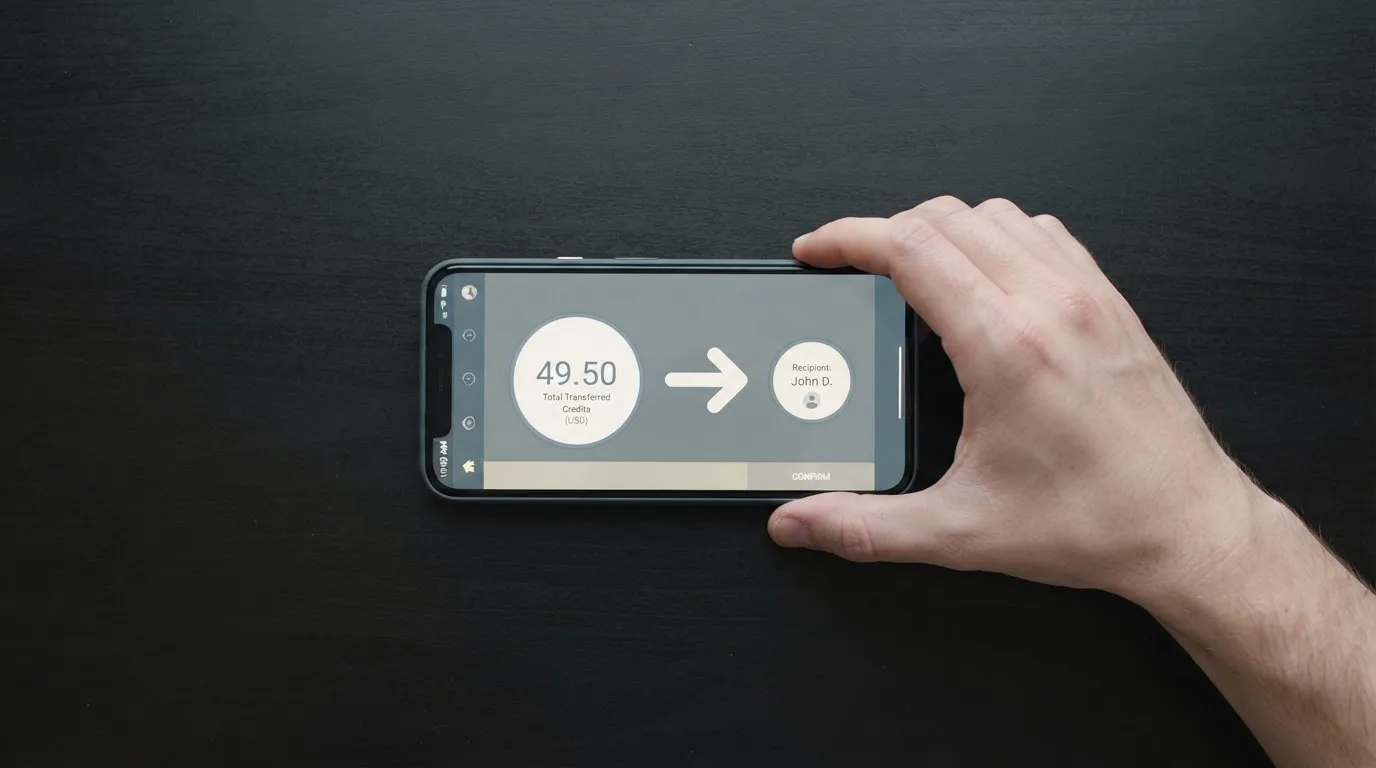
So the practical picture: if your money is already in Bitcoin, or you are willing to hold Bitcoin as your spending fuel, Lemon has a clear line. If you hold a spread of assets, or you want to deposit a stablecoin over whichever network is cheapest for you, you will not find that flexibility described anywhere public. Bitcoin on-chain network fees are charged by the blockchain itself, not by the card, so they apply on top of whatever Lemon does.
Why this matters: topping up on a network the provider does not support, or to an address on another network, can mean lost funds or a manual support recovery with no guarantee. That is why an unclear top-up list is a bigger problem than it sounds. Ask Lemon, before you fund it, exactly which networks and assets are accepted.
Paying with it every day
Used day to day, Lemon behaves like a prepaid card with a crypto engine under it. You get a virtual Visa you can start using in seconds, and a physical one delivered to you. You can pause the card whenever you want, and you can set your own daily purchase limits. There is also a rewards layer: earn up to 2% cashback in Bitcoin with every purchase — and payments over $10.000 earn raffle tickets.
Beyond that, several everyday details are simply not disclosed. The card’s currency is not stated. Whether it works in Apple Pay or Google Pay is not disclosed. Whether there is a dedicated app you rate or rely on daily is not stated. And how disputes work — if a shop overcharges or a charge is fraudulent — is not stated either.
A word on the cashback, because it is the card’s headline feature: “up to 2%” is a ceiling, not a rate. The conditions that get you the full 2% are not stated. Do not build a budget on 2% until you have seen for yourself what your own spending earns.
What can go wrong
This is the section I would read most carefully, because the risks here are structural, not hypothetical.
The wallet is custodial. Lemon is a virtual asset service provider, and your balance sits with them — you are trusting the provider, not holding your own keys. Custodial platforms have a real history of failure: Mt. Gox (about US$350 million reported stolen 2011–2014), Coincheck (about US$400 million in 2018), and the Ronin Network (US$625 million in 2022). Transfers are typically irreversible and a stolen key has no built-in recovery. How Lemon itself safeguards customer funds is not stated on the public pages.
The company behind it is registered but the bank behind it is not. Lemon is operated by Bay Treasure Caramel S.A. (Tax ID 30-71753495-2), listed as virtual asset service provider No. 162 in Argentina’s CNV VASP registry. The site’s own disclaimer says “Digifin S.A. is not a financial institution” and that Lemon is not a bank. The issuing bank is not stated. So the name on your card is a Visa, but the institution behind the licence is not one the pages name to you.
The complaint record is thin but pointed. On Trustpilot, Lemon sits at 2.5 out of 5 from five reviews. Themes include poor customer support (“El peor soporte del mundo”), SEPA IBAN transfers from online betting sites being refused because the banking partner rejects them, and one claim that people from certain birthplaces were told they could not become customers. The sample is tiny, and nationality or country of birth is exactly the kind of thing that gets screened for sanctions and issuer risk policy, separately from your address — so that claim, even if anecdotal, is the kind of thing that is not implausible. Treat it as a signal to ask about your own nationality up front, not as a proven fact about the company.
Support and recovery are the soft spot. Help is a Spanish-language FAQ at help.lemon.me/es, an email at [email protected], and a status page at status.lemon.me, with hours not stated. If you lose the card or suspect theft, you report at report.lemon.me, and you can pause the card yourself in the meantime. Those are the right tools, but a support operation with weak reviews and no published hours is not one you will want to depend on in an emergency.
Two background risks apply to almost any crypto card, so they apply here. A card programme can be shut down — Visa terminated its global agreements with FTX in November 2022 and the FTX US debit card was wound down; Visa also suspended issuer WaveCrest in Europe in 2018, closing every WaveCrest-issued Visa programme. A closure typically means loading stops, then spending stops, then you are asked to withdraw what is left. And merchants can decline prepaid or foreign-issued cards outright, because the BIN lookup reveals the card type and issuer country.
Finally, a tax note you should not ignore, offered here as information rather than advice: the IRS treats digital assets as property, so exchanging them for goods or dollars generally produces a taxable gain or loss measured in local fiat at the fair market value on the transaction date. Each card payment funded from crypto can be a separate taxable disposal. Check what this means where you live.
What to take instead
If Lemon is not right for you, these are the alternatives I looked at, with the same lens. Scores are my own on the same scale.
| Alternative | Score | Card | Cost | Funding | Rewards |
|---|---|---|---|---|---|
| Lemon | 4.7 / 10 | Prepaid Visa, virtual + physical | No shipping, no maintenance | Bitcoin named; others not | Up to 2% cashback in Bitcoin |
| Gemini | 4.9 / 10 | Mastercard World Elite credit card | No annual fee; no foreign transaction fees | Fiat credit card, not prepaid | 4% gas/EV/transit, 3% dining, 2% groceries, 1% other, paid in crypto |
| Lava | 7.1 / 10 | “Lava Card”, 150+ countries | No annual fees; no FX fees or spread | Local currency or stablecoins | Up to 5% back in bitcoin |
| Trastra | 4.1 / 10 | Prepaid debit, Visa worldwide | Not stated | Crypto in your Mover wallet | Not stated |
Where each stands apart:
Gemini is a credit card, not a prepaid one. You pay it off in fiat and earn rewards paid instantly in crypto or 50+ cryptos, which is a cleaner rewards story than Lemon’s Bitcoin-only cashback. It has no foreign transaction fees and no annual fee. But its eligibility is not stated on the card page, and its reward tiers are specific categories rather than a flat rate.
Lava scores highest of the group at 7.1. It spends at 150 million merchants in 150+ countries, charges no annual fees, and makes a strong fee claim: no FX fees and no FX spread, plus no exchange fees or spread on buying or selling Bitcoin. You fund it in local currency or stablecoins. Rewards are up to 5% back in bitcoin, though the conditions are not stated. If broad use and clear fees are your priority, Lava is the one I would look at first.
Trastra is a prepaid Visa accepted worldwide, but its eligibility rule is the most restrictive: available in 31 listed countries (including Germany, France, the UK), “will be available for all residents of the European Economic Area (EEA)”, and for non-European residents, “Not at the moment” — a residence-based rule. You top it up with crypto from your Mover wallet, and its reward and fee details are not stated, which is part of why it scores lowest.
The honest summary: Lemon and Trastra sit at the bottom largely for the same reason — narrow availability and thin disclosure. Gemini wins on rewards structure, Lava wins on breadth and transparent fees. If you want one card with the widest reach and the clearest fee story, the evidence here points away from Lemon.
Who I would recommend it to
I would recommend Lemon to an Argentine resident who: wants up to 2% cashback in Bitcoin on everyday purchases; is comfortable paying no shipping and no maintenance fee; is content to hold their balance with a custodial provider; and mostly buys in or near Argentina. For that specific person, it is a fair, low-friction card.
I would not recommend it to you if any of these are true: you are based outside Argentina or Brazil; you hold more than Bitcoin and need flexible multi-coin, multi-network top-ups; you want to keep your own keys; or you cannot tolerate a provider with a 2.5-of-5 Trustpilot score, unnamed issuing bank, and unpublished support hours. The card’s own pages simply do not tell you enough about those things.
My honest summary: Lemon is cheap and locally strong, but the disclosure is too thin to recommend it as a general-purpose crypto card. Verify your eligibility, your nationality clearance, and your exact top-up assets and fees with Lemon directly before you commit a meaningful balance.
Frequently asked questions
What is Lemon card?
Lemon is a prepaid Visa payment card that draws on a crypto balance rather than a bank account. It comes with a virtual card you can start using immediately and a physical one delivered to you, and it offers up to 2% cashback in Bitcoin. A separate Visa credit card is also backed by Bitcoin. The card is marketed for use in Argentina and for paying abroad without the 30% RG5617 tax. Lemon is not a bank.
How does Lemon card work?
You load the card from crypto — Bitcoin is the one coin Lemon names — and it converts and loads as spendable fiat balance, so it behaves like a prepaid card and cannot overdraw. You then pay in stores, online, or take cash out at partner merchants shown on a map. Unlike a self-custody card, your funds sit with Lemon as a custodial provider, not in a wallet you control. The card can be paused and given daily spending limits.
Is Lemon a bank?
No. Lemon is not a bank, and the site’s own disclaimer says “Digifin S.A. is not a financial institution.” It is operated by Bay Treasure Caramel S.A., listed as virtual asset service provider No. 162 in Argentina’s CNV VASP registry. The card is a Visa programme, but the issuing bank is not named on the public pages. So treat Lemon as a crypto service provider that issues a payment card, not as a bank you can deposit with.
Who owns Lemon?
Lemon is run by Bay Treasure Caramel S.A., Tax ID 30-71753495-2, registered in Argentina’s CNV registry as virtual asset service provider No. 162. The site also references Digifin S.A., with an explicit disclaimer that Digifin is not a financial institution. The company behind the Visa issuing licence is not named on the public pages, which is one of the open questions to raise with support before funding the card.
Is Lemon card available in my country?
The official pages name Argentina only, with QR payments also in Argentina and Brazil. There is no official statement about eligibility for other countries or about citizenship versus residence. Unofficial reporting says Lemon opened a waitlist for Colombia. So if you are outside Argentina and Brazil, treat availability as unconfirmed and ask Lemon directly before applying — and confirm that both your residence and your nationality are accepted.
How do I get a Lemon card?
You sign up through Lemon’s site or app and request the card there; there is no branch to visit. You can create a virtual Visa card to start using it within seconds, before any physical card arrives, and the physical card is shipped with no shipping cost. Delivery time and any replacement cost are not stated. The identity checks you will pass through are also not described, though the site mentions “4M validated users”.
How do I top up Lemon card?
Bitcoin is the one coin Lemon names for top-up; other coins and networks are not stated, and the general method is not spelled out on the public pages. Because Bitcoin is the named asset, its on-chain network fee — charged by the blockchain, not Lemon — applies. The risk to watch is sending on an unsupported network, which can lose funds or require manual recovery with no guarantee. Confirm the accepted assets and networks with Lemon before funding.
Can I use Lemon card in Apple Wallet or Google Pay?
Whether the card can be added to Apple Pay or Google Pay is not disclosed on the card’s public pages, so do not assume either works. What Lemon does offer is a virtual card for immediate use, a physical card, a self-service card pause, and configurable daily purchase limits. If tokenised mobile wallets matter to how you plan to pay, ask support directly whether your card can be provisioned before you rely on it.
Is Lemon card safe?
It is not a bank and the balance is custodial, so you are trusting the provider rather than holding your own keys. Custodial platforms have a history of large failures (Mt. Gox, Coincheck, Ronin). The issuing bank is not named and how funds are safeguarded is not stated. On Trustpilot Lemon sits at 2.5 of 5 from five reviews, citing weak support and a refusal reportedly linked to birthplace. Treat support quality as a real risk for a provider this young.
Is Lemon card worth it?
For an Argentine resident wanting up to 2% cashback in Bitcoin with no shipping or maintenance fee, it can be worth it. But “up to 2%” is a ceiling with unstated conditions, the day-to-day conversion and cash-out fees are not published, and the card’s reach is essentially Argentina and Brazil. If you need wider use, more top-up flexibility, or self-custody, the alternatives — especially Lava for breadth and clear fees, or Gemini for a fiat credit card with crypto rewards — are the better fit.
Credit and cashback card options – cryptocardoptions.com
Content created by the «cryptocardoptions.com» team