
The card is cheap, the funding route is narrow, and the money sits with an exchange
 Available in US
I read through the MEXC card pages and the surrounding material before writing this, because the honest version of a card review is rarely the one on the front of the brochure. Here is where I landed.
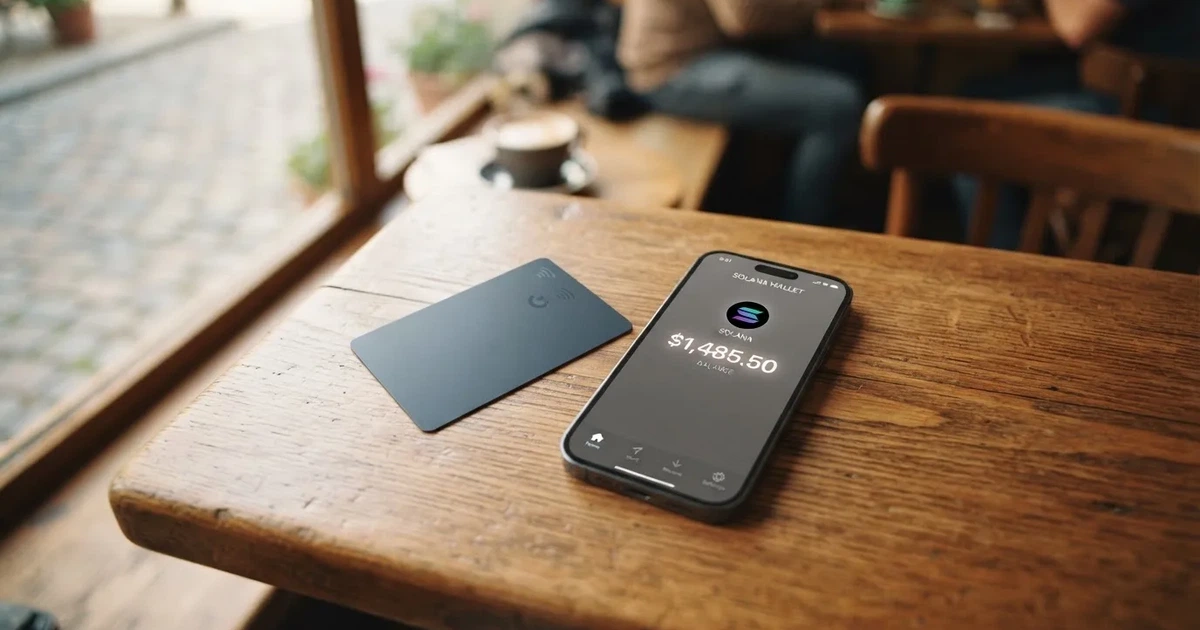
The short version: the MEXC card is cheap in the ways that matter on paper — no annual fee, no top-up fee, zero percent conversion on one of its two products — but it is narrow in the ways that usually decide whether a card is usable for you. It is virtual only, funded only in USDT, and the balance you spend from is held by the exchange rather than by you. On top of that, the MEXC exchange itself carries a heavy complaint load, which matters more here than it would for a card issued by a bank, because the exchange is the custodian of the money the card spends. That combination is why my score lands in the middle rather than higher.
Who it suits: someone who already holds USDT, sits in an eligible country outside the blacklist, is comfortable keeping the spending balance on an exchange rather than in their own wallet, and mainly wants to pay online and in mobile wallets. The audience the card is really built for, as far as I can tell, is USDT holders in Asia who want cashback.
Who it does not suit: anyone who needs a physical card, anyone who wants to withdraw cash, anyone who needs to fund from a bank account or from a currency other than USDT, anyone who needs the issuer named in advance, and anyone whose priority is holding their own keys. If any of those is you, this is the wrong card and I would rather say so now than after you have moved money.
The conditions described on the card’s public pages are current as of October 28, 2026.
Score
| Criterion | Mark | Why |
|---|---|---|
| Who can get it | 8 / 10 | The Global Card is closed to residents of 69 countries and territories, and everyone else is admitted by the country on their proof of address. Unofficial sources put the catalogue at 110 countries. |
| Cost | 7 / 10 | Global Card: 20 USD issuance (temporarily waived), annual fee and top-up 0, 0% crypto conversion, currency at the Visa rate with no markup, and a 1% payment fee from 1 October 2026. |
| Top-up options | 4 / 10 | USDT only: you send it to the Fiat account, then move it to the card. Networks are not named. |
| Reliability and complaints | 3 / 10 | The issuer is not named, the balance sits at the exchange, and on Trustpilot 88% of reviews for the exchange are one-star, with freezes and delayed withdrawals. Unofficial: listed among Hong Kong SFC’s suspicious platforms. |
| Everyday use | 4 / 10 | Virtual Visa Platinum only. Apple Pay and Google Pay exist. No physical card and no ATM. |
| Total | 5.6 / 10 |
Will they give you the card
Yes for many countries, no for a specific and fairly long blacklist — and the rule is about your address, not your passport.
The card page opens with “The Philippines, Taiwan, Thailand…” behind a Details link, so the full list is not on the page itself. Eligibility follows the country of your proof of address: as of August 2026 the application blacklist includes the United States, China, India, Indonesia, Turkey and Russia among others, while the Philippines, Taiwan, Vietnam and Thailand are not blacklisted. The list changes, so treat any answer you get today as provisional.
Unofficial sources are more generous than the official page. DefiLlama lists the card in 110 countries. SpendNode says the Global Card covers Southeast Asia, Latin America, Africa, the Caribbean, the Gulf, Central Asia, plus Japan, South Korea, New Zealand and Israel — per DefiLlama and SpendNode, 2026, and not confirmed by the card. Both of those conflict with the official rule in one place: the official list excludes Russia and Turkey, so if you are in either of those, the third-party coverage is wrong for you.
One thing worth internalising: these restrictions are about your address, and a separate set of rules about who a platform will serve sits over the top of that. If your country is on the blacklist you simply cannot apply; there is no version of this where the card works for you, and I am not going to describe one.
How to get it
Three steps, and the first one is the gate: Advanced KYC.
Before you can apply you must complete Advanced KYC — a government ID plus face verification — and the proof of address must come from an eligible country. No income proof is required. Age is not stated on the public pages, so I cannot tell you the minimum, though prepaid and debit cards in this category generally go to adults aged 18 and up.
Then you apply on the My MEXC Card page, and you fund the card by transferring USDT to your Fiat account. That is the whole flow.
What you get is a virtual card, and the card page says physical cards are not yet available. The network is Visa — a Visa Platinum virtual card — and the card currency is USD. Delivery is not stated, which is consistent with there being nothing to ship.
Two things I would want answered before I moved any money, and neither is on the page: how long processing takes, and why an application gets rejected. Both are not stated. If you have a thin or unusual file, that is a real unknown.
Fees
The headline costs are genuinely low, and then there is a 1% payment fee that arrives on a fixed date in the middle of this year.
| Fee or limit | Global Card | APAC Card |
|---|---|---|
| Issuance | 20 USD, waived for a limited time as of Aug 2026 | 0 |
| Annual fee | 0 | Not stated |
| Top-up fee | 0 | Not stated |
| Inactivity fee | 0 | Not stated |
| Termination fee | 0 | Not stated |
| Crypto conversion | 0% | 1% |
| Currency conversion | Visa rate, no MEXC markup | Visa rate plus 1% on non-USD purchases |
| Spending fee | 1% from 1 Oct 2026 | 0% |
| ATM | Not applicable to virtual cards | Not applicable to virtual cards |
| Per transaction | 80,000 USD | 50,000 USD |
| Per day | 1,000,000 USD | 50,000 USD |
| Per year | No monthly or annual cap listed | 1,000,000 USD |
| Transactions per day | 100 | 50 |
Two rows of that table need unpacking, because they are the ones that will actually change what your money costs.
The issuance fee page shows 20 USD sitting possibly next to a 0 USD discounted price, and it is unclear which is live — so treat 20 USD as the real figure and the waiver as promotional until you see otherwise. The US dollar 20 issuance fee is waived for a limited time as of Aug 2026, and the 1% transaction fee was waived from 31 August to 30 September 2026 and applies from 1 October 2026. That is the fee that matters. A 100 USD purchase deducts 101 USDT.
The Visa spread is said to be usually 0.1% to 0.3%. That is the network’s own currency spread, not a MEXC charge, and it applies even on the Global Card where MEXC adds nothing.
So, three everyday payments, priced from the Global Card figures:
- A 20 USD coffee. Visa rate, no markup, plus the 1% spending fee — 20.20 USDT comes out of the card balance.
- A 50 USD shop in euros. Visa’s own spread of roughly 0.1% to 0.3% applies, and then the 1% spending fee on the converted amount. The APAC card would add a further 1% here.
- A 30 USD subscription. The same 20.20-style arithmetic: 30.30 USDT, and there is no separate monthly fee anywhere in this.
What the public pages do not tell you: a separate fee-and-limits guide is linked but was not reachable, so anything not in the table above may exist inside it. Multi-currency balances are not stated — both cards are USD-denominated and funded in USDT, and other currencies are converted by Visa.
Top up
One asset, one route, and the networks are the part you have to be careful about.

You transfer USDT to your Fiat account, then add it to the card on the My MEXC Card page. That is the whole mechanism — there is no bank transfer, no card-to-card load, no fiat purchase route stated, and no IBAN in the picture.
Costs on top-up are zero: no top-up fee, and moving USDT into the Fiat account is free. Each top-up runs from 1 to 1,000,000 USDT per the Global Card guide. Note the conflict: an older MEXC post cites a 100 USDT minimum. If you are depositing a small amount, that is the discrepancy to raise with support before you send it.
The networks are not stated. This is the sharpest edge on this page. Blockchain transfers are irreversible, and USDT exists on several networks — Ethereum, Tron, Solana, Polygon, Avalanche among others. Sending on a network the card provider does not support, or to an address belonging to a different network, can lose the funds or require manual support recovery with no guarantee attached. There is also the Ethereum gas point: on ERC-20 chains fees are paid only in ETH, so a wallet holding USDT and no ETH cannot send. And note that Tether disables tokens in wallets on the OFAC sanctions list, so stablecoins are not censorship-proof.
On the way out: there is no termination fee and no inactivity fee, and the card page says you can freeze the card in Card Management if you lose it and then contact Customer Service for a replacement. What happens to money left on the card when the card is closed — how to move the remaining balance back to the exchange account, and what you can retrieve afterwards — is not stated. Ask before you load it more than you need.
Paying with it every day
It works, it is virtual, and it lives in your phone.
Both products are USD-denominated and funded in USDT, and the Global Card supports Apple Pay and Google Pay. The APAC Card supports Google Pay only. You add the card to a mobile wallet in the usual way and pay by tokenised number, which is the safer of the two routes — the device keeps its own account number and each payment carries a one-time dynamic code, so the raw card number is not handed to the shop.
The two products differ in shape. MEXC Global Card is a Visa Platinum virtual card launched on 31 August 2026. MEXC Card is the APAC product, for selected Asia-Pacific markets. Standard, Premier and Elite tiers change only cashback and the monthly cap — there is no metal or physical tier, because there is no physical card at all.
Cashback runs on your M-Score tier and is paid by the 15th of the following month: Standard 4% with a 100 USDT monthly cap, Premier 6% for scores of 600 to 799 with a 300 cap, Elite 10% for 800 and above with an 800 cap. Referral pays 20 USDT to the referrer and 10 USDT to the referee.
Two frictions worth naming. A merchant category code is a four-digit classification attached to a business, and gambling sits in MCC 7995 — issuers block it on individual cards by policy rather than by law, and the blocked list differs by issuer. MEXC does not publish its blocked-merchant list; that is not stated. And a declined payment is not always a clean no: it can leave a hold on funds that stays for days, in the region of up to seven.
If a payment goes wrong, the route is merchant first, then MEXC Customer Service with the reason and your evidence. Windows are 90 days for duplicate charges and 120 days for suspected fraud, goods not received, or goods not as described. Filing is free, but a review fee can apply if the dispute is rejected for incomplete evidence. Refunds usually land in 1 to 7 days, travel refunds up to 30 days, and there is a 0.50 USD charge per refund only if your refund rate is excessively high. Cashback on a refunded purchase is deducted.
What can go wrong
The card’s own pages are calm. The thing that should make you pause is not on them.
The money is custodial. The exchange holds your spending balance; no safeguarding arrangement and no insurance statement was found in the reviewed documents. That is a counterparty position, and the category has a long record of how that ends: Mt. Gox with about US$350 million reported stolen between 2011 and 2014, Coincheck around US$400 million in 2018, Ronin Network US$625 million in 2022. Nobody is saying MEXC is any of those. The point is structural — with a custodial balance you carry the risk of the custodian, and you cannot point at a seed phrase that only you hold.
The issuer is not named. Neither issuer nor licences appear on the card page, and nobody has published the name. That is unusual, and it means you cannot check a licence register for the entity that actually holds your money. If you want to check a provider, ESMA keeps an interim register of authorised crypto-asset service providers, white papers and non-compliant entities — though a card is a payment service regulated separately from the crypto side, so a card like this often rests on two licences and you may be looking for either.
The exchange’s complaint record is the heaviest item here. On Trustpilot, as read on 2026-10-20, MEXC has 1,368 reviews with 88% one-star and no available score; another analysis says Trustpilot later removed fake reviews and showed a breach-of-guidelines notice. FinTelegram reported a 1.8 out of 5 score with one-star reviews about frozen and withheld funds, withdrawal friction and support, and says MEXC appeared on the Hong Kong SFC’s suspicious platforms alert list. User reports cluster on four themes: accounts flagged as “risk” without explanation and then restricted, withdrawals frozen or delayed for months, generic support replies and unresolved tickets, and hard account deletion. One review describes a 0.50 USD fee on a declined Apple Pay transaction. None of these are official incidents on MEXC’s part — the company states nothing about them on the pages I checked — but they are the reasons a card funded from that exchange deserves a second thought.
Then the mechanics of a frozen account become a card problem. Repeated failed payments can trigger a risk review and eventual card termination, and a frozen or restricted exchange account is the fastest route to that. Security on the card itself is conventional: freeze in Card Management, 3D Secure one-time code by email — valid for four minutes — or in the app.
Third-party catalogues disagree about what this card even is. DefiLlama says Visa, 110 countries; CryptoCardHub says Mastercard, EUR, restricted to inner test users in February 2026. When the catalogues contradict the card page, believe the card page — but also notice that a product described as an inner test somewhere is a product whose rollout is unsettled.
Support is a ticket from the platform, and the MEXC help centre has a Russian-language version, though live chat and hours for card support are not stated on the pages I checked.
What to take instead
All three of these were reviewed on the same basis as MEXC, which is why the comparison is fair. They are not all better — they are differently wrong.
MSX — 6.4 / 10. The score is higher, and I will be honest about why: it scored higher, not because the detail is better, but because almost none of the detail is stated on any official page I could read. Who can get it, what it costs, what the fees are, how you fund it, what the rewards are — not stated. I would not call that an advantage. It is a thinner file.
Bybit Card — 6.0 / 10. The most transparent of the three, and the one with the widest reach. The official help centre lists card regions across Latin America, the Caucasus and Central Asia, Australia, Mexico, Brazil, Peru and Asia Pacific; unsupported countries get your interest registered. The cards page states plainly that the product is not meant for European Economic Area customers and that all EEA participation is strictly prohibited. It offers virtual and physical cards, Mastercard in most regions and Visa in Brazil, Peru and Asia Pacific, in the local currency — ARS, MXN, BRL, PEN or USD. Virtual issuance is free “until further notice” and there are no annual fees; physical issuance ranges from 29.99 USD in Australia to 5 USDT in Argentina and Asia Pacific. The costs are real: 0.9% crypto conversion in most regions on top of the One-Click Sell rate, 2% FX on top of the network rate, and Argentina carries VAT of 21%, a 30% tax on foreign transactions and provincial gross-income tax of 1% to 13.2%. Rewards are tiered from 2% up to 10%, and since 5 October 2026 only crypto-funded transactions earn — fiat-funded spending does not.
Pionex — 4.8 / 10. The narrowest and the simplest. Your card type follows the country on your completed KYC rather than your citizenship, users in restricted regions cannot apply, and since 14 August 2026 new Visa applications from Belarus have stopped, with Mastercard offered instead. Virtual only, USDT only, no fiat top-up and no IBAN. The trade-off is honest: no annual and no inactivity fee, 1% transaction fee on Visa, and a Mastercard that converts non-USD at its own rate with no separate FX markup listed — though its transaction fee is “up to 3.5%”. Small payments are treated kindly: 5 USD or less is free once a month, then 0.2 USDT, and failed payments are 0.5 USDT after the first free one. Cashback is 1% credited in real time with no cap mentioned, plus 5% APY on the USDT card balance.
| MEXC | Bybit | Pionex | |
|---|---|---|---|
| Score | 5.6 / 10 | 6.0 / 10 | 4.8 / 10 |
| Card | Virtual Visa Platinum | Virtual and physical, mostly Mastercard | Virtual Visa or Mastercard |
| Funding | USDT only | Funding Account, fiat then crypto | USDT only |
| Crypto conversion | 0% (Global), 1% (APAC) | 0.9% most regions, 0.5% Argentina | Free on Visa (USD/USDT 1:1) |
| Main catch | Custody at a heavily complained-of exchange | EEA excluded; taxes in some regions | Narrowest eligibility, virtual only |
Who I would recommend it to
If you already sit on USDT, live in an eligible country outside the blacklist, and spend mostly online and through Apple Pay or Google Pay, this is a cheap way to turn a stablecoin balance into everyday spending — the 0% conversion on the Global Card and the cashback tiers are real advantages over most of the field.
Before you do it, though, four checks. Confirm your country is not on the current blacklist and that your proof of address is from an eligible country. Confirm the 1% spending fee is live on your account, since that is the difference between 0% conversion being worth anything and not. Ask support which networks the USDT transfer supports, before you send anything. And ask what happens to a remaining balance if the card is closed.
What I would not do is treat this as a bank card. It is an exchange product with a payment front end, the issuer is unnamed, your balance is custodial, and the exchange behind it carries 88% one-star reviews with reported withdrawal freezes. That combination is why it sits at 5.6 rather than higher — not a problem with any single number on the fee table, but with who holds the money and what happens if they stop.
Frequently asked questions
What is the MEXC card?
It is a virtual Visa Platinum payment card funded from USDT held on the MEXC exchange. You load USDT into your Fiat account, move it to the card, and spend it online or through Apple Pay and Google Pay. There is no physical card and no ATM access, and both products are denominated in US dollars even if you pay elsewhere.
Does MEXC card require KYC?
Yes. Advanced KYC is required before you can apply, meaning a government ID plus face verification, and your proof of address must come from an eligible country. No income proof is needed. The age requirement is not stated on the card’s public pages, and neither is how long processing takes or why an application might be rejected.
Is MEXC card available in my country?
It depends on where your proof of address is from, not on your citizenship. As of August 2026 the application blacklist includes the United States, China, India, Indonesia, Turkey and Russia among others, while the Philippines, Taiwan, Vietnam and Thailand are not blacklisted. The list changes, so check the current version before you move any money.
What does it cost to hold and use the MEXC card?
On the Global Card, issuance is 20 USD though waived for a limited time, the annual fee is 0, top-up is free, crypto conversion is 0%, and currency conversion runs at the Visa rate with no MEXC markup. The cost that matters is the 1% spending fee, which applies from 1 October 2026, so a 100 USD purchase deducts 101 USDT. The APAC card adds 1% crypto conversion and 1% on non-USD purchases.
How do I top up the MEXC card?
You transfer USDT to your Fiat account and then add it to the card on the My MEXC Card page. There is no top-up fee and no fiat purchase route stated, so USDT is effectively the only source of funds. Each top-up runs from 1 to 1,000,000 USDT per the Global Card guide, though an older MEXC post cites a 100 USDT minimum.
Which network should I use to send USDT?
The card’s own pages do not name any, which is the single thing I would not guess at. USDT exists on Ethereum, Tron, Solana, Polygon, Avalanche and others, and a transfer on an unsupported network, or to an address belonging to a different network, can be lost or need manual support recovery with no guarantee. Transfers are irreversible, so confirm with MEXC support first.
Is the MEXC card safe?
Treat it as an exchange product, not a bank product. The balance is custodial — the exchange holds it, and no safeguarding or insurance statement was found — and the issuer is not named anywhere on the card page. On Trustpilot, as read on 2026-10-20, MEXC had 1,368 reviews with 88% one-star, and user reports describe account restrictions without reasons and withdrawals delayed for months.
Can I use the MEXC card in Apple Wallet?
Yes. The Global Card supports Apple Pay, and the APAC Card supports Google Pay only. Adding the card to a mobile wallet is the safer of the two routes because the device generates a one-time code per payment rather than handing the card number to the merchant. Three-D Secure codes arrive by email, valid for four minutes, or in the MEXC app.
What happens if I want to close the card?
There is no termination fee and no inactivity fee, so closing costs nothing on the card side. What is not stated is how to move the remaining balance back to your exchange account and what happens to it when the card is closed, so ask support before you load more than you plan to spend.
Is the MEXC card worth it?
Worth it if you already hold USDT, live in an eligible country, and spend online through a mobile wallet — the 0% conversion and the cashback tiers are genuine advantages. Worth skipping if you need a physical card, cash, a bank-transfer top-up, or if holding your balance on a heavily complained-about exchange is a line you do not want to cross.
Exchange card options – cryptocardoptions.com
Content created by the «cryptocardoptions.com» team