
The Pay Card programme no longer issues cards, so there is nothing left to sign up for
 Available in US
If you are reading about the Pay Card because you are looking for a way to spend crypto in a shop or to get a payment card when the ordinary route is closed to you, the first thing to understand is that you cannot apply. The programme is closed. Card purchases through the payment partner were switched off on 5 December 2022, and the most recent version of the app is 1.2.0, dated 18 February 2023. There is no sign-up flow to complete and no card to order, because the thing you would be ordering does not exist any more.
Conditions are current as of October 28, 2026.
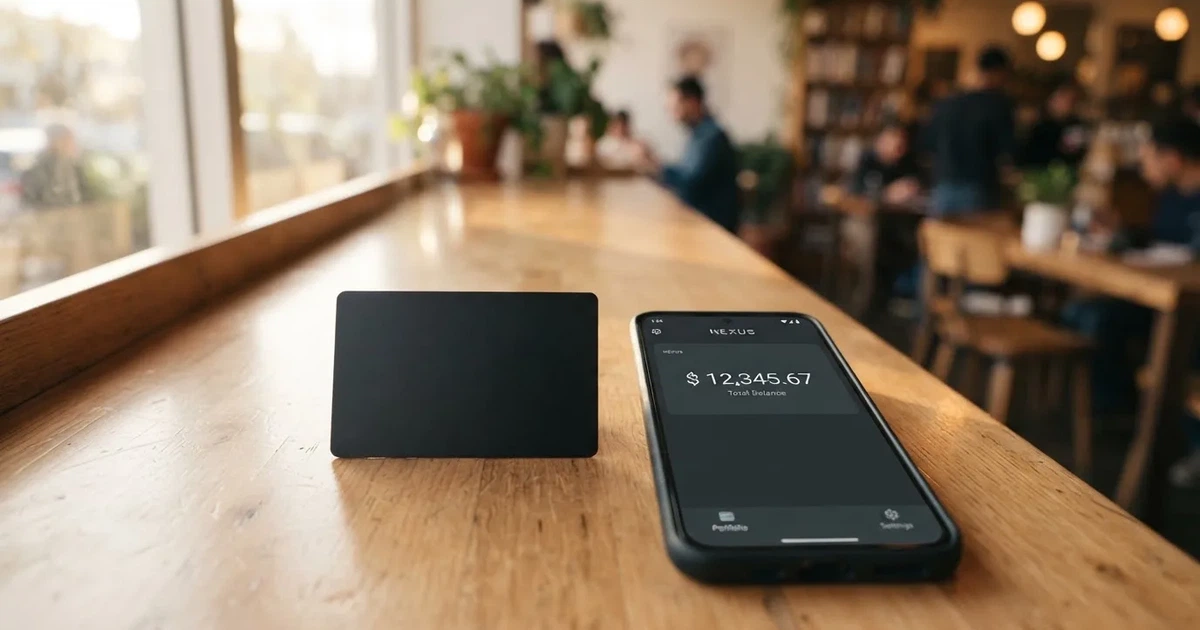
That said, a closed programme is not the same as a scam, and it is not the same as a card that failed in some way you should learn from. It is a feature inside a DeFi wallet app that was never finished the way a bank card is finished, and the company behind it moved on. What this page does is separate the three things that get mixed together when you read about a shut-down crypto card: what actually happened, in what order, and with which dates; what it means for anyone who still has a balance tied to the old Card Pay wallet; and what a live alternative looks like when you compare the alternatives on the facts rather than on the marketing.
The conditions described here are current as of October 2026.
My score for the Pay Card as it stands today is 1.8 out of 10, and I want to be clear that the low number is not a judgement of anybody’s intentions. It is a measurement of what is available to you now: an app you can download, a wallet you can use for its self-custody features, and a card section that no longer issues cards. For a wallet app alone the score would be meaningless; for a card product, scored on whether you can get one, what it costs and whether it works day to day, the arithmetic comes out where it does.
Who this card suits, and who it does not
Nobody new, is the short answer on the “who can get it” line. The card is not issued, so there is no applicant to approve or reject — there is no eligibility list to read, no country table to check yourself against, because the thing that would use those rules no longer runs. That is the single most important fact on this page, and it comes before every other consideration.
The people this does concern are the holders of the old Card Pay wallet: the users who loaded a balance into the in-app prepaid card years ago, or who were still holding a small amount when the feature was switched off. For them the questions are different and less about features than about money: what happened to the balance, can it be spent, can it be withdrawn, and who do they ask. I go into that in the section for people who already have the card, below.
The rest of the criteria score as follows, with the reasoning behind each mark.
| Criterion | Mark | Why |
|---|---|---|
| Who can get it | 0 / 10 | Programme closed: prepaid card purchases through Wyre disabled since 5 December 2022, last app version 1.2.0 from 18 February 2023 |
| Cost | 5 / 10 | Not disclosed: no card fees named; the only paid item is the “Account on Gnosis Chain” at GBP 0.99 |
| Top-up options | 2 / 10 | Programme closed, funding methods not disclosed; Polygon removed in version 1.1.13 |
| Reliability and complaints | 1 / 10 | Wyre card purchases disabled, Wyre announced its wind-down in 2023; issuer not named; App Store rating 5.0 out of 5 from 3 ratings |
| Everyday use | 0 / 10 | Cards are no longer issued through the app, and physical delivery is not mentioned |
| Total | 1.8 / 10 | — |
Two of those lines deserve a word, because they are the kind of number people misread. The cost mark of 5 is not a compliment. It reflects that nothing much is charged, because there is very little on offer: the app is free to download and the sole purchase is a Gnosis Chain account at GBP 0.99, which is a wallet product, not a card. And the reliability mark of 1 is not about you being let down by a service that broke; it reflects that the card depended on a partner who stopped, and the issuer is not named anywhere public.
What actually happened to the programme
Here is the timeline, and it is worth reading slowly because the order of these events is what explains everything else.
- 5 December 2022, app version 1.1.12: prepaid card purchases with Wyre are disabled “until further notice”. This is the card purchase flow being switched off. The “until further notice” wording matters, because it implies the pause was expected to be temporary at the time.
- January 2023: MetaMask stopped supporting Wyre, reportedly because Wyre was closing. This is reported by Benzinga. Note that this concerns MetaMask’s integration, not Cardstack directly.
- June 2023: Wyre announced its wind-down, reported by The Block.
- 18 February 2023, app version 1.2.0: the last release of the app recorded.
Two things I should flag about sourcing. First, the official part is the app’s own release note: the 5 December 2022 disabling of prepaid card purchases through Wyre, and the 18 February 2023 final version. Second, the Wyre story — MetaMask’s January 2023 exit and the June 2023 wind-down announcement — comes from third-party reporting, not from Cardstack. I found no source that ties Cardstack directly to those announcements, so treat the causal link between Wyre’s closing and this card’s closure as well-supported by timing but not confirmed by the company.
The pattern is one you will recognise if you read about crypto cards generally. The card was not issued by the crypto brand. Behind the interface sat a licensed partner whose job was to actually issue and fund the card, and when that partner wound down, the feature had nothing underneath it. A card is not software you can rewrite your way out of; it is a licence, a bank account and a network membership held by somebody else. When the somebody else leaves, the feature leaves with them.
What the app still is: a DeFi payments wallet whose listing says “Manage your prepaid cards”, running on iOS 13.0+, macOS 11.0+ on Apple M1 or later, and visionOS 1.0+. It is on the UK App Store with a rating of 5.0 out of 5 from three ratings — a number too small to mean anything, since three people is not a sample. Google Play availability is not stated. The app is still downloadable and the wallet functions are still there; the card section is a label on a feature that no longer runs.
On the details that would normally fill out a card review: who the card was for, what identity checks applied, what network and currency the card ran on, what fees it charged — none of that is stated anywhere on the public pages, and once, so I do not repeat it: the card’s own public listing simply does not say. That is expected for a dead feature, and it means there is no honest way for me to reconstruct who could have used it or what it cost.
If you already have the card, or a balance in the old wallet
This is the section that matters if you are one of the people who used Card Pay while it worked, and I want to be direct with you: the card’s public pages do not tell me what happened to your money, and I am not going to invent an answer.
What is not stated:
- Whether a remaining card balance can be spent, withdrawn, or refunded, and what happens to a balance after the programme closes. The version notes give no guidance on this.
- ATM access, spending limits, or dispute handling. All of it is not stated.
- What the support route is for a holder with money in the wallet. The App Store listing links no support page — only the developer site cardstack.com and a privacy policy.
- Withdrawal mechanics. The only hints in the release notes are indirect: version 1.0.11 mentions “reward withdrawal” bug fixes, and version 1.1.13 says each reward is claimed individually. Those are about rewards, not about getting your card balance out, and they are the closest thing to a clue I found.
- Where the balance is held. The listing says self-custody is not stated. It does say that transactions are confirmed with Touch ID or Face ID — which tells you about approving payments in the app, and tells you nothing about who holds the funds behind the card.
What I can tell you is that the app’s developer on the App Store is CARDSTACK SERVICES PTE. LTD., a Singapore entity, while the Cardstack homepage footer refers to a Cardstack Foundation. The card’s issuer is not named. Neither of those facts tells you anything about your balance, and I mention them because when you go looking for answers, you will want to know who you are dealing with.
There is one more thing about funding worth knowing, because it is the kind of detail that turns into lost money in a different way. Polygon support was removed in version 1.1.13, and the listing mentions crypto balances. Stablecoins and tokens arrive on specific networks, and a transfer sent on a network the provider does not support can be lost or need manual recovery with no guarantee. If you are holding anything connected to this wallet and you are thinking of moving it, check the network on both sides before you send, every time.
My honest recommendation for a holder is not a financial instruction but a sequence of checks. Look inside the app at what balance you actually have and whether any card or payment entry point still responds. If money is stranded, the only named channels are the developer site and the privacy policy in the listing — there is no published support page to escalate to, and no dispute process is described. That is a thin position to be in, and it is worth knowing before you assume a problem can be fixed with a support ticket.
What can go wrong here, and what the category does to everyone
For this card specifically, the honest list of risks is short because the card is not running:
- The card depended on a partner who stopped. Card purchases through Wyre were disabled on 5 December 2022; Wyre announced its wind-down in mid-2023, reported by The Block. No source links Cardstack to that shutdown, but the sequence is not in doubt.
- No issuer is named. You do not know which institution holds the programme or your funds, which means you do not know who your regulator is or which dispute scheme would apply.
- No user complaints found. I searched for Trustpilot pages and Reddit threads for Card Pay and found nothing — the searches returned unrelated companies. That is not a clean bill of health; it is a tiny footprint with three App Store ratings, so there is not enough public commentary either way to judge.
Now the wider picture, because a closed card is the easy case and the live alternatives are where these things actually bite. A few things worth knowing before you pick any crypto card.
Who is really behind the card. A card payment involves three parties: the network (Visa or Mastercard) routes the messages and sets the rules; the issuer — a bank or e-money institution licensed under that network’s licence — actually holds the card programme; and the crypto brand is often just a programme manager or a front end that markets it. When you read a fee table on a crypto card’s site, work out which of those three is publishing it, because the answer determines who you complain to when a payment is declined.
Why a card gets declined at the till. Every card number starts with a six- or eight-digit issuer identification number that says which institution and which country issued it. Merchants can look that up, and if the issuer country differs from your billing address, some will treat the transaction with more suspicion. That is why a card issued in one country can look foreign in a shop in another — and it is a policy of the merchant and their acquirer, not a rule about you. Address verification, which compares the numeric parts of the billing address a buyer types against the issuer’s records, is mostly available in the US, Canada and the UK and generally unavailable for foreign-issued cards, which causes declines. Some merchants decline prepaid or foreign-issued cards outright because the lookup reveals the card type.
The things that block a transaction at the category level. A merchant category code — the four-digit number that classifies a business — is assigned when a shop starts accepting cards. MCC 7995 covers gambling, and many issuers block it on specific cards by policy rather than by law, with the blocked list varying by issuer. Online payments add 3-D Secure, an identity check where the issuer either approves frictionlessly or challenges you with a one-time code or biometric; under it, liability for a fraudulent online payment can shift from the merchant to your bank. And a declined authorisation can leave a hold on your money that stays for several days, typically up to seven. If you put a card into Apple Pay, the number is replaced by a device-specific account number in the Secure Element, never on Apple’s servers, each payment uses a one-time code — and the issuer can still restrict that token, for example blocking it on magnetic-stripe, phone or website use.
Custody is the decision nobody explains to you. With a custodial wallet the provider holds the credentials, so you must trust them completely; with a self-custody-linked card your funds stay in your own wallet until the moment of payment, and you bear sole responsibility for key loss, phishing and clipboard-hijacking malware that swaps addresses you copy. Neither side is free of risk. Custodial platforms have a real record of failure: Mt. Gox, with about US$350 million reported stolen between 2011 and 2014; Coincheck, about US$400 million in 2018; Ronin Network, US$625 million in 2022. And crypto transfers are typically irreversible — a stolen private key has no built-in recovery, because the network cannot freeze or return funds. A seed phrase, typically twelve to twenty-four words, is the unencrypted form of the private key, and anyone who obtains it can restore the wallet and spend it.
Regulation moved under this category’s feet. In the EU, MiCA took legal effect in June 2023; its rules on asset-referenced tokens and e-money tokens applied from 30 June 2024, with the remaining provisions including crypto-asset service provider rules from 30 December 2024. Under MiCA, e-money tokens may be issued only by a credit institution or an electronic money institution. Transitional “grandfathering” lets providers operating under national law continue only until 1 July 2026 or until a MiCA authorisation is received or refused, whichever comes first. You can check whether a provider is authorised on ESMA’s interim register. Note also that a card is a payment service regulated separately under e-money and payment-services law — so a crypto card often depends on two licences, and MiCA alone does not tell you the card is covered. E-money institutions must safeguard customer funds in segregated accounts or insured, but such funds are not the same as bank deposits and may not sit under a deposit guarantee scheme. In the US, FinCEN guidance treats administrators and exchangers of convertible virtual currency as money transmitters, while ordinary users buying things are not.
Stablecoins are the fuel, and fuel has sharp edges. A stablecoin aims to hold a steady value against a fiat currency, but as the BIS put it in July 2025, they are not necessarily stable: about 90% of stablecoin market capitalisation sits in Tether’s USDT and Circle’s USDC. USDC is redeemable 1:1 for USD and 100% backed by cash and cash equivalents, mostly in an SEC-registered government money market fund, with monthly reserve attestations by a Big Four firm, and Circle lists it as natively supported on 38 networks as of 16 September 2026. Pe gs break, too: TerraUSD collapsed in May 2022 and USDC temporarily lost its peg in March 2023 during the US banking crisis. Network fees are paid in ways that surprise people — on Ethereum, gas is paid only in ETH, so a wallet holding USDT with no ETH cannot send anything; Tron prices with bandwidth and energy, often burning TRX. And Tether says it disables tokens in wallets on the OFAC sanctions list, so stablecoins are not censorship-proof either.
Taxes land on each swipe. The IRS treats digital assets as property, so exchanging them for goods, services or dollars generally produces a taxable gain or loss. For personal holdings the result is a capital gain or loss, short-term if held a year or less, measured in local fiat currency at fair market value on the date of the transaction — which means each card payment funded from crypto can be a separate disposal. I am not giving you tax advice here, only the mechanism, but check your own position with a professional before you spend repeatedly.
Closures have a pattern. Programme closures typically give a notice period, then stop spending and loading, then ask users to withdraw remaining balances. That is the sequence you are looking at here, minus the part where the card’s public pages tell you how to withdraw. One 2026 closure reported by a single unconfirmed secondary source ended new loads on 8 July 2026 and spending on 8 August 2026 — I mention it only to show the shape of these events, not as a prediction about this card.
What to take instead
Three live options, each with a score from the same ten-point scale, so you can see how they compare on the facts rather than the pitch. Read the country line first — for all three of them, eligibility is the thing most likely to rule you out, and none of them publishes a clean answer on their card page.
BloFin Wallet Card — 6.9 / 10
The strongest of the three on the numbers, and the one whose pricing is clearest. It is a Visa Platinum card. The country list is not published on the card page — the app asks you to “select your country or region” — and the starting data lists 35 countries including the US, Australia, Japan, the UAE, Brazil, Mexico, Malaysia and New Zealand. Citizenship versus residence is not stated, which is exactly the distinction that matters if you are asking about a country you live in but do not hold nationality in.
Costs are the best in this group: activation, annual, issuance and dormancy fees are each $0.00, and cancellation carries no fee. The spend fee is “1% or lower” depending on your VIP tier — VIP 0 at 1.00%, VIP 1 at 0.90%, VIP 2 at 0.80%, VIP 3 at 0.50%, VIP 4 at 0.20%, VIP 5 at 0.00% — charged at the moment of payment. The FX fee is not stated, and in my experience the unstated line on a crypto card is the one that costs you money at an airport, so treat that as an open question. You top up with USDT and USDC on Arbitrum and Base. There is no cashback; instead you get a reduced spend rate by tier. Whether the card is virtual or physical, and what currency it carries, is not stated.
Decaf — 6.2 / 10
A Visa card, virtual or physical, with tracked delivery on the physical one. Its differentiator is FX: Decaf adds no fee of its own, stating that “the FX is the one Visa offers”. The crypto conversion fee is not stated.
The cost structure is where you feel the geography. A virtual card is $5 worldwide. A physical card is $10 if you are in the US, and $90 everywhere else — that difference is not an accident, and it tells you something about where the issuer’s cost base sits. There is no annual or monthly fee.
The country rules here are the most explicit of the three and also the most likely to exclude you. Not issued in: Belarus, China, North Korea, India, Iran, Iraq, Israel, Myanmar, Nepal, Russia, Syria, Turkey, Cuba, Ukraine, Venezuela, Vietnam, Nicaragua, Puerto Rico, Nigeria. Restricted US states: Arizona, Delaware, Georgia, Idaho, Louisiana, Maryland, Montana, Ohio, Oregon, Rhode Island, Washington, Wisconsin. Russia and Belarus both appear on the restricted list, and the card does not state whether the rule follows citizenship or residence — so if your situation involves either, that ambiguity is yours to resolve, not mine.
Funding is flexible in a different way from the others: you can pay a Decaf payment link or account details by card, bank transfer or USDC, with the sample balance on the page shown in USDC. The app runs on Solana and Stellar. Which specific coins and networks top the card up is not stated. Rewards are not stated either.
SafePal — 6.2 / 10
A virtual Mastercard debit card. The eligibility wording is “citizens of supported regions who live in supported areas” — note it says both, which is stricter than a residence-only rule — and when I fetched the regions list page it was empty, so I cannot tell you which regions those are. Whether a physical card exists is not stated. Spending limits are given in euros, against a Swiss Fiat24 account.
On fees: no account creation or management fees, and the card issuance fee is not stated. The standard top-up fee is 0%. Mastercard non-USD settlement carries a 1% FX fee. Refund processing costs 1 USD, EUR, CHF or 7 CNH. Swaps include a spread, not quantified; elsewhere on its own site the bank page says crypto top-up is “as low as 0.4%” on the top tier. You can fund from 40+ blockchains, converted to USDC (the default) or to fiat, with transactions on Arbitrum. There is no cashback, but there are referral commissions of up to 40% of referred top-up fees, plus tier privileges tied to deposits, referrals and SFP staking.
How the three compare
| BloFin Wallet Card | Decaf | SafePal | |
|---|---|---|---|
| Score | 6.9 / 10 | 6.2 / 10 | 6.2 / 10 |
| Network and card type | Visa Platinum; virtual or physical not stated | Visa; virtual or physical with tracked delivery | Virtual Mastercard debit; physical not stated |
| Issuance / annual fee | $0.00 activation, annual, issuance, dormancy; no cancellation fee | Virtual $5; physical $10 US, $90 rest of world; no annual fee | Issuance fee not stated; no account or management fees |
| Spend cost | 1% or lower by VIP tier, charged at payment | Crypto conversion fee not stated | Top-up 0%; non-USD settlement 1% FX |
| FX | Not stated | No added fee, Visa’s own rate | 1% on Mastercard non-USD settlement |
| Top-up | USDT and USDC on Arbitrum and Base | Card, bank transfer or USDC; coins and networks not stated | 40+ blockchains to USDC or fiat, on Arbitrum |
| Country access | 35 countries in the data; list not published; citizenship vs residence not stated | Long restricted-country and restricted-US-state list | Supported regions and areas; list page empty when fetched |
| Rewards | Reduced spend rate by tier, no cashback | Not stated | No cashback; referral commissions up to 40% of referred fees |
One structural observation that applies to all three, and to every card in this category. In the pre-loaded balance model, you convert or top up a fiat or stablecoin balance first and the card spends only that, so it cannot overdraw — which is a real comfort, but it also means the balance sits with the provider between your deposit and your purchase. The two questions I would ask any of these, before any of the fee tables matter, are: who is the issuer, and what happens to the balance if the provider has a bad quarter. None of the three pages above names an issuer as clearly as it names its fees.
Who I would recommend it to
I would recommend the Pay Card to nobody, in the sense of recommending it as something to go and get, because there is nothing to get. If you were considering a crypto card in the abstract and landed on this page from a search for “Pay card”, the practical advice is to close the tab and pick from the three above — with the caveat that each of them has a country rule that could exclude you and none of them publishes it cleanly, so check the eligibility wording yourself before you commit.
If you are a holder of the old Card Pay wallet, my advice is different and more careful, because your problem is not choosing a card, it is accounting for a balance in a product that stopped. Check what is actually in the app. If funds are visible and movable inside the wallet, treat that as a wallet balance and move it, carefully, checking networks on both sides — but do not treat me as having verified that this is possible, because the card’s pages do not say. If funds appear to be locked to the card, you are in the harder position the industry has left people in, and the only channels the listing names are the developer site and a privacy policy, with no support page and no described dispute process. That is worth knowing now rather than later, and it is worth being matter-of-fact about: nobody is coming to hand you a form.
What I would not do is draw a general lesson that all crypto cards are like this. This one was a feature inside a wallet that never became a standalone card product, it leaned on a partner who wound down, and it stopped before anyone could be badly served by it at scale. Plenty of live cards are structured far more sensibly. The transferable lesson is narrower and more useful: read who the issuer is, because when the partner leaves, that is the party whose name you will need.
Frequently asked questions
What was the Pay Card?
It was a prepaid card feature inside a DeFi payments wallet, described in the app listing as “Manage your prepaid cards”. The app runs on iOS 13.0+, macOS 11.0+ on Apple M1 or later, and visionOS 1.0+. It was not a standalone bank account product. The listing does not state the network or currency the card ran on, and the issuer is not named anywhere on the public pages.
How does the Pay Card work, and how did it work?
It worked on the prepaid model: the card drew on a balance you loaded in advance rather than on a bank account, and crypto was converted and loaded as that balance. Transactions in the app were confirmed with Touch ID or Face ID. In the pre-loaded balance design the card cannot overdraw, because it spends only what is on it — but that balance sat with the provider between deposit and purchase, which is why the closure mattered.
Is Pay a bank?
No evidence of it. The app’s developer on the App Store is CARDSTACK SERVICES PTE. LTD., and the Cardstack homepage footer refers to a Cardstack Foundation, but the card’s issuer is not stated. Nothing on the public pages describes deposit insurance or a banking licence. What the public pages do not say about the issuer is precisely the thing you would need to judge it as a bank.
Who owns Pay, and what happened to the company?
The app is developed by Cardstack, a Singapore entity, and the card was built on infrastructure from Wyre rather than issued by the crypto brand itself. Wyre announced its wind-down in mid-2023, reported by The Block; MetaMask stopped supporting Wyre in January 2023, reported by Benzinga. No source links Cardstack directly to those announcements, so the link between the closure and the card’s shutdown is clear in timing but not formally confirmed by the company.
Can I still apply for a Pay Card?
No. Prepaid card purchases through Wyre were disabled on 5 December 2022, described in the release notes as “until further notice”, and the last recorded app version is 1.2.0 from 18 February 2023. There is no application flow. The app still downloads and its wallet features still work; the card section is a label on a feature that no longer issues cards, and the programme does not issue new ones.
What happened to the money if I had a balance in the old wallet?
The public pages do not say. There is no stated procedure for withdrawing a card balance, and nothing about what a balance becomes after closure — whether it stays spendable, is converted, or must be claimed. The release notes mention “reward withdrawal” bug fixes in version 1.0.11 and individual reward claiming in version 1.1.13, but those concern rewards, not your card balance. The only channels named are the developer site cardstack.com and a privacy policy; no support page is linked.
Is the Pay Card free?
The app is free to download, and the only in-app purchase is “Account on Gnosis Chain” at GBP 0.99. Card fees are not stated — no spend fee, no FX fee, no issue or annual fee is published. That is not a bargain, though: it reflects a feature that is no longer running, not a free card you can use. I would not read the absence of fees as value.
Is it safe to use, and were there complaints?
There is no risk in using a card that is not issued, which is the only honest framing here. On past practice: the public pages name no security model beyond Touch ID or Face ID confirmation of transactions, and self-custody is not stated. I found no Trustpilot page or Reddit threads for Card Pay, and searches returned unrelated companies — with an App Store rating of 5.0 from three ratings, there is simply not enough public commentary to draw a conclusion either way.
What can I use instead?
Three live options are set out above with their scores and their real costs: the BloFin Wallet Card (Visa Platinum, 6.9 / 10, $0.00 activation and annual fees, 1% or lower spend fee by tier, funded with USDT or USDC on Arbitrum and Base); Decaf (Visa, 6.2 / 10, no added FX fee, $5 virtual or $10 US / $90 rest of world physical, with an explicit restricted-country list); and SafePal (virtual Mastercard debit, 6.2 / 10, 0% top-up fee, 1% non-USD settlement fee, 40+ blockchains).
Was the Pay Card a scam?
There is nothing in what I found that points to fraud, and framing it that way would be inaccurate. What I found is a wallet feature that depended on a payment partner who wound down, that was switched off in December 2022, and whose app has not been updated since February 2023 — with an issuer that was never named publicly. That combination is a governance and transparency lesson rather than evidence of wrongdoing, and it is a reason to check who the issuer is in any card you do consider.
Wallet card options – cryptocardoptions.com
Content created by the «cryptocardoptions.com» team