
Phemex Card: a virtual Mastercard drawn from a stablecoin balance, EEA-only and easy to start, but limited elsewhere
 Available in US
The Phemex card is a virtual Mastercard that lets you pay with USDT and USDC balances held in your Phemex Spot Account. It is built for residents of the European Economic Area, comes with no issuance or annual fee, and pays cashback in USDT. Outside that narrow geography the card simply does not exist, and even within it the experience is more limited than it first appears. In this review I walk through who can actually get one, what it costs in practice, how everyday payments work, and where Phemex falls short against alternatives.

The conditions described below are current as of October 28, 2026.
Verdict
My overall mark for the Phemex card is 5.9 out of 10. It is a competent virtual card for a very specific reader: an adult living in one of thirty EEA countries, who already keeps funds on Phemex, is comfortable with stablecoins, and wants a small cashback on everyday spending without paying any account fees. For that person, it does the job. For anyone outside the EEA, anyone who needs a physical card, anyone who wants to withdraw cash, or anyone who treats the card as their main account, the Phemex card is the wrong tool.
Here is how the score breaks down.
| Criterion | Mark | Reason |
|---|---|---|
| Who can get it | 5 / 10 | EEA residents only; thirty countries listed, with some internal inconsistency around Croatia, Ireland and Romania |
| Cost | 8 / 10 | No issuance, annual or closure fee; no monthly charge; conversion spread is unstated as a percentage; cashback is 0.25% Standard, 1% VIP |
| Top-up options | 6 / 10 | Spot Account balance in USDT and USDC, with auto-conversion at payment; no network choice matters because there is no on-chain top-up step |
| Reliability and complaints | 4 / 10 | Programme run by IMMERSVE LIMITED (New Zealand) under a Mastercard licence; the Phemex exchange has a low Trustpilot score with complaints of blocked withdrawals; card funds are custodial |
| Everyday use | 6 / 10 | Virtual Mastercard only; works with Apple Pay and Google Pay; no ATM access; some merchant categories excluded from cashback |
| Total | 5.9 / 10 |
The card’s audience is the EEA-based crypto user who wants a low-friction way to spend stablecoin balances and earn a small USDT rebate. The card is not the right pick if you need a physical card, a non-EEA jurisdiction, cash withdrawals, or the certainty of a segregated client account.
Who the Phemex card is for
The eligibility rules are the first thing to check, because they are unusually narrow for a crypto card. Phemex states the card is “available exclusively to users residing in the European Economic Area”. I went through the eligibility list carefully, and the rule is by residence, not by citizenship. You do not have to hold an EU passport, but you do have to live in one of the listed countries.
The full list, as Phemex publishes it, is: Austria, Belgium, Bulgaria, Croatia, Cyprus, Czech Republic, Denmark, Estonia, Finland, France, Germany, Greece, Hungary, Ireland, Italy, Latvia, Lithuania, Luxembourg, Malta, Netherlands, Poland, Portugal, Romania, Slovakia, Slovenia, Spain, Sweden, plus Iceland, Liechtenstein and Norway from the EFTA side of the EEA. That is thirty jurisdictions in total.
There is a small but real conflict inside those pages worth flagging. The cardholder terms define the EEA in a way that excludes Croatia, Ireland and Romania, while the eligibility list on the marketing side includes them. The cardholder terms are the legal document that governs your card, so if you live in one of those three countries, treat the legal definition as the one that matters and assume the marketing list is the one that drifts. In practice this means an application from Dublin, Bucharest or Zagreb may behave differently from an application from Paris or Stockholm, and you should not rely on the list alone.
Beyond the country, the rules are conventional. You must be at least 18, you must already have a Phemex Wallet, and you must complete the card-specific checks. Nationality is recorded and screened separately from your country of residence, which is standard for any regulated payments product. If you are a citizen of a country that the issuer treats as higher risk, that is checked alongside your address.
There is one more limit worth saying plainly: Phemex does not state a maximum on citizenship. The card is open to citizens of any country, provided they reside in the EEA and clear the issuer’s risk and compliance review. The application is the part where the issuer decides whether to take you on, and that decision is final.
If you are reading this from outside the EEA, there is no path I can see. You can keep a Phemex account, but you cannot get a card. If you are reading this from inside the EEA but you travel often, the card still works at merchants that accept Mastercard; what it does not do is open up new countries for you.
How to sign up
The application is short and entirely digital, which fits the fact that this is a virtual card with no shipping step. From your Phemex account, you open the Card page, complete the standard KYC identity check, verify your residential address, enter a mobile number, agree to the Terms of Use, the Privacy Policy and the Cardholder Terms, and submit.
The address step is where the experience splits. Residents of twelve countries enter their address into a form: Austria, Belgium, Denmark, Finland, France, Germany, Italy, Netherlands, Norway, Poland, Spain and Sweden. Residents of any other EEA country have to upload a proof of address dated within the last three months. Phemex accepts a bank document, a utility bill, or a government document.
There is one KYC level for the card. It is the same identity verification as your Phemex account, plus the address check. Rejection reasons are listed in the terms: incomplete KYC, an unsupported region, a failed address verification, a failed risk and compliance review, or inconsistent information across what you have submitted. The processing time is not stated, so do not assume it is instant and do not assume it is slow; the time will depend on your documents and on the volume of applications at that moment.
Two practical notes from going through the flow. First, the card is issued immediately on approval, which means once you pass the checks you have a card number, an expiry and a CVC ready to use. Second, there is no replacement process in the usual sense: if you cancel the card or it is terminated, getting a new one is only possible if the concerns that led to the cancellation no longer apply. That phrasing is loose on purpose; it gives the issuer discretion, so do not count on a fresh card after a closure.
What the Phemex card really costs in fees
The headline pricing is the strongest part of the offer. There is no card issuance fee, no annual fee, no account closure fee and no monthly fee. There is one tier, and the only thing that varies is the cashback rate, which is tied to your Phemex user tier, not to a paid card tier.

Beyond that, the card has two real costs to know about, and neither is published as a percentage. The first is the spread applied at the moment of auto-conversion from USDT or USDC into the card’s base currency. Phemex takes a spread at the time of the transaction, and the size of that spread is not stated. The second is the FX margin when you spend in a currency other than the card’s base currency. The card settles in USD by default, and the issuer uses the card network’s baseline rate plus a possible Phemex conversion spread. The terms say explicitly that spreads and markups are non-refundable, which is standard but worth knowing if you are trying to recover a difference after the fact.
There are no ATM terms at all, because there is no physical card. The virtual card is online and at the till, not at an ATM.
| Fee or limit | Value |
|---|---|
| Issuance fee | None |
| Annual fee | None |
| Monthly fee | None |
| Account closure fee | None |
| Crypto auto-conversion | A spread at transaction time, percentage not stated |
| FX on non-USD purchases | Card network baseline rate plus a possible Phemex conversion spread, percentage not stated |
| ATM | Not applicable (virtual card only) |
| Per-transaction limit | 5,000 USD (default, adjustable down) |
| Daily spending limit | 5,000 USD |
| Monthly spending limit | 30,000 USD |
| Annual spending limit | 100,000 USD |
| Cashback | 0.25% Standard, 1% VIP, promos up to 3% for VIP |
| Cashback currency | USDT, credited to the Spot Account on the 10th of the following month (UTC) |
Three everyday examples to make the cost picture concrete.
A 100 USD coffee at a shop that prices in euros. Phemex converts the euros at the network rate, then applies its spread. The spread is the part you cannot see, and the same is true of the FX margin. If you keep balances in USDT, the card converts USDT to USD for the base currency, then USD to EUR for the merchant. The effective cost is the sum of the auto-conversion spread and the FX spread, and neither is published as a percentage.
A 500 USD online subscription in US dollars, paid from a USDC balance. This is the cleanest case. The card stays in its base currency, so there is no FX spread. The only cost is the auto-conversion spread from USDC to USD, again with no published percentage.
A 1,000 USD grocery shop in a non-USD currency, paid from USDT. The card charges the auto-conversion spread from USDT to USD, then the FX spread from USD to the merchant’s currency. The cumulative cost is a real, visible number on the merchant’s statement, but how much of it is Phemex and how much is the network is not disclosed.
The cashback is a small offset. At 0.25% Standard, on a 1,000 USD monthly shop you receive 2.50 USDT, paid the following month. At 1% VIP, the same 1,000 USD returns 10 USDT. Promotional rates can reach 3% for VIP, but the base rate is the one to budget on. The cashback is paid only on completed, eligible purchases by merchant category, and it is reduced proportionally when you take a refund.
How to top up the Phemex card
There is no on-chain top-up step for the card. The card draws directly on your Phemex Spot Account, in USDT and USDC. At the moment of payment, Phemex auto-converts the balance you have chosen into the card’s base currency, and the merchant is paid in fiat.
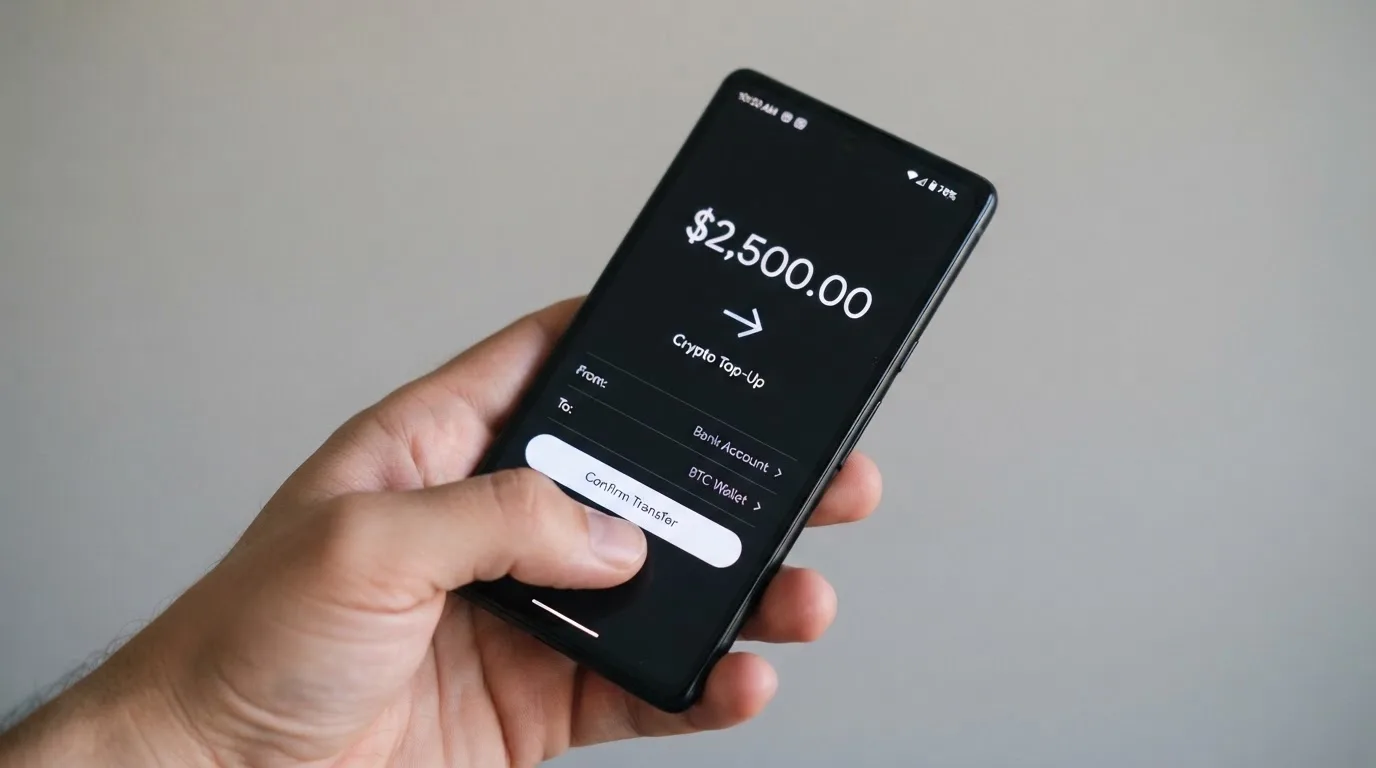
You can switch each supported coin on or off and set a priority between them. If you hold both USDT and USDC, you decide which is spent first; if you only hold one, the card uses that one. There are no networks to choose from for the top-up itself, because the top-up is internal to the Phemex account. The networks that matter are the ones you use to get funds into your Phemex account in the first place, which is a different question and depends on the chains Phemex supports for deposits.
Two practical consequences follow. The first is that the spread is taken on every transaction, not on a single load. You do not pay once to load a balance and then spend; you pay a small slice every time you tap. The second is that the card balance and the card’s base currency are different things. The card is denominated in USD, so non-USD spending adds an FX layer on top of the conversion spread. The terms do not show this as two line items; it shows up as the difference between the rate the merchant receives and the rate you see in your Phemex app.
The card’s top-up behaviour is straightforward, but two things are not stated. The first is whether there is a minimum balance to keep the card active. The second is whether the Transfer and Deposit buttons inside the card interface carry any fee or minimum. The cardholder terms do not say, so do not assume there is a minimum or assume there is none. The deposit side of the flow, where you move external crypto into your Phemex Spot Account, is governed by the exchange’s deposit rules and not by the card.
On cancellation, the terms say that any remaining balance is refunded to your Phemex Wallet once final transactions and fees have settled. The programme can also be terminated with sixty days’ written notice, which is a real risk for a card you may want to use for years. If the programme ends, you have two months to wind down your spending and arrange any return of funds.
Paying with the Phemex card every day
In daily use the card behaves like a standard virtual Mastercard. You have a number, an expiry and a CVC. You can add it to Apple Pay and Google Pay, which tokenises it so the merchant never sees the card number. The tokenised number is device-specific and protected by your phone’s biometric or passcode checks.
You can also pay at a physical store with a contactless terminal by holding your phone. Some in-store payments ask for a 4-digit PIN, which is set inside the app. The PIN requirement is at the merchant’s discretion and at the issuer’s risk policy, not a guarantee that the PIN is always required.
The app and the web card page are the two places you manage the card. The web page supports Chrome, Safari and Firefox, and the experience is similar to any modern banking app: you can freeze the card, view transactions, change limits and check cashback. The app store ratings were not part of my review, so I cannot tell you whether the iOS or Android apps have a strong or weak user rating.
Cashback is the one daily-use feature that needs a little more care. The cashback rate is 0.25% for Standard users and 1% for VIP, with promotional rates up to 3% for VIP. There is no monthly cap, which is unusual and worth noting; most cards cap cashback somewhere. The cashback is paid in USDT, credited to your Spot Account on the 10th of the following month at UTC. It is paid only on completed, eligible purchases, and the eligible list is narrower than the spendable list. Phemex excludes Financial and Investment, Cash-like and Crypto-related, Gambling, Government Services, Education, Insurance, Business Services, and Professional Services from cashback. You can still spend in those categories, you just do not earn USDT on them.
The card also has the usual dispute paths. For an unauthorised transaction, you must notify the issuer within 13 months of the debit. For a merchant dispute, you need written confirmation within 120 days. For merchant-initiated amount disputes, the window is 8 weeks. Fiat refunds reduce the cashback proportionally, so if you buy a 100 USD item, get a 50 USD refund, the cashback on the 50 USD that stayed is clawed back at the same rate.
What can go wrong with the Phemex card
The everyday-use picture is fine, but the risks sit in three places: the issuer, the exchange behind the card, and the fact that the balance is custodial.
On the issuer side, the programme is managed by IMMERSVE LIMITED, a company registered in New Zealand. The card is issued under a Mastercard International licence. The cardholder terms name IMMERSVE LIMITED as the Card Issuer, which is the standard language for the legal counterparty. The Mastercard licence means the card works wherever Mastercard is accepted, but it does not guarantee any specific service level: the issuer is a New Zealand company and your recourse runs through New Zealand law and the terms you agreed to.
On the exchange side, I read the most recent public reviews of Phemex on Trustpilot. As of my check, the exchange had a score of 2.0 out of 5 from 277 reviews, with about 31 in the last 12 months. The themes that came up repeatedly were blocked or locked withdrawals, repeated KYC re-verification, slow or bot-like support, and disputed liquidations. One reviewer in July 2026 specifically mentioned a card deposit followed by a KYC re-check, which is the kind of friction that matters when the card draws on a custodial balance. None of these reviews is a card incident in itself, but they tell you what it feels like to depend on Phemex’s back office when something goes wrong. These are user reports from a third-party site and are not confirmed by Phemex.
On the security and custodial side, your card balance sits in the Phemex Spot Account. That means you do not hold the private keys. If Phemex is hacked, becomes insolvent, freezes withdrawals or has an incident like the 2025 security event that interrupted deposits and withdrawals, the funds behind the card are exposed along with the rest of your account. The cardholder terms state that customer funds are safeguarded “in accordance with applicable law”, and explicitly do not promise a deposit protection scheme. Your liability if the card is misused is capped at €50 or £35, which is the standard EU figure, but the bigger loss is the balance, not the misuse of the number.
There are practical safeguards you do get. The app lets you freeze the card instantly. There is a 4-digit PIN that can be required at physical stores. You can set per-transaction, daily, monthly and annual limits, and the defaults are 5,000 USD, 5,000 USD, 30,000 USD and 100,000 USD. You need security verification to view the card details. None of these is a substitute for understanding the custodial structure, but they reduce the day-to-day risk of card theft.
Support is provided through live chat and Zendesk tickets, with a stated two-minute response target. Email is [email protected]. Complaints are answered within ten business days, according to the terms. In my reading of the exchange reviews, the actual support experience has been mixed; the time-to-respond is fast, the time-to-resolve can be long.
One last risk to call out: programme termination. The terms give the issuer the right to end the programme with sixty days’ written notice. If that happens, you have two months to wind down your spending and move your balance. Crypto cards have been wound down before. Visa terminated its global agreement with FTX in November 2022, and WaveCrest-issued Visa programmes in Europe were closed in 2018. The Phemex card has no specific warning, but the structural risk is real.
What to take instead of the Phemex card
Phemex is not the only EEA-relevant option, and the comparison gets sharper once you look at who else is in the market. Below I compare the Phemex card against three alternatives I have also reviewed: MSX, Bybit Card and MEXC.
| Card | Score | Who can get it | Card type | Cashback | Notes |
|---|---|---|---|---|---|
| Phemex | 5.9 / 10 | EEA residents only, 30 countries | Virtual Mastercard, USD | 0.25% Standard, 1% VIP, USDT | No issuance, annual, monthly or closure fees |
| MSX | 6.4 / 10 | Not stated officially | Not stated officially | Not stated officially | The page did not give me clean official numbers to compare on |
| Bybit Card | 6.0 / 10 | Not for EEA customers; available in Argentina, AIFC, Kazakhstan, Georgia, Australia, Mexico, Brazil, Peru, Asia Pacific | Virtual and physical, multiple networks and currencies | 2% to 10% by tier, USDT | Wide regional split, fees vary by region |
| MEXC | 5.6 / 10 | Page lists the Philippines, Taiwan, Thailand (full list not shown) | Virtual only; network and currency not stated | 4% to 10% by M-Score tier, USDT | Issuance fee around 20 USD on the public page |
The MSX score is a placeholder. I could not read a clean official eligibility, card-type or fee page, so the 6.4 figure is the score on file rather than a figure I can defend in detail. If MSX matters to you, the official MSX site is the place to confirm.
Bybit Card is the strongest direct alternative if you do not live in the EEA. Bybit’s published rules explicitly say the card is “not meant for European Economic Area customers” and that EEA participation is prohibited. The card is offered across Latin America, the AIFC in Kazakhstan, Georgia, Australia and an Asia Pacific region, with virtual and physical options and a tiered rewards structure from 2% to 10% in USDT. If you are outside the EEA, Bybit is a more realistic option than Phemex; if you are inside the EEA, Bybit closes its door to you.
MEXC is closer in structure to Phemex: virtual only, paid in USDT cashback, no physical card. The MEXC card’s published cashback is higher on paper (4% to 10% by M-Score tier), and the published issuance fee is around 20 USD, which makes the cost story more mixed. The fee page is also somewhat unclear in places, with what looks like a discounted price next to the 20 USD figure. If you are choosing between Phemex and MEXC, the difference is geography, cost structure and reward ceiling rather than feature set.
Who I would recommend the Phemex card to
The Phemex card earns its 5.9 because it is a clean, no-fee, virtual card for a narrow audience, and it does what it does competently. It loses points because the audience is narrow, the card is virtual only, the spreads are not published, and the balance is custodial under an exchange with a difficult public reputation.
I would recommend the Phemex card if you live in one of the thirty EEA countries on the list, you already have a Phemex account and a USDT or USDC balance, you want a small USDT rebate on everyday spending, and you do not need a physical card or ATM access. I would also recommend it if the alternative is leaving your stablecoin balance on an exchange with no spend path at all, in which case the card is a small, contained way to turn that balance into a working payment instrument.
I would not recommend the Phemex card if you live outside the EEA, if you need a physical card, if you need to withdraw cash, if you want to see your conversion and FX costs as published percentages, or if you are not comfortable keeping a meaningful balance on a custodial platform. For any of those cases, the Bybit Card (outside the EEA) or a different EEA-eligible product is a better match.
A final note on safety. No card removes the underlying counterparty risk. The Phemex card is convenient, and the costs at the point of sale are reasonable on a fee-free basis, but the balance is held by the same entity that has the public reputation issues. Treat the card as a spending tool for an amount you can afford to leave on the platform, not as a primary account.
Frequently asked questions
What is the Phemex card?
The Phemex card is a virtual Mastercard debit card that lets you spend the USDT and USDC balance in your Phemex Spot Account. It settles in US dollars by default, auto-converts stablecoins at the point of sale, and pays a small cashback in USDT. There is no physical version of the card.
Is Phemex a bank?
No. Phemex is a cryptocurrency exchange, and the card programme is run by IMMERSVE LIMITED, a New Zealand-registered company that issues the card under a Mastercard International licence. Phemex is the brand and the front end, not the regulated bank behind the product.
Who owns Phemex?
The publicly known ownership is the Phemex group, which operates the exchange. The card programme itself is operated by IMMERSVE LIMITED in New Zealand, with a stated company registration number and a financial service provider licence reference. The exchange’s ownership and corporate history are not the focus of this card review.
Is the Phemex card available in my country?
The card is available only to residents of the European Economic Area. Phemex lists thirty countries: Austria, Belgium, Bulgaria, Croatia, Cyprus, Czech Republic, Denmark, Estonia, Finland, France, Germany, Greece, Hungary, Ireland, Italy, Latvia, Lithuania, Luxembourg, Malta, Netherlands, Poland, Portugal, Romania, Slovakia, Slovenia, Spain, Sweden, Iceland, Liechtenstein and Norway. The cardholder terms define the EEA in a way that excludes Croatia, Ireland and Romania, which is a real conflict to be aware of.
How do I apply for the Phemex card?
You open the Card page in the Phemex app or on the web, complete the standard identity check, verify your residential address, enter a mobile number, agree to the relevant terms and submit. Residents of twelve countries enter their address directly; residents of any other EEA country upload a recent proof of address, such as a bank document, utility bill or government document.
Does the Phemex card require KYC?
Yes. You need Phemex’s standard identity verification plus a residential address check. The card uses a single KYC level, and the issuer can reject the application for incomplete KYC, an unsupported region, a failed address check, a failed risk and compliance review, or inconsistent information across your documents.
How do I add the Phemex card to Apple Wallet or Google Pay?
From the card details in the Phemex app, choose the option to add the card to a wallet. The flow uses standard tokenisation, so the card number is replaced with a device-specific number that the merchant never sees. You authenticate with your phone’s passcode, Face ID or fingerprint at the point of payment.
How do I top up the Phemex card?
The card does not have a separate top-up step. It draws on your Phemex Spot Account balance in USDT and USDC, and you choose which coin to prioritise. At the point of sale, Phemex auto-converts the chosen balance into the card’s base currency, and the merchant is paid in fiat.
Is the Phemex card free?
There is no issuance fee, no annual fee, no monthly fee and no account closure fee. The cost you do pay is the auto-conversion spread at the time of payment, and an FX spread when you spend in a non-USD currency. Neither of those spreads is published as a percentage, which is the main cost uncertainty on the card.
Is the Phemex card safe to use?
The card has the usual safeguards: app-based freeze, a 4-digit PIN, adjustable spending limits, security verification to view card details, and tokenisation through Apple Pay and Google Pay. The larger risk is that the balance is held in a custodial Phemex account, with no deposit protection scheme, and the exchange has a low score on public review sites. Treat the card balance as funds you can leave on the platform, not as a primary store of value.
Exchange card options – cryptocardoptions.com
Content created by the «cryptocardoptions.com» team