
PSTNET review: a virtual-only crypto card with quick signup but real gaps in trust and transparency
 Available in US
If you have struggled to get an ordinary bank card — because of where you live, your status, or a banking system that does not serve you — a crypto payment card can look like a practical exit door. PSTNET is one of those cards, and on paper it ticks several boxes that matter to exactly that reader: signup is fast, the cards are virtual, you can load them with crypto, and the site does not publish a country list. But read past the sales page and a different picture emerges. There is no named company or licence on the site, the physical-card story is silent, whole merchant categories are blocked, and the Trustpilot record — the one place where real users speak — is not flattering.
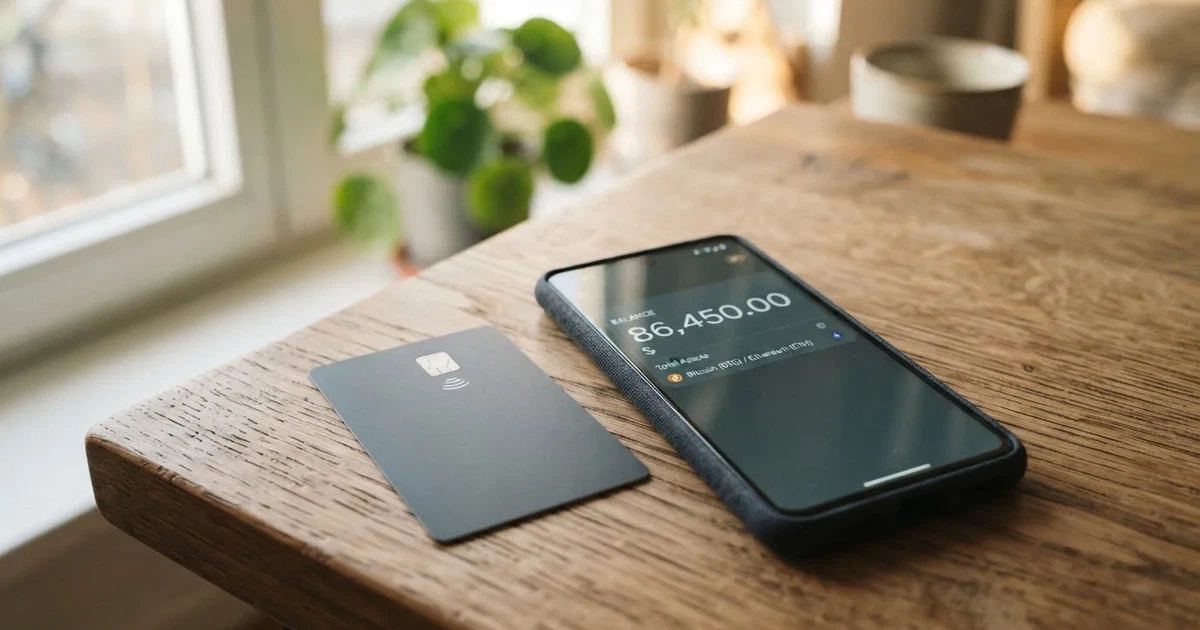
This review walks through what PSTNET actually is, who it suits, what it costs, how you would fund and use it, the things that can go wrong, and whether one of the alternatives below would serve you better. I have kept every figure and every date exactly as the card and independent reviewers state them, and I flag clearly what is officially published and what comes from third parties.
The conditions described here are current as of October 28, 2026.
Verdict: a middling card for a specific niche
Overall score: 5.3 out of 10. That is an honest middling mark, not a round number, and the individual criteria behind it are more telling than the total. Let me show you the breakdown.
| Criterion | Score | Reason |
|---|---|---|
| Who can get it | 8 / 10 | Worldwide except restricted countries; the site says availability “may not be available to all customers” |
| Cost | 4 / 10 | Ultima “from 7$ card price”; issuance and monthly maintenance after the first month $16; 0% withdrawal fee; unofficial figures differ |
| Top-up options | 7 / 10 | Instant crypto deposit into a PSTNET account; unofficial sources list USDT (TRC20, ERC20) and BTC |
| Reliability and complaints | 4 / 10 | Legal entity and licences unnamed; eKYC via Sumsub; complaints about delayed crypto withdrawals and unexplained card blocks |
| Everyday use | 3 / 10 | Only virtual cards (USD, 3D-Secure); instant issuance; Apple Pay, Google Pay, plastic and ATM unaddressed; several merchant categories blocked |
Adding those five criteria — accessibility strong, cost mediocre, funding solid on paper, reliability weak, everyday use the weakest — lands the card at 5.3. The shape of that profile tells you most of what follows: this is not a general-purpose everyday card. It is a fast, virtual, crypto-funded card aimed at a particular group.
So who does it suit? Advertisers and media buyers who need many virtual cards — that is the audience the card is really built for. If your work involves Google Ads, TikTok Ads or general advertising platforms, and you need a card per campaign or per client, the lineup of niche virtual cards (Ultima, PST Private, Google Ads, TikTok Ads, Advertisement) is genuinely relevant to you. PST Private, with more than 20 private BINs, an API and a Private Manager, is clearly aimed at that professional workflow.
Who does it *not* suit? If you want a physical card you can hand over at a shop, if you rely on Apple Pay or Google Pay, or if you plan to spend your balance in gambling, fuel, dating or money-transfer services, PSTNET is the wrong tool. If your priority is knowing exactly who is holding your money and under which licence, the lack of a named legal entity or published licences is a real drawback. And if you cannot tolerate the complaints pattern around frozen cards and slow crypto withdrawals, look elsewhere.
The score is a snapshot, not a verdict of innocence. Read the sections that follow and decide which of these gaps matter to you.
Will they give you the card?
Broadly yes, with caveats — this is PSTNET’s strongest suit, and the one place where it genuinely competes. The site says that “PST solutions may not be available to all customers” and publishes no country list. An earlier check described the service as worldwide except restricted countries, with the United States restricted. A July 2026 Trustpilot review adds a sobering real-world data point: that user’s country was no longer supported.
Let me be precise about what that means for you. “May not be available to all customers” is a very soft phrase — it is not a list you can check against your own country before you invest time. If you live somewhere unusual, the honest answer is: you will not know until you try, and if you are turned down you may not get a clear reason. The review on Trustpilot about a country losing support suggests support decisions can change under you.
There is also a layer that matters for anyone who has been refused elsewhere: nationality and residence are not always treated the same way. Under anti-money-laundering rules, screening is often applied to citizenship and country of birth as well as your address, and providers can restrict by either. That is a background point, not a PSTNET rule, but it explains why “worldwide except restricted countries” can feel less universal than it sounds.
Practically: your best first step is to read the site’s own wording carefully, and to keep in mind that acceptance is not the same as ongoing support. A country that is accepted at signup is not guaranteed to be supported a year later.
How to get it
Getting a PSTNET card is quick, and the signup is genuinely fast — but the identity requirements are more than a name and an email. The card runs “full eKYC execution” through Sumsub, meaning automated identity-document and biometric verification. You sign up with a Google account or an email address, and the card promises “instant card issuance.”
That combination — a light start (email or Google) followed by full eKYC — is a common pattern for regulated fintech. It also means the process can stop abruptly: once Sumsub reviews your documents, the outcome depends on that verification, and what exactly is required (which documents, proof of address, a minimum age) is not stated on the pages. That is a real gap. If your situation is non-standard — unusual address, missing paperwork, cross-border identity — you may hit friction without a published rulebook.
The moment to pause is this: sign-up looks instant, but KYC is the gate, and the gate’s requirements are unpublished. Make sure your documents are in order before you start, because a failed verification is exactly the kind of thing that produces an account freeze later.
Once past verification, issuance is fast. Which brings us to what you actually receive.
What you actually get: virtual cards only
The card lineup is where PSTNET’s real identity shows. Everything on offer is virtual — there is no physical (plastic) card listed anywhere. The catalogue includes:
- Ultima — a single virtual card, USD, with 3D-Secure.
- PST Private — aimed at professionals, with more than 20 private BINs, express withdrawal, a free API, a Private Manager, 3% cashback and unlimited cards. The first 100 cards are free.
- Niche advertising cards — Google Ads (12 BINs), TikTok Ads (3 BINs) and Advertisement (15 BINs).
- Additional virtual variants — Virtual prepaid, Virtual debit and Platinum cards.
A few practical notes so there are no surprises:
- Currency: Ultima is described as a USD virtual card. The currency of the other card types is not stated.
- Network: the card network (Visa or Mastercard) is not stated for the lineup, so you cannot confirm from the site which rails your card runs on.
- Delivery: not applicable — these are virtual cards only, so there is nothing shipped.
- KYC tiers: not stated; the card describes a single Sumsub eKYC flow rather than tiered access.
So the honest summary of “how to get it”: sign up with email or Google, pass automated KYC, and receive a virtual card almost instantly — a USD card for the everyday option, or a specialised card from the advertising and professional ranges. No plastic, and very little published about the underlying network.
Fees: what it really costs
The cost picture is the messiest part of this card, because the official numbers and the unofficial ones disagree. This is the section I would read twice before committing money.
Here is what I could establish. Ultima is described on the cards page as “from 7$ card price”; the Ultima page states that issuance and monthly maintenance after the first month is “$16”. PST Private offers the first 100 cards free. For fees, Ultima lists a “0% withdrawal fee”, and the PST Private page states 0% transaction, declined-payment, refund and withdrawal fees. On top of that, a top-up fee and a foreign-exchange fee are *not stated* officially. An unofficial review (per techeconomy.ng, 2022–2025) lists a 7$ monthly maintenance fee and a 99$ annual fee for Ultima, and a separate unofficial press release (paymentsdive, 2022) and a Chrome extension listing mention a 2% top-up (deposit) fee.

| Item | Official figures | Unofficial / conflicting figures |
|---|---|---|
| Card price (Ultima) | “from 7$ card price” | — |
| Issuance + monthly maintenance after first month (Ultima) | “$16” | 7$ monthly fee, 99$ annual fee (techeconomy.ng, 2022–2025) |
| First cards (PST Private) | First 100 cards free | — |
| Transaction fee | 0% (PST Private) | — |
| Declined-payment fee | 0% (PST Private) | — |
| Refund fee | 0% (PST Private) | — |
| Withdrawal fee | 0% (Ultima and PST Private) | — |
| Top-up (deposit) fee | Not stated | 2% (paymentsdive press release 2022; Chrome extension listing) |
| FX / currency fee | Not stated | — |
| ATM fee | Not applicable — virtual cards only | — |
| Spending / deposit limits | PST Private: “unlimited number of issued cards, spends or deposits”; other limits not stated | — |
The number to hold onto: sources differ. If you are weighing this card for daily spending, the gap between “7$ a month” and “$16 a month” is the difference between a cheap tool and a mediocre one, and you cannot currently resolve it from official pages. My advice is to treat the higher figure as the safe planning number and to confirm the current fee on the site before you rely on the card for anything important.
Three everyday payments, and which fees bite
To make the fee picture concrete, let me walk through three ordinary purchases and point at the fee that matters in each. I am not inventing amounts — I am showing you *which* published fee attaches to *which* situation, so you can see where the cost hides.
- An online subscription in US dollars. You spend a USD balance on a USD merchant. The published transaction fee is 0% on PST Private, so here the fee load is light — provided the purchase is not in a blocked category and your balance is already in USD. The risk here is not fee, it is a decline (see the daily-use section).
- A purchase priced in a currency other than dollars. Here you hit the area the card does *not* clarify: the FX fee is not stated anywhere official. If you are charged a currency-conversion margin on a non-USD purchase, it comes out of a fee line the site leaves blank. This is the single cost detail I would most want clarified before using the card abroad.
- Loading the card with crypto. Moving funds in is where an unofficial 2% top-up fee may apply (per the paymentsdive release and the extension listing). Separately, the on-chain network fee (gas) for your deposit is charged by the blockchain itself, not by the card provider — a general category fact, but one that lands on your deposit, not on PSTNET’s books. So topping up can cost you the card’s fee *plus* the network fee.
Read that table with one question in mind: *what am I paying for, and can I see it?* For issuance and maintenance you can see figures (though they conflict). For top-up and FX, the official picture is incomplete. That is not a dealbreaker on its own, but it is a reason to keep a buffer and to check live fees before you commit.
Top up: how the money gets in
Topping up starts with an instant crypto deposit into your PSTNET account — the funding step is well rated, but the specifics are thin. The card describes “instant crypto deposit into PSTNET account”, and an earlier check recorded the same. The official site page, however, does not list which coins or which networks are supported. Unofficial sources (a Chrome extension listing, 2022–2025) name USDT on TRC20 and ERC20, and BTC.
So the practical question — “can I top up this card with my coin, on my network?” — does not have a clean official answer. That matters more than it sounds, because sending on the wrong network is one of the most common and most expensive mistakes in this whole space. As a general rule, blockchain transfers are irreversible: a deposit sent on a network the provider does not support, or to an address belonging to a different network, can be lost or need manual recovery with no guarantee. So the network question is not academic.
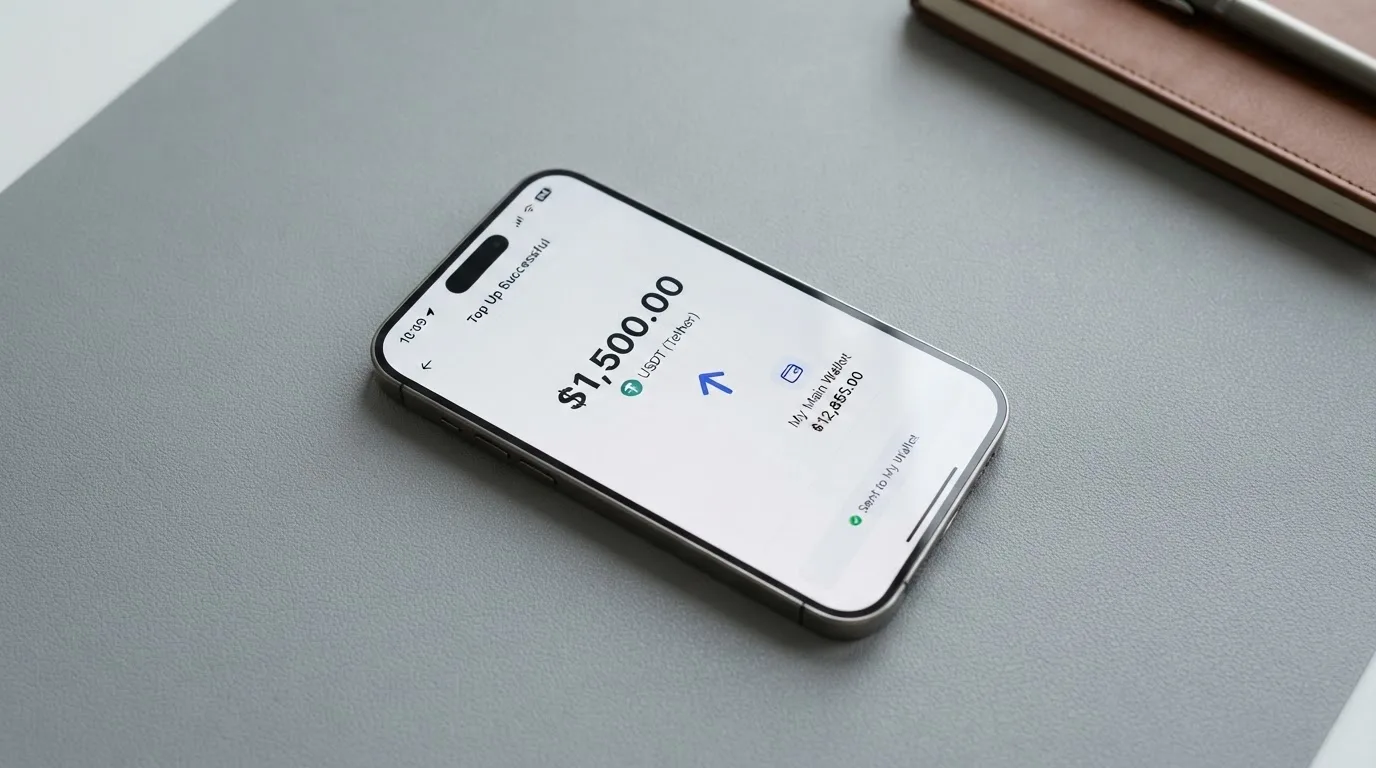
Other top-up details that are *not stated* officially: the minimum top-up, who pays the network fee, and whether there are fiat (rather than crypto) top-up options.
On the money side going back out: Ultima lists a “0% withdrawal fee” and PST Private mentions “express withdrawal”. Against that, users report crypto withdrawals taking up to 14 days. And the balance on closure is not stated — relevant if you ever close the account.
Two practical cautions before your first deposit:
- Confirm the network from inside your account before sending anything. Unofficial lists are not a substitute, and a wrong-network deposit is the classic irreversible loss.
- If you fund with a stablecoin, know its chain. USDT and USDC are dollar-pegged, but they live on multiple networks — USDT has been issued on Ethereum, Tron, Solana, Polygon, Avalanche and others. Fees differ by chain: Ethereum gas is paid only in ETH (so a wallet holding USDT but no ETH cannot send), while Tron fees work differently. And note one trap — “USDC over TRC20” is not a native option, because Circle stopped supporting USDC on Tron in February 2024. Get the network right.
Paying with it every day
This is the card’s weakest area (3 out of 10), and it is the one that decides whether PSTNET is your everyday card or just a specialist tool. Three things define daily use here: mobile wallets are unaddressed, several merchant categories are blocked, and there is no app.
What you cannot do
- No Apple Pay, no Google Pay confirmed. Whether the card can be added to Apple Wallet or Google Wallet is *not stated*. That alone rules the card out for anyone who pays by phone as their main habit.
- No physical card, no ATM. Virtual only, so no cash withdrawal is described, and no ATM fee is listed because there is no ATM function to price. If you need cash, this card does not offer a described path to it.
- Several merchant categories are blocked. On the Ultima page, the closed categories are: gambling, dating, money transfers, quasi-cash, fuel and EV charging, freight/trucking, brokerage, and massage. That covers a lot of ordinary life — fuel stations especially are a common everyday expense. The specific category codes cited are 6211, 7273, 7297, 7995, 6051, 4829, 7800–7802, 5552, 5533, 5541, 5542, 5172, 4215, 4214.
There is a general reason these blocks exist and why they vary between issuers: a merchant category code (a four-digit number classifying a business, assigned when a shop starts accepting cards) is checked at authorisation, and issuers block certain codes by policy. But the practical takeaway is simple — if your spending includes fuel, gambling-adjacent services, or transfers, expect declines.
What you can do, and the fine print
- Payments are online-first with 3D-Secure. Ultima supports 3D-Secure, the identity-check layer on online card payments where the issuer either approves frictionlessly or challenges you (a one-time code or biometrics). Visa’s brand is Visa Secure, Mastercard’s is Identity Check.
- 3% cashback on PST Private. The conditions, the cap and the payout currency are not stated, so treat the headline figure cautiously.
- No mobile app is listed. There is a Chrome browser extension, but its ratings were not read. So daily management is not obviously a smooth app experience.
- Where you shop can matter more than usual. A card’s first six to eight digits identify the issuing institution, and merchants can look it up and apply extra scrutiny if the issuer country differs from your billing address — which is why a foreign-issued card can look “foreign” to a shop. Address-verification checks, which compare the numeric parts of your billing address against issuer records, are generally unavailable for foreign-issued cards and can cause declines. Some merchants decline prepaid or foreign-issued cards by policy. On top of that, some users report declines specifically on Amazon digital goods and Stripe-based merchants.
Net: for subscriptions and ordinary online purchases in dollars where your balance is already USD, it can work. For paying at the pump, in a shop that wants a physical card, or with your phone, it will not. And keep in mind a declined payment can leave a hold on your funds for several days — sometimes up to a week — even though the declined-payment *fee* is listed at 0%.
What can go wrong
This is where the independent record matters most, and it is not reassuring. There are two layers: what the card itself states, and what users report on Trustpilot.
First, the structural facts. PSTNET does not name its legal entity, country of registration, or any licence on the site — the entity behind the card is not publicly identified in the pages I reviewed. Identity checks are outsourced to Sumsub. The balance is custodial: it is held in a PSTNET account, meaning the provider holds the credentials and you must trust them completely. The card lists 3D-Secure, real-time anti-money-laundering transaction monitoring — but a freeze feature and two-factor authentication are *not stated*, and, importantly, fund safeguarding is not stated. Support runs through Twitter and Telegram updates, with no direct channel listed on the pages read. No official incident reports surfaced.
That structural silence matters. Under EU rules, e-money institutions must safeguard customer funds by segregating them or insuring them, but those funds are not the same as bank deposits. When a card does not say who holds your money or under what protection, you are asked to take that on trust.
Second, the user record. Trustpilot shows 381 reviews (51 in the last 12 months), with 5 stars at 67% and 1 star at 25% — read 2026-10-21. Trustpilot has itself withheld the TrustScore over a guideline breach after fake reviews were removed. Note the discrepancy: the site’s own page claims 458 Trustpilot reviews, more than the 381 on the profile — which is itself worth a moment’s thought.
Across those reviews, the recurring user themes (roughly February to July 2026) are:
- Slow crypto withdrawals and deposits — withdrawals reported up to 14 days (the company says these are manual); deposits held for days to weeks (the company cites KYC/KYT checks).
- Account or card suspensions without clear notice.
- KYC and country problems.
- Declines on some merchants — notably Amazon digital goods and Stripe-based merchants.
I want to be fair here. Slow withdrawals attributed to manual processing and deposit holds attributed to compliance checks are, on their face, plausible operational explanations, and no official incidents were found. But the *pattern* — funds delayed for weeks, cards blocked without explanation — is exactly the kind of thing that damages you most when you are depending on the balance. If your plan depends on being able to move money out reliably, treat this as a genuine risk, not a footnote.
What to take instead
If PSTNET’s gaps bother you, three comparable crypto cards are worth comparing. I have included their scores and key differences so you can weigh them against the same questions.
| Alternative | Score | Card type | Cost notes | Fees | Top-up |
|---|---|---|---|---|---|
| Cardex | 5.6 / 10 | Debit crypto card on VERVE, Visa, Mastercard, UnionPay; virtual and physical | Not stated | Real-time crypto-to-fiat conversion at payment; “AI-Powered Conversion Rate” picks best rate; no percentage stated | USDT, USDC, BTC (networks not stated) |
| TakeCard | 5.5 / 10 | Virtual card (immediate) and physical card (Bolivia only); Visa; issued in the US; prepaid; USD | Virtual USD 5; physical (Bolivia) USD 20 issuance + USD 20 shipping (one article says USD 10 — conflicting); no monthly fee stated | 1% commission per purchase; USD 1:1; other currencies at Visa’s official rate of the day | From the Takenos balance; USDC/USDT via Polygon, BNB Chain, Tron or Ethereum into the Takenos account (not verified) |
| OkiCard | 6.0 / 10 | Virtual card (page also mentions a physical card); USD/EUR pegged | Issuance $0, monthly $0, starting price $15 for virtual card (FAQ mentions one-time issuance fee — pages disagree); initial deposit 100 USDT | Load fee 3%; transaction fee (USD) 0%; “no hidden exchange spreads” | USDT on BSC (BEP-20), Ethereum (ERC-20), Tron (TRC-20), Solana (SPL); USDC “soon”; BTC/altcoins “coming soon” |
Let me walk through how these differ from PSTNET in the ways that matter most:
- Cardex is a debit card on four networks including Visa and Mastercard, with both virtual and physical options — a broader network reach than PSTNET’s unstated single rail. It converts crypto to fiat in real time at the moment of payment, scanning global rates. Its weakness is that it publishes no fee percentage at all, so the true cost is as unclear as PSTNET’s FX line. Its App Store listing is Naira-focused (pay in Naira), and the card currency per listing is Naira.
- TakeCard is the most transparent on fees of the three: a clear 1% commission per purchase, USD at 1:1, other currencies at Visa’s official rate. It offers a physical card — but *only to Bolivian users for now* — so for most people it is effectively virtual, like PSTNET. It is issued in the United States and prepaid. Its country coverage is murky: the help articles list no countries, and starting data (not confirmed) lists virtual cards for Argentina, Bolivia, Peru, Chile, Paraguay, Colombia, Ecuador, the US, Spain and Italy.
- OkiCard scores highest of the four at 6.0 and is the most explicit on fees: a 3% load fee, 0% USD transaction fee, and a stated “no hidden exchange spreads”. It covers 150+ countries (some pages say 200+) with “no geo-blocking based on your passport”, though users must confirm they are not in a sanctioned jurisdiction. It is virtual-first, names its supported networks in detail (USDT on BSC, Ethereum, Tron, Solana), and pegs USD/EUR. Its drawback is the 100 USDT initial deposit and a starting price around $15.
One useful cross-cutting point for any of these: a crypto card often rests on two licences, not one — the card itself is a payment service under e-money and payments law, while the crypto side (custody, exchange, transfer) falls under separate crypto regulation. And the two big networks, Visa and Mastercard, do not issue crypto cards to consumers themselves; they license issuers and can suspend a programme. That history is not theoretical — Visa terminated its global agreements with FTX on 13 November 2022 and the FTX US debit card was wound down, and WaveCrest, a card issuer that supplied several crypto brands, was suspended by Visa in Europe in 2018, closing all its Visa programmes. Programme closures typically mean a notice period, then spending and loading stop, then you are asked to withdraw remaining balances. So *when you hold the balance matters*: know your exit before you load.
Who I would recommend it to
Pulling it all together, PSTNET is worth your attention if all of the following describe you:
- You need virtual cards for advertising work — Google Ads, TikTok Ads, or general media buying — and the specialist BIN ranges and the API-friendly PST Private option genuinely fit that job.
- You want fast signup and instant issuance and can complete automated Sumsub KYC without trouble.
- You are comfortable with a custodial balance held by an unnamed entity, published fees that conflict (budget for the higher figure), and a slow-withdrawal risk you can absorb.
- Your spending is online, in dollars, in unblocked categories — and you do not need a physical card, a wallet, or cash.
I would steer you away if any of these apply:
- You need a physical card, Apple Pay, Google Pay, or ATM cash access — none of these are offered or even addressed.
- You spend on fuel, gambling, dating, transfers or brokerage — those categories are closed on the flagship card.
- Knowing who holds your money and under which licence matters to you — the entity, country and licences are not published, and safeguarding is not stated.
- You are sensitive to funds being delayed for weeks or cards blocked without notice — that pattern appears repeatedly in the user reviews.
- You want clear, consistent fees — official and unofficial figures conflict, and the top-up and FX fees are unstated.
If you fall mostly in the second list, one of the alternatives above will likely serve you better: OkiCard for the clearest fees and named networks, TakeCard for transparent commission-based pricing (with a physical card if you happen to be in Bolivia), or Cardex for network breadth and real-time conversion. My honest bottom line: PSTNET is a competent specialist tool with a transparency problem — fine for a professional use case you control, a poor choice as your one everyday card.
Frequently asked questions
What is PSTNET card?
PSTNET is a virtual payment card service that lets you load funds from crypto and spend them online. Its catalogue includes an everyday virtual card called Ultima (USD, with 3D-Secure), a professional option called PST Private with more than 20 private BINs and an API, and niche advertising cards for Google Ads and TikTok Ads. There is no physical card. The balance is held custodially in a PSTNET account, and the card’s legal entity and licences are not named on its site.
Is PSTNET a bank, and who owns it?
PSTNET does not present itself as a bank. Its site does not name the legal entity, the country of registration, or any licences — that information is simply not published on the pages I reviewed. Identity checks are run by Sumsub. Because the company behind the card is not clearly identified, you are asked to trust an unnamed provider with your balance, and the site does not state whether customer funds are safeguarded.
Who can get a PSTNET card?
Broadly anyone, in almost any country — this is the card’s strongest point. The site says “PST solutions may not be available to all customers” and publishes no country list; an earlier check described it as worldwide except restricted countries, with the United States restricted. A July 2026 Trustpilot review reports a user’s country was no longer supported. Because no list exists, you cannot reliably check in advance — acceptance today is not a guarantee of support later.
Does the PSTNET card require KYC, and how do I apply?
Yes — the card runs “full eKYC execution” through Sumsub, using automated identity-document and biometric verification. You sign up with a Google account or an email address, pass verification, and then get “instant card issuance”. The specific documents, any proof-of-address requirement and the minimum age are not stated on the pages, so it is worth having your documents ready before you start.
How much does a PSTNET card cost?
The official figures are inconsistent. Ultima is described as “from 7$ card price”, with issuance and monthly maintenance after the first month at “$16”, while PST Private offers the first 100 cards free. Transaction, declined-payment, refund and withdrawal fees are 0% on PST Private. Unofficial sources quote a 7$ monthly and 99$ annual maintenance fee, and a 2% top-up fee. Top-up and FX fees are not stated officially, so plan on the higher figure.
How do I top up the PSTNET card, and can I withdraw?
Topping up is an “instant crypto deposit into PSTNET account”. The site does not officially list which coins or networks are supported; unofficial sources name USDT on TRC20 and ERC20, and BTC — so confirm the network before sending, because wrong-network deposits can be lost irreversibly. Withdrawals are listed at a 0% fee with “express withdrawal”, but users report crypto withdrawals taking up to 14 days. The minimum top-up and fiat options are not stated.
Is the PSTNET card safe, and what about lost or frozen funds?
The card has real safeguards in places — 3D-Secure, real-time anti-money-laundering monitoring and Sumsub KYC — but a freeze feature, two-factor authentication and fund safeguarding are not stated. The recurring user complaints (Trustpilot, 381 reviews, 5 stars 67%, 1 star 25%) include slow withdrawals and deposits, and accounts or cards suspended without clear notice. If you need reliable access to your funds, this is the card’s main risk.
Can I add the PSTNET card to Apple Wallet or Google Pay, and is there a physical card?
No — and this is not a small gap. Apple Pay and Google Pay are not stated as supported, and there is no physical card at all; everything on offer is virtual. If paying by phone or handing over plastic is how you normally spend, PSTNET simply will not fit. The card also has no listed mobile app, though a Chrome browser extension exists, which makes day-to-day management less convenient.
Where can I use the PSTNET card, and what is blocked?
You can use it mainly for online payments in dollars on unblocked merchants, assuming the balance is already USD. Several merchant categories are closed on the Ultima card: gambling, dating, money transfers, quasi-cash, fuel and EV charging, freight/trucking, brokerage and massage. Users also report declines on Amazon digital goods and Stripe-based merchants, and foreign-issued cards can be declined by shops that check the card’s issuing country.
Is the PSTNET card worth it?
It is worth it if you are an advertiser or media buyer who needs many virtual cards with dedicated BINs and can accept a custodial balance and a slow-withdrawal risk. It is not worth it as your one everyday card, because there is no physical card, no confirmed mobile wallet, no ATM access, a long list of blocked categories, and unclear fees. In that case, look at OkiCard (clearest fees, named networks) or TakeCard (transparent 1% commission).
Virtual card options – cryptocardoptions.com
Content created by the «cryptocardoptions.com» team