
The crypto card that scores well on daily use and badly on trust
 Available in US
RedotPay is a prepaid-style card that spends a balance you load with cryptocurrency, and on paper it ticks most of the boxes that matter to someone who cannot easily get an ordinary bank card. It comes in virtual and plastic form, works with Apple Pay and Google Pay, takes USDT, USDC and ETH on-chain, and holds no monthly account fee. Its own website claims 9 Million+ Users. What holds it back is not the product — it is the thinness of what the public pages promise, and a pattern of complaints that all point at the same place: money that gets held while identity checks run.
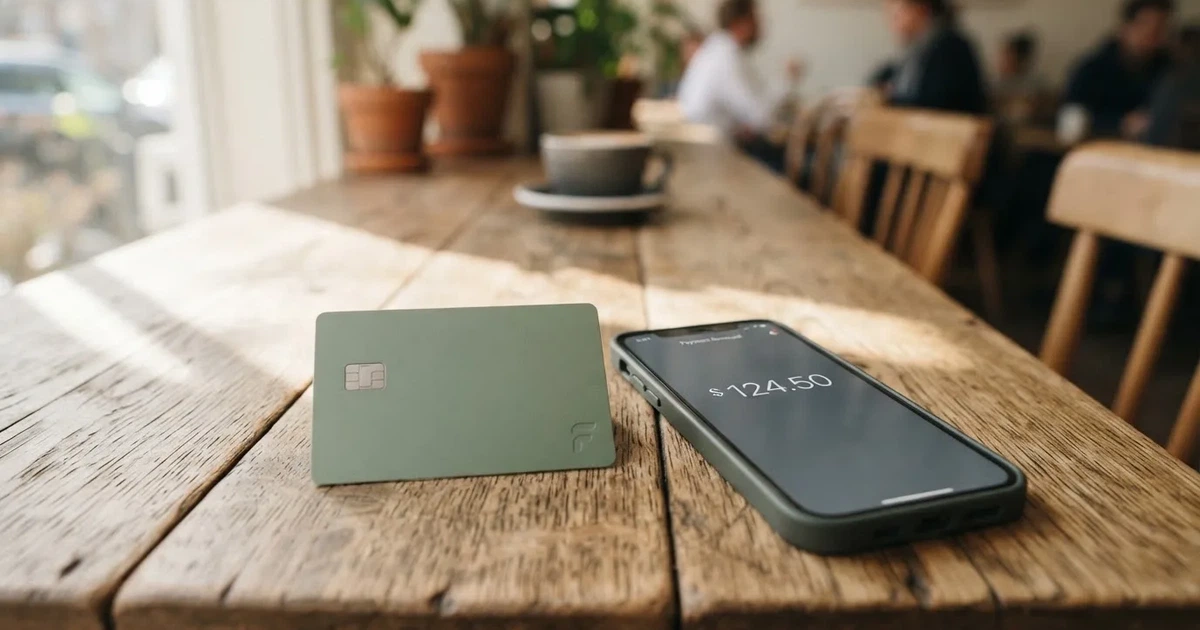
My score for the card is 6.9 out of 10. That is not a rounding of a marketing number; it is a weighted view of six things I could actually check, and the spread between them is wide. Everyday use, who can get the card, and top-up options all scored well. Cost sits in the middle. Reliability and complaints scored 4, and that is the number that pulls the whole thing down.
The conditions described on this page are current as of October 28, 2026.
Verdict: 6.9 out of 10
Here is the breakdown, criterion by criterion, with the mark I gave and why.

| Criterion | Mark | Why |
|---|---|---|
| Who can get it | 8 / 10 | 47 places on the card-issuance list dated August 28, 2026 are closed; the rest of the world is open, and the service claims 9 Million+ Users |
| Cost | 6 / 10 | Virtual card 10.00 USD, physical 100.00 USD, account maintenance waived; 1.00 % transaction fee, 1.20 % in another currency, ATM 2 % up to 10,000 USD a month |
| Top-up options | 8 / 10 | Crypto to card online, USDT-TRC20 from 1 USDT, USDC and ETH; topping up the card balance is free and the network list shows on the deposit page |
| Reliability and complaints | 4 / 10 | Issuer not named, only a “BIN Sponsor”; the programme manager is Redotpay Technology Pte. Ltd.; complaints about KYC freezes and source-of-funds reviews, 778 reviews on Trustpilot |
| Everyday use | 9 / 10 | Virtual and physical, Apple Pay and Google Pay, ATMs worldwide |
| Total | 6.9 / 10 | A card that works well when it works, and sits on top of a support and compliance record I would want to see improve |
Who this suits: you already hold crypto, you are outside the restricted lists, and you would rather have a virtual card in your phone today than argue with a bank. Who it does not suit: anyone who needs a fully named issuing bank on the tin, anyone whose spending depends on a stablecoin holding its value, and anyone who cannot afford to have funds sit still for weeks while a review runs.
Who will they give you the card to
Mostly everyone, but not quite — and the “not quite” is drawn in two different places, which is the first thing worth understanding.
The KYC list (“Unsupported Countries/Regions”) is about citizenship. It says: “If you are a citizen of any of the countries or regions listed below, you will not be able to complete identity verification (KYC) or use RedotPay’s services,” and that the restrictions are “based on local regulations and sanction policies—not on individuals.” That second clause is doing real work. It is the service telling you the line is about the country, not about you as a person.
The listed countries and regions are: Afghanistan, Albania, Belarus, Bosnia and Herzegovina, Bouvet Island, Burkina Faso, Burundi, Central African Republic, Congo (DR), Croatia, Cuba, Eritrea, Ethiopia, Guinea-Bissau, Haiti, Iran, Iraq, Kosovo, Lebanon, Liberia, Libya, Mainland China, Mali, Montenegro, Myanmar, Netherlands Antilles, Nicaragua, North Korea, North Macedonia, Russia, Serbia, Slovenia, Somalia, South Sudan, Sudan, Syria, Ukraine, United States, Venezuela, Yemen, Zimbabwe.
Then there is the second list, and it behaves differently. The card-issuance list, dated August 28, 2026, covers 47 places and adds India, Indonesia, Morocco, Nepal, Singapore and Turkey on top of several of the above. For those six it says: “Residents of these areas are ineligible for both virtual and physical cards,” and they cannot be used as billing addresses. Citizenship is not mentioned there at all. So for those places the test is where you live, not what you hold.
Put the two together and the overlap matters more than either list alone. Russia, Belarus, Ukraine and Serbia appear on both lists, so they are closed on citizenship grounds and on residence grounds. Georgia, Armenia, Kazakhstan and the UAE appear on neither, which means nothing is closed there as far as these lists go.
Two cautions before you plan around this. First, an open list is not a guarantee: the terms separately say users must be “ordinarily resident outside of Singapore,” and issuing policy can change. Second, a card that is open to you does not mean it is open everywhere you might travel — that is a separate list, covered under delivery below.
How to get it
The onboarding is ordinary: install the app, sign up with email, Google or Apple ID, verify your identity, fund the account, open the Card section, choose virtual or physical.
The identity requirements are worth reading twice, because this is where applications fail. The minimum age is 18. You must upload only an original physical ID — the instruction is blunt about it: “Do not use copies, screenshots, or photos of a screen.” The document has to be valid for at least three months from the moment you submit it, and if there is data on the back, both sides. Extra documents in JPG, PNG or PDF up to 10MB are only needed if the system asks for them.
There is no separate proof-of-address document mentioned anywhere in this flow. Instead, the requirement is that you type your “true, current address in full.” That is a meaningful difference from a bank, where a utility bill is standard: here the address is what you declare, and it is compared against other signals. If it does not match reality as far as the system can tell, you are the one explaining the gap.
One verification level is described — identity plus address, with documents on request. The card’s public pages do not state how long processing takes, and they do not list official rejection reasons. If your verification stalls, the honest answer is that nothing on the public pages tells you how long to wait.
For the physical card there are two requirements that catch people out. Your billing and shipping address must be in English. And the cardholder name printed on the back cannot be changed afterwards, so check the spelling before you order.
One more thing to decide at the start: virtual or physical. Both exist, and the virtual one is the cheaper way to find out whether the service works for you at all.
What it really costs
The headline numbers look reasonable. The structure underneath them is where the money goes.
| Fee or limit | What it is |
|---|---|
| Virtual card application | 10.00 USD |
| Physical card application | 100.00 USD, not cancellable or refundable once paid |
| Virtual card replacement | 5.00 USD for the first one, 10.00 USD each after |
| Account maintenance | Waived — no monthly or annual fee, no inactivity fee mentioned |
| Transaction fee | 1.00 %, the crypto conversion fee |
| Transaction in the default currency | Waived |
| Transaction in another currency | 1.20 % |
| ATM, HKD card | 2.00 % |
| ATM, USD card | 2 % while monthly withdrawals are 10,000 USD or less, 3 % above |
| Paid tier, RedotPay Pro | 12.90 USD monthly, 129.00 USD annual |
The fee table behind these numbers took effect on December 1, 2025.
Now the part that will cost you more than the numbers suggest. The 1.00 % transaction fee is the crypto conversion fee, so it applies to what you spend from a crypto-funded balance. Pay in the currency of the card and that fee is waived — but pay in a different one and you add 1.20 %. On a 100 USD physical card that fee stack can run well past what a bank card would charge.
There are also the small edges. A transaction of 1.00 USD or less: the first five per card per month are waived, then 0.2 USD each. Declined transactions: the first three per month are waived, then 0.5 USD — which means a failed payment is not free, and repeated declines get expensive fast.
Some merchants carry an extra 1.5 % with a minimum of 0.50 USD, with the first three per month waived. The named list is worth knowing because it is not a category you would guess: Gulf Health Counsel, Free Fire, PUBG Mobile, Brawl Stars, eFootball, Facebook Ads and Discord. Ad spend and mobile games, that is the pattern.
Three everyday payments, and what actually applies:
- Coffee abroad, paying in local currency on a USD card. The 1.00 % conversion fee applies, plus 1.20 % for the non-default currency. Two fees on a small bill, and neither is avoidable while the card is denominated in dollars.
- A subscription in USD, paid in USD. The transaction fee of 1.00 % still applies because it is the conversion fee, but the currency fee does not. If the subscription keeps charging, this is the line item that quietly recurs.
- Withdrawing cash at an ATM on a USD card. 2 % while your monthly withdrawals stay at or below 10,000 USD, 3 % above that. Add whatever the ATM operator charges you, which the card’s own terms do not cover.
Limits are generous on paper and tighter in some places. Per transaction 100,000 USD; daily 1,000,000 USD, on both BINs. ATM withdrawals: 3 per day and 30 per month, up to 23,000 HKD a day on the HKD card or 3,750 USD a day on the USD card, with monthly ceilings of 75,000 HKD or 50,000 USD. The balance limit itself is unlimited. But the card also says: “For USD cards: In some countries and regions, daily limits are $3,000 and monthly limits are $10,000” — so the headline figures are a ceiling, not what you will see everywhere. Balance unlimited also means there is no buffer stopping you emptying an account in one bad market move.
The 5 USD welcome reward is small and awkward: usable only on spending, valid for 30 days, and it “can’t be used toward the issuance fee.” The card page lists “Points & Rewards” and “RedotPay Pro” as separate programmes, and no card cashback rate is stated anywhere.
RedotPay Pro is worth a look only if you use ATMs heavily — at 129.00 USD a year it is not cheap, and the annual version is the one that includes ATM fee waivers.
How to top it up
Topping up is the part of this card that genuinely scores well, and the reason is simple: nothing sits between you and the network.
There are two routes. You can deposit crypto on-chain directly, or buy crypto with a credit card inside the app (ETH, USDC or USDT, depending on your region). The deposit fee to the card balance is free.
The minimum for USDT-TRC20 is 1 USDT after network fees — so it is a genuine low floor, useful for a first test. Each asset is accepted only on the networks shown on the Deposit page, and RedotPay may change them. That last clause is the one to keep in mind: the network list is not a constant.
Transfers in from a mainstream credit or debit card cost 3 %, with a minimum of 1 USD. So if your goal is to load fiat, you are paying three times the rate on the way in, plus whatever the conversion does.
One distinction worth holding onto: on-chain network fees are charged by the blockchain, not by the card provider, and on Tron they are paid through bandwidth and energy resources, often burning TRX. When you send USDT-TRC20 you should keep a little TRX available, or the transfer will not move.
Two things the public pages do not state. How to withdraw money is not described. And a free allowance for ATM withdrawals is not mentioned — so the 2 % and 3 % figures are what I can see, not a floor you can assume.
A note on the TRC20/USDC combination, since it is a common trap: Circle stopped supporting USDC on Tron in February 2024, so “USDC over TRC20” is not a native option. If you are holding USDC, check the networks list on the deposit page rather than assuming it mirrors USDT.
Paying with it every day
This is where the card is genuinely good, and it is not a grudging 9 — the mechanics are the easy part.
The virtual card offers “Apple Pay/Google Pay Integration,” which means you can put it in your phone wallet and not think about it. The physical card works with tap and swipe, and cash withdrawal is described as available “globally.” There are two card currencies: a USD card on a USD BIN and an HKD card on an HKB BIN, with the currency switchable in the app.
On the network question, the card page only says “leading card networks,” while the Singapore terms describe it as Visa debit. I would treat the terms wording as the more precise one, but the page is not as explicit as it could be, and if the network matters to you that is a question to ask support rather than infer.
You have real controls over the card in the app: per-card limits, toggles for online, point-of-sale and ATM use, and currency toggles. A currency you have switched off is declined rather than converted — that is a feature, because it turns an accidental foreign-currency charge into a clear failure instead of a 1.20 % one.
What there is not: no formal list of blocked merchant categories is published. There is no MCC list given — including, notably, no statement about MCC 7995, the gambling code that many issuers block as policy rather than by law. The card page acknowledges that “Some individual merchants may have their own internal policies regarding prepaid or crypto cards,” which is the honest version of a warning sign: a merchant can decline you and you will not be able to tell in advance. Illegal use is banned, and the card is not usable in sanctioned countries.
One everyday detail from general card behaviour, worth knowing before your first online order: address verification is mainly offered in the US, Canada and the UK and is generally unavailable for foreign-issued cards, which causes declines. Combined with the fact that merchants can see the issuing country from the BIN and may apply extra scrutiny when it differs from your billing address, a decline on a small foreign merchant is a realistic outcome, not a sign that anything is wrong.
The app itself is well rated on iOS: 4.75 from 4,312 ratings, updated 2026-09-28. The Android rating is not stated.
What can go wrong
The single worst-documented area of this card is also the one that matters most, because it concerns your money being available at all.
Identity checks that hold your funds. The card’s own documentation acknowledges freezes linked to P2P orders and dispute handling. On top of that, the user-reported picture for 2026 is worse: KYC-related holds on funds, support escalations going unanswered for days, and limited daily payments. A Trustpilot page shows 778 reviews. A third-party review-analysis site describes freezes with source-of-funds reviews lasting weeks as the most serious complaint — I am flagging that as unofficial and not confirmed by the card, but it matches what the official material already concedes. If you have ever had a bank freeze an account for a source-of-funds review, you already know how unpleasant that is; this is a known feature here, not a surprise.
You do not know who issues the card. The App Store seller is “Red Dot Technology Limited.” The Singapore terms name “Redotpay Technology Pte. Ltd.” as the programme manager and an unnamed “BIN Sponsor” as the actual issuer. That middle position — programme manager, not issuer — is normal for this category, but it means the entity whose balance you hold is not named in the terms you can read.
The terms let them freeze, and fees do not come back. The Singapore terms state that fees are non-refundable (clause 16.3) and permit the account to be frozen. The physical card fee of 100.00 USD is separately described as not cancellable or refundable once paid.
Delivery can fail after you have paid. Standard Mail is waived; DHL Express “varies by country,” calculated at checkout. Delivery is unavailable as of July 21, 2026 in the issuance-restricted places plus Egypt, Palestine and Tunisia, “due to logistical and customs constraints.” Delivery time is not stated. So the full 100.00 USD can be committed before you learn whether the card will arrive.
No safety net is described. Whether customer funds are safeguarded or insured, and whether two-factor authentication is available, are both not stated on the public pages. I would not assume either.
Some things simply are not published. Dispute handling is not stated. Support details are not stated. There is no MCC block list. These absences are not proof of a problem, but they are places where you are asked to rely on trust rather than on terms.
On the crypto side, the risks are the category’s own. Blockchain transfers are irreversible, so a deposit sent on a network the provider does not support, or to an address belonging to another network, can be lost or need manual support recovery with no guarantee. Stablecoins can depeg — TerraUSD collapsed in May 2022 and USDC temporarily lost its peg in March 2023. And stablecoins are not censorship-proof: Tether says it disables tokens in wallets on the OFAC sanctions list and has frozen funds tied to illicit activity.
Country rules move. The card-issuance restriction list is dated August 28, 2026 and the delivery restriction list as of July 21, 2026. Both are recent enough to have changed recently.
What to take instead
Three alternatives came up in this category. None of them scores higher than RedotPay overall, and each has a bigger gap in it — which is itself informative about where this card sits.
| RedotPay | Whop Cards | Stella | UniFi Card | |
|---|---|---|---|---|
| Score | 6.9 / 10 | 5.2 / 10 | 6.5 / 10 | 4.7 / 10 |
| Card | Virtual and physical | Virtual/physical type not stated | Virtual and physical | Prepaid Debit Visa Card |
| Who can get it | Open outside the restricted lists | 31 US states for consumers, 41 for businesses; 16 unsupported consumer countries | Countries not stated on the official site | Not confirmed from official pages |
| Cost | 10.00 USD virtual, 100.00 USD physical, maintenance waived | “No extra fees”, no amounts listed | Not stated | Not stated |
| Fees | 1.00 % conversion, 1.20 % non-default currency | Not stated | Not stated officially | Not stated |
| Funding | Crypto on-chain, or buy in app | Spends from a Whop balance; stablecoin-backed | Crypto deposit auto-tops-up the card | ACH, wire, SEPA, SPEI; get paid to a USDC wallet |
| Rewards | 5 USD welcome reward, spending only, 30 days | 5% cashback at select merchants, currently Uber | No cashback stated on the card page | “3% rewards on balances” claimed in the listing |
Whop Cards are the narrowest of the three. US consumers in 31 named states can get one, businesses in 41, and there is a list of 16 unsupported consumer countries. Its funding model is different in kind: it spends from a Whop balance, and pending balance becomes usable as soon as a payment arrives. But no fees are published at all — no issuance amount, no conversion, no monthly — and the card type and currency are not stated. For someone who wants to see the numbers, that is the dealbreaker.
Stella is the closest comparison. Virtual and physical, VISA, described as working at “over 40 million VISA merchants globally,” funded by depositing crypto that automatically tops up the card. Its terms bar users under economic sanctions programmes and route US and European users through affiliates. Costs are “described under this User Agreement and/or on the App” — in other words, not on the page. No cashback is stated; the Earn product is a separate yield. At 6.5 it sits just below RedotPay, and the difference is transparency of pricing rather than capability.
UniFi Card is the one I would think hardest about before dismissing. It is a Prepaid Debit Visa Card issued by Lead Bank — a named issuer, which RedotPay cannot offer you — with Apple Pay and USD spending, funded by ACH, wire, SEPA or SPEI and by getting paid to a USDC wallet. Its listing claims 3% rewards on balances. But eligibility is not confirmed from official pages, fees are “may apply,” and the App Store listing points at send-money routes to the Philippines, Mexico, the eurozone and, in recent release notes, Colombia, Brazil via PIX and the UK. That is a remittance product with a card attached, not a general spending card.
Who I would recommend it to
I would recommend RedotPay to you if three things are true at once.
First, you are outside the restricted lists and, if you are in one of the six added on August 28, 2026, you are not a resident of it either. Check that before anything else, because no amount of good service matters if you are on the wrong list.
Second, you already hold crypto and are comfortable with the mechanics — sending on the right network, keeping a little of the gas token available, accepting that a transfer is one-way. The card is a thin, well-built layer on top of that, not a place to keep money you have not thought about.
Third, you have a backup. If your funds sit in this card, do they sit nowhere else? A 5 USD welcome reward and a points programme are not a hedge. If the account is frozen during a source-of-funds review, what is the alternative that week?
I would hold off if any of the following applies. You need the name of the issuing bank on the card. You cannot afford a 100.00 USD physical card fee that is non-refundable and may be spent on a card that never arrives. You are planning to hold a large balance and want documented safeguarding — the public pages do not state whether funds are insured or segregated. Or you are in a market where sanctions and country rules are moving fast, because two of the lists here already changed within the last few months.
My honest summary: this is a competent card wrapped around a compliance function that has a visible, well-documented problem. The 9 out of 10 for everyday use is real, and so is the 4 out of 10 for reliability. Both describe the same product. Judge which one your situation can live with.
Frequently asked questions
What is the RedotPay card?
RedotPay is a prepaid-style payment card that spends a balance you load with cryptocurrency, most often USDT, USDC or ETH sent on-chain. It exists as a virtual card and as a physical one, in two currencies: a USD card on a USD BIN and an HKD card on an HKB BIN. Many crypto cards work this way — crypto is converted and loaded as fiat balance, and the card simply draws down that stored balance, so it cannot overdraw.
Is RedotPay a bank?
No — and this is the point that catches most people. The Singapore terms name Redotpay Technology Pte. Ltd. as the programme manager and an unnamed “BIN Sponsor” as the actual issuer, so the entity behind the card is not disclosed in the terms you can read. In this category the card network routes payments, a licensed bank or e-money institution issues, and the crypto brand is often only a front end.
How do I get the RedotPay card?
Install the app, sign up with email, Google or Apple ID, verify your identity, fund the account, then open the Card section and choose virtual or physical. You must be 18 or over, upload only an original physical ID — no copies, screenshots or photos of a screen — valid for at least three months, both sides if there is data behind. For a physical card, addresses must be in English.
Does RedotPay require KYC?
Yes, identity verification is required and the rules are stricter than they first look. The KYC list excludes citizens of listed countries from completing verification or using the service, framed as local regulation and sanctions policy rather than judgement of individuals. A separate issuance list, dated August 28, 2026, closes 47 places to residents — including India, Indonesia, Morocco, Nepal, Singapore and Turkey.
How much does the RedotPay card cost?
A virtual card costs 10.00 USD to apply for, a physical card 100.00 USD and that one is not refundable once paid. Account maintenance is waived, so there is no monthly or annual fee. On top of that: 1.00 % per transaction as the conversion fee, 1.20 % for transactions in a non-default currency, and 2 % on the USD card for ATM withdrawals up to 10,000 USD a month, 3 % above.
Can I use the RedotPay card in my country?
It depends which of the two lists applies to you. Citizenship on the KYC list blocks verification entirely and covers 41 countries and regions, from Afghanistan to Zimbabwe. Residence in any of the 47 places on the card-issuance list blocks both virtual and physical cards and cannot be used as a billing address. Georgia, Armenia, Kazakhstan and the UAE are on neither list.
How do I top up the RedotPay card?
Two ways: deposit crypto on-chain, or buy ETH, USDC or USDT with a credit card inside the app, depending on your region. The deposit fee to the card balance is free and the USDT-TRC20 minimum is 1 USDT after network fees. Each asset is accepted only on the networks listed on the Deposit page, and that list can change.
Is the RedotPay card safe to use?
Safe enough for small everyday spending, with caveats you should accept first. The card’s public pages do not state whether customer funds are safeguarded or insured, and do not state two-factor authentication availability. Blockchain transfers are irreversible, so sending on an unsupported network can lose the money. And stablecoins can depeg — TerraUSD in May 2022, USDC in March 2023.
What are the RedotPay card limits?
Per transaction 100,000 USD and daily 1,000,000 USD on both BINs, with no balance limit. ATMs are limited to 3 withdrawals a day and 30 a month, up to 23,000 HKD daily on the HKD card or 3,750 USD on the USD card, with monthly ceilings of 75,000 HKD or 50,000 USD. Note the carve-out: in some countries USD cards drop to $3,000 daily and $10,000 monthly.
Why were my funds frozen?
Most likely an identity or source-of-funds review, and this is the card’s most common complaint. The card’s own material acknowledges freezes linked to P2P orders and dispute handling, and user reports describe KYC-related holds, support escalations unanswered for days, and daily payment limits. A Trustpilot page shows 778 reviews, and a third-party analysis — unofficial, not confirmed by the card — describes such freezes lasting weeks as the gravest complaint.
Can I add the RedotPay card to Apple Wallet?
Yes. The virtual card offers “Apple Pay/Google Pay Integration,” so you can add it to your phone wallet and pay by device rather than handing over card details. Worth knowing: the wallet replaces your card number with a device-specific number, and the issuer can restrict a tokenised number, for example blocking it on magnetic-stripe, phone or website use.
App and neobank card options – cryptocardoptions.com
Content created by the «cryptocardoptions.com» team