
The Solflare card programme is on hold — here is what happened and what to do
 Available in US
The Solflare card was a self-custody Mastercard that drew USDC directly from a Solana wallet at the moment of purchase. On 28 July 2026, Solflare paused the card programme after its issuer, Kulipa, wound down. The team promised a replacement card “in August” with Apple Pay, Google Pay, higher limits and cashback, but as of the second half of October 2026 no relaunch has been confirmed and the issuer’s successor has not been named. Existing cards stopped working on that date. The Solflare wallet itself, along with staking, swaps and the self-custodial USDC balance, continues to work normally, and user funds are not at risk because the money was never loaded onto a card balance in the first place.
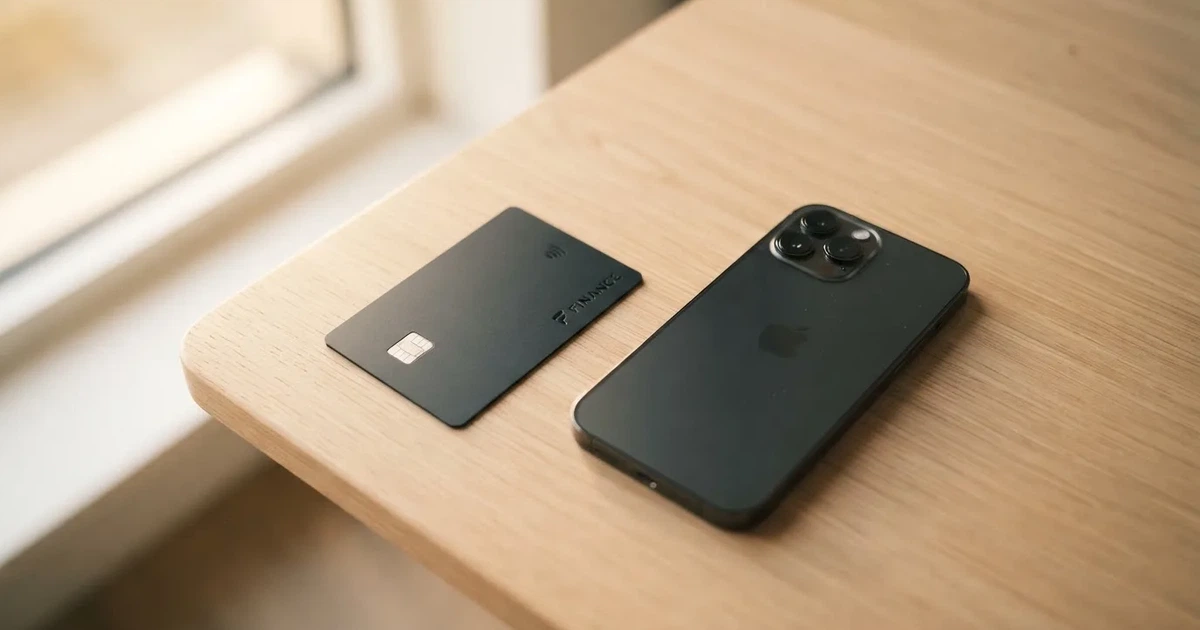
This review walks through what changed, what cardholders should do now, where the real risks sit, and which alternative crypto cards can step in while the programme is on hold. The card is not currently being issued, so there is no sign-up flow to describe, no fee table from the issuer, and no shipping timeline. The information below was checked on 20 October 2026.
Conditions on this page are current as of October 28, 2026.
Verdict
The Solflare card is a useful idea that is, in practice, unavailable. A score of 3.2 out of 10 reflects that the programme is paused, the replacement partner is unnamed, and almost every figure a reader normally wants to compare (fees, limits, KYC depth, tier structure) is either not stated by Solflare or buried in third-party screenshots. The card scores well on its core mechanic: spending USDC straight from a self-custodial Solana wallet, without a custodial load step, is genuinely clean. That mechanic is now an academic point until cards start being issued again.
The card is right for a narrow reader: a Solflare wallet user who already lives inside the Solana ecosystem, holds USDC, and is willing to wait for a relaunch without a confirmed date. The card is wrong for anyone who needs a card they can use today, anyone who wants fee clarity before signing up, and anyone whose primary requirement is Apple Pay or a published limit structure, because none of those are currently available.
| Criterion | Mark | Reason |
|---|---|---|
| Who can get it | 0 / 10 | Issuance is closed: cards are paused during the transition to a new issuer, and a relaunch has not been confirmed |
| Cost | 7 / 10 | Not officially disclosed; unofficial sources give a free annual fee, a 1% service fee, an FX fee of around 0.7%, and a 2% ATM fee, with sources disagreeing |
| Top-up options | 4 / 10 | The card deducts USDC directly from the Solana wallet; no other coins or networks are supported |
| Reliability and complaints | 2 / 10 | Cards were paused on 28 July 2026 after issuer Kulipa shut down; a new partner has not been named, and funds remain in self-custody |
| Everyday use | 3 / 10 | The card is not currently being issued; Google Pay works, Apple Pay is “coming soon” and tied to the relaunch; unofficial sources say virtual is instant and physical optional, with a 2% ATM fee |
| Total | 3.2 / 10 |
A reader in the audience for this card is, broadly, a Solflare wallet holder who was waiting for the card relaunch. For everyone else, the alternatives at the end of this page will be more useful than a programme that may or may not restart in the coming months.
What happened to the programme
Solflare announced on 28 July 2026 that all card activity was being paused. The reason, as the Solflare co-founder explained at the time, was that Kulipa, the card issuer that backed the programme, was winding down, and Solflare cited solvency issues at Kulipa as the trigger. The Solflare site still describes a self-custody Mastercard that deducts USDC from the wallet at checkout, with the network claim of “100M+ merchants”, but the marketing pages do not carry a pause notice. The footer of the site lists Solrise Finance Ltd in Tortola, British Virgin Islands, as the corporate entity, and affiliate marketing is reportedly handled by Blockadopt d.o.o. in Zagreb, Croatia. The card issuer is not named on the official pages, and third-party sources name Kulipa as the wound-down issuer; a new partner has not been announced.
At the time of the pause notice, the team said a replacement card would arrive “in August” 2026, with Apple Pay, Google Pay, higher limits and cashback. As of the second half of August 2026 the project roadmap still listed the relaunch as a future item, and by the time this review was checked, on 20 October 2026, no relaunch had been confirmed. The pause notice is the only official acknowledgement of the situation on the help side, while the public site keeps the original “Get Solflare Card” marketing live.
Three practical facts follow from the pause. First, new cards are not being issued at all, so any reader who has been considering signing up cannot currently do so. Second, existing cards stopped working on 28 July 2026, so a card that was in a wallet before that date is no longer functional. Third, the pause notice said the new card would not inherit the old one, which means anyone who still has the old plastic or virtual card should treat it as expired, not as something to reactivate later.
A few details about the original card design help make sense of what the replacement is supposed to add. The card is a Mastercard, and the spending model is direct: at checkout, the card takes USDC from the connected Solana wallet and converts it through the issuer’s rails. There is no prepaid balance to top up and no separate account to maintain. The KYC check runs inside the Solflare mobile app, and the official description says verification is instant, although the documents required, the proof of address policy, and any minimum age are not stated on the public pages. Eligibility for a card is checked by requesting one in the app, with the company describing availability in the EEA, the UK and “other countries”, decided on a case-by-case basis, but no country list has been published and the distinction between residence and citizenship is not addressed.
On the wallet side, Google Pay is reported to work with the card, and Apple Pay is described as “coming soon” and tied to the relaunch. Neither feature is a separate sign-up: linking a supported mobile wallet is the standard way to add a tokenised card number. There is no published list of merchant blocks, so the reader cannot tell in advance whether gambling, dating, or other MCC-restricted categories will work. There are no published tiers: the programme offered a single product with virtual and physical options, and the only meaningful variation was whether the user wanted a piece of plastic or just a card number in their phone.
If you already have the card
For someone who signed up before 28 July 2026, the most important point is also the simplest: the card stopped working on that date. Anything that depended on it, including subscription auto-renewals charged to the card number, stopped with it. Subscriptions on platforms that bill the card directly will not renew; subscribers need to add a new payment method with each service. Open Borrow positions, for users who had taken a crypto-backed loan, remain accessible through the Cards tab in the app.
The second point is that there is no card balance to drain. Because the card spends USDC directly from the wallet, the user’s USDC never moved into a card-specific account. The official pause notice summarises the situation in a line: there is nothing you need to do with the funds. The USDC is still in the wallet, the wallet is still self-custodial, and only the user holds the keys. Anyone who was earning staking yield on that USDC before the pause is still earning it, and any swaps or transfers in the wallet are unaffected.
The third point is that the card, when it is reissued, will not carry over. The replacement card is a new product, and the team has indicated that re-enrolment with a fresh KYC round is likely for anyone who wants the new card. A reader who set up the original card with a specific document should not assume the same document will pass the next round, particularly if the new issuer applies a different country policy or a different proof-of-address standard. If the relaunch does happen, the path back in is the same as the path for a new applicant: open the app, request a card, complete the in-app KYC, and wait for approval.
For anyone who still has the physical card in a drawer, the right move is to dispose of it as you would any expired card. The number is no longer valid, but it is still a Mastercard BIN with the user’s name on it, so the usual caution about keeping an old card number out of screenshots and emails applies. The virtual card number stored in Google Pay should also be removed from the wallet, and any merchant where the card was saved as a default payment method should be updated to a different card.
Support is reachable inside the app, where the team describes a 24/7 human support team contactable by message. The help centre currently has a single card article that explains the pause; it does not cover the questions a reader is most likely to have about limits, fees or disputes, because those questions were never answered on the public site and the pause has made them less urgent. There is no published dispute process for the old card, and no published limit structure, so a reader who has a chargeback question for a transaction that took place before 28 July 2026 has no official channel to go through beyond the in-app support thread.
A note on the unofficial fee and limit numbers that appear in third-party sources. Third-party reviews list an annual fee of free, a service fee of 1%, an FX fee of around 0.7%, and an ATM fee of 2%, with some sources disagreeing on the FX figure (one SpendNode page lists 0.40% to 0.70% for the UK and EEA, another lists 1%, and cryptocards.so lists 0.55%). The same third-party sources disagree on ATM withdrawals: SpendNode says 2%, cryptocards.so says free. The Solflare help article is reported to describe a fixed 1% FX fee. None of these are official, and the Solflare site does not confirm them. Treat them as unofficial, and confirm in the app once the programme restarts.
The same caveats apply to limits. Third-party sources variously describe daily, monthly and ATM limits as “unlimited” or as “not published”, and the official pause notice says higher limits will return with the new card. For the moment there are no limits to check, because there is no card to apply a limit to.
What can go wrong
The Solflare card carries the same risks as any crypto card, and a few that are specific to a programme whose issuer has just disappeared.
The most obvious risk is programme risk. The Solflare card was issued by Kulipa, and Kulipa has wound down. Crypto card programmes are issued by a regulated entity — usually a bank or an e-money institution — and the crypto brand is often just the marketing front. When the issuer stops operating, the cards stop with it. The same pattern is visible elsewhere: Visa terminated its global agreements with FTX in November 2022, and the WaveCrest programme that supplied crypto cards in Europe was suspended by Visa in 2018. None of this is unique to Solflare, but the Solflare case shows how fast a programme can close, and how little warning users can get.
The second risk is regulatory. The card’s corporate home is in the British Virgin Islands, where the entity behind the marketing is Solrise Finance Ltd. Crypto cards in Europe are usually issued by an electronic money institution authorised in an EU member state, and they fall under both payment-services law and, since MiCA took effect, the EU’s crypto-asset service provider regime. Solflare has not published a MiCA CASP authorisation, an EMI authorisation, or any other licence on the public site, and the licence status of the replacement issuer is not known. A reader who relies on a card programme in a regulated jurisdiction needs that licence to be visible, because that is the layer that handles disputes, sanctions screening and customer-fund safeguarding.
The third risk is KYC depth. The Solflare card’s public description of KYC is thin: verification runs in the app and is described as instant, but the documents, the proof-of-address requirements, and any age threshold are not stated. In regulated markets, the issuer is expected to run a full customer due diligence process, which in the EU covers name, address, date of birth, nationality, identity documents, a sanctions check, the purpose of the relationship, and a politically-exposed-persons check. The same regulated process is why accounts get frozen when documents do not match. A reader who values predictability in KYC should look for an issuer that publishes the documents it requires up front.
The fourth risk is self-custody. The Solflare card is self-custodial, which means the user holds the keys, and the seed phrase is the only way to recover the wallet. Anyone who obtains the seed phrase can spend the funds, and blockchain transfers are not reversible, so a stolen phrase is, in practice, lost money. A self-custody-linked card protects the user from the issuer’s failure (the FTX-style risk), but it puts the burden of key management on the user. Theft, phishing, and clipboard-hijacking malware that swaps a copied address are the standard threats.
The fifth risk is the marketing and customer-complaint record. Trustpilot reviews for the Solflare domain, as cited in third-party reporting, run at 3.9 out of 5 from 66 reviews, with about 45% of reviews classed as critical and citing lost funds, failed transactions and suspicious token approvals. The reviews are for the wallet rather than the card specifically, and no card-specific complaints have surfaced, but the wallet is the product the user actually interacts with, and a wallet that generates a high share of critical reviews is a wallet to test with small amounts before relying on it for day-to-day spending.
The sixth risk is stablecoin risk. The card spends USDC, which is a dollar-pegged stablecoin. USDC has historically held its peg, but it depegged briefly during the March 2023 US banking crisis, and stablecoins are not guaranteed. Circle describes USDC as redeemable 1:1 for USD and 100% backed by cash and cash equivalents, mostly in an SEC-registered government money market fund, with monthly reserve attestations by a Big Four firm. As of mid-September 2026 Circle lists USDC as natively supported on 38 networks, including Solana. The card’s reliance on USDC means that any future depeg event would translate directly into a change in the cardholder’s effective spending power, without an opportunity to opt out.
The seventh risk is sanctions and censorship. Tether, the issuer of USDT, has stated that it disables tokens in wallets on the OFAC sanctions list and has frozen funds tied to illicit activity, so even stablecoins on public chains are not censorship-proof. A cardholder whose address ends up on a sanctions list, or whose wallet is implicated in an investigation, can find their funds frozen. This is unusual, but it is part of the cost of using a regulated stablecoin on a regulated card.
The official security page for the card lists biometric protection, 3-D Secure authentication, partner fraud defences and instant spending notifications. There is no mention of insurance, and there is no information on what happens to a cardholder’s position if the wallet is compromised. The same self-custody point applies: if a phishing attack drains the wallet, the card will not save the user, because the funds have already left the chain.
What to take instead
Three alternatives are worth considering while the Solflare card is on hold. They are presented below in the order of their overall score.
Cardex
Cardex is a single crypto card that supports 200+ countries, although no country list or exclusions are published on the public site and the App Store listing is Naira-focused. The card is a debit card on multiple networks — Verve, Visa, Mastercard and UnionPay — and is available as both a virtual and a physical card, with a card currency of Naira per the App Store listing. The card is funded by USDT, USDC and BTC wallets; the networks for those wallets are not stated. Cardex describes a real-time crypto-to-fiat conversion at the moment of payment, with an “AI-Powered Conversion Rate” that scans global exchange rates and picks the best one when the user spends, although no fee percentage is published. The site also says “no extra fees” in the marketing copy. No reward structure has been published. Cardex scores 5.6 out of 10.
MSX
MSX is a smaller programme. The card’s structure, fees, funding options and reward structure were not available from an official page, and no official corporate detail is on hand. MSX scores 6.4 out of 10, which puts it above Cardex on the overall rating despite the thin public information. A reader interested in MSX will need to look for the official site themselves to fill in the gaps.
Whop Cards
Whop Cards is a Visa product that works anywhere Visa is accepted online and in stores. The card is available to consumers in 31 US states (Alabama, Alaska, Arkansas, California, Colorado, Connecticut, Florida, Hawaii, Illinois, Indiana, Iowa, Kansas, Kentucky, Maine, Massachusetts, Michigan, Minnesota, Montana, Nebraska, New Hampshire, New Jersey, New York, North Carolina, Oklahoma, Pennsylvania, South Carolina, Texas, Utah, Virginia, West Virginia and Wyoming) and to businesses in 41 states. The unsupported consumer countries are Belarus, Mainland China, Cuba, Hong Kong, India, Iran, Iraq, Israel, Myanmar, Nepal, Nicaragua, North Korea, Russia, Syria, Turkey, Ukraine, Venezuela and Vietnam; the unsupported corporate countries include Russia and Belarus. Whether the basis is citizenship, residence, or both, is not stated. The card spends from a Whop balance, where the pending balance is usable as soon as a payment arrives and standard withdrawals use settled funds. The starting data is backed by stablecoin collateral from a linked wallet, although the specific coins and networks are not stated. The marketing copy says “no extra fees”, and no issuance or monthly amounts are listed. Whop offers 5% cashback at select merchants, currently Uber, with more planned, although the payout currency and conditions are not stated. Whop Cards scores 5.2 out of 10.
A general point when comparing crypto cards: the most useful things to check are the licence of the issuer, the regulator behind the licence, the KYC documents the issuer requires, the published fees, the published limits, the funding coins and networks, the reward structure, and the customer-support channel. A card that does not publish these is harder to compare and harder to hold the issuer to if something goes wrong.
| Card | Score | Networks | Funding | Rewards | KYC and licence | Notable gap |
|---|---|---|---|---|---|---|
| Cardex | 5.6 / 10 | Verve, Visa, Mastercard, UnionPay | USDT, USDC, BTC | Not stated | Not stated | No fee percentage published |
| MSX | 6.4 / 10 | Not stated officially | Not stated officially | Not stated | Not stated | No official page details |
| Whop Cards | 5.2 / 10 | Visa | Whop balance, stablecoin-backed | 5% at Uber and select merchants | US state-based eligibility, sanctions screen | Funding coins and networks not stated |
Who I would recommend it to
The short answer is: nobody, today. The card is not being issued, the replacement partner has not been named, the fees are not officially published, and a relaunch date has slipped from “August 2026” into “no confirmed date” as of late October 2026. A reader who needs a crypto card to use in the next few months should pick one of the three alternatives above and verify the licence, fees and KYC requirements on the issuer’s own site before signing up.
A slightly longer answer is more useful, because the Solflare card has a real design that may return. For a Solflare wallet user who already holds USDC on Solana, who values the self-custody design, and who is willing to wait, the relaunch, when it happens, will offer a familiar UX: open the app, request a card, complete in-app KYC, link to Google Pay, and spend. That is a cleaner flow than a card that requires the user to top up a separate balance and watch for FX and network fees on every load. If the relaunch confirms a named issuer with a published licence, published fees, published limits and a clear dispute process, the card becomes a credible option again, particularly for a reader who already has a Solana balance and does not want to convert out of USDC.
A reader who does not currently use the Solflare wallet should not start using it just to wait for a card. The wallet is a self-custody product, and the seed phrase is the user’s responsibility; transferring a meaningful USDC balance to a new wallet to qualify for a card that may or may not restart is a poor trade. A reader who needs a card now should use one of the alternatives, and revisit Solflare later if the relaunch delivers a named issuer with a real licence and published terms.
For the Solflare user who is still mid-decision: keep the USDC in the wallet, do not chase yield in unfamiliar protocols to “make the wait worthwhile”, and do not load up on subscriptions that auto-renew through a future card. The card is a payment rail, not an investment product, and the right time to add it is when the programme’s issuer, fees and KYC requirements are all visible on the official site. Until then, the wallet, the staking, the swaps and the open Borrow positions are unaffected, and those are the products to rely on.
Frequently asked questions
What is the Solflare card?
The Solflare card was a self-custody Mastercard that deducted USDC directly from a Solana wallet at the moment of purchase. There was no prepaid balance to top up: the card pulled from the wallet, converted to fiat through the issuer’s rails, and paid the merchant. The programme is currently paused, with no relaunch confirmed as of late October 2026.
How does the Solflare card work?
In its original form, the card connected to a Solflare wallet and used the USDC balance in that wallet as the funding source. At checkout, the card requested authorisation, the issuer converted the USDC to the merchant’s currency, and the equivalent USDC left the wallet. KYC ran inside the mobile app, and the user kept the keys to the wallet throughout.
Is Solflare a bank?
No. Solflare is the brand of a wallet, and the entity behind the marketing is Solrise Finance Ltd in Tortola, British Virgin Islands. The card was issued by a third party, Kulipa, which has since wound down. The replacement issuer has not been named, and no banking or e-money licence has been published on the Solflare site.
Who owns Solflare?
The corporate entity is Solrise Finance Ltd, registered in Tortola, British Virgin Islands, per the site footer. Affiliate marketing is reportedly handled by Blockadopt d.o.o. in Zagreb, Croatia. The individual owners and the corporate ownership chain beyond the named entity are not stated on the public pages.
Is the Solflare card available in my country?
Solflare describes availability in the EEA, the UK and “other countries”, decided case by case when a user requests a card in the app. No full country list is published, and the basis for eligibility (residence, citizenship, or both) is not stated. With the programme paused, the question is moot for now, and the answer will depend on the replacement issuer’s policy once the card restarts.
How do I get a Solflare card?
At the moment, you cannot. New card issuance is paused following the 28 July 2026 closure of the issuer Kulipa. When the programme restarts, the path is to open the Solflare mobile app, request a card, complete the in-app KYC, and wait for approval. The old card does not carry over to the new one, and a fresh KYC round is likely.
Does the Solflare card require KYC?
The official description says KYC runs inside the app and is described as instant. The specific documents required, the proof-of-address policy and any minimum age are not stated. If the new issuer is a regulated e-money institution, expect a full customer due diligence process covering identity, address, date of birth, nationality and a sanctions check.
How do I add the Solflare card to Apple Wallet?
The Solflare card is described as supporting Google Pay now, with Apple Pay marked as “coming soon” and tied to the card relaunch. As of late October 2026 the Apple Pay integration has not been enabled. Once the relaunch happens, the standard Apple Pay flow is to open the Wallet app, tap the add-card button, and follow the issuer’s prompts.
Where can I use the Solflare card?
In its original form, the card worked anywhere Mastercard was accepted, with the marketing page claiming “100M+ merchants”. In practice, the merchant category codes that the issuer blocks, if any, are not stated, and the old card is no longer functional. The replacement card, when issued, will rely on the new issuer’s acceptance policy and any merchant-category restrictions it chooses to apply.
Is the Solflare card safe?
The card is self-custodial, so the user holds the wallet keys and the funds stay in the wallet until the moment of payment. That design protects the user from an issuer failure of the FTX or Kulipa type, but it puts the responsibility for key management on the user: a leaked seed phrase means lost funds, and blockchain transfers are not reversible. The card’s security page lists biometric protection, 3-D Secure authentication, partner fraud defences and instant spending notifications, but does not mention insurance.
Wallet card options – cryptocardoptions.com
Content created by the «cryptocardoptions.com» team