
Uphold Essential or Elite: what the card really costs, and who it is actually for
 Available in US
If you are reading this because a normal bank card is awkward for you — because you travel, because your
country’s banking is thin, because you hold money in crypto and want to spend it — then the Uphold card
deserves a real look rather than a headline. It is a genuine Visa card, it works in the places Visa works,
and it spends directly from a balance of more than 300 digital assets. That is a genuinely unusual
capability and no ordinary debit card has it.
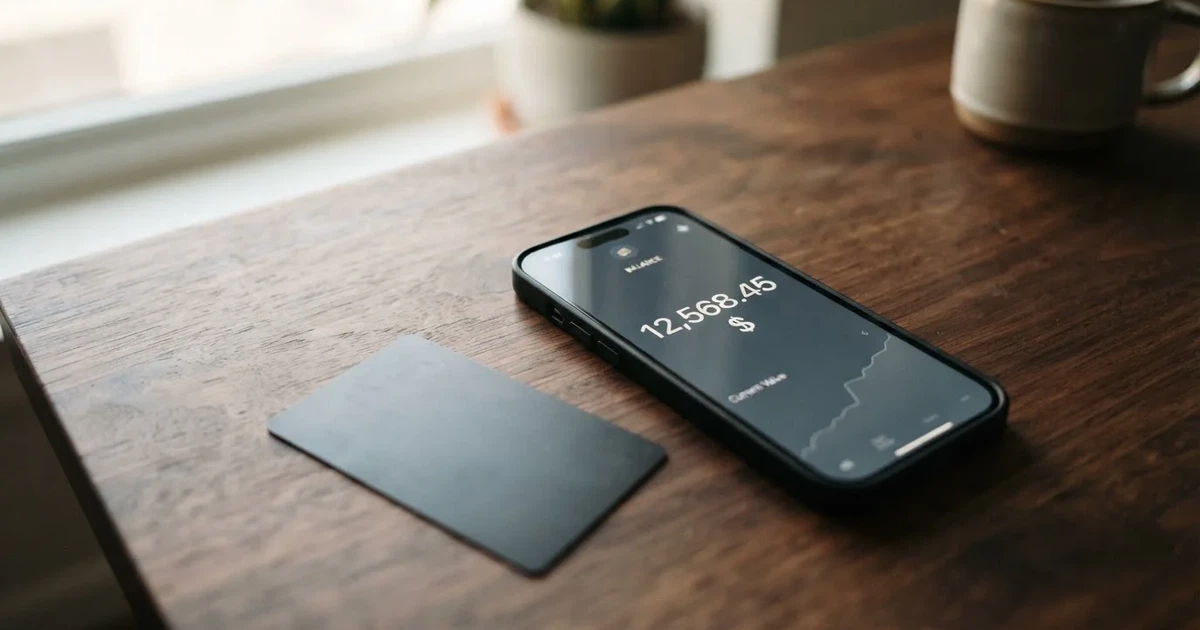
It is also a US-only product with a narrow eligibility rule, a fee structure that punishes everyday foreign
use unless you pay $99.99 a year, and a documented history of account freezes that has
drawn a large volume of public complaints. Those two halves are both true at once, and the review that
helps you is the one that keeps both on the table.
The conditions described here are current as of October 28, 2026.
Verdict: 5.8 out of 10, and the score is mostly about geography and fees
My score for the Uphold card is 5.8 out of 10. That is not a bad card. It is a competent card behind a
geography fence, aimed at a specific person, and the number reflects both.

Who it suits. You are a resident of a US state or Washington D.C. — and not Louisiana, New York, or any US
territory. You already hold, or plan to hold, a spread of crypto assets and want to spend them without
manually selling each time. You mostly spend in the United States, or you are willing to pay a fee when you
do not. You are comfortable holding XRP as a reward currency, because that is what the card pays in.
Who it does not suit. You live outside the United States and want the card in your own country. You need
to travel often and hate foreign transaction fees. You want to know exactly what your crypto conversion will
cost on every purchase and want that number small. Or you cannot tolerate the possibility that your account is
restricted for weeks while support explains nothing.
Let me show you how the score is built, because the shape of the number matters more than the number itself.
| Criterion | Mark | Why |
|---|---|---|
| Who can get it | 2 / 10 | Residents of US states and Washington D.C. only; not in Louisiana, New York or US territories |
| Cost | 6 / 10 | Essential: $0 a year, $0 virtual, $4.99 plastic, 1.50% foreign fee, $2.95 ATM; Elite: $99.99 a year, 0% foreign fee; BTC/ETH conversion spread 2.05% to 2.2% |
| Top-up options | 8 / 10 | Spends 300+ digital assets and USD, stablecoins highlighted; funded by bank transfer, direct deposit, PayPal or crypto; networks not named on the page |
| Reliability and complaints | 6 / 10 | Issuer Cross River Bank (Member FDIC), programme run by Uphold HQ Inc.; Trustpilot 4.6 out of 5 from 27,602 reviews, but account freezes reported lasting weeks and up to three months |
| Everyday use | 9 / 10 | Virtual and physical Visa, Apple Pay and Google Pay “when available”, ATM $2.95 on Essential and $0 on Elite |
The total of those five is the 5.8. The two lowest numbers — eligibility and everyday use — pull in opposite
directions, and that is the whole story of this card in one line. On the day you are actually using it, it is
excellent. On the day you are trying to sign up, it may not exist for you at all.
Who will they give you the card to?
Straight answer: only people living in the United States, and not in every state.
The card page is for US residents in US states and Washington D.C. It is not available in Louisiana, New
York, or US territories. Eligibility is based on residence, not citizenship — so a non-US citizen living in,
say, Nevada is inside the rule, while a US citizen living in Paris is outside it.
That last point matters more than it first appears, because countries are not treated the same way in
financial screening. Nationality and country of birth are recorded and screened separately from address,
because sanctions screening and issuer risk policy are applied to citizenship as well as to where you live.
The card page I read tells you about residence and does not spell out a citizenship rule; the card terms do
require an accurate real name, a valid US mailing address and a date of birth, and personal use only.
One thing the pages do not say: there is no list of KYC tiers and no stated processing time. I want to be plain
about what “not stated” means in this review — it means the card’s own public pages did not tell me, so I
cannot tell you either. Do not read the silence as an absence of checks. Identity verification is required by
law for regulated businesses, and in the US the customer identification programme requires name, date of
birth, address and an identification number. What I could not find is a published schedule.
How to get it
There is no credit check. That is the headline, and for someone without a US credit history it is the reason
to keep reading.
What you need: an Uphold wallet, which the company says sets up “under five minutes”. Beyond that, the pages
are silent on which documents are required, what proof of address looks like, or an age threshold.
Prepaid and debit cards are generally available to adults from 18, and some issuers set higher limits of
their own, but I did not find a Uphold-specific age statement.
The card itself is Visa. There are two tiers:
- Essential — virtual card and a physical plastic card, in USD.
- Elite — virtual card and a physical metal card, in USD. Costs $99.99 a year.
Delivery needs a US mailing address. Delivery time and shipping cost are not stated. Replacement is
straightforward but not free: $4.99 on Essential, $29.99 on Elite, with one free replacement per year on Elite.
Expedited replacement is not available.
Activate the card, then add it to your wallet if you want to pay by phone. The card terms are worth reading
before you start, because they set out personal use only, the requirement for accurate details, and the
liability rules for lost or stolen cards.
Fees: what it really costs you per payment
This is where the card is most misunderstood, and where your day-to-day experience lives. The number you
will feel is not the card’s fee — it is the spread on converting crypto to dollars.
The tier comparison first:
| Fee or limit | Essential | Elite |
|---|---|---|
| Annual fee | $0 | $99.99 |
| Virtual card | $0 | $0 |
| Physical card | $4.99 (plastic) | $0 (metal) |
| Foreign transaction fee | 1.50% | 0% |
| ATM withdrawal | $2.95 | $0 |
| Foreign ATM transaction fee | $1.50 | $0 |
| Point-of-sale purchase | $0 | $0 |
| Card replacement | $4.99 | $29.99 |
| Closing the card | $0 | $0 |
| Customer service | $0 | $0 |
| XRP rewards | 2%, cap up to $120 | up to 4% crypto/metals spend, 3% fiat/stablecoin, cap up to $300 |
| Upgrade Essential to Elite | $0 fee | |
| Maximum card balance | $25,000 | $25,000 |
| Purchases and total withdrawals | $2,500 a day, $10,000 a month | $25,000 a day, $100,000 a month |
| ATM withdrawals | $500 a day, $2,000 a month; 3 a day, 10 a month | $2,000 a day, $10,000 a month; 3 a day, 30 a month |
| Bank-teller cash | Same as ATM amounts | Same as ATM amounts |
| ATM balance inquiry | Not available | Not available |
Now three ordinary payments, and which fees actually bite.
Buying coffee in the United States with dollars already in your balance. Nothing happens. Point-of-sale
purchases are $0, and no conversion is involved because the money is already there. This is the card at its
best and the reason the everyday-use score is so high.
Buying coffee in a euro country. Two things hit. Visa converts the transaction into USD at the exchange
rate in effect on the processing day, and on top of that the card charges 1.50% on Essential or 0% on Elite.
The terms are explicit that the bank does not reimburse exchange-rate losses or foreign fees. In other words,
on Essential, the rate you get is the Visa rate minus 1.5%, and nobody makes it whole afterwards.
Buying something with BTC or ETH in your balance. Here the real cost appears. The card converts crypto to
USD at a spread: 2.05% to 2.2% for BTC and ETH. So a purchase funded from Bitcoin costs you more than the
cash price of the coffee, and noticeably more than a U.S. exchange spread would. The crypto conversion fee
is not separately stated on the card page; the spread is the mechanism. If you want to see the all-in price
before committing, the app has a “Preview Trade” screen that shows it.
A small but useful detail: converting USD into USD is listed at 0% — a 1:1 conversion, capped at $20,000 a
month per customer. Other stablecoins convert under 0.25%. Major foreign exchange pairs are 0.3%. Altcoins
are 2.85% to 3.8%, and precious metals 2.35% to 3.40%.
So which fee hurts you depends entirely on how you live. Dollars in the US: nothing. Stablecoins: very little.
Bitcoin: real. Eurozone travel on Essential: noticeable. If you travel a lot, the Elite tier’s 0% foreign fee
and $0 ATM is what the $99.99 buys — that is the honest version of the “is it worth it” question.
How to Top up the card
There is no separate card account to load in the ordinary sense. The card spends straight from your Uphold
wallet, and the wallet holds 300+ digital assets plus USD, with stablecoins highlighted as the straightforward
route.
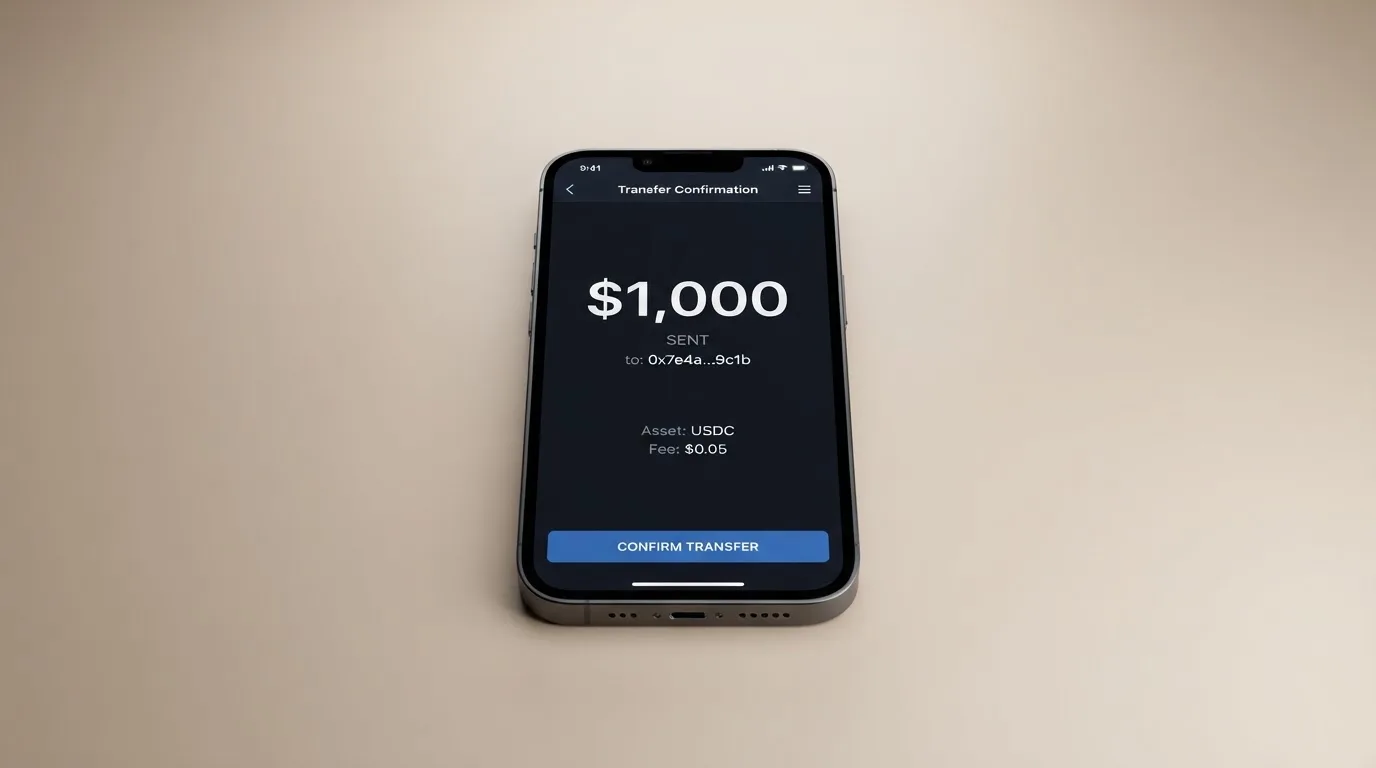
The wallet is funded by bank transfer, direct deposit, PayPal, or a crypto deposit. Per-method deposit fees
and minimums are not stated on the pages I read. The networks that crypto deposits travel over are also not
listed, and that omission is worth taking seriously rather than shrugging at.
Here is the practical warning that follows from how blockchain transfers work. A deposit sent on a network
the provider does not support, or sent to an address belonging to a different network, can be lost or need
manual support recovery with no guarantee of success. Transfers are irreversible. Some networks charge a
small fee paid in their own token, which means a wallet holding USDT but no ETH cannot actually send on
Ethereum, because gas is paid only in ETH. If you are sending crypto in rather than dollars, confirm the
network in the app before you send, not after.
Two things about the money itself. Funds in the card account do not expire, and closing the card through
customer service costs $0. The bank may cancel the card at any time. Only the USD fiat account is
FDIC-insured — the crypto and metals are not, and that is not a small distinction, since most of what this
card is for lives outside that insurance.
Paying with it every day
Virtual and physical Visa, USD. Apple Pay and Google Pay work “when available” — the qualifier matters, as
availability depends on your country and your device. In the app the iOS version scored 4.7 out of 5 from
91K ratings when I read it, version 6.111.0 for iPhone. I did not read the Google Play rating.
Rewards are the most distinctive everyday feature, and they are paid in XRP. Elite pays 4% in XRP on
crypto- or metals-funded spending, or 3% in XRP on fiat and stablecoin spending, with a cap up to $300.
Essential pays 2% in XRP with a cap up to $120. The rewards currency is currently XRP, and the programme runs
for three months after activation for cards activated on or after 1 January 2026.
That structure deserves a second look rather than a quick read of “up to 4%”. On Elite, the higher rate applies
to crypto-funded spending — which is precisely the spending that also carries the 2.05% to 2.2% BTC/ETH
spread. The higher fiat rate, 3%, applies to the cheaper route. If you are spending stablecoins, 3% on a
sub-0.25% conversion is genuinely good. If you are spending Bitcoin, the reward is competing with a spread
several times its own size.
When something goes wrong, the dispute route runs through the Uphold platform. Report errors within 60
days; a phone report needs written confirmation within 10 business days. The bank decides within 10 business
days, though it may take up to 45 days, with provisional credit within 10 business days. New cards, point-of-sale
transactions, and foreign-initiated transactions can take up to 90 days. Unauthorized Visa transactions are
investigated in 5 business days, plus 5 more. Lost or stolen card liability is capped at $50 if you report
within 2 business days, and up to $500 after that. One thing to notice: the terms do not use the word
“chargeback” at all.
Visa’s zero liability policy does not cover ATM transactions outside the Visa and PLUS networks, so treat a
withdrawal abroad as your own risk even on Elite.
What can go wrong
This is the section I would read twice, and it is where the reliability score of 6 comes from.
Trustpilot, as of 20 October 2026, showed 4.6 out of 5 across 27,602 reviews — about 6,386 of them in the last
twelve months. Five-star reviews were 67% of the total and one-star 17%. No negative reviews had a reply.
That distribution matters: a large share of reviewers are satisfied, and the platform’s own responding rate
to criticism is zero.
The dominant complaint theme from September and October 2026 is account freezes and restrictions without
explanation, lasting from weeks up to three months. They often come after a first deposit, linking a card, a
withdrawal, or a location mismatch. Alongside that: slow, bot-driven support; identity-verification problems
including expired verification links and lockouts after a phone number change; and unexpected charges.
Third-party reporting is mixed and I want to label it as third-party. Unofficial and not confirmed by the
card: a Reddit user reported an account closed without explanation while holding over 9,000 USD. ComplaintsBoard
shows 1.9 out of 5 from 13 reviews. Trustpilot figures vary by source elsewhere — 2.4 out of 5 in a community
thread against 4.5 on an aggregator — so treat any single Trustpilot number with suspicion, including mine.
A UK Financial Ombudsman decision, DRN-5127266, concerned a closed wallet and card issued by Optimus Cards
UK, a different programme.
On the official side, Uphold’s status page reported a Mastercard-related issue that froze some UK cards,
resolved on 19 May 2026. It was fixed, and it was fixed, which is the right ending.
Why freezes happen at all is not mysterious once you know the law. KYC rules require regulated businesses to
verify customers and assess risk, with ongoing transaction monitoring and suspicious-activity reporting. If
due diligence cannot be completed, the rules require the institution to hold off — and where necessary, end
the relationship. A freeze pending documents is often the system working as designed. That explains the
mechanism; it does not excuse weeks of silence from a chatbot.
Who is actually behind the card matters here. The issuer is Cross River Bank, a Member FDIC institution, on
the Visa network. The programme manager is Uphold HQ Inc. USD balances are held at Cross River Bank, and
Uphold states it is not itself an FDIC-insured bank. The card issuer entity and Uphold’s own licences are not
stated on the page I read.
Security practices I can confirm: Uphold recommends enabling two-factor authentication, uses email
verification for unusual activity, and describes a Reservechain solvency proof. In-app card freeze, spending
controls and insurance are not stated on the security page.
One more structural risk, which belongs to the category rather than to this card: with a custodial wallet, the
provider holds the credentials, so you must trust them completely. Transfers are irreversible and a stolen
private key has no recovery path, because the network cannot freeze or return funds. Custodial platforms have a
record — Mt. Gox, Coincheck, Ronin Network. And card programmes do close: WaveCrest was suspended by Visa in
Europe in 2018, closing all its Visa programmes, and Visa terminated its agreements with FTX in November 2022.
Usually there is a notice period, then loading and spending stop, then you are asked to withdraw.
What to take instead
Uphold is not alone in this category, and if it fails you on geography, the honest answer is that another
card might be open to you. Three comparisons, using the same questions.
| Uphold | Bybit Card | MEXC | MSX | |
|---|---|---|---|---|
| Score | 5.8 / 10 | 6.0 / 10 | 5.6 / 10 | 6.4 / 10 |
| Card regions | US states and Washington D.C., excluding Louisiana, New York and territories | Argentina, AIFC (Kazakhstan), Georgia, Kazakhstan, Australia, Mexico, Brazil, Peru, Asia Pacific | Philippines, Taiwan, Thailand and others | Not stated |
| Network and type | Visa, virtual and physical | Mastercard or Visa depending on region, virtual first then physical | Virtual card only | Not stated |
| Issuance | $0 virtual, $4.99 plastic | Virtual free; physical from none to 29.99 USD / 29.99 USDT by region | 20 USD | Not stated |
| FX / conversion | 1.50% (Essential) or 0% (Elite); crypto spreads up to 2.85–3.8% on altcoins | FX 2% on top of network rate in some regions, up to 7% in Argentina; crypto conversion 0.9% over the One-Click Sell rate in most regions | Not stated on the page | Not stated |
| Rewards | XRP, 2% Essential / up to 4% Elite | Cashback tiers from 2% up to 10%, crypto-funded spending only from 5 Oct 2026 | Cashback 4% to 10% by M-Score tier | Not stated |
Bybit is the widest of the three geographically, and it is the one to look at if you are outside the US. But
read its restrictions before you get excited: the cards page says the product is not meant for European
Economic Area customers and that all EEA customer participation is strictly prohibited. Its fiat-service
restricted list — which covers deposits, withdrawals and One-Click Buy, not the card as such — includes
Belarus, the Russian Federation, Serbia, China and the United States, with Russian users able to make only RUB
transactions in fiat. I found no card-specific statement about Russian or Belarusian citizens and no rule
distinguishing citizenship from residence, and the card currency depends on the country of your identity
verification. One detail that catches people out: from 5 October 2026, only crypto-funded transactions earn
points or cashback — fiat-funded spending earns nothing.
MEXC is virtual only, with physical cards not yet available, and a listed issuance fee of 20 USD shown
alongside a possibly discounted 0 USD price that the page itself renders unclearly. Its funding route is
specific: USDT transferred to the fiat account and then added on the card page.
MSX scores highest of the four at 6.4, and I want to be honest about why: on the official pages I could
read, eligibility, card details, costs, fees, funding and rewards are all not stated. That is not a better
card. It is a card I could not evaluate, and I would not advise anyone to sign up on the strength of a score
whose inputs are blank.
Two general points before you choose. Card payments involve several parties: the network routes the
messages and sets the rules, the issuer holds the programme, and the crypto brand is often just a programme
manager and a front end. And merchants can look up the card’s issuer identification number — the 6 or 8 digit
prefix — to see which institution and country issued it. A card issued in one country can look foreign to a
shop in another, and some merchants decline prepaid or foreign cards for exactly that reason. If you are
outside the US, that friction is part of your daily life with any of these cards, and it is worth a thought
before you pick.
Who I would recommend it to
I would recommend this card to a US resident outside Louisiana and New York who holds several crypto assets,
spends mostly at home, and wants to use them without selling by hand each time. Add to that a person who
values stablecoin spending and the 3% fiat-funded reward on Elite, and who can justify $99.99 a year by
travelling in a way that would otherwise cost 1.5% plus ATM fees on every purchase. Those are the people the
card is genuinely built for, and for them it works well.
I would not recommend it to anyone living outside the United States — the eligibility rule ends that
conversation before the fees do. I would hesitate for someone whose income or savings are volatile, because a
freeze during a KYC review can last weeks and the balances outside USD are not insured. And I would think
twice for a person who plans to spend Bitcoin or Ethereum often: a 2.05% to 2.2% conversion spread is a
large, recurring, invisible cost.
If you are eligible, here is my order of checking. Read the card terms for the personal-use condition and the
lost-or-stolen liability rules. Work out which tier your travel actually justifies, because that decision is
worth more than any reward rate. Then find the Preview Trade screen in the app and look at the all-in price
on the asset you hold most, because that number, not the annual fee, is what your coffee will really cost.
One practical thing that also costs nothing: put the card in Apple Pay or Google Pay and use the virtual card
for online payments, so a lost physical card is not a lost card. Enable two-factor authentication before you
deposit anything. And keep a balance you can afford to have restricted, because the honest summary of this
card is that it is well built, competently priced for its niche, and subject to a support experience its own
reviews describe as slow and silent.
Frequently asked questions
What is the Uphold card?
It is a USD Visa card that spends directly from your Uphold wallet balance, which can hold more than 300
digital assets plus dollars. You get a virtual card immediately and a physical one in the plastic (Essential)
or metal (Elite) version. The card is issued by Cross River Bank, a Member FDIC bank, with Uphold HQ Inc. as
programme manager. When you pay, crypto in your balance is converted at a spread rather than you selling it
by hand beforehand.
Is Uphold a bank, and who owns Uphold?
No — Uphold states it is not itself an FDIC-insured bank. Your USD balance is held at Cross River Bank, a
Member FDIC institution, which is the card issuer. Uphold HQ Inc. runs the card programme. So the dollar
side sits with a regulated US bank; the crypto side does not sit with a bank at all and is not covered by
deposit insurance.
Who can get the Uphold card, and is it available in my country?
Only residents of US states and Washington D.C., and not in Louisiana, New York, or US territories. The rule
is based on residence, not citizenship. If you live outside the United States, this card is not available
to you at all, and no fee or tier changes that. Eligibility is decided by where you live, so reading about
tiers or rewards is only useful once you know the residence test is passed.
Does the Uphold card require KYC, and what documents do I need?
There is no credit check, which is why people without a US credit history can get one. Identity verification
is still required, because that is the law for regulated businesses. The card pages do not state which
documents are required, what proof of address looks like, or how long checks take. Terms require an accurate
real name, a valid US mailing address, a date of birth, and personal use only.
What does the Uphold card cost, and is it free?
Essential is free: $0 a year, $0 virtual, $4.99 for the plastic card. Elite costs $99.99 a year but includes
a metal card at $0, 0% foreign transaction fees, and $0 ATM withdrawals. The cost that catches people is not
the card fee but the conversion spread — 2.05% to 2.2% on Bitcoin and Ethereum, up to 2.85% to 3.8% on
altcoins — which applies on every crypto-funded purchase.
How do I top up the Uphold card, and which networks work?
You top up the wallet, not the card: by bank transfer, direct deposit, PayPal, or a crypto deposit.
Deposits in dollars and USD stablecoins convert 1:1, and other stablecoins under 0.25%. The card’s public
pages do not list which blockchain networks crypto deposits use, so check inside the app before sending. A
transfer on the wrong network can be lost or need manual recovery with no guarantee.
Is the Uphold card safe, and are my funds insured?
Your USD balance is held at an FDIC-member bank and is insured. Your crypto and metals are not insured.
Custodial platforms carry counterparty and hack risk, and blockchain transfers cannot be reversed. Enable
two-factor authentication, keep spending within limits you could survive losing, and note that Visa’s zero
liability policy does not cover ATM transactions outside Visa and PLUS networks.
Why was my Uphold account frozen or restricted?
Reviews from September and October 2026 describe freezes lasting weeks to up to three months, often after a
first deposit, a card link, a withdrawal, or a location mismatch, plus identity-verification problems such
as expired links or lockouts after a phone change. Compliance rules require institutions to hold off when
due diligence cannot be completed, so freezing pending documents is often the rule working. Support speed
is the part users complain about most.
Can I use the Uphold card abroad and at Apple Pay?
Yes, with caveats. Visa converts foreign purchases to USD at the rate on the processing day, plus 1.50% on
Essential or 0% on Elite, and the bank does not reimburse exchange losses. Apple Pay and Google Pay work “when
available”, which depends on your country and device. Note that a foreign-issued-looking card can also be
declined by some merchants purely from its issuer identification number, independently of any fee.
Is the Uphold card worth the Elite fee?
Only if you travel or withdraw cash enough for 1.50% foreign fees and $2.95 ATM charges to outweigh $99.99 a
year, or if you spend stablecoins steadily and value the 3% fiat-funded XRP reward. If you spend in dollars
inside the US, Essential at $0 a year already gives you everything the card does, and Elite’s main additions
are zero foreign fees, a metal card, and higher limits.
Exchange card options – cryptocardoptions.com
Content created by the «cryptocardoptions.com» team